How does a high-throughput tube furnace achieve precise sulfurization? Expert Control for CoS2–Co(OH)F Nanostructures
Updated 3 months ago
A high-throughput tube furnace achieves precise sulfurization through the rigorous control of a gas-solid phase reaction within an inert, thermally stable environment. By regulating the flow of argon (Ar) gas and maintaining a specific internal temperature distribution, the furnace facilitates the reaction between sublimated sulfur vapor and solid $Co(OH)F$ precursors. This specialized setup ensures the formation of a distinct $CoS_2$ shell while preserving the structural integrity of the $Co(OH)F$ core.
Precise sulfurization relies on the furnace’s ability to create a "spatial reaction gradient" where temperature and gas flow dictate the depth of sulfur diffusion into the precursor. This allows for the synthesis of complex core-shell architectures that would otherwise collapse into a single phase under less controlled conditions.
The Mechanics of Gas-Solid Phase Sulfurization
The Role of the Inert Atmosphere
The tube furnace utilizes a continuous flow of argon (Ar) gas to purge oxygen from the reaction chamber. This inert environment is critical because it prevents the unwanted oxidation of the cobalt precursors at elevated temperatures.
Spatial Separation of Reactants
In this process, sulfur powder is typically placed upstream and the $Co(OH)F$ precursor downstream within the tube. As the furnace heats, the sulfur sublimates into a vapor, which the Ar carrier gas then transports precisely over the solid precursor.
The Gas-Solid Interaction
The sulfurization occurs as a gas-solid phase reaction at the surface of the $Co(OH)F$ particles. By controlling the concentration of the sulfur vapor and the speed of the carrier gas, the furnace allows for a uniform coating of $CoS_2$ to develop around the precursor.
Thermal Distribution and Kinetic Control
Precise Temperature Regulation
The furnace maintains a specific heating zone temperature—often around 400 °C for this reaction—to ensure the sulfur remains in the vapor phase. High-throughput furnaces are designed to minimize thermal fluctuations, ensuring that every part of the sample experiences the same kinetic energy.
Controlling the Reaction Depth
The internal temperature distribution is the primary governor of how deep the sulfur penetrates the precursor lattice. By fine-tuning the heating rate and the peak temperature, researchers can stop the reaction once the $CoS_2$ shell reaches the desired thickness.
Achieving Core-Shell Stability
The result of this thermal precision is a core-shell structure featuring an active cobalt sulfide shell and a stable cobalt oxyfluoride inner core. Without this level of control, the entire particle would likely sulfurize, losing the beneficial properties of the heterostructure.
Understanding the Trade-offs and Limitations
The Risk of Over-Sulfurization
If the temperature is too high or the reaction time too long, the sulfur vapor will penetrate the entire $Co(OH)F$ lattice. This leads to the total conversion of the material into $CoS_2$, destroying the core-shell interface required for specific electrochemical applications.
Vapor Pressure Management
Maintaining a consistent sulfur vapor pressure is difficult because sulfur sublimates at relatively low temperatures compared to the reaction target. If the upstream temperature is not isolated or calibrated correctly, the sulfur may deplete before the reaction is complete.
Gas Flow Sensitivity
The velocity of the Ar carrier gas is a double-edged sword; if it is too slow, sulfur vapor accumulates unevenly, leading to a non-uniform shell. Conversely, if the flow is too fast, the sulfur vapor may pass over the precursor too quickly to react effectively.
How to Apply This to Your Research
Implementing Precise Sulfurization
To achieve the best results when synthesizing core-shell nanostructures, consider the following parameters based on your specific material goals:
- If your primary focus is shell thickness control: Prioritize the calibration of the heating rate and the exact duration of the dwell time at 400 °C.
- If your primary focus is phase purity: Ensure a high-purity argon flow and a complete oxygen purge before increasing the temperature to prevent oxide impurities.
- If your primary focus is structural uniformity: Optimize the spatial distance between the sulfur source and the precursor to ensure a steady, diluted vapor stream.
The precision of a high-throughput tube furnace transforms a simple chemical reaction into a highly tunable manufacturing process for advanced heterostructured materials.
Summary Table:
| Key Parameter | Role in Sulfurization | Impact on Material Quality |
|---|---|---|
| Inert Atmosphere | Ar gas purges oxygen | Prevents unwanted oxidation of precursors |
| Spatial Separation | Upstream sulfur / Downstream precursor | Ensures controlled vapor transport and interaction |
| Temperature (400°C) | Regulates sulfur sublimation & kinetics | Determines shell thickness and prevents core collapse |
| Gas Flow Velocity | Manages vapor pressure distribution | Ensures uniform shell coating across the sample |
Elevate Your Research with THERMUNITS Thermal Solutions
Precision is the foundation of material science innovation. THERMUNITS is a leading manufacturer of high-performance laboratory equipment, providing the tools needed for complex syntheses like core-shell nanostructures.
Our comprehensive range of thermal processing solutions includes:
- Tube & Rotary Furnaces (ideal for precise gas-solid phase reactions)
- Vacuum, Atmosphere, & Muffle Furnaces
- CVD/PECVD Systems for advanced material deposition
- Vacuum Induction Melting (VIM) & Hot Press Furnaces
- Dental Furnaces & Electric Rotary Kilns
Whether you are focused on industrial R&D or academic material science, we offer the thermal stability and kinetic control your projects demand.
Ready to optimize your heat treatment process?
Contact our engineering experts today to find the perfect furnace for your laboratory.
References
- Liubin Song, Xifei Li. Co/Li<sub>2</sub>S of chemical confinement decorated electrochemically stable Co(OH)F nanoarrays enabling dendrite-free flexible 3D Li anodes. DOI: 10.1039/d4ta02143f
Mentioned Products
- 1200C High Throughput Multi Channel Tube Furnace with 50mm Quartz Tubes for Annealing and Material Phase Diagram Research
- High Throughput 1200C Four Channel Tube Furnace with 3 Inch Quartz Tubes for Multi Zone Annealing and Material Research
- High Vacuum Compact Tube Furnace 1200C with Integrated Turbo Pump System and 8 Inch Heating Zone
- Compact High Temperature 1600C Tube Furnace with 50mm Alumina Tube and Vacuum Flanges for Material Sintering
- High Temperature Tube Furnace 1500C with Sliding Flanges and 50mm OD for Rapid Thermal Processing Fast Heating and Cooling
People Also Ask
- Why is high-purity alumina selected for sample trays? Key to High-Throughput Sintering Success
- How does the precise temperature control of a tube furnace influence the formation of V2AlC MAX phase? Expert Insights.
- What is the function of argon gas flow within a tube furnace during the selenization of MOFs? Essential Process Guide
- What is the effect of introducing camphor as a carbon source in a tube furnace CVD? Boost CNT Density and Growth
- Why is precision temperature programming in a tube furnace critical for the synthesis of molybdenum-based metal nitrides?

Tech Team · ThermUnits
Last updated on Jun 02, 2026
Related Products
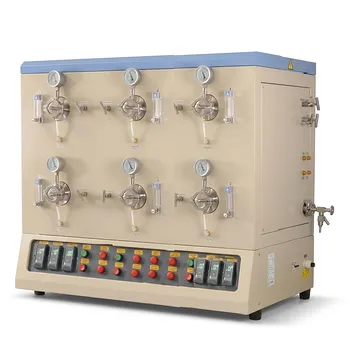
1200C High Throughput Multi Channel Tube Furnace with 50mm Quartz Tubes for Annealing and Material Phase Diagram Research
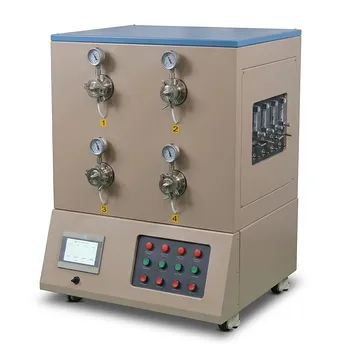
High Throughput 1200C Four Channel Tube Furnace with 3 Inch Quartz Tubes for Multi Zone Annealing and Material Research
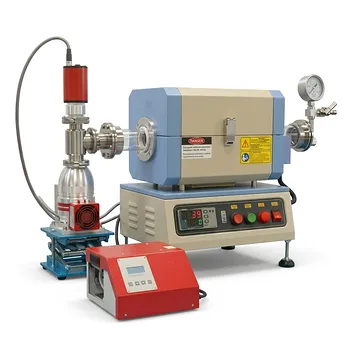
High Vacuum Compact Tube Furnace 1200C with Integrated Turbo Pump System and 8 Inch Heating Zone
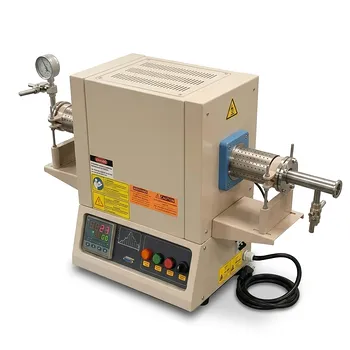
Compact High Temperature 1600C Tube Furnace with 50mm Alumina Tube and Vacuum Flanges for Material Sintering
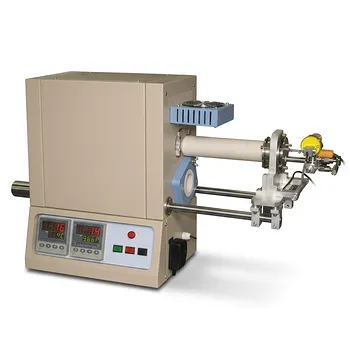
High Temperature Tube Furnace 1500C with Sliding Flanges and 50mm OD for Rapid Thermal Processing Fast Heating and Cooling

High Temperature Automated 5 Inch Tube Furnace for Autonomous Material Research and Advanced Laboratory R&D
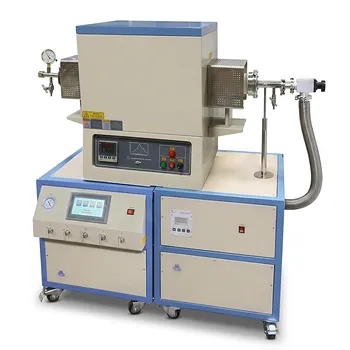
High Temperature 1700C Tube Furnace with High Vacuum Turbomolecular Pump System and Multi Channel Mass Flow Controller Gas Mixer

High Temperature 1700C Vertical Tube Furnace for Powder Spherification and Material Sintering

1800C High Temperature Compact Vacuum Tube Furnace with 60mm OD Alumina Tube and Kanthal MoSi2 Heating Elements
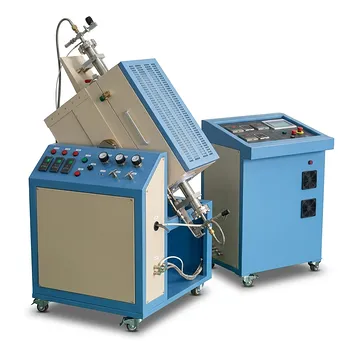
1100C High Pressure Rocking Tube Furnace with 2 Inch Super Alloy Processing Tube for Material Synthesis
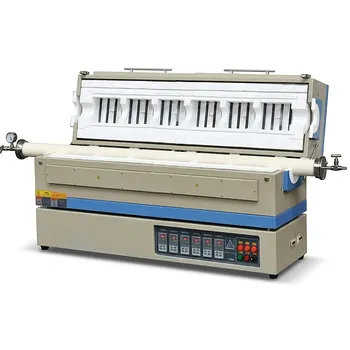
High Temperature 1700C Six Zone Split Tube Furnace with Alumina Tube and Water Cooled Flanges
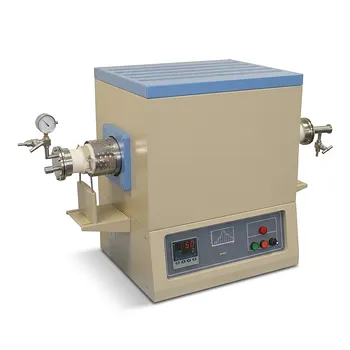
1700C High Temperature Alumina Tube Furnace with 18 Inch Heated Zone and Vacuum Sealing Flanges

High Temperature 1700C Benchtop Tube Furnace with 5 Inch Heating Zone High Purity Alumina Tube and Vacuum Sealing Flanges
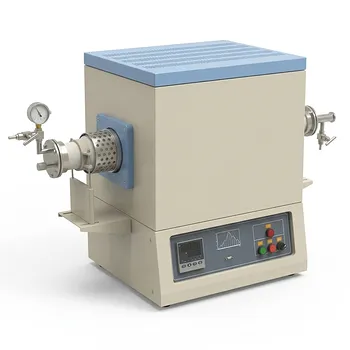
1750°C High Temperature Benchtop Vacuum Atmosphere Tube Furnace with Kanthal Super 1800 Heating Elements and 60mm Alumina Processing Tube
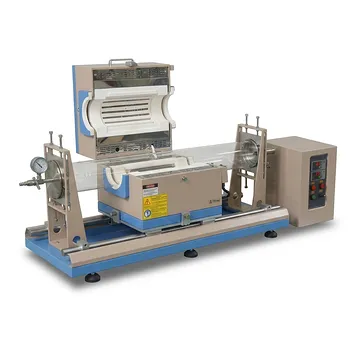
1200C High Temperature 5 Inch Sliding Tube Furnace for Rapid Thermal Processing RTP and Wafer Annealing
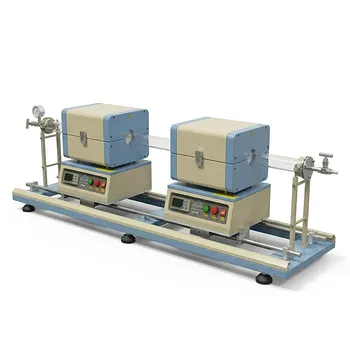
1200C Max Dual Sliding Tube Furnace with 50 mm Tube Flanges for CVD
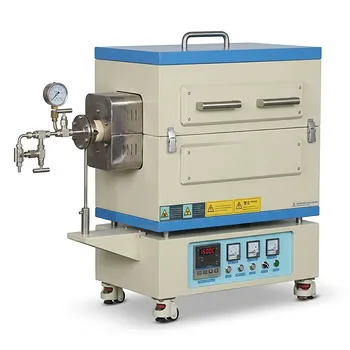
High Temperature Split Tube Furnace 1500C for Material Research Vacuum and Atmosphere Thermal Processing
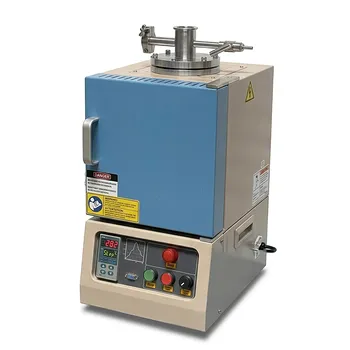
High Temperature Hybrid Muffle and Tube Furnace with Vacuum Capability and PID Control
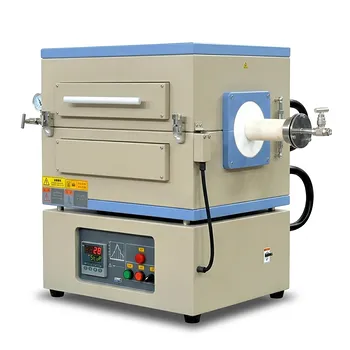
1500°C Split Tube Furnace with Alumina Tube and Vacuum Sealing Flanges for Material Research