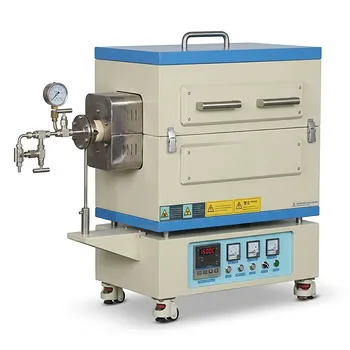
Why is high-purity alumina selected for sample trays? Key to High-Throughput Sintering Success
Updated 3 months ago
Material integrity is the cornerstone of high-throughput sintering. High-purity alumina is selected for sample trays because it provides a unique combination of extreme thermal stability and chemical inertness at temperatures often exceeding 1400°C. This ensures that the tray acts as a neutral carrier, preventing any chemical interaction with the samples or the introduction of impurities that could compromise experimental results.
Core Takeaway: High-purity alumina serves as a "chemically invisible" substrate that maintains its structural and electrical integrity under intense heat. Its use is essential for ensuring that the properties of the sintered material—rather than the container—are what researchers actually measure.
The Role of Chemical Inertness in Sintering
Preventing Sample Contamination
At the extreme temperatures required for sintering, many materials become highly reactive. High-purity alumina remains inert, meaning it does not react with ceramic powders, such as perovskites, or metals like iron and copper.
This lack of reactivity is critical for phase analysis, such as Silico-Ferrite of Calcium and Aluminum (SFCA) studies. By using an inert tray, researchers ensure that the container does not interfere with the sample's chemical composition or bonding strength.
Protecting the Sintering Environment
During the sintering process, some materials may release volatile gases. Alumina’s stability prevents it from reacting with these gases, such as sulfur-containing volatiles produced during Galena sintering.
This protection extends to the furnace itself. By remaining stable, alumina trays help prevent corrosive elements from reaching and damaging the heating elements or the furnace lining.
Thermal and Structural Performance at Extreme Temperatures
Dimensional Stability for Automation
High-throughput systems rely on automated transport mechanisms to move samples through the furnace. High-purity alumina maintains its structural strength and regular geometric dimensions even under intense thermal load.
This dimensional stability prevents the trays from warping or deforming. Such precision is vital for maintaining stable heat conduction and ensuring that automated grippers can reliably handle the trays without mechanical failure.
Managing Shrinkage and Friction
The surface characteristics of the tray influence how a part behaves as it densifies. High-purity alumina support plates provide a flat reference plane with specific friction characteristics.
These characteristics are essential for controlling the shrinkage behavior of metal and ceramic parts. Proper management of this friction ensures the final parts achieve their intended geometric accuracy after densification.
Electrical and Atmospheric Integrity
High-Temperature Insulation
In specialized sintering processes, such as those generating intense Joule heat, electrical insulation becomes a safety and performance requirement. Alumina provides superior high-temperature electrical insulation.
This insulation prevents high-voltage current leakage from the sample area to the furnace body. It ensures that the energy remains focused on the sample, maintaining the accuracy of recorded data like luminescence spectra.
Maintaining Vacuum and Gas Purity
High-throughput sintering often requires a controlled atmosphere or a stable vacuum. High-purity alumina exhibits excellent airtightness, which is necessary for maintaining a consistent environment.
Because the material does not release volatile impurities when heated, it preserves the purity of the atmosphere. This is particularly important when sintering materials like titanium strips, which are highly sensitive to oxygen and other contaminants.
Understanding the Trade-offs and Limitations
Thermal Shock Sensitivity
While alumina is exceptionally stable at high temperatures, it is susceptible to thermal shock. Rapid heating or cooling cycles can cause the material to crack or shatter due to localized thermal expansion.
In high-throughput environments, temperature ramps must be carefully controlled. If the process requires "instant" cooling or heating, alumina may require specific structural designs or may need to be replaced by materials with higher thermal shock resistance.
Material Brittleness and Cost
High-purity alumina is a ceramic, meaning it possesses high hardness but low ductility. It is brittle and can fail catastrophically if dropped or subjected to mechanical impact during automated handling.
Furthermore, as the purity level increases (e.g., 99.7% and above), the cost of the material rises significantly. Facilities must balance the need for extreme purity against the budget constraints of high-volume tray replacement.
Making the Right Choice for Your Goal
When integrating high-purity alumina trays into your high-throughput furnace workflow, consider your primary objective:
- If your primary focus is Phase Purity: Opt for the highest purity (99.7%+) to ensure zero chemical interference with sensitive ceramic or metal samples.
- If your primary focus is Automated Reliability: Prioritize trays with tight geometric tolerances and high structural strength to prevent jams in your transport system.
- If your primary focus is Electrical Analysis: Ensure the alumina grade is rated for high-temperature insulation to prevent current leakage during high-voltage sintering.
- If your primary focus is Vacuum Stability: Verify the airtightness and "outgassing" profile of the alumina to maintain a pristine sintering atmosphere.
High-purity alumina remains the industry standard because it provides the most reliable, non-reactive environment for high-temperature material transformation.
Summary Table:
| Feature | Benefit for Sintering | Impact on Results |
|---|---|---|
| Chemical Inertness | Prevents reactions with perovskites/metals | Pure phase analysis and zero contamination |
| Thermal Stability | Maintains structure above 1400°C | Reliable support and long-term durability |
| Dimensional Precision | Resists warping and deformation | Seamless automated transport and handling |
| Electrical Insulation | Prevents high-voltage current leakage | Accuracy in luminescence and Joule heat data |
| Airtightness | Minimizes outgassing in vacuum | Preserves atmosphere purity for sensitive alloys |
Elevate Your Material Research with Precision Thermal Solutions
Maximize the accuracy and efficiency of your high-throughput workflows with high-purity alumina components and advanced heating systems. THERMUNITS is a leading manufacturer of high-temperature laboratory equipment for material science and industrial R&D. We offer a comprehensive range of thermal processing solutions, including Muffle, Vacuum, Atmosphere, Tube, Rotary, and Hot Press furnaces, CVD/PECVD systems, Dental Furnaces, electric rotary kilns, vacuum induction melting furnaces (VIM), Thermal Elements, and premium heat treatment accessories.
Whether you are scaling up production or conducting sensitive phase analysis, our engineering team is ready to provide the expertise and equipment you need.
Contact THERMUNITS Today to Optimize Your Lab
References
- Mojan Omidvar, Yang Hao. Accelerated discovery of perovskite solid solutions through automated materials synthesis and characterization. DOI: 10.1038/s41467-024-50884-y
Mentioned Products
- 1200C High Throughput Multi Channel Tube Furnace with 50mm Quartz Tubes for Annealing and Material Phase Diagram Research
- High Throughput 1200C Four Channel Tube Furnace with 3 Inch Quartz Tubes for Multi Zone Annealing and Material Research
- High Vacuum Compact Tube Furnace 1200C with Integrated Turbo Pump System and 8 Inch Heating Zone
- Compact High Temperature 1600C Tube Furnace with 50mm Alumina Tube and Vacuum Flanges for Material Sintering
- High Temperature 1700C Tube Furnace with High Vacuum Turbomolecular Pump System and Multi Channel Mass Flow Controller Gas Mixer
People Also Ask
- How does a high-throughput tube furnace achieve precise sulfurization? Expert Control for CoS2–Co(OH)F Nanostructures
- How does the precise temperature control of a tube furnace influence the formation of V2AlC MAX phase? Expert Insights.
- What is the function of argon gas flow within a tube furnace during the selenization of MOFs? Essential Process Guide
- What is the effect of introducing camphor as a carbon source in a tube furnace CVD? Boost CNT Density and Growth
- Why is precision temperature programming in a tube furnace critical for the synthesis of molybdenum-based metal nitrides?

Tech Team · ThermUnits
Last updated on Jun 02, 2026
Related Products

1200C High Throughput Multi Channel Tube Furnace with 50mm Quartz Tubes for Annealing and Material Phase Diagram Research
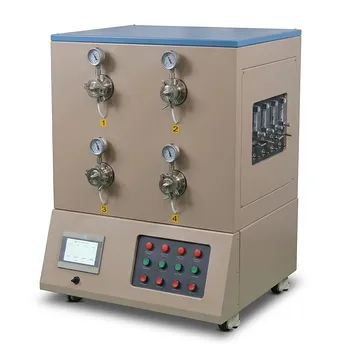
High Throughput 1200C Four Channel Tube Furnace with 3 Inch Quartz Tubes for Multi Zone Annealing and Material Research

High Vacuum Compact Tube Furnace 1200C with Integrated Turbo Pump System and 8 Inch Heating Zone

Compact High Temperature 1600C Tube Furnace with 50mm Alumina Tube and Vacuum Flanges for Material Sintering

High Temperature 1700C Tube Furnace with High Vacuum Turbomolecular Pump System and Multi Channel Mass Flow Controller Gas Mixer
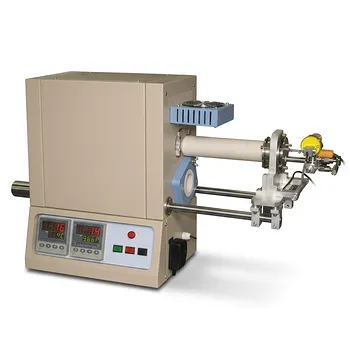
High Temperature Tube Furnace 1500C with Sliding Flanges and 50mm OD for Rapid Thermal Processing Fast Heating and Cooling

High Temperature Automated 5 Inch Tube Furnace for Autonomous Material Research and Advanced Laboratory R&D

1800C High Temperature Compact Vacuum Tube Furnace with 60mm OD Alumina Tube and Kanthal MoSi2 Heating Elements
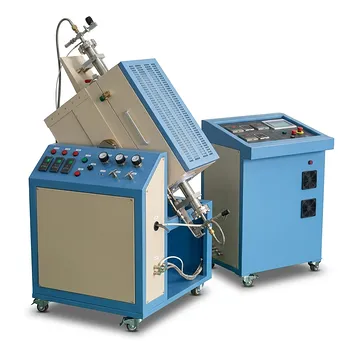
1100C High Pressure Rocking Tube Furnace with 2 Inch Super Alloy Processing Tube for Material Synthesis

High Temperature 1700C Vertical Tube Furnace for Powder Spherification and Material Sintering
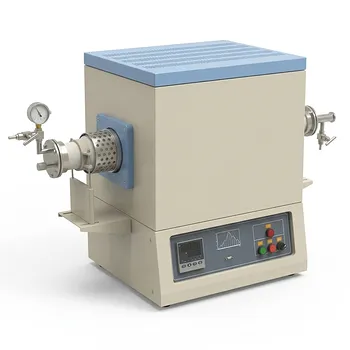
1750°C High Temperature Benchtop Vacuum Atmosphere Tube Furnace with Kanthal Super 1800 Heating Elements and 60mm Alumina Processing Tube
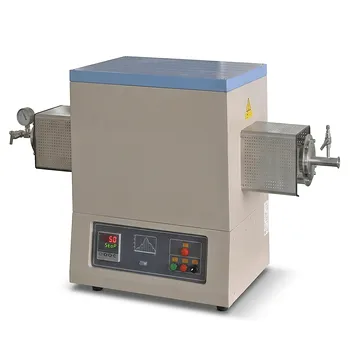
High Temperature 1700C Tube Furnace with 4 Inch OD Alumina Tube and Vacuum Sealing Flanges
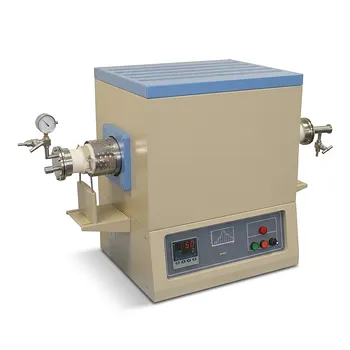
1700C High Temperature Alumina Tube Furnace with 18 Inch Heated Zone and Vacuum Sealing Flanges

1700C Hydrogen Gas Tube Furnace with 60mm Alumina Process Tube and Integrated Hydrogen Safety Detector

High Temperature 1700C Benchtop Tube Furnace with 5 Inch Heating Zone High Purity Alumina Tube and Vacuum Sealing Flanges
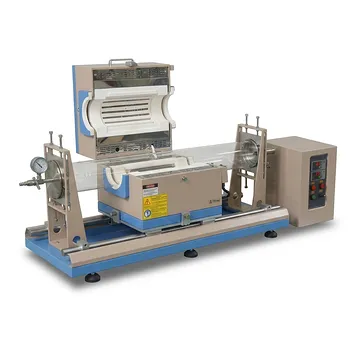
1200C High Temperature 5 Inch Sliding Tube Furnace for Rapid Thermal Processing RTP and Wafer Annealing

High Temperature 1700C Six Zone Split Tube Furnace with Alumina Tube and Water Cooled Flanges
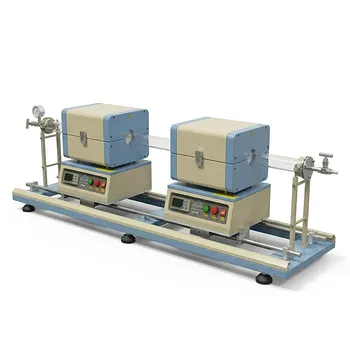
1200C Max Dual Sliding Tube Furnace with 50 mm Tube Flanges for CVD
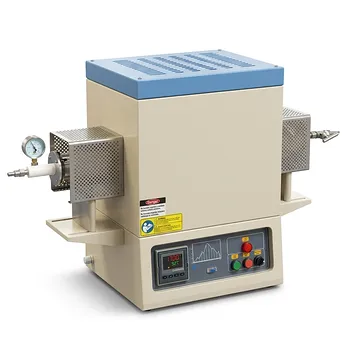
High Temperature Three Zone Tube Furnace 1700C with Alumina Tube and Water Cooled Flanges