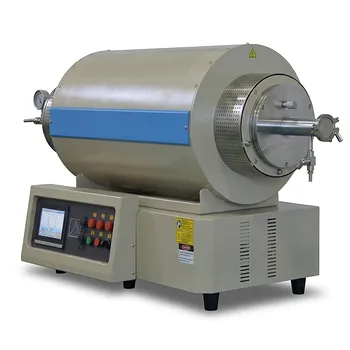
Why is a nitrogen purging step necessary before performing carbonization treatment in an atmosphere tube furnace? Tips
Updated 3 months ago
Eliminating residual oxygen through nitrogen purging is a non-negotiable prerequisite for carbonization to prevent the destructive effects of oxidative ablation. This step ensures that the furnace chamber is entirely cleared of air before temperatures rise, protecting the precursor material from spontaneous combustion. Without this inert environment, the carbon yield is significantly reduced, and the structural integrity of the resulting material is often irreparably compromised.
Core Takeaway: Nitrogen purging transforms the furnace environment from reactive to inert, ensuring that high-temperature processing leads to anaerobic pyrolysis rather than material loss through oxidative combustion.
The Critical Role of Oxygen Removal
Preventing Oxidative Ablation
Even trace amounts of oxygen during the high-temperature stage can cause oxidative ablation of the precursor materials. This process chemically erodes the surface morphology of fibers and structures, leading to severe physical defects in the final product.
Maximizing Carbon Conversion Efficiency
An oxygen-free environment is essential for high carbon conversion efficiency. If oxygen is present, a significant portion of the carbon source will react to form CO or CO2 gases instead of converting into the desired solid carbon skeleton.
Insulating Against Spontaneous Combustion
As temperatures reach the 400°C to 1000°C range, many organic precursors reach their auto-ignition temperature. Nitrogen purging ensures that these materials undergo anaerobic pyrolysis—a thermal decomposition in the absence of oxygen—rather than simple burning.
Protecting Structural and Chemical Integrity
Preserving Micro and Nano-Morphology
Advanced materials, such as one-dimensional hollow tubes or two-dimensional nanosheets, are highly susceptible to thermal erosion. Maintaining an inert atmosphere protects these delicate architectures from being destroyed by reactive oxygen species at peak temperatures.
Facilitating Stable Chemical Doping
For applications involving nitrogen-doped hard carbon, the presence of oxygen can interfere with the thermal rearrangement of atoms. A nitrogen-rich environment allows for controlled graphitization and the stable integration of heteroatoms like nitrogen and phosphorus into the carbon lattice.
Removal of Pyrolysis By-products
The continuous flow of nitrogen during and after the initial purge serves to carry away volatile by-products like CO, CO2, and tars. This ensures that the gas-phase environment remains stable, preventing secondary reactions that could contaminate the carbon surface.
Understanding the Trade-offs
Nitrogen Purity vs. Material Quality
Using low-purity nitrogen can be a "silent killer" for sensitive experiments. If the gas contains even minor oxygen impurities, the surface of the carbon may still undergo micro-oxidation, which increases surface oxygen groups but might unintentionally reduce electrical conductivity.
Flow Rate and Thermal Gradients
While a high flow rate ensures a rapid purge, it can introduce thermal gradients within the tube furnace. Excessive cooling from cold nitrogen gas can lead to non-uniform carbonization, potentially resulting in structural stress or cracking in the final material.
Gas Consumption and Costs
Achieving a "strictly oxygen-free" environment requires significant volumes of high-purity gas, especially in larger furnaces. Balancing the purge duration with the volume of the chamber is necessary to optimize costs without risking the integrity of the thermochemical cracking process.
How to Apply This to Your Project
Before initiating your heating cycle, ensure your system is fully sealed and the nitrogen flow has displaced at least 3-5 times the volume of the furnace chamber.
- If your primary focus is Maximum Yield: Prioritize a slow, thorough pre-purge at room temperature to ensure every pocket of residual air is removed before the material reaches 400°C.
- If your primary focus is Structural Integrity: Maintain a consistent, low-velocity nitrogen flow throughout the entire heating and cooling cycle to prevent oxygen back-diffusion.
- If your primary focus is Chemical Purity: Use ultra-high purity (99.999%) nitrogen to prevent unintended doping or oxidation, ensuring the resulting products are derived solely from pure thermochemical cracking.
Proper atmospheric control is the defining factor that separates controlled carbonization from uncontrolled material degradation.
Summary Table:
| Key Function | Benefit for Carbonization | Risk if Omitted |
|---|---|---|
| Oxygen Removal | Prevents oxidative ablation & burning | Total material loss or erosion |
| Environment Control | Enables stable anaerobic pyrolysis | Low carbon yield (CO/CO2 formation) |
| Morphology Protection | Preserves micro and nano-structures | Structural collapse of precursors |
| By-product Removal | Flushes out volatile tars and gases | Secondary reactions/surface contamination |
| Atmospheric Purity | Facilitates stable chemical doping | Unintended oxidation or impurity levels |
Achieve Flawless Carbonization with THERMUNITS
Precision atmospheric control is the difference between successful material synthesis and costly degradation. THERMUNITS is a leading manufacturer of high-temperature laboratory equipment for material science and industrial R&D. We provide the advanced thermal processing solutions required to maintain the ultra-pure, inert environments essential for your research.
Our comprehensive range of equipment includes:
- Atmosphere & Vacuum Tube Furnaces for precise gas-controlled carbonization.
- Muffle, Rotary, and Hot Press Furnaces for diverse heat treatment needs.
- CVD/PECVD Systems and Vacuum Induction Melting (VIM) furnaces.
- Specialized Dental Furnaces, Thermal Elements, and Electric Rotary Kilns.
Don't let oxygen impurities compromise your carbon yield. Contact our technical experts at THERMUNITS today to find the perfect thermal solution for your lab and ensure the structural integrity of your advanced materials.
References
- Maxime Parot, Tatjana Stevanović. Effect of Iron Chloride Addition on Softwood Lignin Nano-Fiber Stabilization and Carbonization. DOI: 10.3390/polym16060814
Mentioned Products
- Vertical 1700C Vacuum and Atmosphere Tube Furnace with 80mm Alumina Tube
- 1200C Hybrid Muffle and Tube Furnace for Material Research with Dual Atmosphere Control Quartz Tubes
- 1200°C Atmosphere Controlled Automatic Bottom Loading Furnace with 6 Inch Quartz Tube
- Compact Hybrid Muffle and Tube Furnace for 1000C Controlled Atmosphere Laboratory Material Sintering
- Compact Vertical Split Quartz Tube Furnace with Stainless Steel Vacuum Flanges for Rapid Thermal Quenching and Controlled Atmosphere Material Processing
People Also Ask
- How is an industrial-grade vertical tube furnace utilized in smelting leaching residues? Enhance Metal Recovery Efficiency
- What is the function of a laboratory-grade vertical tube furnace in fast pyrolysis? Optimize Composite Research.
- How does a vertical tube furnace facilitate thermoelectric alloy melting? Precision synthesis for material homogeneity.
- Why is a thermocouple sensor indispensable for monitoring the vertical tube furnace during gallium oxide nanowire production? Optimize VLS Growth
- What are the advantages of using a vertical tube furnace for crucible experiments simulating steel-slag interactions?

Tech Team · ThermUnits
Last updated on Jun 02, 2026
Related Products

Vertical 1700C Vacuum and Atmosphere Tube Furnace with 80mm Alumina Tube
1200C Hybrid Muffle and Tube Furnace for Material Research with Dual Atmosphere Control Quartz Tubes
1200°C Atmosphere Controlled Automatic Bottom Loading Furnace with 6 Inch Quartz Tube
Compact Hybrid Muffle and Tube Furnace for 1000C Controlled Atmosphere Laboratory Material Sintering

Compact Vertical Split Quartz Tube Furnace with Stainless Steel Vacuum Flanges for Rapid Thermal Quenching and Controlled Atmosphere Material Processing

Three Zone Tube Furnace with 11 Inch or 15 Inch Quartz Tube and Hinged Flanges for Vacuum Atmosphere Heat Treatment
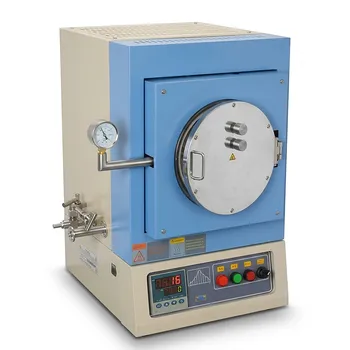
1100°C High Temperature Quartz Chamber Furnace 8 Inch OD with 7.6 Liter Capacity and Vacuum Atmosphere Capability
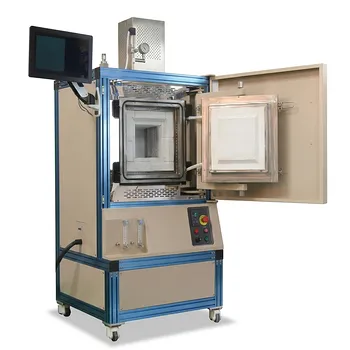
High Temperature Hydrogen Atmosphere Box Furnace 1650C Max Reducing Environment Material Synthesis System 8x8x8 Chamber

High Temperature 1700C Vertical Tube Furnace for Powder Spherification and Material Sintering

Compact High Temperature 1600C Tube Furnace with 50mm Alumina Tube and Vacuum Flanges for Material Sintering

High Temperature 1700C Tube Furnace with High Vacuum Turbomolecular Pump System and Multi Channel Mass Flow Controller Gas Mixer

High Temperature 1700C Six Zone Split Tube Furnace with Alumina Tube and Water Cooled Flanges

1800C High Temperature Compact Vacuum Tube Furnace with 60mm OD Alumina Tube and Kanthal MoSi2 Heating Elements

1100C Tube Furnace with Vacuum Flange and Programmable Temperature Controller for Material Science and Industrial Heat Treatment

High Temperature 1700C Benchtop Tube Furnace with 5 Inch Heating Zone High Purity Alumina Tube and Vacuum Sealing Flanges

1200C High Throughput Multi Channel Tube Furnace with 50mm Quartz Tubes for Annealing and Material Phase Diagram Research
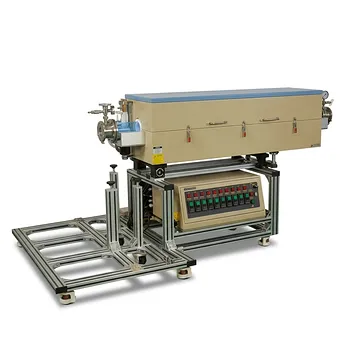
Ten Zone Multi Orientation Laboratory Tube Furnace for 1200C High Temperature Gradient Thermal Processing

High Temperature Automated 5 Inch Tube Furnace for Autonomous Material Research and Advanced Laboratory R&D

1700C Hydrogen Gas Tube Furnace with 60mm Alumina Process Tube and Integrated Hydrogen Safety Detector