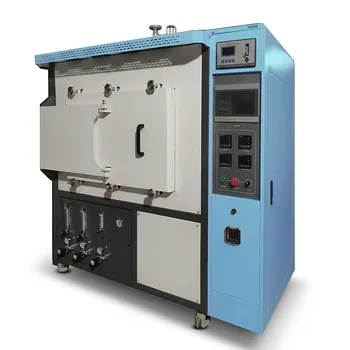
Why is a vacuum pump utilized for atmosphere annealing of TiO2? Achieve Precise Defect Engineering & Material Purity
Updated 3 months ago
Establishing a pristine reaction environment is the fundamental reason a vacuum pump is utilized prior to the atmosphere annealing of titanium dioxide ($TiO_2$). By exhausting residual air and moisture, the system prevents uncontrolled oxidation and side reactions that would otherwise compromise the material’s purity and its specific electronic properties, such as the formation of oxygen vacancies.
Core Takeaway: Pre-evacuation eliminates atmospheric contaminants to ensure that the subsequent annealing process—typically aimed at "defect engineering"—is driven solely by the introduced process gases rather than unpredictable residual oxygen.
The Necessity of a Controlled Chemical Environment
Eliminating Atmospheric Interference
Titanium and its oxides exhibit significantly increased chemical activity at high temperatures. If residual oxygen remains in the furnace, it will react with the $TiO_2$ surface, preventing the intended reduction process and leading to inconsistent material phases.
Establishing a Pure Starting Point
The vacuum pump reduces the internal pressure to a range often between 5 Pa and 10⁻² Pa. This deep evacuation ensures that the "background" environment is neutral, allowing the introduced reducing or inert gases to dictate the reaction kinetics without competition from atmospheric impurities.
Preventing Water Vapor Complications
Residual moisture in a non-evacuated system can dissociate at high temperatures. The resulting oxygen and hydrogen can cause point defects or lead to "hydrogen embrittlement" in related metallic components, potentially damaging the structural integrity of the sample or the reaction vessel.
Mechanics of Oxygen Vacancy Engineering
Enabling Targeted Reduction
Many $TiO_2$ annealing processes aim to create oxygen vacancies and Ti³⁺ centers, which are critical for enhancing photocatalytic performance. A vacuum-cleansed environment ensures that the reducing gas (such as a $H_2/Ar$ mixture) can effectively strip oxygen atoms from the lattice without them being immediately replaced by atmospheric oxygen.
Promoting Charge Carrier Efficiency
By precisely controlling the oxygen-deficient environment through evacuation and subsequent gas introduction, engineers can reduce the recombination rate of photogenerated electron-hole pairs. This optimization is only possible when the "oxygen partial pressure" is strictly regulated from a zero-baseline established by the vacuum pump.
Ensuring Phase Purity
Incomplete evacuation can lead to the formation of unintended oxide layers or the over-oxidation of precursors. Utilizing a vacuum pump followed by cyclic gas displacement (purging) ensures that the final $TiO_2$ product maintains high crystallinity and the specific stoichiometric ratio required for its intended application.
Understanding the Trade-offs and Technical Challenges
The Cost of High-Vacuum Integrity
Achieving the ultra-low pressures required for high-purity annealing requires sophisticated pumping stacks and vacuum-tight seals. Any minor leak during the evacuation phase can introduce "oxygen gain," effectively nullifying the benefits of the vacuum process and leading to batch-to-batch inconsistency.
Processing Time vs. Material Purity
The time required to reach a deep vacuum can be significant, especially in large-scale industrial furnaces. While rapid evacuation is desirable for throughput, rushing this stage can leave pockets of trapped gas in porous samples, leading to increased porosity or surface defects during the high-temperature phase.
Potential for Precursor Volatilization
In some specific chemical vapor deposition (CVD) or annealing setups, applying a vacuum too early or too aggressively might cause certain volatile precursors to sublimate prematurely. The vacuum level must be carefully balanced against the vapor pressure of the materials involved in the reaction.
How to Optimize Your Evacuation Strategy
Applying These Principles to Your Process
- If your primary focus is photocatalytic activity: Prioritize a deep vacuum ($<10$ Pa) followed by a nitrogen or argon purge to ensure the stable formation of $Ti^{3+}$ active sites.
- If your primary focus is structural integrity: Use cyclic evacuation and displacement to thoroughly remove moisture, which prevents hydrogen-induced degradation of the titanium matrix.
- If your primary focus is high-throughput production: Implement a multi-stage pumping system (roughing pump to turbo-molecular pump) to minimize the time required to reach a pure starting environment.
Mastering the pre-annealing vacuum stage transforms a volatile chemical reaction into a precise and repeatable engineering process.
Summary Table:
| Key Benefit | Role in TiO2 Atmosphere Annealing |
|---|---|
| Oxygen Removal | Prevents uncontrolled oxidation and ensures specific electronic properties. |
| Moisture Elimination | Avoids hydrogen embrittlement and unwanted point defects at high temperatures. |
| Defect Engineering | Enables targeted creation of oxygen vacancies and Ti³⁺ centers for photocatalysis. |
| Phase Purity | Ensures consistent stoichiometry and high crystallinity through cyclic gas displacement. |
| Environment Control | Establishes a neutral "background" for precise gas-driven reaction kinetics. |
Elevate Your Material Research with THERMUNITS
Precise atmosphere control starts with superior thermal engineering. As a leading manufacturer of high-temperature laboratory equipment, THERMUNITS provides the advanced vacuum and furnace technology required for high-purity TiO2 processing and material science R&D.
Our comprehensive range includes:
- Atmosphere & Vacuum Furnaces for precise oxygen vacancy engineering.
- Tube & Muffle Furnaces designed for uniform heat treatment.
- CVD/PECVD Systems for sophisticated thin-film and coating applications.
- Specialized Solutions: Rotary kilns, Hot Press furnaces, and Vacuum Induction Melting (VIM) systems.
Whether you are optimizing photocatalytic performance or ensuring phase purity, our equipment delivers the reliability your research demands.
Ready to optimize your thermal process? Contact our experts today to find the perfect solution for your laboratory or industrial R&D needs.
References
- Junwu Zhu, Mengxia Ji. Graphite Carbon Nitride Accelerating Interfacial Electron Transfer of Defect-Rich TiO2 for N2 Photofixation. DOI: 10.3390/catal15010019
Mentioned Products
- Rapid Thermal Processing Furnace 1100C Atmosphere Controlled Bottom Loading RTP System for Wafer Annealing and Catalysis Research
- Rapid Thermal Processing Atmosphere Controlled Bottom Loading Furnace 1100C with 50C Per Second Heating Rate for Wafer Annealing
- Compact Atmosphere Controlled Rapid Thermal Processing RTP Furnace with 4 Inch ID Quartz Tube 1100C
- High Temperature Vertical Atmosphere Controlled Furnace with Automatic Bottom Loading and 1700°C Capacity for Advanced Material Research
- High Temperature Oxygen and Inert Atmosphere Controlled Furnace 8 Liter 1700C Sintering System for Advanced Materials RD
People Also Ask
- What role does a SiC-coated graphite susceptor play in H2Se selenization? Boost RTP Thermal Uniformity & Film Purity.
- What are the functional advantages of an RTP system for surface deposition? Enhance Heterojunction Interface Integrity
- Why is an atmosphere-controlled annealing furnace required for the post-treatment of synthesized KTiOPO4 thin films? KTP
- What are the advantages of RTPR for Pd1/PU catalyst synthesis? Achieve superior single-atom dispersion and stability.
- Why is 1100°C in situ annealing required after LZO and DTO deposition? Achieve High-Quality Thin Film Synthesis

Tech Team · ThermUnits
Last updated on Jun 02, 2026
Related Products
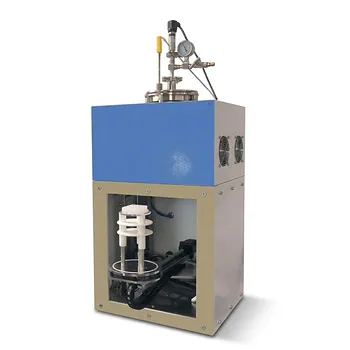
Rapid Thermal Processing Furnace 1100C Atmosphere Controlled Bottom Loading RTP System for Wafer Annealing and Catalysis Research
Rapid Thermal Processing Atmosphere Controlled Bottom Loading Furnace 1100C with 50C Per Second Heating Rate for Wafer Annealing
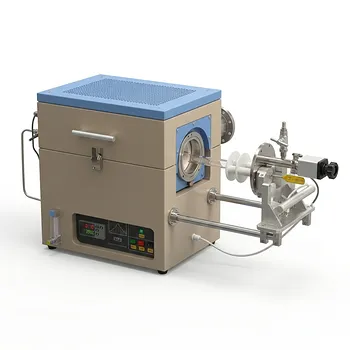
Compact Atmosphere Controlled Rapid Thermal Processing RTP Furnace with 4 Inch ID Quartz Tube 1100C
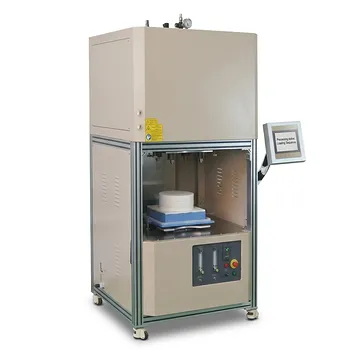
High Temperature Vertical Atmosphere Controlled Furnace with Automatic Bottom Loading and 1700°C Capacity for Advanced Material Research
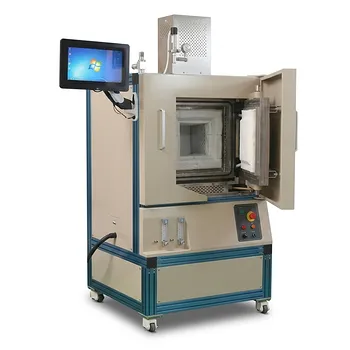
High Temperature Oxygen and Inert Atmosphere Controlled Furnace 8 Liter 1700C Sintering System for Advanced Materials RD
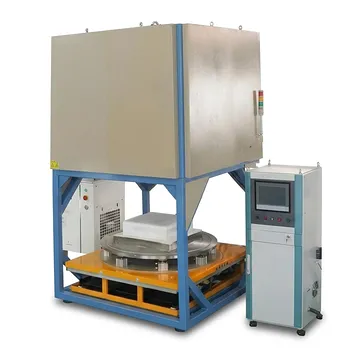
Bottom Loaded Inert Gas Atmosphere Box Furnace 1400C Maximum Temperature 125L High Capacity Laboratory Heat Treatment System
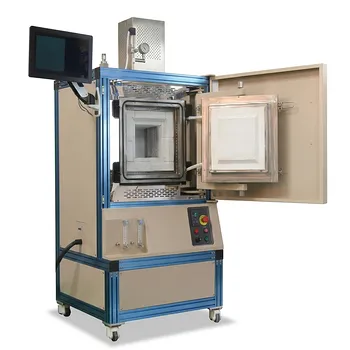
High Temperature Hydrogen Atmosphere Box Furnace 1650C Max Reducing Environment Material Synthesis System 8x8x8 Chamber