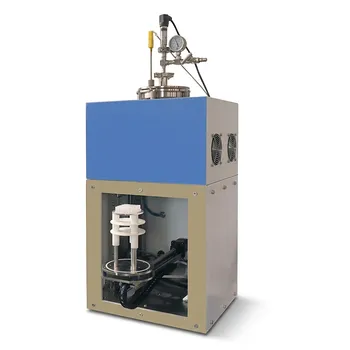
Why is air annealing at 350 °C necessary for MnO2/3D PG cathodes? Optimize Catalyst Activity and Electrode Performance.
Updated 3 months ago
The 350 °C air annealing step is the definitive transition from an inactive precursor to a high-performance catalytic electrode. This specific thermal treatment converts manganese precursors into the highly active beta-MnO2 crystalline phase while simultaneously establishing the interfacial contact required to minimize energy losses during battery operation.
Annealing at 350 °C is a dual-purpose optimization step that triggers a phase transformation into crystalline beta-MnO2 and secures the catalyst to the 3D porous graphene support. This process is critical for ensuring high catalytic activity and reducing polarization across the electrode.
The Crystallographic Transformation of Manganese Dioxide
Conversion to the Beta-MnO2 Phase
Initially, electrochemical deposition often leaves manganese in a precursor or amorphous state. The 350 °C environment provides the specific thermal energy required to rearrange these atoms into a crystalline beta-MnO2 structure.
Maximizing Catalytic Activity
Crystallinity is a primary driver of performance in battery cathodes. The beta-phase is preferred in this context because its specific lattice arrangement provides the high catalytic activity necessary for efficient oxygen reduction and evolution reactions.
Optimization of the Electrode Interface
Ensuring Tight Interfacial Contact
The transition from a precursor to a crystalline solid during heating causes the catalyst to bond more effectively with the three-dimensional porous graphene (3D PG). This "tight contact" ensures that electrons can move freely between the graphene current collector and the MnO2 active sites.
Minimizing Electrochemical Polarization
Weak contact between a catalyst and its support creates high resistance, leading to significant polarization during charge and discharge cycles. By using annealing to fuse the interface, the system experiences lower voltage drops and higher overall energy efficiency.
Understanding the Trade-offs and Constraints
Temperature Sensitivity
While 350 °C is ideal for MnO2 phase conversion, it is a relatively low temperature compared to the 3000 °C required for the initial graphitization of carbon materials. This specific window is chosen to optimize the catalyst without damaging the underlying graphene lattice or causing the MnO2 to over-sinter.
Atmospheric Requirements
The presence of air (oxygen) during this annealing step is non-negotiable for MnO2. Unlike the inert argon environments used for high-temperature graphene repair, the oxygen in the air maintains the proper oxidation state of the manganese throughout its phase transition.
How to Apply This to Your Project
When optimizing 3D porous graphene cathodes for catalytic performance, the post-deposition treatment must be precisely calibrated to the material's chemical requirements.
- If your primary focus is maximizing discharge capacity: Ensure the annealing temperature reaches the full 350 °C to guarantee complete conversion to the high-activity beta-MnO2 phase.
- If your primary focus is long-term cycle stability: Focus on the ramp rate of the annealing process to ensure the tightest possible contact between the catalyst and the 3D PG support, which prevents catalyst detachment.
- If your primary focus is reducing internal resistance: Verify that the annealing atmosphere is sufficiently oxidative to prevent the formation of lower-conductivity manganese sub-oxides.
Precise thermal control at 350 °C transforms a simple composite into a highly efficient, integrated catalytic system ready for demanding electrochemical applications.
Summary Table:
| Optimization Factor | Impact on MnO2/3D PG Cathode |
|---|---|
| Crystallographic Phase | Converts amorphous precursors into highly active beta-MnO2. |
| Interfacial Contact | Ensures tight bonding between MnO2 and graphene for electron flow. |
| Electrochemical Polarization | Minimizes internal resistance and voltage drops during operation. |
| Thermal Environment | Air/Oxygen atmosphere maintains proper manganese oxidation states. |
Maximize Your Material Performance with THERMUNITS
Precise thermal control at 350 °C is the difference between an inactive precursor and a high-performance catalytic electrode. THERMUNITS is a leading manufacturer of high-temperature laboratory equipment for material science and industrial R&D. We offer a comprehensive range of thermal processing solutions—including Muffle, Atmosphere, Tube, and Vacuum furnaces, as well as CVD/PECVD systems—specifically designed to meet the rigorous demands of battery research and heat treatment.
Whether you are developing 3D porous graphene cathodes or advanced catalysts, our equipment provides the uniform heating and atmospheric precision your project requires. Contact us today to find the ideal furnace for your research!
References
- Yanna Liu, Xiao Liang. Binder-Free Three-Dimensional Porous Graphene Cathodes via Self-Assembly for High-Capacity Lithium–Oxygen Batteries. DOI: 10.3390/nano14090754
Mentioned Products
- Rapid Thermal Processing Atmosphere Controlled Bottom Loading Furnace 1100C with 50C Per Second Heating Rate for Wafer Annealing
- 1200C Five Side Heating Muffle Furnace with Sliding Door 125L Volume High Temperature Heat Treatment System for Large Scale Sintering and Annealing
- Large Bench Top 1700C High Temperature Muffle Furnace with 19L Chamber for Advanced Material Sintering and Annealing
- High Temperature Cold Wall Vacuum Furnace for Advanced Material Sintering and Annealing 1600C Heating Area 200x200x300mm
- High Temperature 1000C Vacuum Furnace with 8 Inch ID Chamber for Material Sintering and Research Annealing
People Also Ask
- What role does a SiC-coated graphite susceptor play in H2Se selenization? Boost RTP Thermal Uniformity & Film Purity.
- What are the advantages of using a Bottom-Loading High-Temperature Furnace in Barium Titanate Fast Firing? Superior Microstructure
- What are the functional advantages of an RTP system for surface deposition? Enhance Heterojunction Interface Integrity
- Why is an atmosphere-controlled annealing furnace required for the post-treatment of synthesized KTiOPO4 thin films? KTP
- What is the purpose of coating ceramic sheets with platinum paste? Achieve Stable High-Temp Ohmic Contacts

Tech Team · ThermUnits
Last updated on Jun 03, 2026
Related Products
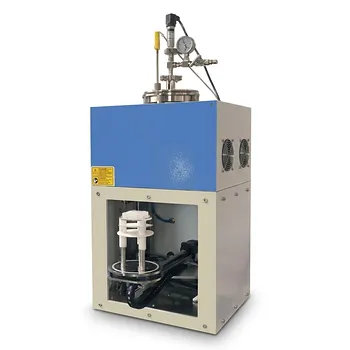
Rapid Thermal Processing Atmosphere Controlled Bottom Loading Furnace 1100C with 50C Per Second Heating Rate for Wafer Annealing
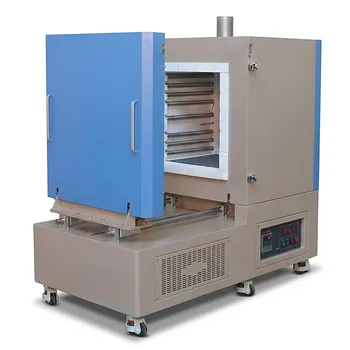
1200C Five Side Heating Muffle Furnace with Sliding Door 125L Volume High Temperature Heat Treatment System for Large Scale Sintering and Annealing
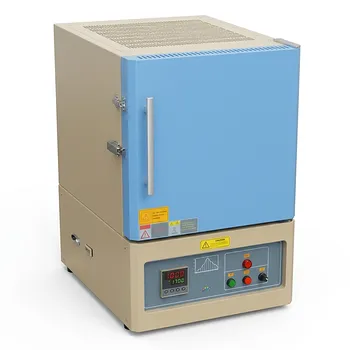
Large Bench Top 1700C High Temperature Muffle Furnace with 19L Chamber for Advanced Material Sintering and Annealing
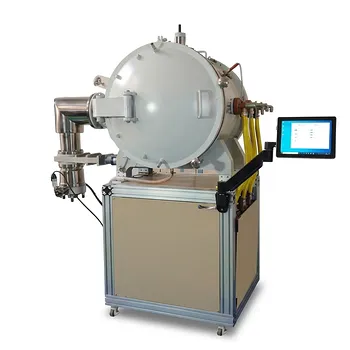
High Temperature Cold Wall Vacuum Furnace for Advanced Material Sintering and Annealing 1600C Heating Area 200x200x300mm
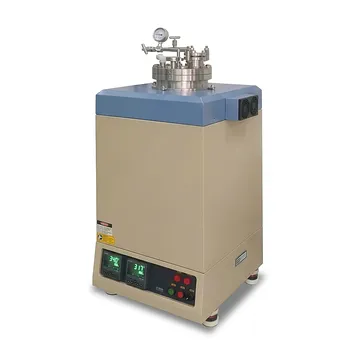
High Temperature 1000C Vacuum Furnace with 8 Inch ID Chamber for Material Sintering and Research Annealing
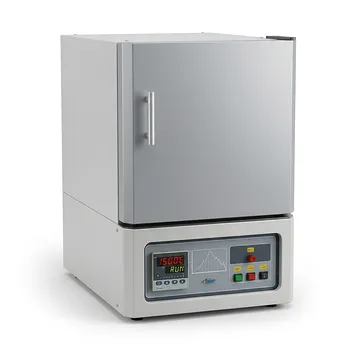
High Temperature 1500C Benchtop Muffle Furnace 3.6L Alumina Fiber Chamber Programmable Controller Sintering Annealing Carbonization Thermal Processing System
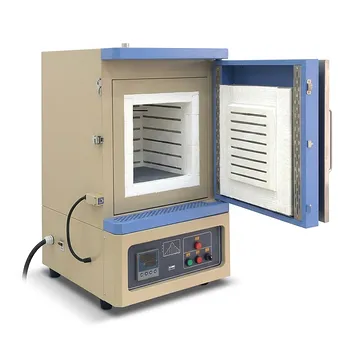
Five Side Heating Muffle Furnace High Purity Alumina Fiber 27L Chamber 1200C High Temperature Thermal Processing System for Sintering Annealing and Materials Research
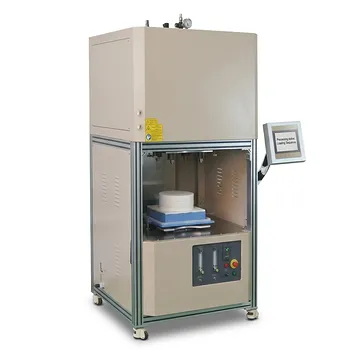
High Temperature Vertical Atmosphere Controlled Furnace with Automatic Bottom Loading and 1700°C Capacity for Advanced Material Research
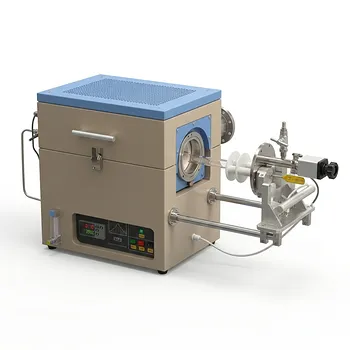
Compact Atmosphere Controlled Rapid Thermal Processing RTP Furnace with 4 Inch ID Quartz Tube 1100C
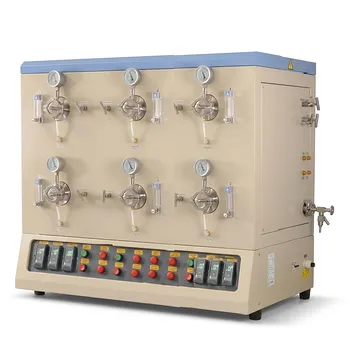
1200C High Throughput Multi Channel Tube Furnace with 50mm Quartz Tubes for Annealing and Material Phase Diagram Research
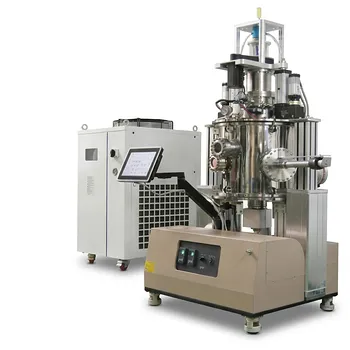
950C Rapid Thermal Processing Furnace for 12 Inch Wafer CSS Coating with Rotating Substrate Holder
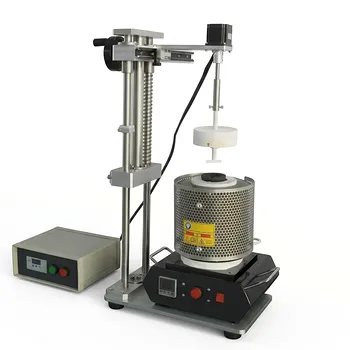
1100C Crucible Melting Furnace with Stirring Function for Glovebox and Air Sensitive Alloy Research
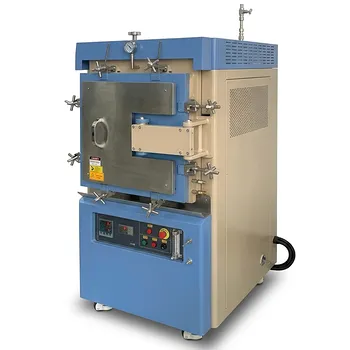
Atmosphere Controlled Muffle Furnace 1700C Maximum Temperature 80L High Capacity Vacuum Inert Gas Box Furnace
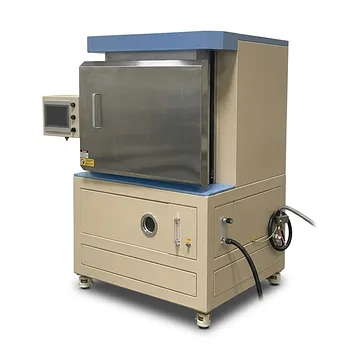
1650C High Temperature Atmosphere Controlled Box Furnace with 65L Chamber for Advanced Material Sintering and Industrial Heat Treatment
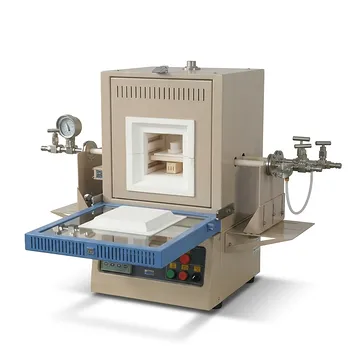
1700C Compact Hybrid Furnace with Dual Layer Box Sintering and Controlled Atmosphere Alumina Tubes
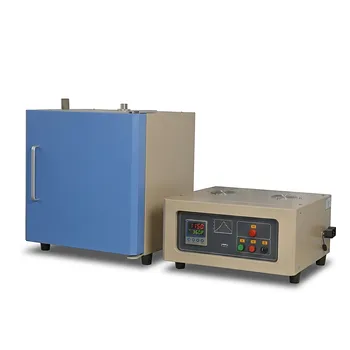
High Temperature Muffle Furnace with Alloy Chamber for Debinding and Sintering Applications
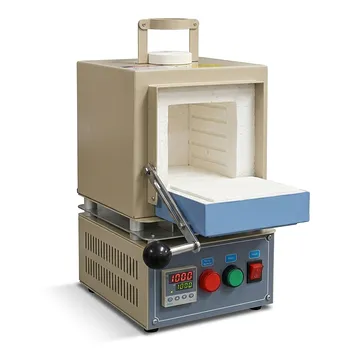
Compact 1000C Muffle Furnace with Programmable Controller and 2 Inch Top Port for Vacuum and Atmosphere Material Research

Three Zone Tube Furnace with 11 Inch or 15 Inch Quartz Tube and Hinged Flanges for Vacuum Atmosphere Heat Treatment
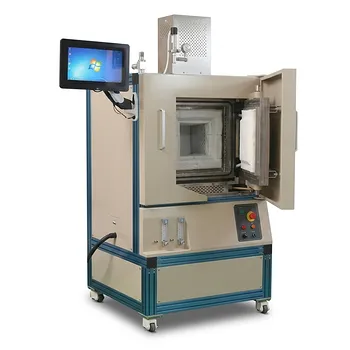
High Temperature Oxygen and Inert Atmosphere Controlled Furnace 8 Liter 1700C Sintering System for Advanced Materials RD