Why is an alumina boat used for Bi-MOF carbonization? The Key to Producing High-Purity Bi@C Composites
Updated 3 months ago
Alumina boats are the industry standard for Bi-MOF carbonization because they provide a chemically inert and thermally stable environment essential for producing high-purity Bismuth-Carbon (Bi@C) composites. During the heating process—which typically ranges from 600°C to 800°C—the boat acts as a "neutral" stage, ensuring that the container itself does not introduce impurities or react with the metallic bismuth or the carbon matrix. This stability is critical for researchers who require precise control over the final material properties without risk of container-induced contamination.
Core Takeaway: Alumina boats are selected for Bi-MOF carbonization primarily for their high-temperature chemical inertness and thermal shock resistance, ensuring the final Bi@C composite remains pure and the container remains structurally sound through repeated heating cycles.
Maintaining Chemical Purity and Material Integrity
Prevention of Unwanted Chemical Reactions
At the high temperatures required for MOF pyrolysis, many materials become reactive. Alumina (Al2O3) is exceptionally stable and does not react with Bi-MOF precursors or the resulting pyrolysis products. This ensures that the bi-metallic sites or bismuth nanoparticles remain untainted by the container material.
Ensuring High-Purity Bismuth-Carbon Composites
The primary goal of carbonization is to create a clean Bi@C composite. Because alumina is chemically inert, it prevents the leaching of impurities into the sample, which is vital for applications like electrocatalysis or energy storage where trace contaminants can ruin performance.
Resistance to Adhesion and Sample Loss
During the transition of Metal-Organic Frameworks into carbon structures, the material can become "sticky" or undergo melting phases. Alumina's surface properties prevent adhesion between the sample and the container, allowing for the complete recovery of the produced material after the furnace cools.
Structural Stability Under Thermal Stress
Exceptional Refractoriness
Carbonization often reaches temperatures that would soften or deform lesser materials. Alumina boats possess high refractoriness, meaning they maintain their physical shape and strength even when approaching 1000°C, well above the 600°C–800°C range needed for Bi-MOFs.
Thermal Shock Resistance
Rapid heating and cooling cycles can cause many ceramics to crack. High-purity alumina is engineered for thermal shock resistance, allowing the boat to withstand the temperature fluctuations inherent in laboratory muffle furnaces without structural failure.
Physical Integrity over Repeated Use
Unlike quartz or other materials that may devitrify over time, alumina boats are resistant to deformation. This durability makes them a cost-effective choice for repeated experimental runs, as they maintain a stable platform for the sample throughout their lifecycle.
Optimizing the Reaction Atmosphere
Efficient Removal of Gas-Phase Byproducts
The open "boat" geometry is critical for the carbonization of organic frameworks. This design allows small gas molecules generated during the decomposition of the MOF ligands to be efficiently swept away by the carrier gas (such as Nitrogen or Argon).
Maintenance of Reaction Equilibrium
By allowing for the free flow of gases, the alumina boat helps maintain the reaction equilibrium. This ensures that the carbonization process proceeds uniformly throughout the sample, leading to a more homogenous final product.
Understanding the Trade-offs and Limitations
Brittleness and Handling
While alumina is thermally robust, it is a ceramic and therefore intrinsically brittle. It cannot withstand significant mechanical impact or being dropped, necessitating careful handling by lab personnel during loading and cleaning.
Sensitivity to Specific Corrosives
Although inert to Bi-MOFs, alumina can be attacked by certain strong alkalis or hydrofluoric acid at high temperatures. It is essential to ensure that the MOF precursors do not contain specific caustic additives that might degrade the alumina matrix over time.
Porosity and Contamination Carryover
Lower-grade alumina boats can be slightly porous, which may lead to cross-contamination if the boat is used for different types of samples without rigorous cleaning. Using high-purity, low-porosity alumina is necessary to prevent "memory effects" from previous experiments.
How to Optimize Your Carbonization Setup
If you are beginning a carbonization project, your choice of container should align with your specific research requirements to ensure reproducibility.
- If your primary focus is Maximum Purity: Use a high-purity (99.9%) alumina boat to eliminate the risk of trace metal contamination during the 800°C soak.
- If your primary focus is High-Throughput Testing: Opt for standard alumina boats with high thermal shock resistance to allow for faster cooling and shorter cycle times between experiments.
- If your primary focus is Quantitative Yield Recovery: Ensure the boat surface is smooth and non-porous to prevent sample adhesion and facilitate 100% recovery of the Bi@C powder.
By prioritizing alumina for your container, you ensure that your experimental results are a reflection of your chemistry, not your equipment.
Summary Table:
| Key Feature | Benefit for Bi-MOF Carbonization | Performance Level |
|---|---|---|
| Chemical Inertness | Prevents sample contamination & ensures pure Bi@C | High (99.9% Al2O3) |
| Thermal Stability | Maintains shape during 600°C–800°C pyrolysis | Up to 1800°C |
| Shock Resistance | Withstands rapid heating/cooling in lab furnaces | Excellent |
| Surface Texture | Minimizes adhesion for 100% sample recovery | Low Porosity |
| Open Geometry | Facilitates efficient gas-phase byproduct removal | Optimized Flow |
Elevate Your Material Research with THERMUNITS Precision Solutions
At THERMUNITS, we expertise in manufacturing high-performance thermal equipment tailored for advanced material science and industrial R&D. Whether you are carbonizing Bi-MOFs or developing next-generation composites, our equipment ensures the accuracy and reliability your work demands.
Our Comprehensive Thermal Solutions Include:
- Laboratory Furnaces: High-purity Muffle, Vacuum, Atmosphere, Tube, and Rotary Furnaces.
- Advanced R&D Systems: CVD/PECVD systems, Vacuum Induction Melting (VIM), and Hot Press Furnaces.
- Specialized Industrial Equipment: Electric rotary kilns, Dental Furnaces, and high-grade Thermal Elements.
Ready to optimize your heat treatment process and achieve superior material integrity?
Contact Our Experts at THERMUNITS Today
References
- Xiaoqing Dong, Chaolin Li. Bismuth Nanoparticles Encapsulated in a Porous Carbon Skeleton as Stable Chloride-Storage Electrodes for Seawater Desalination. DOI: 10.3390/batteries10010035
Mentioned Products
- Three Zone Alumina Tube Furnace with Vacuum Flanges High Temperature 1700C Thermal Gradient CVD System
- Vertical Hybrid High Temperature Furnace 1500C Alumina Tube SOFC Fuel Cell Testing Laboratory Heat Treatment Research Equipment
- Twelve Zone 1700°C Multi Zone Split Tube Furnace with 100mm Alumina Processing Tube and Independent Temperature Gradient Control
- High Temperature Vertical Hybrid Furnace with Alumina Tube and SiC Heating for SOFC Coin Cell Testing and Atmosphere Processing
- High Temperature Compact Vacuum Tube Furnace 1750C Max 60mm OD Alumina Tube
People Also Ask
- What functions does a 3-zone tube furnace provide for graphene-coated alumina fibers? Expert CVD Heat Treatment Guide
- What role does a 3-zone tube furnace play in CCO ceramic conductivity testing? Ensure Isothermal Precision.
- What is the primary role of a High-Vacuum CVD tube furnace? Enabling Precise Semiconductor Micro-tripod Growth.
- Why is a high-temperature tube furnace with precise gas flow control required for CVD? Optimize Carbon Nanotube Synthesis
- How to Optimize CVD Systems with Alumina/BN Inner Tubes? Enhance Purity for High-Temperature Applications

Tech Team · ThermUnits
Last updated on Jun 02, 2026
Related Products
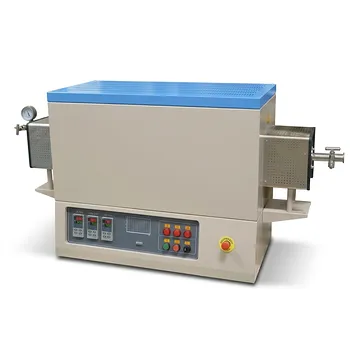
Three Zone Alumina Tube Furnace with Vacuum Flanges High Temperature 1700C Thermal Gradient CVD System
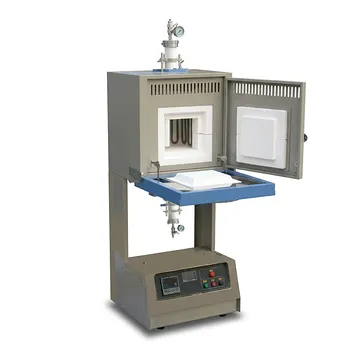
Vertical Hybrid High Temperature Furnace 1500C Alumina Tube SOFC Fuel Cell Testing Laboratory Heat Treatment Research Equipment
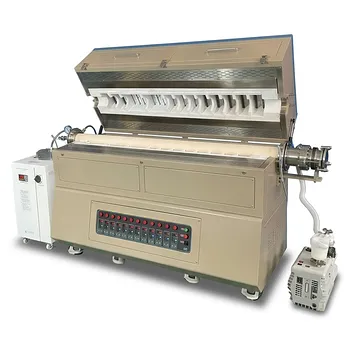
Twelve Zone 1700°C Multi Zone Split Tube Furnace with 100mm Alumina Processing Tube and Independent Temperature Gradient Control
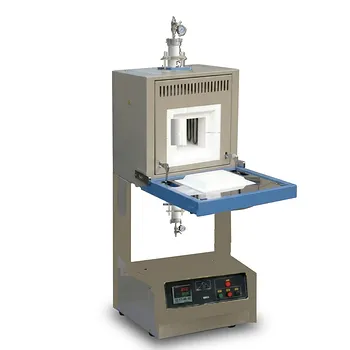
High Temperature Vertical Hybrid Furnace with Alumina Tube and SiC Heating for SOFC Coin Cell Testing and Atmosphere Processing
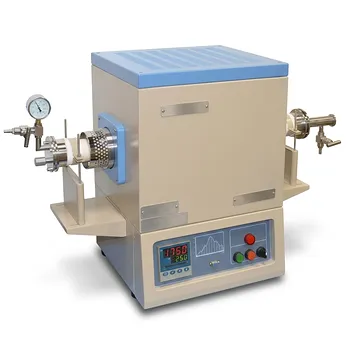
High Temperature Compact Vacuum Tube Furnace 1750C Max 60mm OD Alumina Tube
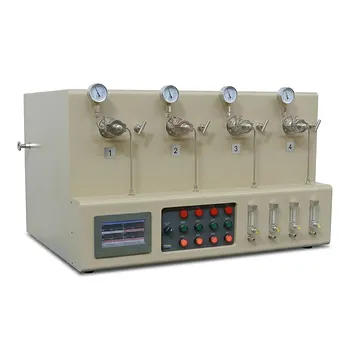
High Temperature 1700C 4 Channel Tube Furnace 1 Inch Alumina Tube for Hi-Throughput Annealing

1800C High Temperature Compact Vacuum Tube Furnace with 60mm OD Alumina Tube and Kanthal MoSi2 Heating Elements
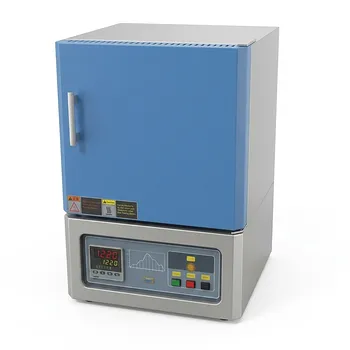
High Temperature Benchtop Muffle Furnace 1700C 10L Chamber Alumina Fiber Insulation MoSi2 Heating Elements
1750°C High Temperature Benchtop Vacuum Atmosphere Tube Furnace with Kanthal Super 1800 Heating Elements and 60mm Alumina Processing Tube
1700C Hydrogen Gas Tube Furnace with 60mm Alumina Process Tube and Integrated Hydrogen Safety Detector
1500C Compact Hydrogen Gas Tube Furnace with 2 Inch Alumina Tube and Hydrogen Detector
1800C Bench Top Muffle Furnace with Kanthal Super 1900 Heating Elements and 3.6L Alumina Fiber Chamber
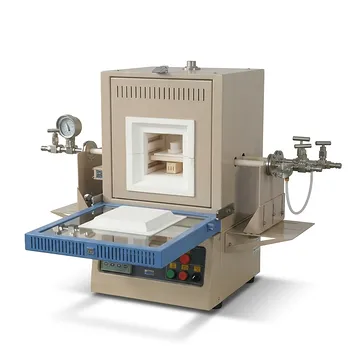
1700C Compact Hybrid Furnace with Dual Layer Box Sintering and Controlled Atmosphere Alumina Tubes
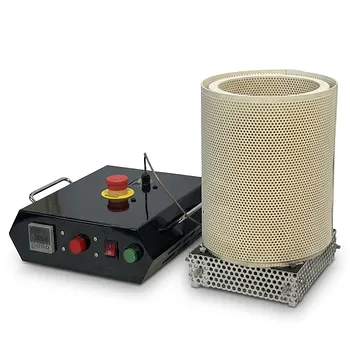
1250 C Compact Vertical Box Furnace for Glovebox Material Research Air Sensitive Samples
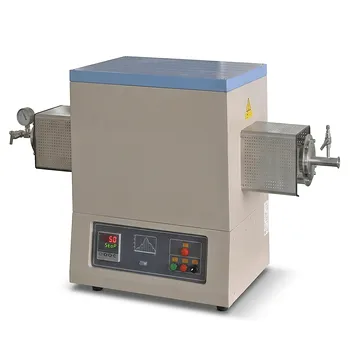
High Temperature 1700C Tube Furnace with 4 Inch OD Alumina Tube and Vacuum Sealing Flanges
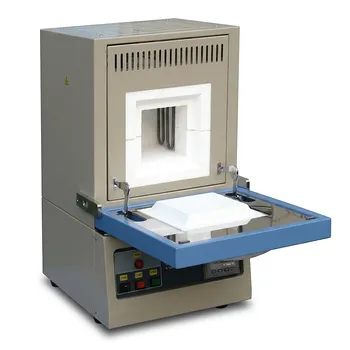
High Temperature 1800C Compact Muffle Furnace with Kanthal Super 1900 Heating Elements and 1.7L Alumina Chamber