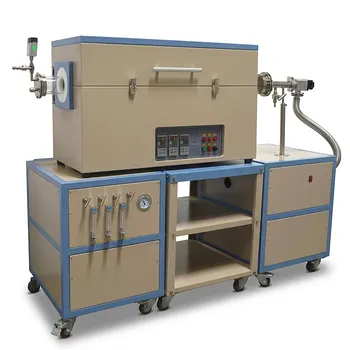
What role does a 3-zone tube furnace play in CCO ceramic conductivity testing? Ensure Isothermal Precision.
Updated 3 months ago
The high-precision three-zone tube furnace serves as the definitive thermal environment for characterizing Calcium Cobalt Oxide (CCO) ceramics. It provides a stable isothermal hot zone that eliminates temperature gradients across the sample ends. This ensures that electrical conductivity data, typically gathered through the four-probe method, accurately reflects the material’s intrinsic physical properties rather than artifacts of thermal fluctuation or uneven heating.
A three-zone tube furnace is essential for isolating the material's true electrical response by providing a gradient-free thermal field. This precision allows researchers to correlate conductivity with oxygen stoichiometry and phase transitions without the interference of spatial temperature variations.
Achieving Thermal Uniformity in High-Temperature Testing
The Necessity of Isothermal Conditions
Measuring the electrical conductivity of Calcium Cobalt Oxide requires a perfectly uniform temperature across the entire sample length. In standard single-zone furnaces, the ends of the sample often experience cooling due to heat loss at the tube openings.
A three-zone furnace solves this by using independent heating elements for the center and the ends. This configuration "buffers" the central sample zone, creating an isothermal environment where the temperature is identical at every point on the ceramic specimen.
Improving Four-Probe Method Accuracy
The four-probe method is the standard for testing CCO conductivity because it eliminates contact resistance. However, this method is highly sensitive to local temperature differences between the voltage probes.
By eliminating temperature gradients, the furnace ensures that the measured voltage drop is solely a function of the material's resistivity. This allows for the collection of high-fidelity data at specific, high-temperature setpoints without noise from thermal drift.
Regulating Oxygen Stoichiometry and Carrier Concentration
Managing Oxygen Vacancies and Hole Concentration
Calcium Cobalt Oxide is a complex oxide where electrical performance is tied to oxygen deficiency (δ). The furnace provides the high-temperature environment necessary for long-duration annealing (e.g., 100 hours at 1073 K).
This controlled heating regulates the concentration of hole carriers and the Seebeck coefficient. By precisely maintaining the thermal field in synthetic air or pure oxygen, the furnace allows researchers to optimize the material's thermoelectric efficiency.
Controlling Surface Exchange and Diffusion Kinetics
The furnace acts as a reactor for simulating oxygen surface exchange kinetics. Its stability is critical when measuring how conductivity responds to changes in oxygen partial pressure.
Accurate thermal control enables the quantitative regulation of oxygen diffusion into the nanoparticle lattice. This is vital for maintaining the stability of the Co3O4 shell or other core-shell intermediates during the testing process.
Characterizing Phase Transitions and Conduction Mechanisms
Capturing Phase Changes and Curie Temperature
Integrating a conductivity fixture into the furnace allows for in-situ measurements of electrical parameters. This setup is used to identify the Curie temperature and analyze how doping elements influence phase transitions.
The ability to maintain a stable thermal field at frequencies ranging from 100 Hz to 100 kHz is essential for dynamic analysis. This ensures that the phase behavior observed is a result of the material chemistry, not erratic heating.
Analyzing Arrhenius Characteristics
High-precision furnaces allow for very slow, controlled heating rates, such as 1 K/min. This granularity is necessary for impedance spectroscopy between 400 °C and 900 °C.
By recording conductivity as a function of temperature with minimal drift, researchers can accurately plot Arrhenius characteristics. This data is the key to identifying transitions between different conduction mechanisms within the CCO ceramic.
Understanding the Trade-offs
Complexity of PID Tuning
While three independent zones provide superior uniformity, they require complex PID (Proportional-Integral-Derivative) tuning. If the zones are not synchronized correctly, they can "fight" each other, leading to oscillations that are more destabilizing than a simple gradient.
Thermal Lag and Atmospheric Integrity
Even with high-precision controllers, there is an inherent thermal lag between the furnace thermocouples and the actual ceramic sample. Furthermore, maintaining high-temperature stability over 100-hour annealing cycles places extreme stress on vacuum seals and alumina tubes, risking atmospheric contamination that can skew conductivity results.
How to Apply This to Your Project
Recommendations Based on Research Goals
- If your primary focus is intrinsic material property validation: Use the three-zone configuration to strictly eliminate gradients, ensuring your four-probe data is free from spatial thermal bias.
- If your primary focus is thermoelectric optimization: Prioritize the furnace’s atmospheric control and long-term stability to precisely tune oxygen vacancies and carrier concentrations.
- If your primary focus is kinetic mechanism study: Utilize slow, linear ramp rates (e.g., 1 K/min) to capture the subtle transitions in Arrhenius plots and impedance spectra.
Precision in thermal management is the foundation upon which accurate electrical characterization of complex oxides is built.
Summary Table:
| Feature | Impact on CCO Ceramic Testing |
|---|---|
| Three-Zone Heating | Creates a gradient-free isothermal hot zone for accurate four-probe measurements. |
| Independent PID Control | Eliminates thermal drift and prevents temperature fluctuations across sample ends. |
| Atmospheric Integrity | Regulates oxygen stoichiometry, surface exchange kinetics, and carrier concentration. |
| Slow Ramp Rates (1 K/min) | Enables precise Arrhenius plots and characterization of subtle phase transitions. |
Elevate Your Material Research with THERMUNITS
As a global leader in high-temperature laboratory equipment, THERMUNITS provides the thermal precision required for advanced material science and industrial R&D. Whether you are characterizing complex oxides like CCO or developing new ceramics, our comprehensive range of Tube, Vacuum, Muffle, and Atmosphere furnaces, as well as CVD/PECVD systems and Hot Press solutions, ensures reliable, repeatable results.
Ready to optimize your heat treatment process?
Contact our technical experts today to find the perfect thermal solution for your lab!
References
- Katharina Kruppa, Armin Feldhoff. High‐performance thermoelectric calcium cobaltite nanoribbon ceramic via electrospinning and dual spark plasma texturing. DOI: 10.1111/jace.20198
Mentioned Products
- Three Zone Tube Furnace with 24 Inch Heating Length and Hinged Flange Quartz Tube System
- Three Zone Hydrogen Gas Tube Furnace with 82mm Superalloy Tube and Dual Hydrogen Detectors 1200C High Temperature Material Processing System
- 1100°C Three Zone Tube Furnace with 8.5 to 11 Inch OD Quartz Tube and Vacuum Flanges for Large Wafer Processing
- Three Zone Tube Furnace with 11 Inch or 15 Inch Quartz Tube and Hinged Flanges for Vacuum Atmosphere Heat Treatment
- High Temperature 1700C Three Zone Tube Furnace with Alumina Tube 50mm 60mm 80mm OD for Material Research and Industrial Heat Treatment
People Also Ask
- What is the primary function of a three-zone tube furnace in the synthesis process of corn-derived carbon nanotubes?
- What role does an industrial-grade three-zone tube furnace play in VOx@VACNT synthesis? Precision Phase-State Control
- Why Use a Three-Zone vs. Single-Zone Furnace for Fe-Ni-Cu Diffusion? Key Benefits for Lab Accuracy
- What advantages does a three-zone tube furnace offer for nanoparticle synthesis? Unlock Superior Thermal Precision.
- What are the technical advantages of using a three-zone tube furnace for MoS2 CVD growth? Achieve Precision Control

Tech Team · ThermUnits
Last updated on Jun 03, 2026
Related Products
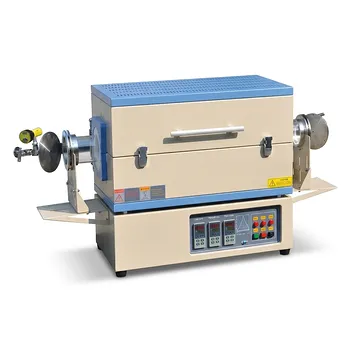
Three Zone Tube Furnace with 24 Inch Heating Length and Hinged Flange Quartz Tube System
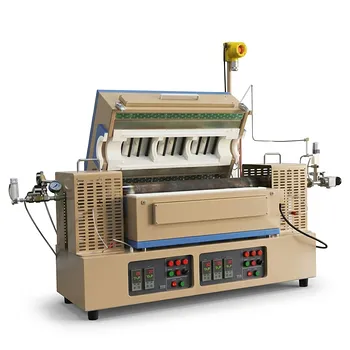
Three Zone Hydrogen Gas Tube Furnace with 82mm Superalloy Tube and Dual Hydrogen Detectors 1200C High Temperature Material Processing System
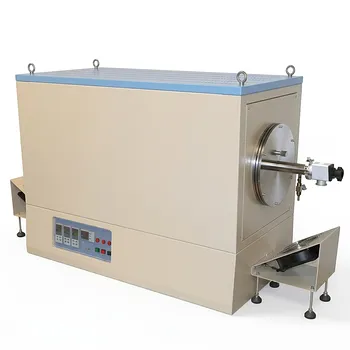
1100°C Three Zone Tube Furnace with 8.5 to 11 Inch OD Quartz Tube and Vacuum Flanges for Large Wafer Processing

Three Zone Tube Furnace with 11 Inch or 15 Inch Quartz Tube and Hinged Flanges for Vacuum Atmosphere Heat Treatment
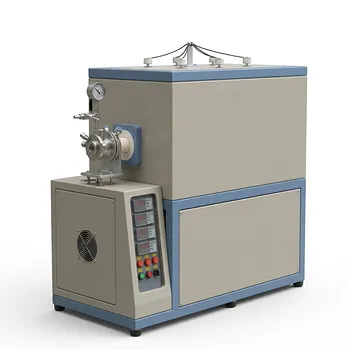
High Temperature 1700C Three Zone Tube Furnace with Alumina Tube 50mm 60mm 80mm OD for Material Research and Industrial Heat Treatment
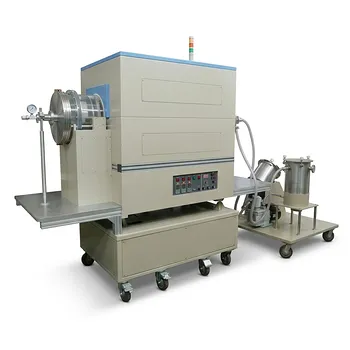
Three Zone Rotary Tube Furnace with Automatic Powder Feeding for Large Scale CVD Coating 1100C
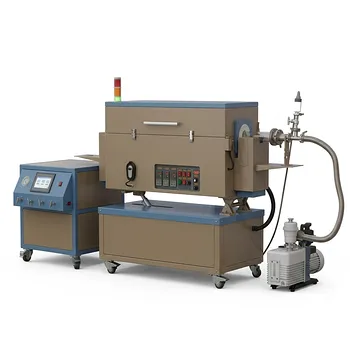
5 Inch Three Zone Rotary Tube Furnace with Integrated Gas Delivery System and 1200C Capability for Advanced Material CVD Processing
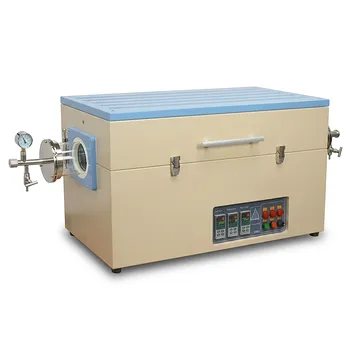
Three Zone Split Tube Furnace 36 Inch Heating Length High Temperature 1200C Material Research Furnace with Vacuum Flanges
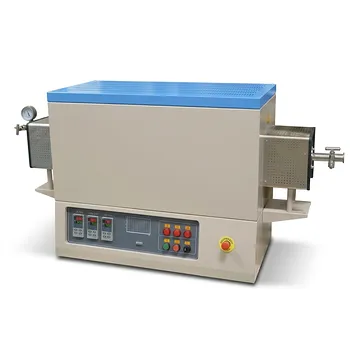
Three Zone Alumina Tube Furnace with Vacuum Flanges High Temperature 1700C Thermal Gradient CVD System
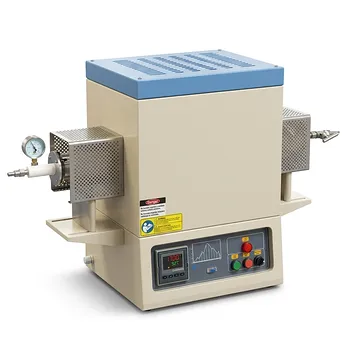
High Temperature Three Zone Tube Furnace 1700C with Alumina Tube and Water Cooled Flanges
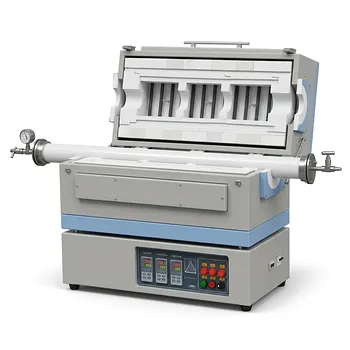
High Temperature 1500C Three Zone Split Tube Furnace with 80mm Alumina Tube and Vacuum Flange
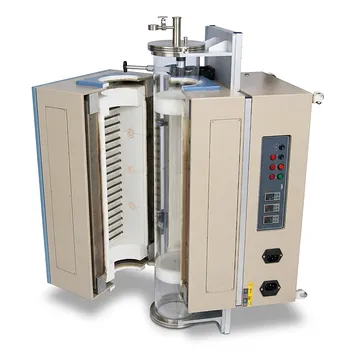
Large Vertical Three Zone Tube Furnace with 8 Inch or 11 Inch Quartz Tube and High Vacuum Flanges 1200C
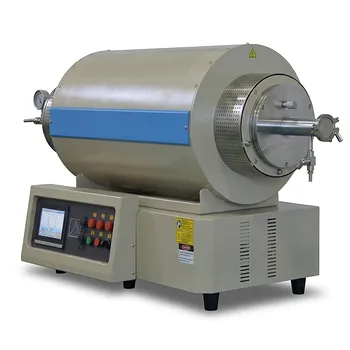
1200C Max Three Zone Tube Furnace 6 Inch OD Max with Tube and Flange
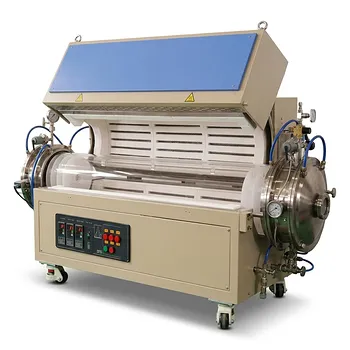
High Temperature Three Zone Split Tube Furnace 1200C Max 35.4 Inch Heating Length 8 Inch ID Tube
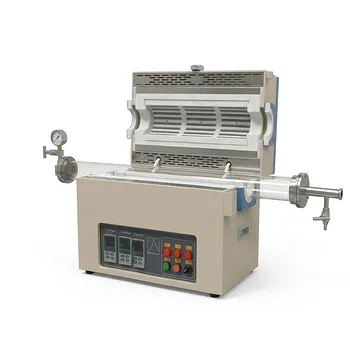
1200°C Three Zone Split Tube Furnace with 18 Inch Heating Length and Vacuum Flanges
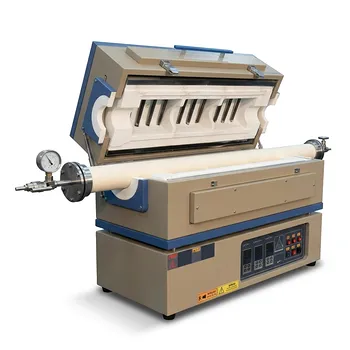
1600C Three Zone Split Tube Furnace with Alumina Tube and Vacuum Flange
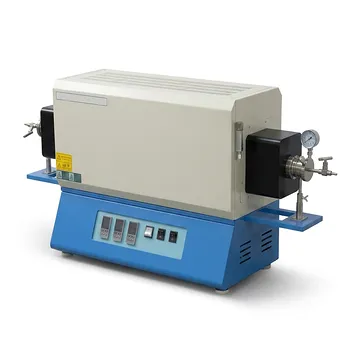
High Temperature Three Temperature Zone Tube Furnace for Advanced Material Science Sintering and Chemical Vapor Deposition Applications
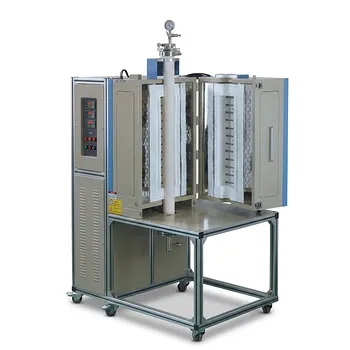
Three Zone Heating Split Vertical Tube Furnace 1700 High Temperature Vacuum Atmosphere Thermal Process System
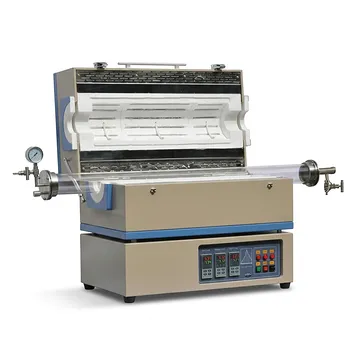
24 Inch Three Zone Split Tube Furnace with Optional Quartz Tube and Vacuum Flange System for High Temperature Material Synthesis