Why is an atmosphere-controlled tube furnace necessary for the sintering of iron-based biomaterials? Expert Guide
Updated 3 months ago
The necessity of an atmosphere-controlled tube furnace in iron-based biomaterial production lies in its ability to eliminate oxygen interference during high-temperature processing. For iron-based scaffolds, the furnace provides a specific hydrogen-reducing environment at 1120 °C that prevents the iron from oxidizing and actively removes existing oxide layers. This controlled environment is the critical factor that allows iron atoms to diffuse and bond, resulting in a high-strength, high-purity medical-grade material.
Core Takeaway: Atmosphere control is mandatory because iron reacts aggressively with oxygen at sintering temperatures; by providing a reducing environment, the furnace ensures the material achieves the structural integrity and chemical purity required for biocompatible applications.
Preventing Oxidation and Material Degradation
The Chemical Vulnerability of Iron at High Temperatures
When iron is heated to the 1120 °C required for sintering, it becomes highly reactive with any oxygen present in the environment. Without a controlled atmosphere, the iron powder would rapidly oxidize, forming a brittle ceramic layer instead of a cohesive metallic structure.
Active Surface Cleaning via Hydrogen Reduction
An atmosphere-controlled furnace does more than just block oxygen; it actively cleans the material. By introducing a hydrogen-reducing environment, the furnace facilitates a chemical reaction that "strips" existing oxide layers from the surface of the iron particles.
Establishing the Path for Atomic Diffusion
The removal of these oxide layers is essential for solid-phase sintering. Once the surfaces are clean, iron atoms can move freely across particle boundaries, allowing the individual grains to fuse into a solid, high-strength scaffold.
Achieving Structural Integrity and Biocompatibility
Maintaining High Material Purity
Biomaterials require extreme purity to ensure they do not cause adverse reactions when implanted in the human body. The airtight nature of the tube furnace prevents external contaminants from entering the hot zone, ensuring the final scaffold remains high-purity iron.
Precise Control of Iron Oxidation States
In many iron-based applications, maintaining the iron in a specific oxidation state (such as divalent Fe2+) is critical for the material's performance. The furnace allows for the precise regulation of gas ratios to ensure the iron does not transition into undesirable trivalent (Fe3+) phases.
Ensuring Consistent Porosity and Strength
For medical scaffolds, the balance between mechanical strength and porosity is delicate. The precise temperature curve and atmospheric stability of a tube furnace ensure that the skeletal structure of the biomaterial forms uniformly without premature combustion or structural collapse.
Understanding the Trade-offs
Equipment Complexity and Safety
Operating a hydrogen-reducing atmosphere requires sophisticated gas management systems to prevent leaks and manage flammability. This increases the operational complexity and safety requirements compared to standard air-fired furnaces.
Cost vs. Performance
While atmosphere-controlled furnaces are more expensive to purchase and operate, there is no viable alternative for iron-based biomaterials. Attempting to sinter these materials in a standard environment results in a complete failure of the material's mechanical properties.
Gas Consumption and Environment
Maintaining a constant flow of high-purity gases like hydrogen or nitrogen adds to the per-unit cost of the biomaterial. However, this is a necessary investment to prevent the formation of impurity phases that would compromise the implant's safety.
How to Apply This to Your Project
Recommendations for Material Processing
- If your primary focus is Maximum Structural Strength: Prioritize a furnace with a high-precision hydrogen delivery system to ensure the complete reduction of oxides, which is the foundation of a strong metallic bond.
- If your primary focus is Chemical Purity and Biocompatibility: Ensure the furnace utilizes a high-purity airtight quartz or ceramic tube to prevent any atmospheric nitrogen or oxygen from contaminating the iron matrix.
- If your primary focus is Phase Stability: Use a furnace that allows for the precise mixing of gases (like CO/CO2 or Argon) to maintain the exact oxygen partial pressure required for your specific iron isotope or alloy.
By masterfully controlling the thermal and chemical environment, you transform loose iron powder into a sophisticated, high-performance medical tool.
Summary Table:
| Key Requirement | Function in Sintering Process | Benefit to Final Biomaterial |
|---|---|---|
| Hydrogen Atmosphere | Actively reduces and removes surface oxide layers | Ensures atomic diffusion and high structural strength |
| Oxygen Exclusion | Prevents iron from reacting with air at 1120°C | Maintains metallic integrity; prevents brittle oxidation |
| Airtight Sealed Tube | Isolates the hot zone from external contaminants | Guarantees medical-grade purity and biocompatibility |
| Precise Gas Ratios | Controls iron oxidation states (e.g., Fe2+ vs Fe3+) | Ensures consistent chemical properties and phase stability |
Elevate Your Material Research with THERMUNITS
Precision is the foundation of high-performance biomaterials. At THERMUNITS, we understand that atmosphere control isn't just a feature—it's a necessity for your success. As a leading manufacturer of high-temperature laboratory equipment, we provide the advanced thermal processing solutions required for complex iron-based sintering and industrial R&D.
Our comprehensive range includes Atmosphere-Controlled Tube Furnaces, Vacuum Induction Melting Furnaces (VIM), CVD/PECVD systems, and Hot Press Furnaces, all designed to ensure uniform heating and contaminant-free environments. Whether you are working on medical scaffolds or advanced material science, our equipment—including Muffle, Rotary, and Dental furnaces—is built to meet the most rigorous standards.
Why choose THERMUNITS?
- Superior Atmosphere Control: Achieve the precise reducing environments needed to eliminate oxides.
- Industry-Leading Reliability: Our furnaces and thermal elements are engineered for high-purity R&D.
- Tailored Solutions: From electric rotary kilns to vacuum systems, we have the right tool for your specific application.
Don't let oxidation compromise your structural integrity. Contact our experts today to find the perfect thermal solution for your laboratory and take your material science to the next level.
References
- Martina Petráková, Renáta Oriňáková. Effect of Gentamicin-Loaded Calcium Phosphate Coating and Polymeric Coating on the Degradation Properties of Biodegradable Iron-Based Biomaterials. DOI: 10.1021/acsomega.4c06192
Mentioned Products
- 1650C High Temperature Atmosphere Controlled Box Furnace with 65L Chamber for Advanced Material Sintering and Industrial Heat Treatment
- Compact Hybrid Muffle and Tube Furnace for 1000C Controlled Atmosphere Laboratory Material Sintering
- High Temperature Vertical Atmosphere Controlled Furnace with Automatic Bottom Loading and 1700°C Capacity for Advanced Material Research
- 1500°C Atmosphere Controlled Rapid Heating Furnace for Material Science and Battery Powder Sintering
- High Temperature Tilting Rotary Tubular Furnace for Continuous Powder Thermal Processing and Controlled Atmosphere Sintering
People Also Ask
- What role does atmosphere control play in technical ceramics and glass? Master Material Purity and Precision
- What role does a high-temperature atmosphere furnace play in the direct electrochemical reduction of CO2? - Key Insights
- What is the role of a high-temperature box furnace in the solid-state synthesis of Europium-doped M3MgSi2O8 phosphors?
- What is the role of a high-temperature box furnace in Na3MnZr(PO4)3 synthesis? Engineering High-Performance NASICON.
- What is the role of a high-temperature atmosphere furnace in Co/Co0.85Se@NC synthesis? Optimize Catalyst Performance

Tech Team · ThermUnits
Last updated on Jun 02, 2026
Related Products
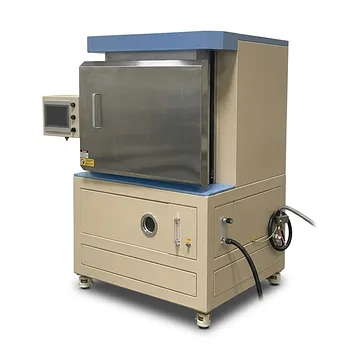
1650C High Temperature Atmosphere Controlled Box Furnace with 65L Chamber for Advanced Material Sintering and Industrial Heat Treatment
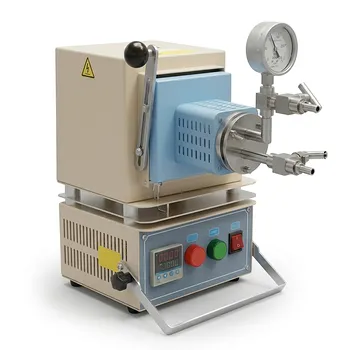
Compact Hybrid Muffle and Tube Furnace for 1000C Controlled Atmosphere Laboratory Material Sintering
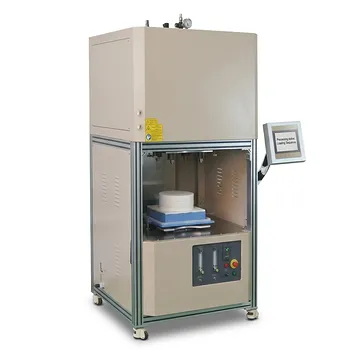
High Temperature Vertical Atmosphere Controlled Furnace with Automatic Bottom Loading and 1700°C Capacity for Advanced Material Research
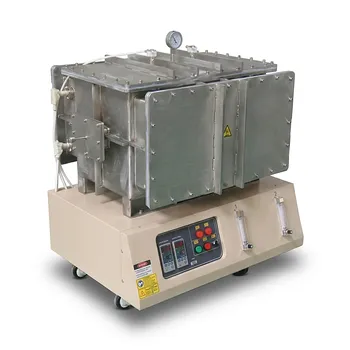
1500°C Atmosphere Controlled Rapid Heating Furnace for Material Science and Battery Powder Sintering
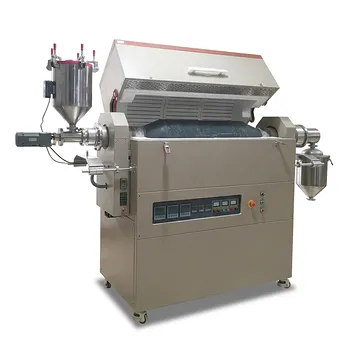
High Temperature Tilting Rotary Tubular Furnace for Continuous Powder Thermal Processing and Controlled Atmosphere Sintering
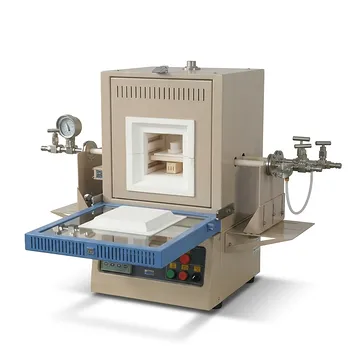
1700C Compact Hybrid Furnace with Dual Layer Box Sintering and Controlled Atmosphere Alumina Tubes
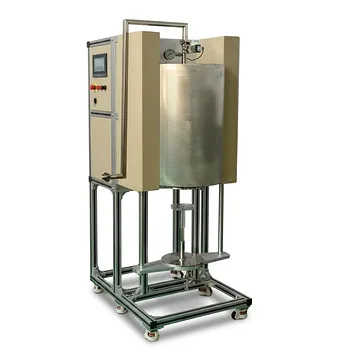
1200°C Atmosphere Controlled Automatic Bottom Loading Furnace with 6 Inch Quartz Tube
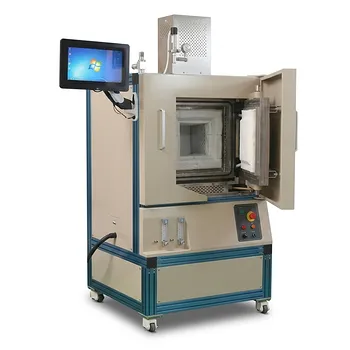
High Temperature Oxygen and Inert Atmosphere Controlled Furnace 8 Liter 1700C Sintering System for Advanced Materials RD
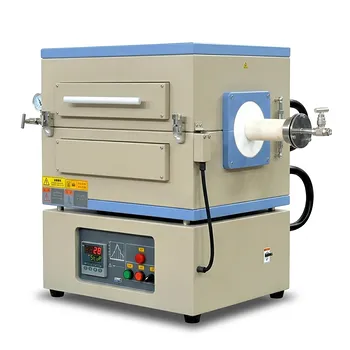
1500°C Split Tube Furnace with Alumina Tube and Vacuum Sealing Flanges for Material Research

High Temperature 1700C Vertical Tube Furnace for Powder Spherification and Material Sintering

Compact High Temperature 1600C Tube Furnace with 50mm Alumina Tube and Vacuum Flanges for Material Sintering
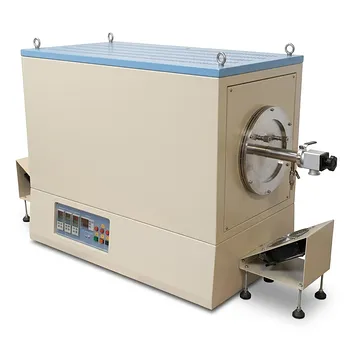
Four Zone Tube Furnace 1100C with 600mm Large Diameter Quartz Tube and Vacuum Flanges
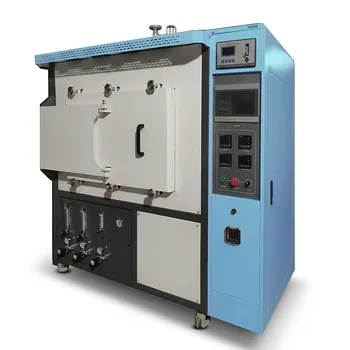
Roller Table Atmosphere Furnace 1500C High Temperature Battery Material Sintering System 112L Capacity
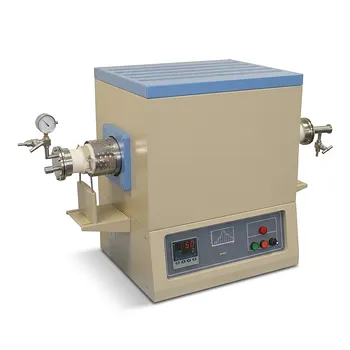
1700C High Temperature Alumina Tube Furnace with 18 Inch Heated Zone and Vacuum Sealing Flanges
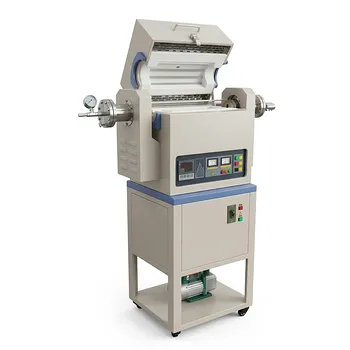
High Temperature Rotary Tilt Tubular Furnaces for Advanced Powder Sintering and Material Processing
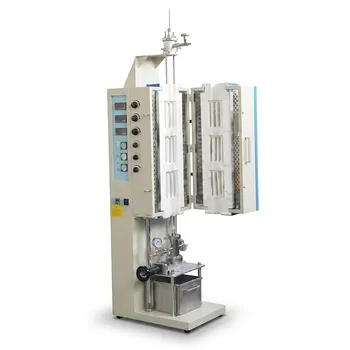
High Temperature Dual Zone Tube Furnace for Material Science Research and Professional Thermal Processing

Vertical 1700C Vacuum and Atmosphere Tube Furnace with 80mm Alumina Tube
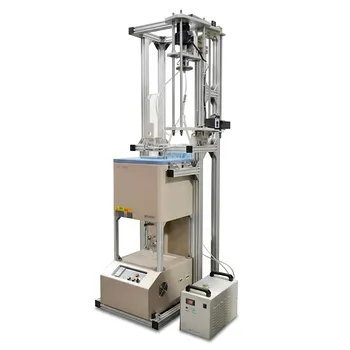
500C Vacuum Vertical Tube Furnace 84mm OD Sample Rotation Lifting System
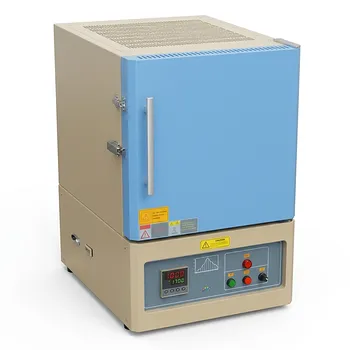
Large Bench Top 1700C High Temperature Muffle Furnace with 19L Chamber for Advanced Material Sintering and Annealing
