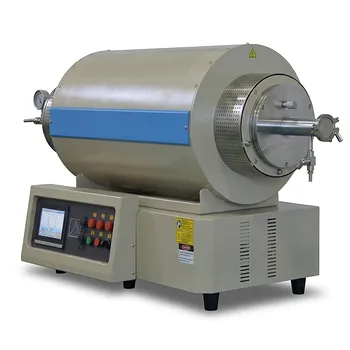
Why is an atmosphere tube furnace necessary during the carbonization stage of epoxy resin boards? Key to Precise Pyrolysis
Updated 3 months ago
The atmosphere tube furnace is the fundamental tool for carbonization because it creates a strictly controlled, oxygen-free environment that prevents the epoxy resin from burning. By replacing oxygen with high-purity nitrogen, the furnace allows the resin to undergo pyrolysis at high temperatures—typically around 600 °C—transforming the material into a stable, conductive carbon skeleton rather than reducing it to ash.
Core Takeaway: An atmosphere tube furnace is required to facilitate pyrolysis while preventing oxidative combustion. This process ensures the epoxy resin decomposes into a stable carbonized structure, maximizing carbon yield and preparing the material for subsequent chemical activation.
Preventing Oxidative Combustion
The Risk of High-Temperature Oxygen Exposure
When epoxy resin is heated to temperatures like 600 °C in the presence of oxygen, it undergoes rapid oxidative combustion. Instead of forming a carbon structure, the organic material reacts with oxygen and turns into ash and gaseous byproducts.
Creating an Inert Shield
The atmosphere tube furnace eliminates this risk by maintaining a continuous flow of high-purity nitrogen, often at a rate of 0.5 L/min. This inert gas displaces oxygen, ensuring that the thermal energy only breaks chemical bonds rather than fueling a fire.
Facilitating the Pyrolysis Process
Thermal Decomposition and Carbon Enrichment
During the carbonization stage, the furnace provides the precise heat necessary for pyrolysis, the chemical decomposition of organic materials. This process removes non-carbon elements—such as hydrogen and oxygen—and volatile impurities from the epoxy resin board.
Structural Rearrangement
As the organic components decompose, the remaining carbon atoms rearrange themselves into a stable, solid skeleton. This transformation is critical for establishing the electrical conductivity and mechanical integrity of the final carbon product.
Ensuring Precise Control and Uniformity
The Importance of Airtight Sealing
The tube furnace design is characterized by superior sealing capabilities, which are essential for maintaining a strictly airtight environment. Even minor oxygen leaks can compromise the integrity of the carbonized sample and lead to significant material loss.
Temperature Field Uniformity
Consistency is vital when treating epoxy resin boards to ensure the entire sample carbonizes at the same rate. The controlled heating zones within a tube furnace provide the temperature uniformity required for a complete and homogeneous thermal decomposition.
Understanding the Trade-offs
Flow Rate and Gas Consumption
Maintaining a strictly inert environment requires a constant supply of high-purity gas, which increases operational costs. If the flow rate is too low, residual oxygen may remain; if it is too high, it may cause temperature fluctuations or unnecessarily waste expensive gases.
Complexity of Sealing and Maintenance
Atmosphere furnaces require regular maintenance of O-rings and gas connections to prevent leaks. Any failure in the sealing system during a high-temperature run can lead to the total oxidation of the sample, potentially damaging the internal heating elements.
How to Apply This to Your Project
Recommendations for Effective Carbonization
- If your primary focus is maximizing carbon yield: Ensure your furnace is perfectly sealed and maintain a steady nitrogen flow of at least 0.5 L/min to prevent any oxidative loss.
- If your primary focus is structural integrity for activation: Use a slow heating ramp rate within the tube furnace to allow volatile components to escape without cracking the carbon skeleton.
- If your primary focus is electromagnetic performance: Target higher carbonization temperatures (up to 900 °C) to promote the rearrangement of carbon chains into a highly conductive fiber network.
By strictly controlling the atmospheric chemistry and thermal environment, you transform a simple resin board into a high-performance carbon material ready for advanced applications.
Summary Table:
| Feature | Function in Carbonization | Key Benefit |
|---|---|---|
| Inert Atmosphere | Displaces oxygen with high-purity Nitrogen | Prevents combustion and ash formation |
| Precise Heat Control | Facilitates pyrolysis at ~600°C+ | Ensures structural rearrangement of carbon |
| Airtight Sealing | Maintains a strictly oxygen-free environment | Maximizes carbon yield and sample purity |
| Thermal Uniformity | Provides consistent temperature fields | Achieves homogeneous thermal decomposition |
Elevate Your Research with THERMUNITS Thermal Solutions
As a leading manufacturer of high-temperature laboratory equipment for material science and industrial R&D, THERMUNITS understands the critical nature of atmosphere control in carbonization. We offer a comprehensive range of thermal processing solutions—including Atmosphere Tube Furnaces, Vacuum Furnaces, Muffle Furnaces, and CVD/PECVD systems—specifically engineered to provide the precision and reliability required for advanced heat treatment.
Whether you are processing epoxy resin boards or developing next-generation conductive materials, our equipment ensures maximum carbon yield and structural integrity. Contact us today to discuss your specific requirements and let our experts help you find the perfect furnace for your laboratory!
References
- Wenfeng Zhu, Jiaoxia Zhang. Activated Carbon Based on Recycled Epoxy Boards and Their Adsorption toward Methyl Orange. DOI: 10.3390/polym16121648
Mentioned Products
- Vertical 1700C Vacuum and Atmosphere Tube Furnace with 80mm Alumina Tube
- 1200C Hybrid Muffle and Tube Furnace for Material Research with Dual Atmosphere Control Quartz Tubes
- 1200°C Atmosphere Controlled Automatic Bottom Loading Furnace with 6 Inch Quartz Tube
- Compact Hybrid Muffle and Tube Furnace for 1000C Controlled Atmosphere Laboratory Material Sintering
- Compact Vertical Split Quartz Tube Furnace with Stainless Steel Vacuum Flanges for Rapid Thermal Quenching and Controlled Atmosphere Material Processing
People Also Ask
- How is an industrial-grade vertical tube furnace utilized in smelting leaching residues? Enhance Metal Recovery Efficiency
- What is the function of a laboratory-grade vertical tube furnace in fast pyrolysis? Optimize Composite Research.
- How does a vertical tube furnace facilitate thermoelectric alloy melting? Precision synthesis for material homogeneity.
- Why is a thermocouple sensor indispensable for monitoring the vertical tube furnace during gallium oxide nanowire production? Optimize VLS Growth
- What are the advantages of using a vertical tube furnace for crucible experiments simulating steel-slag interactions?

Tech Team · ThermUnits
Last updated on Jun 03, 2026
Related Products

Vertical 1700C Vacuum and Atmosphere Tube Furnace with 80mm Alumina Tube
1200C Hybrid Muffle and Tube Furnace for Material Research with Dual Atmosphere Control Quartz Tubes
1200°C Atmosphere Controlled Automatic Bottom Loading Furnace with 6 Inch Quartz Tube
Compact Hybrid Muffle and Tube Furnace for 1000C Controlled Atmosphere Laboratory Material Sintering

Compact Vertical Split Quartz Tube Furnace with Stainless Steel Vacuum Flanges for Rapid Thermal Quenching and Controlled Atmosphere Material Processing
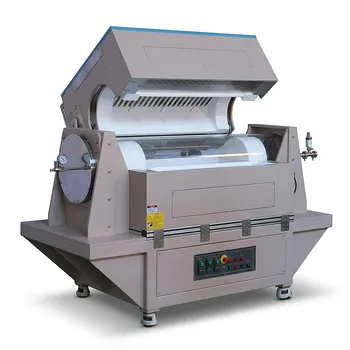
Three Zone Tube Furnace with 11 Inch or 15 Inch Quartz Tube and Hinged Flanges for Vacuum Atmosphere Heat Treatment
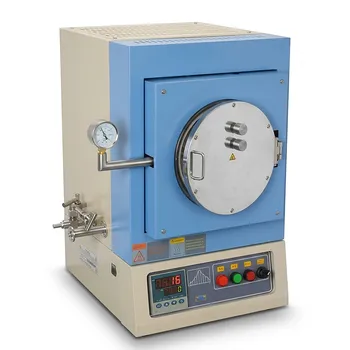
1100°C High Temperature Quartz Chamber Furnace 8 Inch OD with 7.6 Liter Capacity and Vacuum Atmosphere Capability
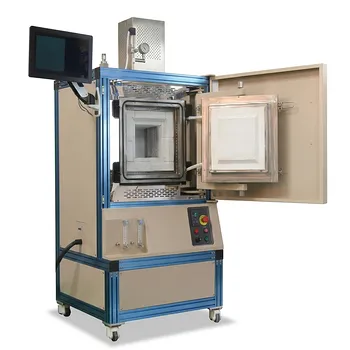
High Temperature Hydrogen Atmosphere Box Furnace 1650C Max Reducing Environment Material Synthesis System 8x8x8 Chamber

High Temperature 1700C Vertical Tube Furnace for Powder Spherification and Material Sintering

Compact High Temperature 1600C Tube Furnace with 50mm Alumina Tube and Vacuum Flanges for Material Sintering

High Temperature 1700C Tube Furnace with High Vacuum Turbomolecular Pump System and Multi Channel Mass Flow Controller Gas Mixer
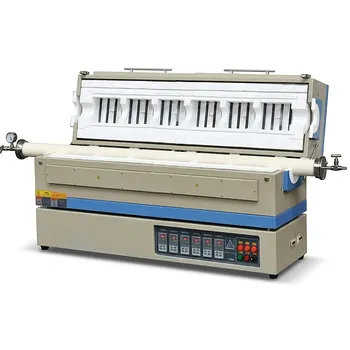
High Temperature 1700C Six Zone Split Tube Furnace with Alumina Tube and Water Cooled Flanges

1800C High Temperature Compact Vacuum Tube Furnace with 60mm OD Alumina Tube and Kanthal MoSi2 Heating Elements

1100C Tube Furnace with Vacuum Flange and Programmable Temperature Controller for Material Science and Industrial Heat Treatment

High Temperature 1700C Benchtop Tube Furnace with 5 Inch Heating Zone High Purity Alumina Tube and Vacuum Sealing Flanges
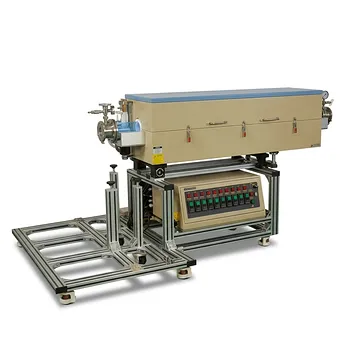
Ten Zone Multi Orientation Laboratory Tube Furnace for 1200C High Temperature Gradient Thermal Processing
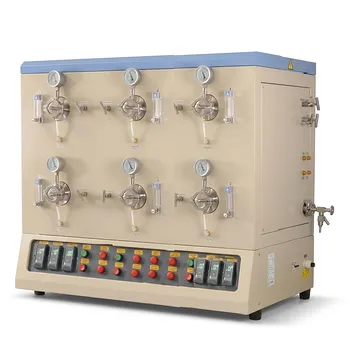
1200C High Throughput Multi Channel Tube Furnace with 50mm Quartz Tubes for Annealing and Material Phase Diagram Research

High Temperature Automated 5 Inch Tube Furnace for Autonomous Material Research and Advanced Laboratory R&D
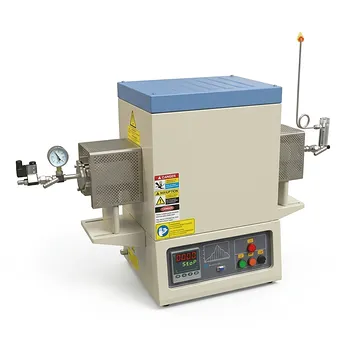
1700C Hydrogen Gas Tube Furnace with 60mm Alumina Process Tube and Integrated Hydrogen Safety Detector