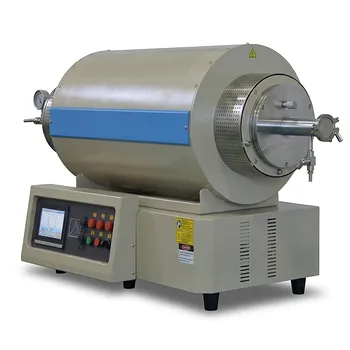
Why is an atmosphere tube furnace necessary for the nitrogen-protected sintering of Fe-N-C catalysts? Expert Guide.
Updated 3 months ago
The synthesis of high-performance Fe-N-C catalysts relies on the atmosphere tube furnace to provide a strictly controlled, oxygen-free thermal environment.
An atmosphere tube furnace is necessary because it maintains a stable, high-temperature inert gas flow (typically nitrogen) that prevents the oxidation of carbon and iron components during sintering at temperatures like 900°C. This specific environment is essential for the pyrolysis reaction that transforms precursors into active Fe-Nx coordination sites, which are the foundation of the catalyst's electrocatalytic activity.
The atmosphere tube furnace is the fundamental tool for Fe-N-C catalyst production because it decouples thermal processing from atmospheric interference. By providing precise temperature control and a consistent inert environment, it enables the formation of delicate Fe-Nx active sites while protecting the structural integrity of the carbon matrix.
Preventing Material Degradation Through Atmosphere Isolation
Protection Against Carbon Oxidation
At the high temperatures required for sintering (often 800°C to 900°C), carbon carriers are highly susceptible to oxidation if any oxygen is present. The atmosphere furnace isolates the material and replaces air with high-purity nitrogen, ensuring the carbon framework remains intact to provide necessary electrical conductivity.
Maintaining Metal Stoichiometry
Iron species can easily form inactive oxides or aggregate into large clusters when exposed to trace oxygen or moisture at high heat. The tube furnace creates a sealed environment that preserves the chemical stoichiometry of the iron source, allowing it to integrate correctly into the nitrogen-doped matrix.
Driving the Formation of Fe-Nx Active Sites
Facilitating Pyrolysis and Nitrogen Doping
The furnace provides the thermal energy needed to drive the chemical reaction between the iron source, nitrogen source, and carbon matrix. This process, known as pyrolysis, is what specifically creates the Fe-Nx coordination structures that serve as the catalytic centers for oxygen reduction reactions.
Suppression of Metal Aggregation
In a controlled reducing or inert atmosphere, the furnace helps prevent iron atoms from "clumping" together into inactive metallic particles. This is a prerequisite for constructing single-atom catalytic centers, where iron is highly dispersed and anchored within the nitrogen-doped carbon lattice.
Precision Control of Structural Evolution
Managing Heating Rates for Morphology
Atmosphere tube furnaces allow for the precise programming of heating rates and dwell times, which directly influence the final shape of the catalyst. Controlled heating is essential for inducing the formation of specific structures, such as nitrogen-doped carbon nanotubes or hollow nanorods, which improve mass transport.
Removal of Volatile Impurities
The continuous flow of inert gas within the tube furnace serves to carry away volatile decomposition products and polymer binders. This "sweeping" action ensures that the resulting catalyst is pure, highly porous, and possesses a high surface area available for electrochemical reactions.
Understanding the Trade-offs and Challenges
Gas Flow Dynamics and Uniformity
While the furnace provides an inert environment, the flow rate of nitrogen must be carefully calibrated. If the flow is too low, byproduct gases may linger and poison the catalyst; if it is too high, it may cause temperature fluctuations across the tube, leading to inconsistent batches.
Complexity vs. Traditional Muffle Furnaces
Unlike standard muffle furnaces, atmosphere tube furnaces require specialized gas handling systems and vacuum pumps to "backfill" the environment. This added complexity increases the operational overhead, but it is a non-negotiable requirement for air-sensitive Fe-N-C precursors that would otherwise combust in open air.
How to Apply This to Your Catalyst Synthesis
- If your primary focus is maximizing active site density: Ensure your furnace supports a high-purity nitrogen or ammonia (NH3) atmosphere to maximize the doping of nitrogen into the carbon lattice.
- If your primary focus is structural morphology (e.g., nanotubes): Prioritize a furnace with high-precision PID controllers to manage specific temperature ramp rates that favor growth over bulk carbonization.
- If your primary focus is preventing metal leaching: Use a strictly controlled reducing atmosphere (like 5% H2 in Ar) to ensure iron atoms are securely anchored in Fe-Nx sites rather than forming unstable surface oxides.
The atmosphere tube furnace is not merely a heater, but a sophisticated chemical reactor that defines the final performance and stability of the Fe-N-C catalyst.
Summary Table:
| Key Requirement | Role in Fe-N-C Catalyst Synthesis | Impact on Performance |
|---|---|---|
| Inert Atmosphere | Prevents carbon oxidation and iron aggregation | Maintains conductivity and stoichiometry |
| Precise Heat Control | Drives pyrolysis and nitrogen doping | Formation of delicate Fe-Nx active sites |
| Controlled Gas Flow | Removes volatile decomposition products | Ensures high purity and surface area |
| Variable Ramp Rates | Manages structural evolution/morphology | Optimizes mass transport (e.g., nanotubes) |
Elevate Your Material Research with THERMUNITS
Precise atmospheric control is the difference between a high-performance catalyst and a failed batch. THERMUNITS is a leading manufacturer of high-temperature laboratory equipment designed specifically for material science and industrial R&D.
We provide a comprehensive range of thermal processing solutions tailored for advanced catalyst synthesis, including:
- Atmosphere & Tube Furnaces: Perfect for nitrogen-protected sintering and pyrolysis.
- Vacuum & CVD/PECVD Systems: For advanced thin-film and carbon nanomaterial growth.
- Specialized Equipment: Muffle, Rotary, Hot Press, and Dental furnaces, alongside Induction Melting (VIM) and high-quality Thermal Elements.
Whether you are constructing single-atom catalytic centers or developing large-scale industrial materials, our equipment delivers the stability and precision your research demands.
Ready to optimize your heat treatment process?
Contact our technical experts today to find the perfect furnace solution for your laboratory.
References
- Yu Guo, Qiangfeng Xiao. Investigation of non-precious metal cathode catalysts for direct borohydride fuel cells. DOI: 10.1039/d4ra02767a
Mentioned Products
- Vertical 1700C Vacuum and Atmosphere Tube Furnace with 80mm Alumina Tube
- 1200C Hybrid Muffle and Tube Furnace for Material Research with Dual Atmosphere Control Quartz Tubes
- 1200°C Atmosphere Controlled Automatic Bottom Loading Furnace with 6 Inch Quartz Tube
- Compact Hybrid Muffle and Tube Furnace for 1000C Controlled Atmosphere Laboratory Material Sintering
- Compact Vertical Split Quartz Tube Furnace with Stainless Steel Vacuum Flanges for Rapid Thermal Quenching and Controlled Atmosphere Material Processing
People Also Ask
- How is an industrial-grade vertical tube furnace utilized in smelting leaching residues? Enhance Metal Recovery Efficiency
- What is the function of a laboratory-grade vertical tube furnace in fast pyrolysis? Optimize Composite Research.
- How does a vertical tube furnace facilitate thermoelectric alloy melting? Precision synthesis for material homogeneity.
- Why is a thermocouple sensor indispensable for monitoring the vertical tube furnace during gallium oxide nanowire production? Optimize VLS Growth
- What are the advantages of using a vertical tube furnace for crucible experiments simulating steel-slag interactions?

Tech Team · ThermUnits
Last updated on Jun 03, 2026
Related Products

Vertical 1700C Vacuum and Atmosphere Tube Furnace with 80mm Alumina Tube
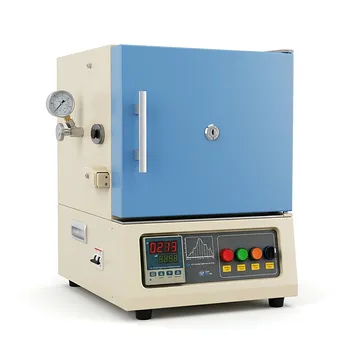
1200C Hybrid Muffle and Tube Furnace for Material Research with Dual Atmosphere Control Quartz Tubes
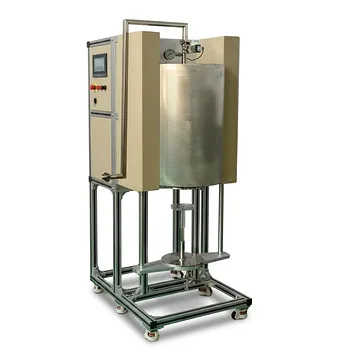
1200°C Atmosphere Controlled Automatic Bottom Loading Furnace with 6 Inch Quartz Tube
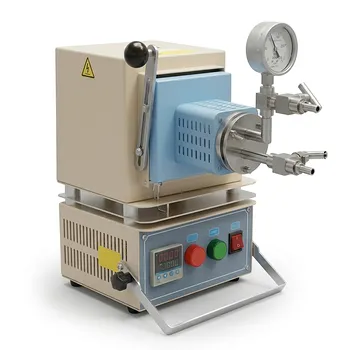
Compact Hybrid Muffle and Tube Furnace for 1000C Controlled Atmosphere Laboratory Material Sintering

Compact Vertical Split Quartz Tube Furnace with Stainless Steel Vacuum Flanges for Rapid Thermal Quenching and Controlled Atmosphere Material Processing

Three Zone Tube Furnace with 11 Inch or 15 Inch Quartz Tube and Hinged Flanges for Vacuum Atmosphere Heat Treatment
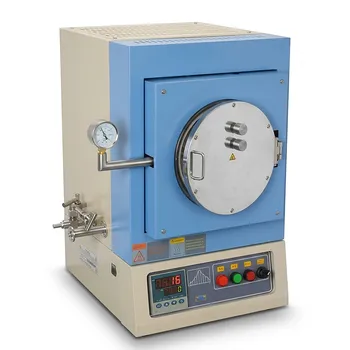
1100°C High Temperature Quartz Chamber Furnace 8 Inch OD with 7.6 Liter Capacity and Vacuum Atmosphere Capability
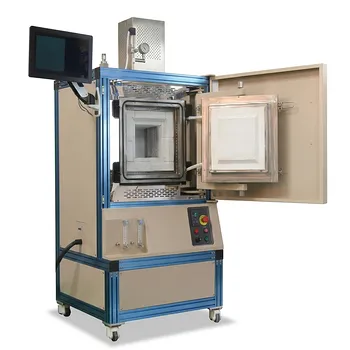
High Temperature Hydrogen Atmosphere Box Furnace 1650C Max Reducing Environment Material Synthesis System 8x8x8 Chamber

High Temperature 1700C Vertical Tube Furnace for Powder Spherification and Material Sintering

Compact High Temperature 1600C Tube Furnace with 50mm Alumina Tube and Vacuum Flanges for Material Sintering

High Temperature 1700C Six Zone Split Tube Furnace with Alumina Tube and Water Cooled Flanges

High Temperature 1700C Tube Furnace with High Vacuum Turbomolecular Pump System and Multi Channel Mass Flow Controller Gas Mixer

1800C High Temperature Compact Vacuum Tube Furnace with 60mm OD Alumina Tube and Kanthal MoSi2 Heating Elements

1100C Tube Furnace with Vacuum Flange and Programmable Temperature Controller for Material Science and Industrial Heat Treatment

High Temperature 1700C Benchtop Tube Furnace with 5 Inch Heating Zone High Purity Alumina Tube and Vacuum Sealing Flanges
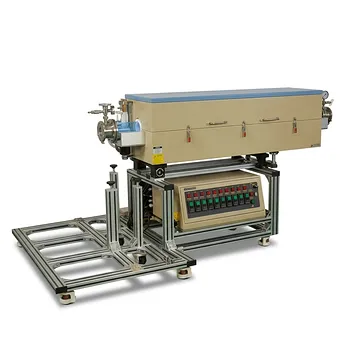
Ten Zone Multi Orientation Laboratory Tube Furnace for 1200C High Temperature Gradient Thermal Processing

1200C High Throughput Multi Channel Tube Furnace with 50mm Quartz Tubes for Annealing and Material Phase Diagram Research

High Temperature Automated 5 Inch Tube Furnace for Autonomous Material Research and Advanced Laboratory R&D

1700C Hydrogen Gas Tube Furnace with 60mm Alumina Process Tube and Integrated Hydrogen Safety Detector