Why is an atmosphere tube furnace required to prepare self-doped Titanium Dioxide (B-TiO2)? Optimize Your Synthesis
Updated 3 months ago
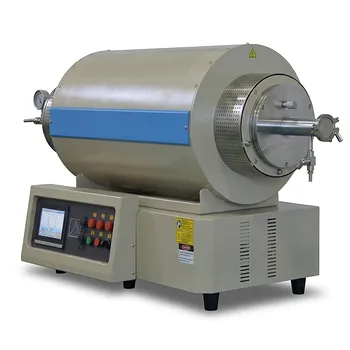
The atmosphere tube furnace is essential for creating a controlled, oxygen-free environment that prevents the premature oxidation of the reducing agent. During the thermal reduction of Titanium Dioxide ($TiO_2$) at approximately 300 °C, the furnace maintains a steady flow of inert gas, such as nitrogen, to ensure that the reduction reaction occurs exclusively on the $TiO_2$ surface rather than with ambient oxygen.
Core Takeaway: The atmosphere tube furnace acts as a chemical reactor that shields sensitive reducing agents like Sodium Borohydride ($NaBH_4$) from atmospheric oxygen, enabling the precise engineering of oxygen vacancies and $Ti^{3+}$ defects necessary for self-doped $B-TiO_2$.
The Role of Inert Shielding in Surface Reduction
Protecting the Reducing Agent from Premature Oxidation
The primary function of the atmosphere tube furnace is to exclude oxygen from the reaction chamber. If oxygen is present, the Sodium Borohydride ($NaBH_4$) reducing agent will react with the air instead of the Titanium Dioxide, neutralizing its ability to induce structural changes.
Facilitating the Formation of $Ti^{3+}$ and Oxygen Vacancy Defects
By maintaining a pure nitrogen or argon environment, the furnace allows the reduction process to target the $TiO_2$ lattice specifically. This precise interaction creates oxygen vacancies (OVs) and $Ti^{3+}$ defects, which are the defining characteristics of self-doped $B-TiO_2$.
Engineering the Desired Core-Shell Structure
A controlled atmosphere ensures that the reduction is limited to the surface layers of the material. This creates a core-shell structure, where a pristine crystalline core is surrounded by a defect-rich, self-doped shell that enhances photocatalytic activity.
Ensuring Structural Integrity and Purity
Precise Temperature Control for Phase Transformation
The tube furnace provides a stable heating curve, often set around 300 °C for reduction or higher for phase changes. This precision is critical for transitioning the material from an amorphous state to active crystalline phases like anatase or rutile without over-heating the sample.
Removal of Residual Impurities and Volatiles
During the heating process, the continuous flow of gas within the tube carries away organic residues, decomposition products, and ions like fluoride. This "sweeping" action prevents carbon impurities from embedding in the lattice, ensuring the chemical stoichiometry and purity of the final $B-TiO_2$ product.
Prevention of Substrate and Material Degradation
When $TiO_2$ is treated on carriers like nickel foam, the furnace’s inert atmosphere prevents the substrate from undergoing severe oxidative degradation. Without this protection, both the catalyst and its supporting structure would lose mechanical and chemical stability at temperatures above 300 °C.
Understanding the Trade-offs
While an atmosphere tube furnace is indispensable, it introduces specific complexities to the synthesis process. Operating under a continuous gas flow requires a constant supply of high-purity gas, which increases operational costs compared to simple muffle furnaces.
Additionally, if the gas flow rate is not precisely calibrated, it can lead to non-uniform defect distribution across the $TiO_2$ sample. Too low a flow may fail to remove all oxygen, while too high a flow can cause temperature fluctuations within the tube, potentially leading to inconsistent crystallinity or incomplete reduction.
How to Apply This to Your Synthesis Goal
Choosing the Right Environment
- If your primary focus is maximizing defect density ($Ti^{3+}$): Utilize a strictly inert atmosphere (Nitrogen or Argon) and a precise 300 °C thermal program to protect the $NaBH_4$ reduction path.
- If your primary focus is phase purity and crystallinity: Prioritize the heating rate and stable constant temperature (e.g., 400 °C to 550 °C) to ensure the transition to the anatase phase.
- If your primary focus is removing organic precursors: Use a continuous airflow (oxidizing atmosphere) within the tube furnace to ensure the complete decomposition of carbonate and acetate groups.
The atmosphere tube furnace is the bridge between simple chemical mixing and the sophisticated engineering of high-performance, self-doped photocatalysts.
Summary Table:
| Feature | Role in B-TiO2 Synthesis | Technical Benefit |
|---|---|---|
| Inert Atmosphere | Prevents premature oxidation of $NaBH_4$ | Maximizes $Ti^{3+}$ and oxygen vacancy formation |
| Temperature Control | Stable heating at 300°C - 550°C | Precise phase transition to anatase/rutile |
| Continuous Gas Flow | Removal of organic residues/impurities | Ensures chemical stoichiometry and lattice purity |
| Substrate Protection | Prevents carrier (e.g., Nickel foam) degradation | Maintains mechanical and chemical stability |
Elevate Your Material Research with THERMUNITS
Precision is the difference between a failed reaction and a high-performance photocatalyst. THERMUNITS is a leading manufacturer of high-temperature laboratory equipment, providing the advanced thermal processing solutions required for complex material science and industrial R&D.
Whether you are synthesizing self-doped $B-TiO_2$ or developing next-generation ceramics, our comprehensive range of Atmosphere, Tube, Vacuum, and CVD/PECVD systems ensures the exact control over oxygen vacancies and crystalline phases your work demands. We also offer Muffle, Rotary, and Hot Press furnaces, alongside specialized Dental and Vacuum Induction Melting (VIM) equipment.
Ready to optimize your heat treatment process? Contact THERMUNITS today to find the perfect furnace for your laboratory and experience the reliability of industry-leading thermal engineering.
References
- Mingqing Zhang, Yong Li. Ti3+ Self-Doping of TiO2 Boosts Its Photocatalytic Performance: A Synergistic Mechanism. DOI: 10.3390/molecules29225385
Mentioned Products
- Vertical 1700C Vacuum and Atmosphere Tube Furnace with 80mm Alumina Tube
- 1200C Hybrid Muffle and Tube Furnace for Material Research with Dual Atmosphere Control Quartz Tubes
- 1200°C Atmosphere Controlled Automatic Bottom Loading Furnace with 6 Inch Quartz Tube
- Compact Hybrid Muffle and Tube Furnace for 1000C Controlled Atmosphere Laboratory Material Sintering
- Compact Vertical Split Quartz Tube Furnace with Stainless Steel Vacuum Flanges for Rapid Thermal Quenching and Controlled Atmosphere Material Processing
People Also Ask
- How is an industrial-grade vertical tube furnace utilized in smelting leaching residues? Enhance Metal Recovery Efficiency
- What is the function of a laboratory-grade vertical tube furnace in fast pyrolysis? Optimize Composite Research.
- How does a vertical tube furnace facilitate thermoelectric alloy melting? Precision synthesis for material homogeneity.
- Why is a thermocouple sensor indispensable for monitoring the vertical tube furnace during gallium oxide nanowire production? Optimize VLS Growth
- What are the advantages of using a vertical tube furnace for crucible experiments simulating steel-slag interactions?

Tech Team · ThermUnits
Last updated on Jun 03, 2026
Related Products

Vertical 1700C Vacuum and Atmosphere Tube Furnace with 80mm Alumina Tube
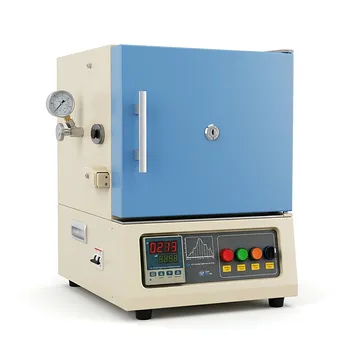
1200C Hybrid Muffle and Tube Furnace for Material Research with Dual Atmosphere Control Quartz Tubes
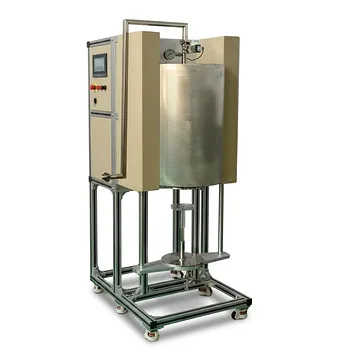
1200°C Atmosphere Controlled Automatic Bottom Loading Furnace with 6 Inch Quartz Tube
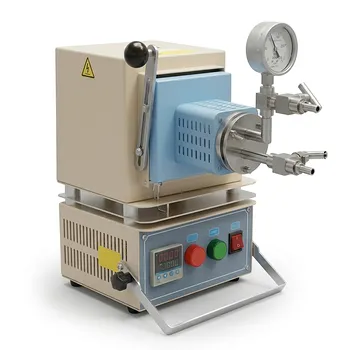
Compact Hybrid Muffle and Tube Furnace for 1000C Controlled Atmosphere Laboratory Material Sintering

Compact Vertical Split Quartz Tube Furnace with Stainless Steel Vacuum Flanges for Rapid Thermal Quenching and Controlled Atmosphere Material Processing
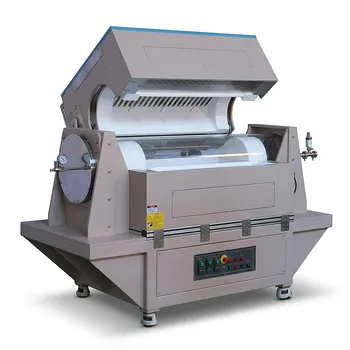
Three Zone Tube Furnace with 11 Inch or 15 Inch Quartz Tube and Hinged Flanges for Vacuum Atmosphere Heat Treatment
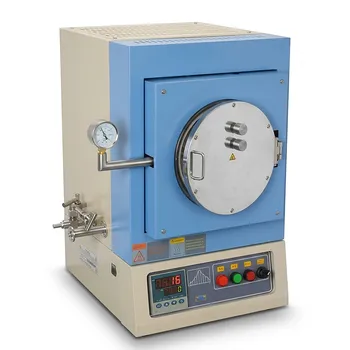
1100°C High Temperature Quartz Chamber Furnace 8 Inch OD with 7.6 Liter Capacity and Vacuum Atmosphere Capability
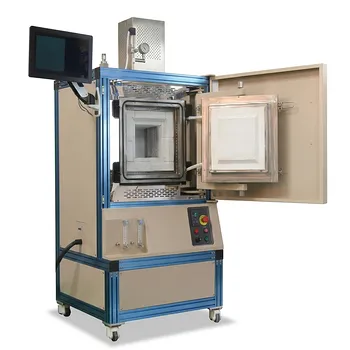
High Temperature Hydrogen Atmosphere Box Furnace 1650C Max Reducing Environment Material Synthesis System 8x8x8 Chamber

High Temperature 1700C Vertical Tube Furnace for Powder Spherification and Material Sintering

Compact High Temperature 1600C Tube Furnace with 50mm Alumina Tube and Vacuum Flanges for Material Sintering

High Temperature 1700C Tube Furnace with High Vacuum Turbomolecular Pump System and Multi Channel Mass Flow Controller Gas Mixer

High Temperature 1700C Six Zone Split Tube Furnace with Alumina Tube and Water Cooled Flanges

1800C High Temperature Compact Vacuum Tube Furnace with 60mm OD Alumina Tube and Kanthal MoSi2 Heating Elements

1100C Tube Furnace with Vacuum Flange and Programmable Temperature Controller for Material Science and Industrial Heat Treatment
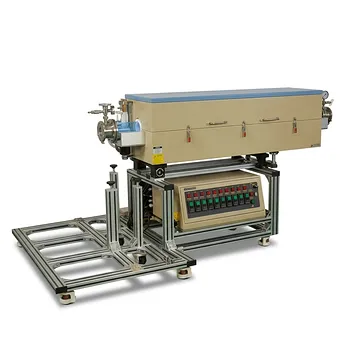
Ten Zone Multi Orientation Laboratory Tube Furnace for 1200C High Temperature Gradient Thermal Processing

High Temperature 1700C Benchtop Tube Furnace with 5 Inch Heating Zone High Purity Alumina Tube and Vacuum Sealing Flanges
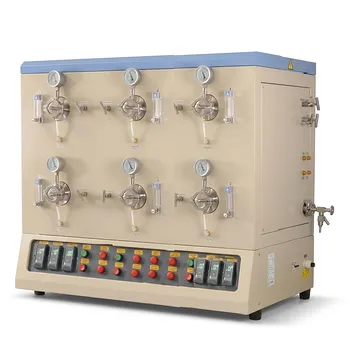
1200C High Throughput Multi Channel Tube Furnace with 50mm Quartz Tubes for Annealing and Material Phase Diagram Research

High Temperature Automated 5 Inch Tube Furnace for Autonomous Material Research and Advanced Laboratory R&D
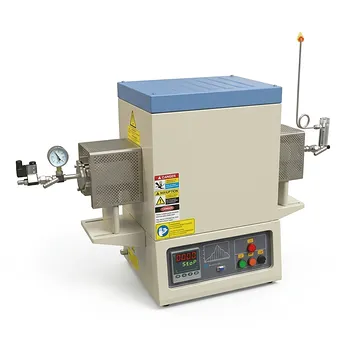
1700C Hydrogen Gas Tube Furnace with 60mm Alumina Process Tube and Integrated Hydrogen Safety Detector