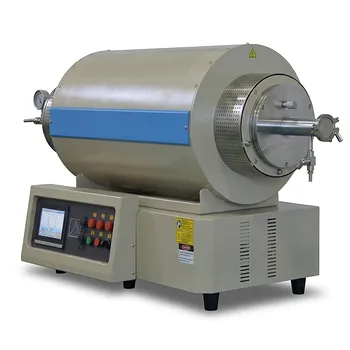
Why is an atmosphere tube furnace required for the post-treatment of carbon products? Achieve 99.83% Purity & Conductivity
Updated 3 months ago
Atmosphere tube furnaces are indispensable for the post-treatment of carbon products because they facilitate deep purification and structural refinement that is impossible in open-air environments. By heating electrolytic carbon to 800°C within a reducing atmosphere (typically 10% H2/Ar), the furnace effectively strips away residual oxygen functional groups and trace calcium impurities. This precise thermal process is the key to achieving carbon purity levels exceeding 99.83% while significantly enhancing the material's crystal structure and electrical conductivity.
Core Takeaway: The atmosphere tube furnace acts as a controlled thermal reactor that prevents carbon burnout while enabling specific chemical reduction reactions. It is the primary tool for transforming raw, impure electrolytic carbon into high-performance nanomaterials with optimized electronic properties.
Achieving High-Level Chemical Purity
Removal of Oxygen and Metallic Trace Elements
Initial carbon products obtained from molten salt electrolysis are rarely pure; they often harbor oxygen functional groups and trace calcium. At temperatures around 800°C, the introduction of a reducing atmosphere (such as hydrogen mixed with argon) triggers chemical reactions that decouple these impurities from the carbon skeleton.
Reaching 99.83% Carbon Purity
Standard heating methods cannot reach the purity levels required for advanced electronic or structural applications. The tube furnace provides the stable chemical potential necessary to drive purification reactions to completion. This results in a final product with a verified carbon content of 99.83% or higher.
Structural and Conductive Enhancement
Optimization of the Crystal Lattice
Beyond simple cleaning, high-temperature treatment within the furnace allows for the rearrangement of carbon atoms. This thermal energy helps heal defects in the crystal structure that may have formed during the rapid electrolysis process.
Improving Electrical Conductivity
A well-ordered crystal structure is directly proportional to electrical conductivity. By removing insulating oxygen groups and refining the graphitic domains, the atmosphere tube furnace ensures the nanomaterial can efficiently transport charge in battery or supercapacitor applications.
The Necessity of Atmospheric Control
Preventing Oxidative Burnout
Carbon materials are highly susceptible to oxidative degradation when heated above 400°C–500°C in the presence of oxygen. The tube furnace provides a hermetically sealed environment where high-purity nitrogen or argon can be introduced to displace oxygen.
Managing Byproduct Outgassing
During carbonization and purification, materials release byproduct gases like CO and CO2. The controlled flow system of a tube furnace efficiently carries these gases away, ensuring they do not interfere with the ongoing chemical reactions or re-contaminate the carbon surface.
Understanding the Trade-offs
Equipment Complexity and Safety
Operating a furnace with reducing gases like Hydrogen (H2) requires rigorous safety protocols to prevent leaks and potential combustion. This adds a layer of operational complexity and cost compared to simple muffle furnaces.
Gas Consumption Costs
Maintaining a constant flow of high-purity inert gas (like Argon) throughout the heating and cooling cycles can be expensive. While Nitrogen is a more cost-effective alternative for some processes, certain high-performance carbons require the more chemically inert environment that only Argon can provide.
Thermal Gradients
While the furnace provides a "constant temperature zone," large samples can still experience internal temperature gradients. This requires careful calibration of the ramp rate and dwell time to ensure the core of the material reaches the same purity level as the surface.
Applying Post-Treatment to Your Project
If your primary focus is Maximum Electrical Conductivity: Use a high-temperature soak at 800°C or above in a 10% H2/Ar atmosphere to ensure the complete removal of oxygen groups and the refinement of the graphitic structure.
If your primary focus is Material Yield and Recovery: Ensure a strict inert flow of Nitrogen (at least 0.5 L/min) is maintained before the temperature exceeds 400°C to prevent any oxidative burnout of the carbon skeleton.
If your primary focus is Morphological Control (Pore Formation): Use the furnace to carefully decompose templates or precursors in situ, utilizing the precise gas flow to remove decomposition byproducts that might otherwise block pore development.
The atmosphere tube furnace is the bridge between raw electrolytic "soot" and the high-purity, high-conductivity carbon structures required for modern technology.
Summary Table:
| Key Requirement | Role in Post-Treatment | Performance Outcome |
|---|---|---|
| Atmospheric Control | Prevents oxidation & burnout | Preserves carbon yield and structure |
| Reducing Atmosphere | Strips oxygen & calcium impurities | Achieves high purity (>99.83%) |
| Thermal Precision | Facilitates lattice rearrangement | Maximizes electrical conductivity |
| Gas Management | Efficient byproduct outgassing | Prevents surface re-contamination |
Elevate Your Carbon Research with THERMUNITS
At THERMUNITS, we understand that precision in thermal processing is the key to transforming raw materials into high-performance structures. As a leading manufacturer of high-temperature laboratory equipment, we provide the advanced tools necessary for material science and industrial R&D.
Our comprehensive range of thermal solutions includes:
- Atmosphere & Tube Furnaces for precise carbon purification.
- Vacuum, Muffle, Rotary, & Hot Press Furnaces for versatile material processing.
- CVD/PECVD Systems for advanced thin-film and nanomaterial synthesis.
- Vacuum Induction Melting (VIM) & Dental Furnaces for specialized industrial needs.
- Thermal Elements and high-quality heat treatment accessories.
Ready to achieve superior purity and conductivity in your materials?
Contact THERMUNITS Today to consult with our experts and find the perfect furnace solution for your laboratory.
References
- Yi‐Bing Cheng, Chunfa Liao. The Effect of Molten Salt Composition on Carbon Structure: Preparation of High Value-Added Nano-Carbon Materials by Electrolysis of Carbon Dioxide. DOI: 10.3390/nano15010053
Mentioned Products
- Vertical 1700C Vacuum and Atmosphere Tube Furnace with 80mm Alumina Tube
- 1200C Hybrid Muffle and Tube Furnace for Material Research with Dual Atmosphere Control Quartz Tubes
- 1200°C Atmosphere Controlled Automatic Bottom Loading Furnace with 6 Inch Quartz Tube
- Compact Hybrid Muffle and Tube Furnace for 1000C Controlled Atmosphere Laboratory Material Sintering
- Compact Vertical Split Quartz Tube Furnace with Stainless Steel Vacuum Flanges for Rapid Thermal Quenching and Controlled Atmosphere Material Processing
People Also Ask
- How is an industrial-grade vertical tube furnace utilized in smelting leaching residues? Enhance Metal Recovery Efficiency
- What is the function of a laboratory-grade vertical tube furnace in fast pyrolysis? Optimize Composite Research.
- How does a vertical tube furnace facilitate thermoelectric alloy melting? Precision synthesis for material homogeneity.
- Why is a thermocouple sensor indispensable for monitoring the vertical tube furnace during gallium oxide nanowire production? Optimize VLS Growth
- What are the advantages of using a vertical tube furnace for crucible experiments simulating steel-slag interactions?

Tech Team · ThermUnits
Last updated on Jun 02, 2026
Related Products

Vertical 1700C Vacuum and Atmosphere Tube Furnace with 80mm Alumina Tube
1200C Hybrid Muffle and Tube Furnace for Material Research with Dual Atmosphere Control Quartz Tubes
1200°C Atmosphere Controlled Automatic Bottom Loading Furnace with 6 Inch Quartz Tube
Compact Hybrid Muffle and Tube Furnace for 1000C Controlled Atmosphere Laboratory Material Sintering

Compact Vertical Split Quartz Tube Furnace with Stainless Steel Vacuum Flanges for Rapid Thermal Quenching and Controlled Atmosphere Material Processing
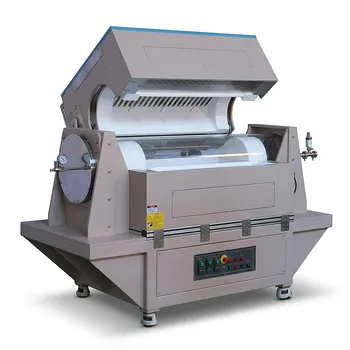
Three Zone Tube Furnace with 11 Inch or 15 Inch Quartz Tube and Hinged Flanges for Vacuum Atmosphere Heat Treatment

1100°C High Temperature Quartz Chamber Furnace 8 Inch OD with 7.6 Liter Capacity and Vacuum Atmosphere Capability
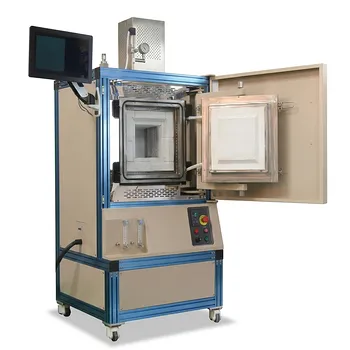
High Temperature Hydrogen Atmosphere Box Furnace 1650C Max Reducing Environment Material Synthesis System 8x8x8 Chamber

High Temperature 1700C Vertical Tube Furnace for Powder Spherification and Material Sintering

Compact High Temperature 1600C Tube Furnace with 50mm Alumina Tube and Vacuum Flanges for Material Sintering

High Temperature 1700C Tube Furnace with High Vacuum Turbomolecular Pump System and Multi Channel Mass Flow Controller Gas Mixer

High Temperature 1700C Six Zone Split Tube Furnace with Alumina Tube and Water Cooled Flanges

1800C High Temperature Compact Vacuum Tube Furnace with 60mm OD Alumina Tube and Kanthal MoSi2 Heating Elements

1100C Tube Furnace with Vacuum Flange and Programmable Temperature Controller for Material Science and Industrial Heat Treatment
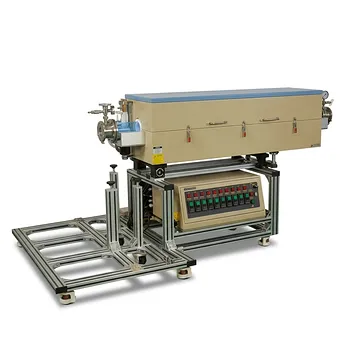
Ten Zone Multi Orientation Laboratory Tube Furnace for 1200C High Temperature Gradient Thermal Processing

High Temperature 1700C Benchtop Tube Furnace with 5 Inch Heating Zone High Purity Alumina Tube and Vacuum Sealing Flanges
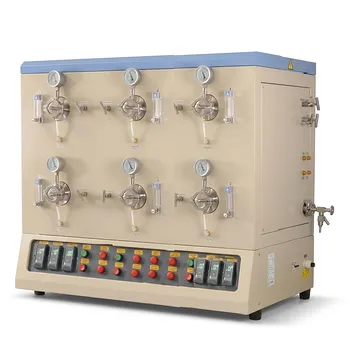
1200C High Throughput Multi Channel Tube Furnace with 50mm Quartz Tubes for Annealing and Material Phase Diagram Research

High Temperature Automated 5 Inch Tube Furnace for Autonomous Material Research and Advanced Laboratory R&D
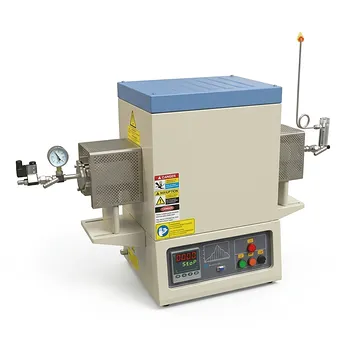
1700C Hydrogen Gas Tube Furnace with 60mm Alumina Process Tube and Integrated Hydrogen Safety Detector