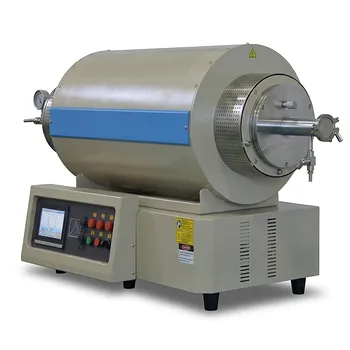
Why is an atmosphere tube furnace used for 800°C catalyst aging tests? Ensure Superior Thermal Stability in Research
Updated 3 months ago
Atmosphere tube furnaces are utilized for 800 °C aging tests because they provide a precisely controlled environment to simulate the extreme thermal and chemical stresses of industrial exhaust systems. This setup allows researchers to perform accelerated aging, effectively compressing years of real-world use into a manageable laboratory timeframe to evaluate the catalyst's durability, structural integrity, and long-term activity.
The primary purpose of using an atmosphere tube furnace at 800 °C is to replicate the harsh operating conditions of automotive or industrial exhaust, enabling researchers to verify if a catalyst can resist sintering and structural collapse over its intended lifespan.
Simulating Extreme Operational Environments
Replicating Automotive and Industrial Stress
Automotive exhaust catalysts must function in high-heat environments where temperatures frequently spike. The tube furnace provides a continuous flow of air at 800 °C, which directly mimics the oxidative stress and thermal load found in a vehicle's tailpipe.
Accelerated Life-Cycle Testing
By maintaining these elevated temperatures for extended periods, researchers can induce accelerated aging. This process reveals how a material might perform after thousands of hours of service, helping to identify potential failures in a fraction of the time.
Controllable Atmospheric Chemistry
Beyond just heat, the "atmosphere" aspect of the furnace allows for the introduction of specific gases, such as water vapor or nitrogen, to simulate hydrothermal aging. This is critical for verifying the framework's collapse resistance and the stability of active sites under high-humidity conditions.
Protecting the Catalyst's Microstructure
Inhibiting Metal Particle Sintering
At 800 °C, metal nanoparticles like platinum (Pt) or palladium (Pd) naturally tend to migrate and clump together, a process known as sintering. Researchers use the furnace to evaluate how well advanced supports, such as high-entropy spinels, can physically or chemically pin these particles in place to prevent loss of active surface area.
Preserving Specific Surface Area
A catalyst’s efficiency depends on its Specific Surface Area (SSA); high temperatures often cause porous structures to collapse. The tube furnace allows for the measurement of the BET surface area before and after aging to ensure the catalyst maintains enough "room" for chemical reactions to occur.
Maintaining Structural Flexibility
Research into medium-entropy oxides often focuses on their ability to maintain structural flexibility during repeated heating cycles. The furnace provides the stable thermal field necessary to prove that the support won't become brittle or inactive after prolonged exposure to 800 °C.
Precision and Process Control
Regulating Heating and Cooling Rates
The ability to control the heating rate (e.g., 6 °C/min) is vital to prevent thermal shock, which could cause artificial cracking in the catalyst support. Precise ramping ensures that the observed degradation is due to thermal aging rather than mechanical failure from rapid temperature changes.
Ensuring Thermal Field Uniformity
High-quality tube furnaces provide a stable thermal field, ensuring that the entire catalyst sample experiences the same temperature. This uniformity is essential for gathering repeatable data that can be used to compare different material compositions objectively.
Understanding the Trade-offs
Sample Volume Limitations
Tube furnaces are generally designed for small-scale laboratory samples, meaning they may not perfectly capture the thermal gradients found in full-scale industrial reactors. Results must be carefully scaled or validated with larger pilot-plant tests.
Atmosphere-Flow Dynamics
While the furnace controls the gas composition, the flow dynamics within a narrow tube can differ from the high-velocity turbulent flow in an exhaust pipe. This can sometimes lead to localized "dead zones" where the gas concentration might vary slightly across the catalyst bed.
Energy and Equipment Wear
Running tests at 800 °C for hundreds of hours places significant mechanical stress on the furnace heating elements and the quartz or ceramic tubes. Frequent maintenance and calibration are required to ensure the accuracy of the temperature and atmosphere sensors over time.
How to Apply This to Your Research
Making the Right Choice for Your Goal
- If your primary focus is long-term industrial durability: Use a continuous air-flow atmosphere at 800 °C for at least 100+ hours to verify the sintering resistance of your active metal phase.
- If your primary focus is hydrothermal stability: Introduce a calibrated percentage of water vapor (e.g., 10%) into the gas stream to simulate the "steaming" effect common in exhaust environments.
- If your primary focus is phase transition or synthesis: Utilize the furnace's ability to switch to inert gases like Argon or reductive gases like H2 to achieve the ideal crystal transition without unwanted oxidation.
The atmosphere tube furnace remains the gold standard for bridging the gap between bench-top catalyst synthesis and real-world industrial application.
Summary Table:
| Key Feature | Research Benefit | Impact on Catalyst Development |
|---|---|---|
| Atmosphere Control | Simulates oxidative/hydrothermal stress | Verifies resistance to framework collapse |
| High-Temp Stability | Replicates 800°C industrial exhaust | Evaluates sintering and metal migration |
| Accelerated Aging | Compresses years into lab hours | Predicts long-term durability and activity |
| Uniform Thermal Field | Ensures consistent sample exposure | Provides repeatable and objective data |
| Precise Ramp Rates | Prevents artificial thermal shock | Isolates thermal vs. mechanical failure |
Elevate Your Material Research with THERMUNITS Precision Terminology
As a leading manufacturer of high-temperature laboratory equipment, THERMUNITS empowers material science and industrial R&D teams with cutting-edge thermal processing solutions. Whether you are researching catalyst stability or advanced alloys, our equipment provides the precision and reliability needed to simulate the harshest environments.
Our comprehensive range includes:
- Atmosphere & Vacuum Tube Furnaces (ideal for catalyst aging)
- Muffle, Rotary, and Hot Press Furnaces
- CVD/PECVD Systems for chemical vapor deposition
- Vacuum Induction Melting (VIM) & Electric Rotary Kilns
- Dental Furnaces and specialized Thermal Elements
Don't compromise on the accuracy of your 800°C thermal stability tests. Let our experts help you select the perfect system to achieve your research goals.
Contact THERMUNITS Today to Upgrade Your Lab
References
- Christopher Riley, Stanley S. Chou. Platinum on High-Entropy Aluminate Spinels as Thermally Stable CO Oxidation Catalysts. DOI: 10.3390/catal14030211
Mentioned Products
- Vertical 1700C Vacuum and Atmosphere Tube Furnace with 80mm Alumina Tube
- 1200C Hybrid Muffle and Tube Furnace for Material Research with Dual Atmosphere Control Quartz Tubes
- 1200°C Atmosphere Controlled Automatic Bottom Loading Furnace with 6 Inch Quartz Tube
- Compact Hybrid Muffle and Tube Furnace for 1000C Controlled Atmosphere Laboratory Material Sintering
- Compact Vertical Split Quartz Tube Furnace with Stainless Steel Vacuum Flanges for Rapid Thermal Quenching and Controlled Atmosphere Material Processing
People Also Ask
- How is an industrial-grade vertical tube furnace utilized in smelting leaching residues? Enhance Metal Recovery Efficiency
- What is the function of a laboratory-grade vertical tube furnace in fast pyrolysis? Optimize Composite Research.
- How does a vertical tube furnace facilitate thermoelectric alloy melting? Precision synthesis for material homogeneity.
- Why is a thermocouple sensor indispensable for monitoring the vertical tube furnace during gallium oxide nanowire production? Optimize VLS Growth
- What are the advantages of using a vertical tube furnace for crucible experiments simulating steel-slag interactions?

Tech Team · ThermUnits
Last updated on Jun 03, 2026
Related Products

Vertical 1700C Vacuum and Atmosphere Tube Furnace with 80mm Alumina Tube
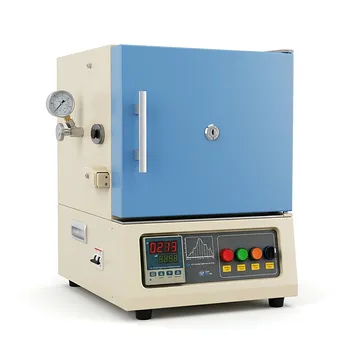
1200C Hybrid Muffle and Tube Furnace for Material Research with Dual Atmosphere Control Quartz Tubes
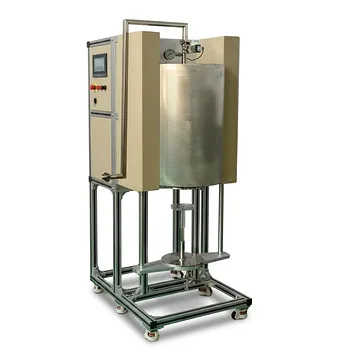
1200°C Atmosphere Controlled Automatic Bottom Loading Furnace with 6 Inch Quartz Tube
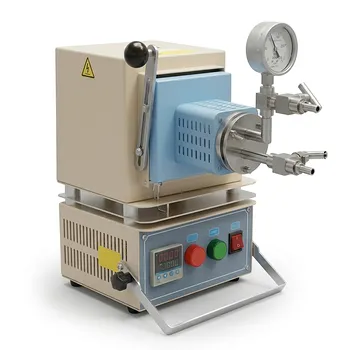
Compact Hybrid Muffle and Tube Furnace for 1000C Controlled Atmosphere Laboratory Material Sintering

Compact Vertical Split Quartz Tube Furnace with Stainless Steel Vacuum Flanges for Rapid Thermal Quenching and Controlled Atmosphere Material Processing
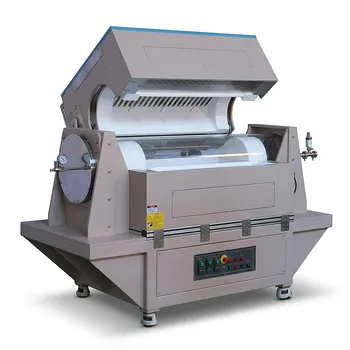
Three Zone Tube Furnace with 11 Inch or 15 Inch Quartz Tube and Hinged Flanges for Vacuum Atmosphere Heat Treatment
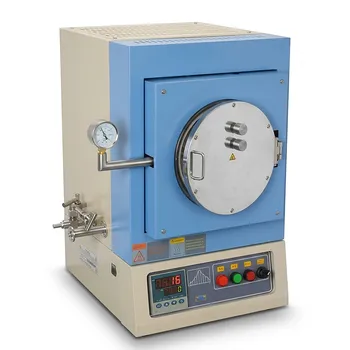
1100°C High Temperature Quartz Chamber Furnace 8 Inch OD with 7.6 Liter Capacity and Vacuum Atmosphere Capability
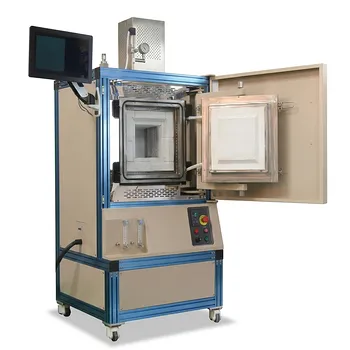
High Temperature Hydrogen Atmosphere Box Furnace 1650C Max Reducing Environment Material Synthesis System 8x8x8 Chamber

High Temperature 1700C Vertical Tube Furnace for Powder Spherification and Material Sintering

Compact High Temperature 1600C Tube Furnace with 50mm Alumina Tube and Vacuum Flanges for Material Sintering

High Temperature 1700C Tube Furnace with High Vacuum Turbomolecular Pump System and Multi Channel Mass Flow Controller Gas Mixer

High Temperature 1700C Six Zone Split Tube Furnace with Alumina Tube and Water Cooled Flanges

1800C High Temperature Compact Vacuum Tube Furnace with 60mm OD Alumina Tube and Kanthal MoSi2 Heating Elements

1100C Tube Furnace with Vacuum Flange and Programmable Temperature Controller for Material Science and Industrial Heat Treatment
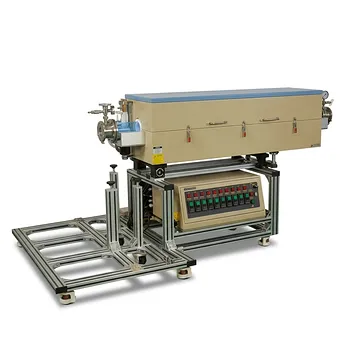
Ten Zone Multi Orientation Laboratory Tube Furnace for 1200C High Temperature Gradient Thermal Processing

High Temperature 1700C Benchtop Tube Furnace with 5 Inch Heating Zone High Purity Alumina Tube and Vacuum Sealing Flanges
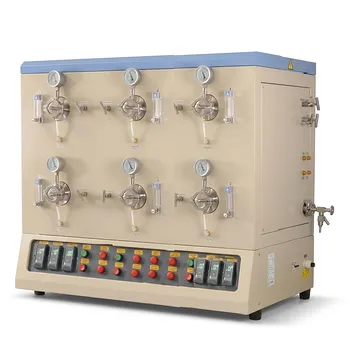
1200C High Throughput Multi Channel Tube Furnace with 50mm Quartz Tubes for Annealing and Material Phase Diagram Research

High Temperature Automated 5 Inch Tube Furnace for Autonomous Material Research and Advanced Laboratory R&D
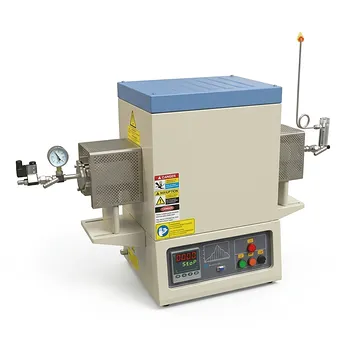
1700C Hydrogen Gas Tube Furnace with 60mm Alumina Process Tube and Integrated Hydrogen Safety Detector