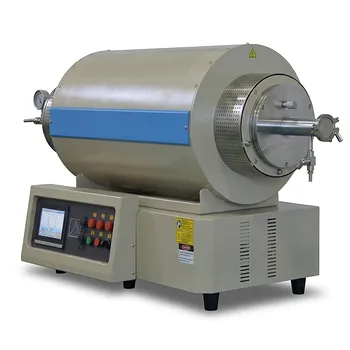
Why is an atmosphere tube furnace with argon flow necessary for Co-C3N5 catalysts? Prevent Oxidation & Maximize Activity
Updated 3 months ago
The final synthesis of Co-C3N5 catalysts requires an atmosphere tube furnace with argon flow to establish a strictly inert environment that prevents the oxidation of cobalt active sites and the degradation of the carbon nitride framework. This specific setup ensures that cobalt atoms correctly coordinate with nitrogen to form Co-N active species while maintaining the structural integrity of the porous support through precise temperature control and the continuous removal of volatile byproducts.
The use of an atmosphere tube furnace is essential for shielding sensitive metal-organic interfaces from oxygen and moisture. By maintaining a continuous argon flow, the process ensures the chemical stability of cobalt ions and the formation of a high-surface-area catalytic structure that would otherwise be destroyed by oxidative ablation.
Preventing Destructive Oxidation of Active Sites
Protecting Metal Coordination States
During the calcination process, typically at temperatures around 550°C, cobalt atoms must coordinate with the carbon nitride framework in specific oxidation states, such as Co2+. The atmosphere tube furnace excludes oxygen and moisture, preventing these cobalt atoms from forming bulk oxides and ensuring the creation of efficient Co-N active species.
Preserving the Carbon Framework
At high temperatures, carbon-based materials like C3N5 are susceptible to oxidative ablation, where oxygen reacts with the carbon to form CO2 gas, effectively "burning" the catalyst away. An inert argon atmosphere protects the carbon framework from this degradation, allowing the material to undergo successful thermal polycondensation or carbonization without mass loss.
Preventing Precursor Degradation
Precursors such as melamine, used to form graphitic carbon nitride layers, can undergo oxidative degradation if heated in the presence of air. The controlled environment of the tube furnace allows these precursors to transform into ultra-thin, high-quality layers that form strong chemical bonds with the metal components.
Optimizing Physical and Pore Structure
Dynamic Removal of Volatiles
As polymer ligands and organic components decompose during heating, they release volatile organic compounds (VOCs) and nitrogen gas. A continuous argon flow acts as a carrier gas, effectively sweeping these byproducts out of the furnace chamber.
Preventing Byproduct Condensation
If volatile byproducts are allowed to remain in the chamber, they can re-condense onto the catalyst surface as it cools, leading to contamination. The constant flow of inert gas prevents this "back-reaction" or condensation, ensuring the purity of the final Co-C3N5 product.
Promoting Pore Development
The removal of decomposition gases is critical for the "opening" of the material's pore structure. By facilitating the escape of these gases, the argon flow helps create a high specific surface area, which is vital for providing accessible active sites during catalytic reactions.
Precision Control of the Thermal Field
Tailoring Crystallinity
An atmosphere tube furnace provides a precisely controlled thermal field that allows for linear heating and cooling rates. This precision is necessary to reach the specific temperatures (such as 550°C or higher) required for phase transformation and the development of high-crystallinity structures.
Facilitating Heteroatom Embedding
The controlled high-temperature environment facilitates the decomposition of organic components and the successful embedding of heteroatoms (like Nitrogen) into the carbon framework. This process is essential for creating the specific electrochemical activity required for Co-C3N5 to function as an effective catalyst.
Understanding the Trade-offs and Pitfalls
Gas Purity and Seal Integrity
The effectiveness of the synthesis is highly dependent on the purity of the argon and the integrity of the furnace seals. Even trace amounts of oxygen leaking into the system can cause "hot spots" of oxidation, leading to inconsistent catalytic performance or the formation of unwanted metal oxide phases.
Flow Rate Balancing
There is a critical trade-off in managing the argon flow rate. While high flow rates ensure the efficient removal of byproducts, excessively high rates can create temperature gradients within the tube, potentially leading to non-uniform crystallization across the catalyst sample.
Energy and Resource Intensity
Atmosphere tube furnaces require significant energy and a constant supply of high-purity inert gas, making this a resource-intensive synthesis method. However, for catalysts requiring precise metal-nitrogen coordination, there is currently no reliable ambient-air alternative that prevents the oxidation of the active sites.
How to Apply This to Your Synthesis Project
Recommendations for Optimal Catalyst Production
- If your primary focus is maximizing active site density: Ensure the argon flow is started well before heating begins to fully purge the chamber of residual oxygen and moisture.
- If your primary focus is high surface area and porosity: Optimize the gas flow rate to be high enough to remove volatiles rapidly without causing significant thermal fluctuations in the furnace.
- If your primary focus is phase purity and crystallinity: Use the furnace's programmable controller to set strict linear heating ramps (e.g., 2-5°C/min) to allow the Co-N bonds to form steadily.
By strictly controlling the chemical atmosphere and thermal profile, you ensure the successful synthesis of a robust, high-performance Co-C3N5 catalyst.
Summary Table:
| Feature | Impact on Co-C3N5 Synthesis | Key Benefit |
|---|---|---|
| Inert Argon Environment | Prevents cobalt oxidation and carbon framework ablation. | Preserves Co-N active species & structural integrity. |
| Dynamic Gas Flow | Continuously sweeps away volatile organic compounds (VOCs). | Prevents byproduct condensation & promotes pore growth. |
| Precise Thermal Control | Enables linear heating/cooling ramps (e.g., 2-5°C/min). | Ensures high crystallinity and successful atom embedding. |
| Vacuum/Sealed Chamber | Excludes trace oxygen and moisture during calcination. | Guarantees phase purity and consistent catalytic performance. |
Elevate Your Material Research with THERMUNITS
Are you looking to achieve the ultimate precision in Co-C3N5 catalyst synthesis? THERMUNITS is a leading manufacturer of high-performance high-temperature laboratory equipment specifically designed for material science and industrial R&D.
Our advanced Atmosphere Tube Furnaces and Vacuum Systems provide the strictly controlled inert environments essential for protecting sensitive metal-organic interfaces from oxidation. Beyond tube furnaces, we offer a comprehensive range of solutions, including:
- Muffle, Vacuum, and Atmosphere Furnaces
- Rotary and Hot Press Furnaces
- CVD/PECVD Systems & Vacuum Induction Melting (VIM)
- Dental Furnaces & Specialized Thermal Elements
Ensure the integrity of your active sites and maximize your catalyst's surface area with equipment built for precision. Contact our technical experts today to find the perfect thermal processing solution for your laboratory.
References
- Boyu Liang, Runhua Liao. Performance of Cobalt-Doped C3N5 Electrocatalysis Nitrate in Ammonia Production. DOI: 10.3390/coatings14101327
Mentioned Products
- Vertical 1700C Vacuum and Atmosphere Tube Furnace with 80mm Alumina Tube
- 1200C Hybrid Muffle and Tube Furnace for Material Research with Dual Atmosphere Control Quartz Tubes
- 1200°C Atmosphere Controlled Automatic Bottom Loading Furnace with 6 Inch Quartz Tube
- Compact Hybrid Muffle and Tube Furnace for 1000C Controlled Atmosphere Laboratory Material Sintering
- Compact Vertical Split Quartz Tube Furnace with Stainless Steel Vacuum Flanges for Rapid Thermal Quenching and Controlled Atmosphere Material Processing
People Also Ask
- How is an industrial-grade vertical tube furnace utilized in smelting leaching residues? Enhance Metal Recovery Efficiency
- What is the function of a laboratory-grade vertical tube furnace in fast pyrolysis? Optimize Composite Research.
- How does a vertical tube furnace facilitate thermoelectric alloy melting? Precision synthesis for material homogeneity.
- Why is a thermocouple sensor indispensable for monitoring the vertical tube furnace during gallium oxide nanowire production? Optimize VLS Growth
- What are the advantages of using a vertical tube furnace for crucible experiments simulating steel-slag interactions?

Tech Team · ThermUnits
Last updated on Jun 03, 2026
Related Products

Vertical 1700C Vacuum and Atmosphere Tube Furnace with 80mm Alumina Tube
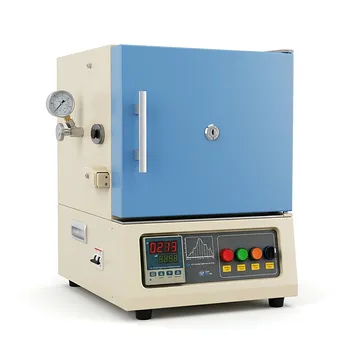
1200C Hybrid Muffle and Tube Furnace for Material Research with Dual Atmosphere Control Quartz Tubes
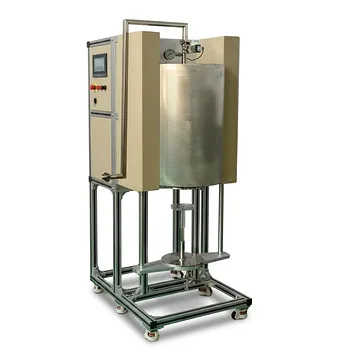
1200°C Atmosphere Controlled Automatic Bottom Loading Furnace with 6 Inch Quartz Tube
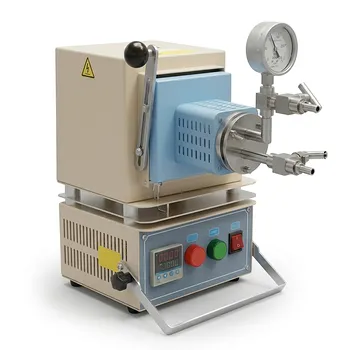
Compact Hybrid Muffle and Tube Furnace for 1000C Controlled Atmosphere Laboratory Material Sintering

Compact Vertical Split Quartz Tube Furnace with Stainless Steel Vacuum Flanges for Rapid Thermal Quenching and Controlled Atmosphere Material Processing
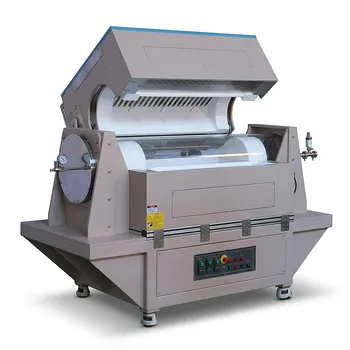
Three Zone Tube Furnace with 11 Inch or 15 Inch Quartz Tube and Hinged Flanges for Vacuum Atmosphere Heat Treatment
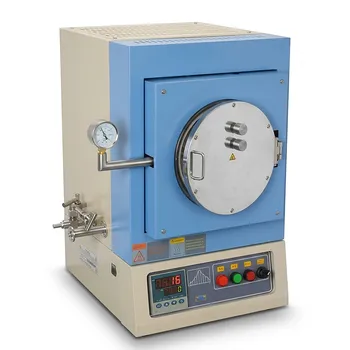
1100°C High Temperature Quartz Chamber Furnace 8 Inch OD with 7.6 Liter Capacity and Vacuum Atmosphere Capability
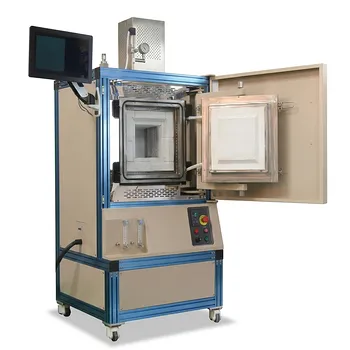
High Temperature Hydrogen Atmosphere Box Furnace 1650C Max Reducing Environment Material Synthesis System 8x8x8 Chamber

High Temperature 1700C Vertical Tube Furnace for Powder Spherification and Material Sintering

Compact High Temperature 1600C Tube Furnace with 50mm Alumina Tube and Vacuum Flanges for Material Sintering

High Temperature 1700C Tube Furnace with High Vacuum Turbomolecular Pump System and Multi Channel Mass Flow Controller Gas Mixer

High Temperature 1700C Six Zone Split Tube Furnace with Alumina Tube and Water Cooled Flanges

1800C High Temperature Compact Vacuum Tube Furnace with 60mm OD Alumina Tube and Kanthal MoSi2 Heating Elements

1100C Tube Furnace with Vacuum Flange and Programmable Temperature Controller for Material Science and Industrial Heat Treatment

High Temperature 1700C Benchtop Tube Furnace with 5 Inch Heating Zone High Purity Alumina Tube and Vacuum Sealing Flanges
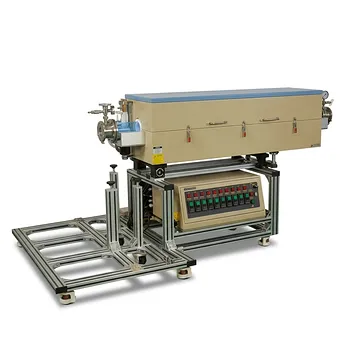
Ten Zone Multi Orientation Laboratory Tube Furnace for 1200C High Temperature Gradient Thermal Processing
1200C High Throughput Multi Channel Tube Furnace with 50mm Quartz Tubes for Annealing and Material Phase Diagram Research

High Temperature Automated 5 Inch Tube Furnace for Autonomous Material Research and Advanced Laboratory R&D
1700C Hydrogen Gas Tube Furnace with 60mm Alumina Process Tube and Integrated Hydrogen Safety Detector