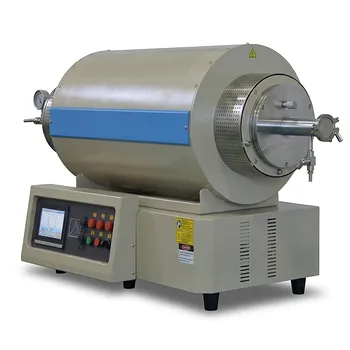
Why is an atmosphere tube furnace with argon gas flow necessary for SnO2/a-C calcination? Ensure Structural Integrity.
Updated 3 months ago
Ensuring structural integrity and functional precision. Utilizing an atmosphere tube furnace with argon gas flow is critical because it creates an inert environment that prevents the amorphous carbon (a-C) carrier from undergoing oxidative combustion at high temperatures. Without this protective atmosphere, the carbon component would burn off, destroying the composite structure before the SnO2 can properly crystallize or achieve the necessary defect chemistry for gas-sensing applications.
Core Takeaway: The argon-filled atmosphere furnace serves a dual purpose: it acts as a protective shield against carbon oxidation while providing the controlled thermal precision required to tune the material's internal bonding and vacancy levels.
Preventing the Degradation of the Carbon Matrix
Protection Against Oxidative Combustion
At calcination temperatures such as 500°C, amorphous carbon is highly susceptible to reacting with oxygen. In a standard air environment, the carbon carrier would oxidize and be lost as carbon dioxide gas, leaving behind an unstructured residue.
Preservation of Composite Morphology
By continuously introducing high-purity argon, the furnace displaces oxygen and establishes an inert shield. This ensures the microscopic morphology of the carbon framework remains intact, allowing it to function as a stable support for the SnO2 particles.
Maximizing Material Yield
Maintaining a non-reactive environment prevents material ablation and thermal degradation. This is essential for ensuring that the final yield of the SnO2/a-C composite matches the intended precursor ratios, preserving the purity of the heterojunction interface.
Engineering the Functional Properties of SnO2/a-C
Facilitating Controlled SnO2 Crystallization
The stable thermal field within a tube furnace provides the uniform energy required for SnO2 crystallization. This precise heat distribution ensures that the tin dioxide forms the correct crystal phase necessary for high-performance sensing.
Adjusting the sp2/sp3 Bonding Ratio
The controlled atmosphere allows for the precise regulation of the sp2/sp3 bonding ratio within the amorphous carbon. This ratio is a fundamental determinant of the material's electrical conductivity and structural stability.
Regulating Defects and Oxygen Vacancies
By fine-tuning the calcination environment, researchers can manipulate carbon defects and oxygen vacancies. These "active sites" are the primary drivers of gas-sensing performance, as they dictate how the material interacts with target gas molecules.
Understanding the Trade-offs and Constraints
The Risk of Residual Oxygen
Even minor leaks or low-purity argon can lead to localized oxidation, which compromises the uniformity of the composite. Maintaining a completely sealed environment is non-negotiable for reproducible results.
Balancing Flow Rates and Temperature
High gas flow rates can sometimes lead to temperature gradients within the tube, potentially causing uneven crystallization. Conversely, insufficient flow may fail to fully purge evolved gases or bypass oxygen, leading to unwanted secondary reactions.
Cost and Complexity
Operating an atmosphere furnace is significantly more expensive and complex than using a standard muffle furnace. The need for high-purity gas tanks, flow controllers, and specialized quartz or ceramic tubes adds a layer of operational overhead that must be justified by the material's performance requirements.
Implementing Precise Atmosphere Control
To achieve the best results with SnO2/a-C composites, your calcination strategy must align with your specific performance objectives.
- If your primary focus is gas-sensing sensitivity: Prioritize the precise control of the cooling rate and argon flow to maximize the density of oxygen vacancies.
- If your primary focus is structural stability: Focus on the long-term soaking time at 500°C to ensure a stable sp2/sp3 ratio and robust carbon framework.
- If your primary focus is high electrical conductivity: Ensure the argon is of the highest purity (99.999%) to prevent even trace oxidation of the carbon shell.
By masterfully controlling the inert environment of the tube furnace, you transform a simple heat treatment into a sophisticated tool for molecular engineering.
Summary Table:
| Feature | Calcination in Air | Calcination in Argon (Inert) |
|---|---|---|
| Carbon Matrix | Oxidizes to $CO_2$ (Combusts) | Remains stable and intact |
| Material Morphology | Collapses/Degrades | Preserves composite framework |
| Oxygen Vacancies | Uncontrolled/Reduced | Precisely tunable for sensing |
| SnO2 Crystallization | Inconsistent due to oxidation | Uniform and phase-pure |
| Final Yield | Low (loss of carbon carrier) | High (matches precursor ratios) |
Elevate Your Material R&D with THERMUNITS
Precision in atmosphere control is the difference between a failed experiment and a breakthrough. THERMUNITS is a leading manufacturer of high-temperature laboratory equipment, providing the specialized tools researchers need for advanced material science.
Our Atmosphere Tube Furnaces are engineered to provide the ultra-pure inert environments and thermal uniformity required for sensitive processes like SnO2/a-C calcination. Beyond tube furnaces, we offer a comprehensive suite of thermal solutions, including:
- Advanced Furnaces: Muffle, Vacuum, Rotary, and Hot Press systems.
- Thin Film Deposition: High-performance CVD and PECVD systems.
- Specialized Equipment: Dental Furnaces, Vacuum Induction Melting (VIM), and Electric Rotary Kilns.
- Components: High-quality Thermal Elements and heat treatment accessories.
Don't let oxidation compromise your results. Partner with THERMUNITS to achieve superior structural integrity and functional precision in your laboratory.
Contact Our Technical Experts Today to find the perfect thermal processing solution for your specific application.
References
- Yong Hwan Kim, Kyu Hyoung Lee. Stepwise emergence of CO gas sensing response and selectivity on SnO2 using C supports and PtOx decoration. DOI: 10.3389/fchem.2024.1469520
Mentioned Products
- Vertical 1700C Vacuum and Atmosphere Tube Furnace with 80mm Alumina Tube
- 1200C Hybrid Muffle and Tube Furnace for Material Research with Dual Atmosphere Control Quartz Tubes
- 1200°C Atmosphere Controlled Automatic Bottom Loading Furnace with 6 Inch Quartz Tube
- Compact Hybrid Muffle and Tube Furnace for 1000C Controlled Atmosphere Laboratory Material Sintering
- Compact Vertical Split Quartz Tube Furnace with Stainless Steel Vacuum Flanges for Rapid Thermal Quenching and Controlled Atmosphere Material Processing
People Also Ask
- How is an industrial-grade vertical tube furnace utilized in smelting leaching residues? Enhance Metal Recovery Efficiency
- What is the function of a laboratory-grade vertical tube furnace in fast pyrolysis? Optimize Composite Research.
- How does a vertical tube furnace facilitate thermoelectric alloy melting? Precision synthesis for material homogeneity.
- Why is a thermocouple sensor indispensable for monitoring the vertical tube furnace during gallium oxide nanowire production? Optimize VLS Growth
- What are the advantages of using a vertical tube furnace for crucible experiments simulating steel-slag interactions?

Tech Team · ThermUnits
Last updated on Jun 03, 2026
Related Products

Vertical 1700C Vacuum and Atmosphere Tube Furnace with 80mm Alumina Tube
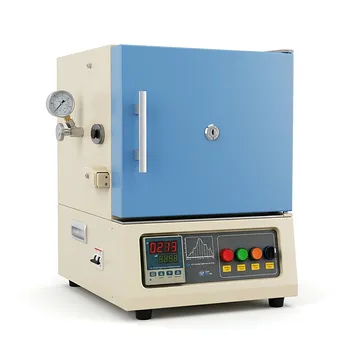
1200C Hybrid Muffle and Tube Furnace for Material Research with Dual Atmosphere Control Quartz Tubes
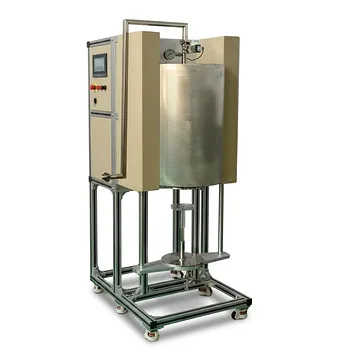
1200°C Atmosphere Controlled Automatic Bottom Loading Furnace with 6 Inch Quartz Tube
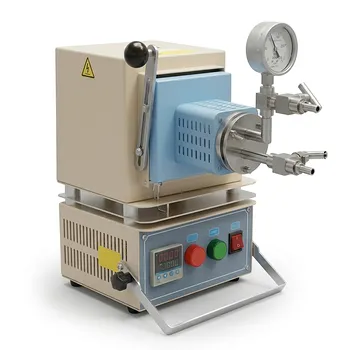
Compact Hybrid Muffle and Tube Furnace for 1000C Controlled Atmosphere Laboratory Material Sintering

Compact Vertical Split Quartz Tube Furnace with Stainless Steel Vacuum Flanges for Rapid Thermal Quenching and Controlled Atmosphere Material Processing

Three Zone Tube Furnace with 11 Inch or 15 Inch Quartz Tube and Hinged Flanges for Vacuum Atmosphere Heat Treatment
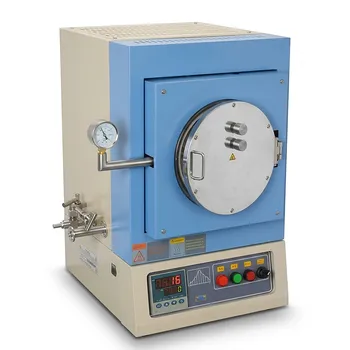
1100°C High Temperature Quartz Chamber Furnace 8 Inch OD with 7.6 Liter Capacity and Vacuum Atmosphere Capability
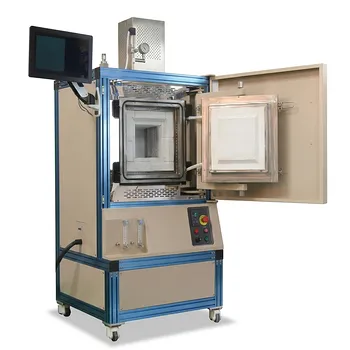
High Temperature Hydrogen Atmosphere Box Furnace 1650C Max Reducing Environment Material Synthesis System 8x8x8 Chamber

High Temperature 1700C Vertical Tube Furnace for Powder Spherification and Material Sintering

Compact High Temperature 1600C Tube Furnace with 50mm Alumina Tube and Vacuum Flanges for Material Sintering

High Temperature 1700C Tube Furnace with High Vacuum Turbomolecular Pump System and Multi Channel Mass Flow Controller Gas Mixer

High Temperature 1700C Six Zone Split Tube Furnace with Alumina Tube and Water Cooled Flanges

1800C High Temperature Compact Vacuum Tube Furnace with 60mm OD Alumina Tube and Kanthal MoSi2 Heating Elements

1100C Tube Furnace with Vacuum Flange and Programmable Temperature Controller for Material Science and Industrial Heat Treatment
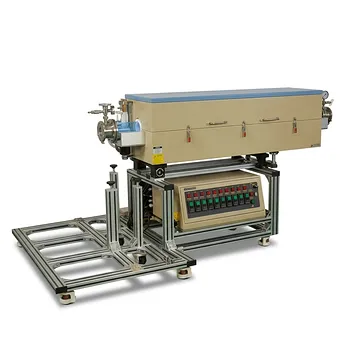
Ten Zone Multi Orientation Laboratory Tube Furnace for 1200C High Temperature Gradient Thermal Processing

High Temperature 1700C Benchtop Tube Furnace with 5 Inch Heating Zone High Purity Alumina Tube and Vacuum Sealing Flanges

1200C High Throughput Multi Channel Tube Furnace with 50mm Quartz Tubes for Annealing and Material Phase Diagram Research

High Temperature Automated 5 Inch Tube Furnace for Autonomous Material Research and Advanced Laboratory R&D

1700C Hydrogen Gas Tube Furnace with 60mm Alumina Process Tube and Integrated Hydrogen Safety Detector