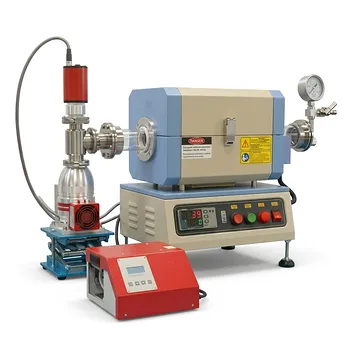
Why is argon gas pre-flushing necessary for a tube furnace prior to vacuum sintering Galena? Prevent PbS Oxidation
Updated 3 months ago
Argon gas pre-flushing is a critical safeguard against chemical degradation during the sintering of Galena. This process removes residual oxygen and water vapor that a vacuum pump alone may not fully eliminate, specifically protecting the Lead Sulfide (PbS) phase from converting into lead oxides. By establishing an ultra-low oxygen baseline, the procedure ensures the chemical and phase stability of the final sintered product.
Core Takeaway: Pre-flushing creates a high-purity inert environment that prevents the oxidative degradation of Galena, ensuring the material maintains its intended lead-sulfide structure rather than reacting with trace air molecules at high temperatures.
The Chemistry of Galena Stability
Preventing Oxidative Degradation
Galena, or Lead Sulfide (PbS), is highly sensitive to oxygen when exposed to the high temperatures required for sintering.
If oxygen is present, the Galena can react to form lead oxides and sulfur dioxide, fundamentally changing the material's chemical identity and physical properties.
Pre-flushing with high-purity argon ensures these reactive molecules are displaced before the furnace begins to ramp up in temperature.
Managing Moisture and Water Vapor
Residual water vapor trapped in the furnace chamber or on the surface of the crucibles can act as a powerful oxidizing agent at high heat.
The primary reference emphasizes that pre-flushing is performed multiple times specifically to target and remove this residual moisture.
By eliminating water vapor early, you prevent complex side reactions that could compromise the phase stability of the Lead Sulfide.
Why Vacuum Alone is Insufficient
The Problem of Residual Air Molecules
While a vacuum pump removes the bulk of the air, it often leaves behind trace concentrations of oxygen that are sufficient to cause surface oxidation on sensitive powders.
Cyclic gas displacement—alternating between vacuuming and argon flushing—is more effective at "diluting" the remaining atmosphere than a single vacuum pull.
This ensures that the initial environment has an extremely low oxygen content, providing a cleaner starting point for the subsequent high-vacuum operation.
Protecting Material Integrity
For materials like Galena, maintaining purity and conductivity depends on the absence of oxide films.
Similar to how argon prevents brittle oxide films from forming on aluminum or titanium, it ensures Galena does not suffer from uncontrolled oxidative changes.
This protection is vital for achieving the intended reaction path and ensuring the final sintered composite meets technical specifications.
Understanding the Trade-offs
Gas Consumption vs. Purity
Conducting multiple argon flushes increases the operating cost of the sintering process due to the consumption of high-purity gas.
However, the cost of a failed batch—where the Galena has oxidized into lead oxide—far outweighs the cost of the argon used for purging.
The primary risk is incomplete displacement; if the flushing cycles are too short or too few, pockets of oxygen may remain in the "dead zones" of the furnace tube.
Temperature Sensitivity
The pre-flushing must be completed before the heating phase begins.
If the furnace begins to heat while residual oxygen is still present, the chemical activity of the Galena increases, making oxidation nearly instantaneous.
Therefore, the timing of the argon purge is just as critical as the purity of the gas itself.
How to Apply This to Your Process
Making the Right Choice for Your Goal
- If your primary focus is Phase Purity: Use a minimum of three vacuum-and-fill cycles with high-purity argon to ensure no lead oxide phases form during sintering.
- If your primary focus is Cost Efficiency: Monitor the oxygen levels of the exhaust gas to determine the minimum number of flushes required to reach your target ppm baseline.
- If your primary focus is Material Conductivity: Ensure the argon flow is maintained at a stable rate throughout the cooling phase to prevent "back-streaming" of air into the chamber.
By rigorously purging the furnace environment, you ensure that the high-temperature sintering process remains a physical transformation rather than a destructive chemical reaction.
Summary Table:
| Feature/Process | Impact on Galena (PbS) | Key Benefit |
|---|---|---|
| Oxygen Removal | Prevents conversion to lead oxides | Maintains chemical & phase stability |
| Moisture Elimination | Stops water vapor from acting as an oxidant | Prevents complex side reactions |
| Cyclic Displacement | Dilutes trace air molecules in "dead zones" | Achieves ultra-low oxygen baseline |
| Pre-heat Timing | Blocks reaction before chemical activity rises | Ensures high-purity sintered results |
Achieve Precise Atmosphere Control with THERMUNITS
Maintaining the integrity of sensitive materials like Galena requires expert-grade thermal equipment. THERMUNITS is a leading manufacturer of high-temperature laboratory equipment for material science and industrial R&D. We offer a comprehensive range of solutions, including Tube, Vacuum, Atmosphere, Muffle, and Rotary furnaces, as well as specialized CVD/PECVD systems and Vacuum Induction Melting (VIM) furnaces.
Our equipment is engineered to provide the high-purity environments and precise gas displacement cycles necessary to prevent oxidation and ensure phase purity.
Ready to elevate your research and production standards?
Contact our technical team today to discuss your specific heat treatment requirements and discover how our advanced thermal solutions can optimize your material performance.
References
- Bety Al-Saqarat, Ehab AlShamaileh. Study of Galena Ore Powder Sintering and Its Microstructure. DOI: 10.3390/met14040439
Mentioned Products
- Compact High Temperature 1600C Tube Furnace with 50mm Alumina Tube and Vacuum Flanges for Material Sintering
- High Temperature 1700C Vertical Tube Furnace for Powder Spherification and Material Sintering
- Compact Hybrid Muffle and Tube Furnace for 1000C Controlled Atmosphere Laboratory Material Sintering
- High Temperature Rotary Tilt Tubular Furnaces for Advanced Powder Sintering and Material Processing
- 1700C Compact Hybrid Furnace with Dual Layer Box Sintering and Controlled Atmosphere Alumina Tubes
People Also Ask
- What is the role of a high-temperature tube furnace in the calcination process of ZnO/In2O3 nanocomposites?
- Why is a high-temperature tube furnace required for CuAlO2 heat treatment? Master Phase Transformation Today
- Function of tube furnaces in cellulose aerogel carbonization? Achieve High-Performance Materials
- What role does a high-temperature tube furnace play in the carbonization? Mastering Precision Carbon Synthesis
- What role does a high-temperature tube furnace play in executing nitrogen absorption kinetic experiments? Expert Insights

Tech Team · ThermUnits
Last updated on Jun 02, 2026
Related Products

Compact High Temperature 1600C Tube Furnace with 50mm Alumina Tube and Vacuum Flanges for Material Sintering

High Temperature 1700C Vertical Tube Furnace for Powder Spherification and Material Sintering
Compact Hybrid Muffle and Tube Furnace for 1000C Controlled Atmosphere Laboratory Material Sintering
High Temperature Rotary Tilt Tubular Furnaces for Advanced Powder Sintering and Material Processing
1700C Compact Hybrid Furnace with Dual Layer Box Sintering and Controlled Atmosphere Alumina Tubes
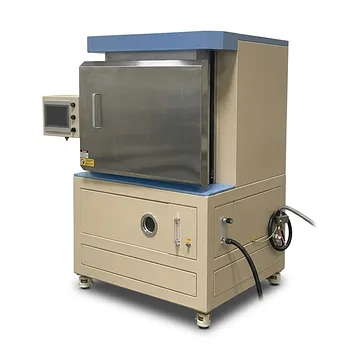
1650C High Temperature Atmosphere Controlled Box Furnace with 65L Chamber for Advanced Material Sintering and Industrial Heat Treatment
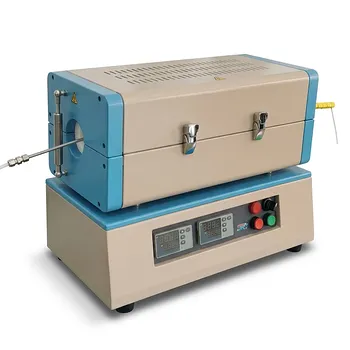
Gas Pre-Heating Tube Furnace for High Temperature Pyrolysis Reactors and Material Science Research
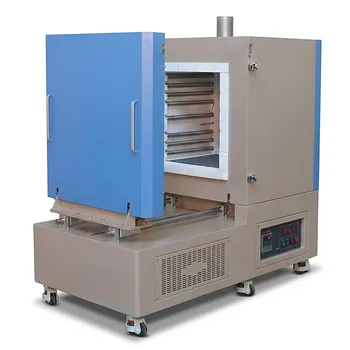
1200C Five Side Heating Muffle Furnace with Sliding Door 125L Volume High Temperature Heat Treatment System for Large Scale Sintering and Annealing
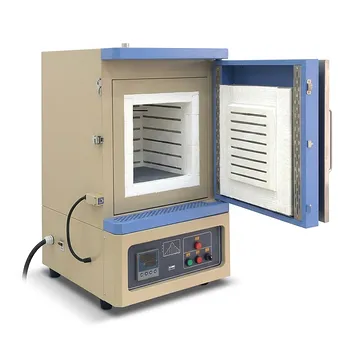
Five Side Heating Muffle Furnace High Purity Alumina Fiber 27L Chamber 1200C High Temperature Thermal Processing System for Sintering Annealing and Materials Research

Compact Vertical Split Quartz Tube Furnace with Stainless Steel Vacuum Flanges for Rapid Thermal Quenching and Controlled Atmosphere Material Processing

Vertical 1700C Vacuum and Atmosphere Tube Furnace with 80mm Alumina Tube

1800C High Temperature Compact Vacuum Tube Furnace with 60mm OD Alumina Tube and Kanthal MoSi2 Heating Elements
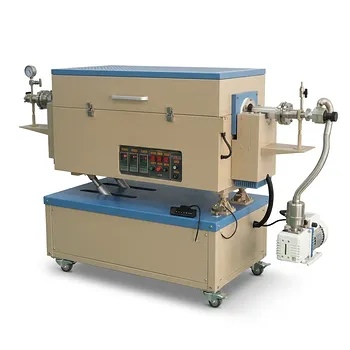
Three Zone Rotary Tube Furnace for High Temperature Powder Processing and Material Research
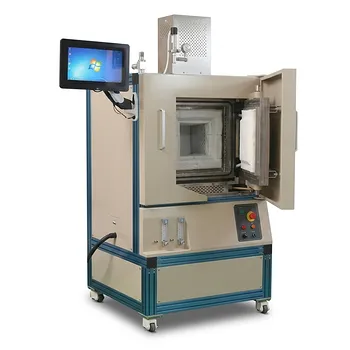
High Temperature Oxygen and Inert Atmosphere Controlled Furnace 8 Liter 1700C Sintering System for Advanced Materials RD
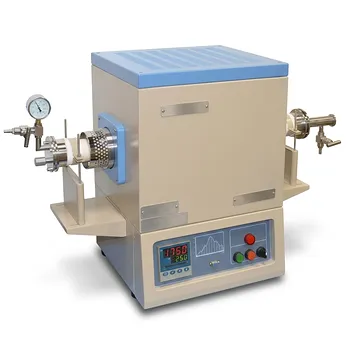
High Temperature Compact Vacuum Tube Furnace 1750C Max 60mm OD Alumina Tube
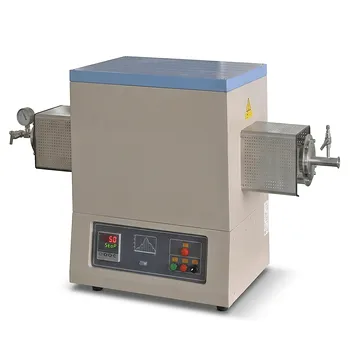
High Temperature 1700C Tube Furnace with 4 Inch OD Alumina Tube and Vacuum Sealing Flanges
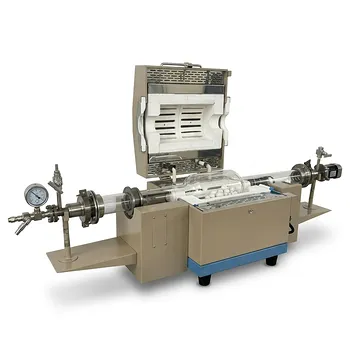
High Temperature Rotary Tube Furnace with Integrated Ball Milling and Gas Flow Function for Powder Nitriding

1700C Hydrogen Gas Tube Furnace with 60mm Alumina Process Tube and Integrated Hydrogen Safety Detector
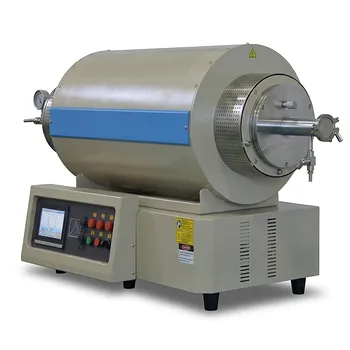
1200C Max Three Zone Tube Furnace 6 Inch OD Max with Tube and Flange