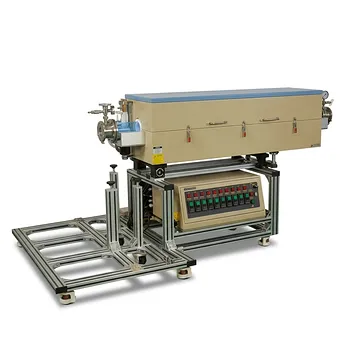
Why is high-temperature calcination in an oxygen atmosphere tube furnace necessary for the final formation of LS(MFCCN)O3?
Updated 5 months ago
High-temperature oxygen-rich calcination is the fundamental driver for the structural and electronic realization of LS(MFCCN)O3. In a tube furnace at approximately 800°C, high thermal energy triggers the transition from amorphous precursor components into a defined perovskite crystal lattice by facilitating the diffusion of metal ions. Simultaneously, the flowing pure oxygen atmosphere inhibits unwanted reduction reactions, ensuring that metal elements maintain the specific oxidation states required for high electrocatalytic activity.
The formation of LS(MFCCN)O3 relies on the synergy between thermal energy, which drives phase transformation, and an oxidative environment, which regulates the material’s electronic profile. This dual-action process is mandatory to achieve both the structural integrity and the active chemical sites necessary for its intended function.
Driving Phase Transformation and Crystallization
Overcoming Energy Barriers for Ion Diffusion
The synthesis of complex oxides like LS(MFCCN)O3 requires significant kinetic energy to move heavy metal ions into their specific positions within a perovskite lattice.
Thermal energy provided by the furnace at 800°C allows these ions to overcome lattice resistance and diffuse through the solid state, ensuring a homogeneous distribution of the MFCCN components.
Transitioning from Amorphous to Periodic Structures
Precursors created via hydrothermal or chemical methods often exist in an amorphous or disordered state with low stability.
The calcination process triggers a permanent phase transformation, converting these disordered components into a coherent, thermodynamically stable crystal phase that defines the material's properties.
The Role of the Oxygen Atmosphere
Inhibiting Undesired Reduction Reactions
In a standard or inert atmosphere, many transition metals within the LS(MFCCN)O3 structure are susceptible to thermal reduction, where they lose oxygen and change valence states.
A continuous flow of pure oxygen creates a high partial pressure that suppresses these reduction reactions, keeping the metal elements in their intended, high-valence oxidation states.
Regulating Oxygen Vacancy Concentration
Oxygen vacancies are critical defects that act as active sites for electrocatalytic reactions in perovskite materials.
By utilizing a controlled oxygen atmosphere in a tube furnace, the concentration of these vacancies can be finely tuned to maximize electrocatalytic activity without compromising the stability of the crystal framework.
Structural Refinement and Purity
Removal of Residual Volatiles
Similar to other oxide synthesis processes, high-temperature treatment is necessary to drive off interlayer carbonates, crystalline water, or organic templates that may remain from the precursor stage.
The removal of these impurities "cleans" the surface and internal pores, ensuring that the final LS(MFCCN)O3 has a high chemical purity and accessible surface area for reactions.
Minimizing Lattice Defects
While crystallization begins at lower temperatures, 800°C is often required to perfect the crystal lattice and eliminate structural defects.
A well-ordered lattice improves the transport efficiency of photogenerated or electrochemical charge carriers, which is decisive for the material's performance in energy applications.
Understanding the Trade-offs
Sintering versus Surface Area
While high temperatures are necessary for phase formation, excessive heat can lead to sintering, where small grains fuse into larger particles.
This process reduces the specific surface area, potentially limiting the material's gas-sensing or catalytic capabilities; therefore, the 800°C threshold must be strictly maintained to balance crystallinity with porosity.
Oxidation State Over-Saturation
An excessively aggressive oxygen atmosphere could theoretically drive metals to oxidation states that are too high, leading to lattice strain or instability.
The furnace must provide a stable, constant flow rather than just a pressurized static environment to maintain the delicate equilibrium of the oxygen-metal bonds.
How to Apply This to Your Project
- If your primary focus is phase purity: Ensure the furnace maintains a stable 800°C for a sufficient duration to allow complete ion diffusion and perovskite realization.
- If your primary focus is catalytic performance: Closely monitor the oxygen flow rate to precisely regulate the density of oxygen vacancies and active metal sites.
- If your primary focus is high surface area: Optimize the ramp-up and cooling rates of the tube furnace to prevent excessive grain growth and particle agglomeration.
The success of LS(MFCCN)O3 synthesis depends entirely on the precise management of thermal energy and atmospheric chemistry to lock in the desired perovskite phase.
Summary Table:
| Process Element | Specific Role in LS(MFCCN)O3 Synthesis | Key Performance Outcome |
|---|---|---|
| High Temperature | Triggers ion diffusion and move metal ions into lattice positions | Stable Perovskite Crystal Structure |
| Oxygen Atmosphere | Prevents thermal reduction of transition metal elements | Maintained High-Valence Oxidation States |
| Atmosphere Control | Precisely regulates the concentration of oxygen vacancies | Optimized Electrocatalytic Activity |
| Thermal Energy | Drives off residual carbonates, water, and organic templates | Superior Chemical Purity & Surface Area |
Achieve Unmatched Material Precision with THERMUNITS
Optimizing advanced materials like LS(MFCCN)O3 requires exact thermal and atmospheric control. THERMUNITS is a leading manufacturer of high-temperature laboratory equipment specifically designed for material science and industrial R&D.
Our comprehensive range of solutions—including Atmosphere Tube Furnaces, Muffle Furnaces, Vacuum/CVD Systems, and Hot Press Furnaces—empowers researchers to achieve the precise phase purity and catalytic performance required for next-generation energy applications.
Ready to elevate your heat treatment process? Contact our technical experts today to find the perfect thermal processing solution for your laboratory.
References
- Zhanpeng Liu, Chaozhu Shu. Strain‐rich high‐entropy perovskite oxide of (La<sub>0.8</sub>Sr<sub>0.2</sub>)(Mn<sub>0.2</sub>Fe<sub>0.2</sub>Cr<sub>0.2</sub>Co<sub>0.2</sub>Ni<sub>0.2</sub>)O<sub>3</sub> for durable and effective catalysis of oxygen redox reactions in lithium‐oxygen battery. DOI: 10.1002/bte2.20230053
Mentioned Products
- High Temperature Oxygen and Inert Atmosphere Controlled Furnace 8 Liter 1700C Sintering System for Advanced Materials RD
- Vertical 1700C Vacuum and Atmosphere Tube Furnace with 80mm Alumina Tube
- Compact Hybrid Muffle and Tube Furnace for 1000C Controlled Atmosphere Laboratory Material Sintering
- Compact Vertical Split Quartz Tube Furnace with Stainless Steel Vacuum Flanges for Rapid Thermal Quenching and Controlled Atmosphere Material Processing
- Three Zone Tube Furnace with 11 Inch or 15 Inch Quartz Tube and Hinged Flanges for Vacuum Atmosphere Heat Treatment
People Also Ask
- What role does atmosphere control play in technical ceramics and glass? Master Material Purity and Precision
- What are the advantages of using an atmosphere-controlled high-temperature sintering furnace? Precise Oxygen Control
- Why is a tube furnace required for FGM-PhG structural color ceramics? Key to Carbon Preservation & Vibrant Color
- What role does an atmosphere furnace play in CN & Aux-CN preparation? Master Thermal Polycondensation & Stability.
- How high-temp furnaces ensure membrane integrity in molten salt impregnation? Precision Thermal & Atmosphere Control

Tech Team · ThermUnits
Last updated on Apr 14, 2026
Related Products
High Temperature Oxygen and Inert Atmosphere Controlled Furnace 8 Liter 1700C Sintering System for Advanced Materials RD

Vertical 1700C Vacuum and Atmosphere Tube Furnace with 80mm Alumina Tube
Compact Hybrid Muffle and Tube Furnace for 1000C Controlled Atmosphere Laboratory Material Sintering

Compact Vertical Split Quartz Tube Furnace with Stainless Steel Vacuum Flanges for Rapid Thermal Quenching and Controlled Atmosphere Material Processing

Three Zone Tube Furnace with 11 Inch or 15 Inch Quartz Tube and Hinged Flanges for Vacuum Atmosphere Heat Treatment
1200C Hydrogen Atmosphere Box Furnace with 5 Heated Sides and 64L Chamber
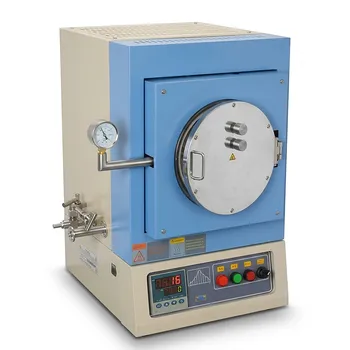
1100°C High Temperature Quartz Chamber Furnace 8 Inch OD with 7.6 Liter Capacity and Vacuum Atmosphere Capability
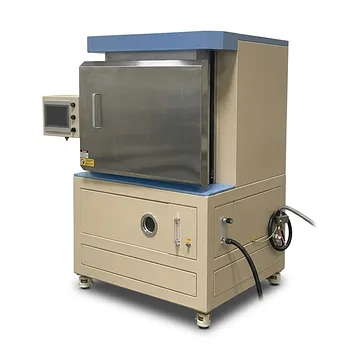
1650C High Temperature Atmosphere Controlled Box Furnace with 65L Chamber for Advanced Material Sintering and Industrial Heat Treatment
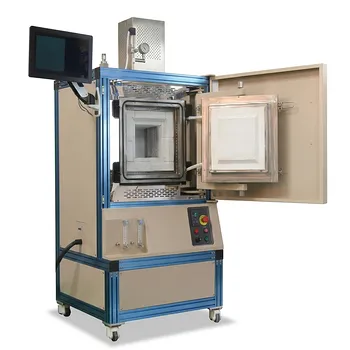
High Temperature Hydrogen Atmosphere Box Furnace 1650C Max Reducing Environment Material Synthesis System 8x8x8 Chamber
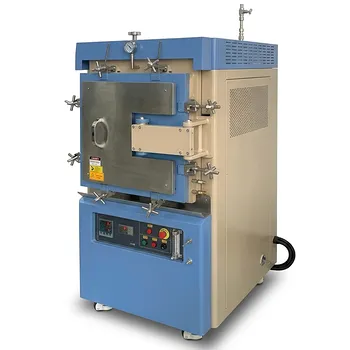
Atmosphere Controlled Muffle Furnace 1700C Maximum Temperature 80L High Capacity Vacuum Inert Gas Box Furnace
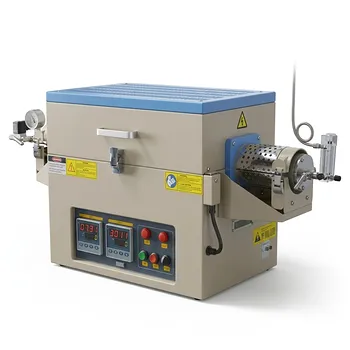
1100C Dual Zone Hydrogen Gas Tube Furnace with Quartz Tube and Integrated H2 Leak Detection System
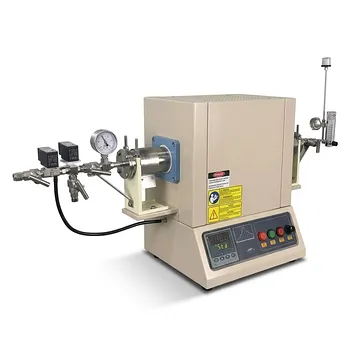
1500C Compact Hydrogen Gas Tube Furnace with 2 Inch Alumina Tube and Hydrogen Detector

1700C Hydrogen Gas Tube Furnace with 60mm Alumina Process Tube and Integrated Hydrogen Safety Detector

High Temperature 1700C Vertical Tube Furnace for Powder Spherification and Material Sintering

High Temperature 1700C Six Zone Split Tube Furnace with Alumina Tube and Water Cooled Flanges

Compact High Temperature 1600C Tube Furnace with 50mm Alumina Tube and Vacuum Flanges for Material Sintering

High Temperature Automated 5 Inch Tube Furnace for Autonomous Material Research and Advanced Laboratory R&D

1800C High Temperature Compact Vacuum Tube Furnace with 60mm OD Alumina Tube and Kanthal MoSi2 Heating Elements
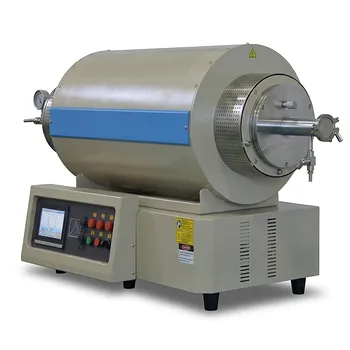
1200C Max Three Zone Tube Furnace 6 Inch OD Max with Tube and Flange