Why is high temperature control precision (±5°C) required for LiNiO2 furnaces? Ensure Battery Material Excellence
Updated 3 months ago
Temperature precision is the linchpin of LiNiO2 synthesis. For high-quality LiNiO2, a variance as small as ±5°C can drastically alter the material's grain size and electrochemical performance. This level of control is required to balance particle growth against defect density, ensuring optimal lithium-ion diffusion while preventing irreversible thermal degradation.
Core Takeaway: High-precision furnace control is a fundamental requirement for LiNiO2 production because the material's electrochemical utility depends on a delicate structural balance that only exists within a narrow thermal window, specifically around 750°C.
The Impact of Temperature on Microstructure
Controlling Grain Size Uniformity
The grain size of LiNiO2 is extremely sensitive to calcination temperatures. Precise furnace control prevents non-uniform grain sizes caused by subtle temperature variations across the heating chamber.
Optimizing Electrochemical Performance
Even minor fluctuations can compromise the material's ability to store and release energy effectively. High precision ensures the microscopic structure is regulated to meet strict chemical performance requirements.
Regulating Lithium-Ion Diffusion Paths
Precise control allows primary particles to grow to an optimal size. This growth is necessary to shorten lithium-ion diffusion paths, which directly improves the rate at which the battery can charge and discharge.
Navigating the 750°C Critical Process Point
Balancing Defect Density and Growth
At approximately 750°C, the synthesis reaches a critical threshold where defect density and particle growth must be balanced. Accurate temperature control ensures that the material achieves high crystallinity without introducing structural flaws.
Preventing Material Degradation
Exceeding the target temperature, even by a small margin, can lead to material degradation. Precise furnace regulation inhibits the excessive thermal energy that would otherwise break down the LiNiO2 framework.
Maintaining Stoichiometric Fixation
Stable thermal environments are vital for maintaining the relationship between sintering temperature and the final chemical composition. This ensures stoichiometric fixation, which is necessary for the long-term stability of the cathode material.
The Necessity of a Stable Thermal Field
Avoiding Structural Gradients
A uniform thermal field within the furnace prevents the formation of unintended structural gradients. Without precision, different parts of the same batch might exhibit different phase transitions, leading to inconsistent battery performance.
Managing Long-Duration Reactions
Synthesis processes often require extended periods at high heat to ensure full chemical homogenization. High-precision programming maintains a consistent reaction rate over many hours, preventing internal stress within the material.
Suppressing Impurity Phases
Strictly controlled heating rates and soaking temperatures ensure the nucleation of crystals within specific space groups. This precision results in a high-crystallinity structure free of unwanted impurity phases that could hinder ion transport.
Understanding the Trade-offs
Equipment Complexity and Cost
Achieving ±5°C or higher precision requires advanced programmable logic controllers (PLCs) and high-quality heating elements. This increases the initial capital expenditure and the technical expertise required for operation.
Calibration and Sensor Drift
High-precision systems are sensitive to thermocouple aging and sensor drift. Maintaining this level of accuracy requires frequent calibration and maintenance to ensure the furnace does not deviate from the programmed thermal profile over time.
Throughput vs. Uniformity
Attempting to increase production volume can lead to thermal lagging in the center of large batches. Balancing high-volume throughput with the need for ±5°C precision requires sophisticated furnace designs, such as rotary or specialized tube furnaces, rather than standard static muffle furnaces.
How to Apply This to Your Project
High-precision thermal processing is the only way to ensure the structural integrity of LiNiO2. Your choice of equipment and settings should reflect the specific performance goals of your material.
- If your primary focus is Maximum Energy Density: Prioritize furnace precision at the 750°C mark to optimize the balance between defect density and particle growth.
- If your primary focus is Batch Consistency: Invest in furnaces with multi-zone heating to ensure a uniform thermal field and prevent structural gradients across the sample.
- If your primary focus is Material Longevity: Strictly enforce upper temperature limits to prevent the subtle thermal degradation that occurs during over-calcination.
Precise thermal regulation transforms LiNiO2 from a volatile chemical mixture into a high-performance electrochemical engine.
Summary Table:
| Key Aspect | Impact of High Precision (±5°C) | Risk of Temperature Fluctuation |
|---|---|---|
| Microstructure | Uniform grain size and optimized growth | Non-uniform grains and structural gradients |
| 750°C Threshold | Balanced defect density & high crystallinity | Irreversible material degradation |
| Ion Diffusion | Shortened paths for faster charging | Reduced battery rate performance |
| Phase Purity | Suppression of unwanted impurity phases | Introduction of phases that hinder ion transport |
| Stoichiometry | Stable chemical composition fixation | Deviation from target chemical ratios |
Master Your Material Synthesis with THERMUNITS
Achieving the strict ±5°C precision required for high-quality LiNiO2 requires superior thermal engineering. THERMUNITS is a leading manufacturer of high-temperature laboratory equipment, providing the advanced solutions essential for material science and industrial R&D.
We offer a comprehensive range of thermal processing equipment, including Muffle, Vacuum, Atmosphere, Tube, Rotary, and Hot Press furnaces, as well as CVD/PECVD systems, Dental Furnaces, Electric Rotary Kilns, and Vacuum Induction Melting (VIM) furnaces. Our equipment is engineered to provide the stable thermal fields and programmable accuracy needed to eliminate structural defects and ensure batch-to-batch consistency.
Ready to enhance your lab's research capabilities and material performance?
Contact THERMUNITS today for a professional thermal solution!
References
- Leonhard Karger, Torsten Brezesinski. From Li<sub>2</sub>NiO<sub>3</sub> to high-performance LiNiO<sub>2</sub> cathodes for application in Li-ion and all-solid-state batteries. DOI: 10.1039/d4cc03873h
Mentioned Products
- 1100C High Pressure Rocking Tube Furnace with 2 Inch Super Alloy Processing Tube for Material Synthesis
- 1500C Max Dual Zone Rotary Tube Furnace with 60 mm OD Alumina Tube for High Temperature Material Synthesis
- 1500C 3-Zone Rotary Tube Furnace 60mm with Automatic Powder Feeding and Receiving System for Continuous Material Synthesis
- Two Zone Rotary Tube Furnace for Powder CVD Coating and Core Shell Material Synthesis 1100C
- High Temperature 1700C Vertical Tube Furnace for Powder Spherification and Material Sintering
People Also Ask
- Why is a high-pressure tube furnace required for the nitriding process of Fe-Cr-N alloys? Enhance Phase Stability
- What is the function of a high-temperature tube furnace in the synthesis of graphene oxide? Mastering LPCVD Processes
- Pt2CoM synthesis: High-temp tube furnace conditions (1000°C & 5% H2/Ar) for L10 intermetallic catalysts.
- What core conditions does a high-temperature tube furnace provide for rGO aerogels? Mastering Precision Synthesis.
- Why is it necessary to introduce steam into a high-temperature tube furnace during ACNN activation? Enhance Porosity.

Tech Team · ThermUnits
Last updated on Jun 02, 2026
Related Products
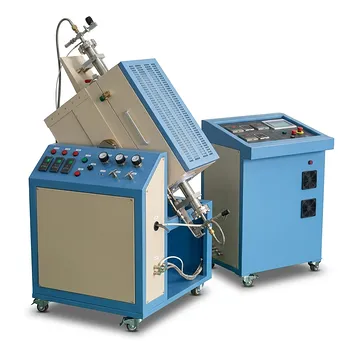
1100C High Pressure Rocking Tube Furnace with 2 Inch Super Alloy Processing Tube for Material Synthesis
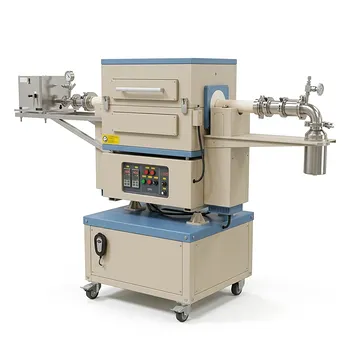
1500C Max Dual Zone Rotary Tube Furnace with 60 mm OD Alumina Tube for High Temperature Material Synthesis
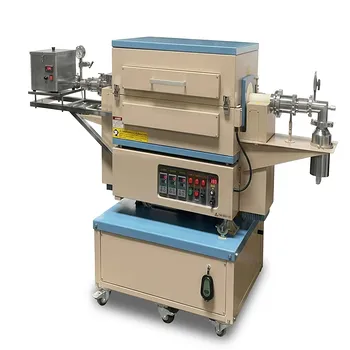
1500C 3-Zone Rotary Tube Furnace 60mm with Automatic Powder Feeding and Receiving System for Continuous Material Synthesis
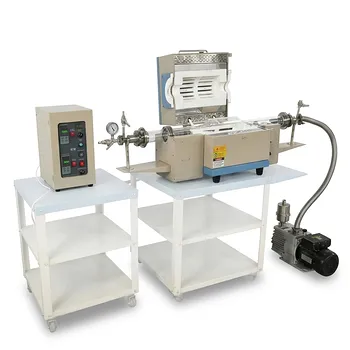
Two Zone Rotary Tube Furnace for Powder CVD Coating and Core Shell Material Synthesis 1100C

High Temperature 1700C Vertical Tube Furnace for Powder Spherification and Material Sintering
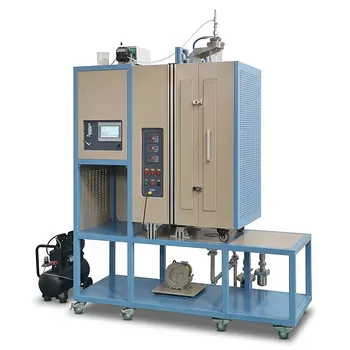
1500C Three Zone Vertical Pyrolysis Furnace for Nanoparticle Synthesis and Advanced Oxide Coating
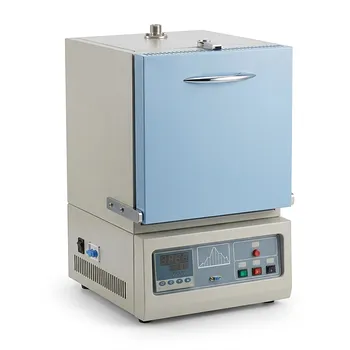
1750C Compact Muffle Furnace 1.7L Ultra High Temperature Laboratory Sintering System for Advanced Ceramics and Material Science Research
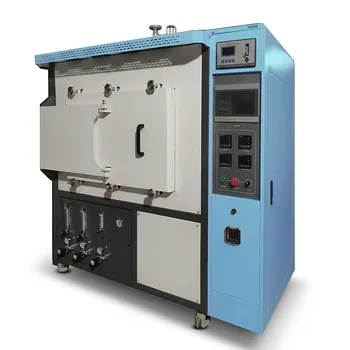
Roller Table Atmosphere Furnace 1500C High Temperature Battery Material Sintering System 112L Capacity
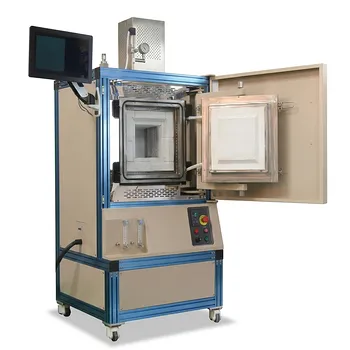
High Temperature Hydrogen Atmosphere Box Furnace 1650C Max Reducing Environment Material Synthesis System 8x8x8 Chamber
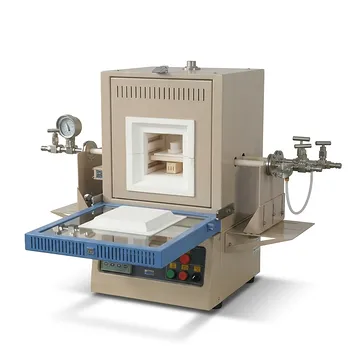
1700C Compact Hybrid Furnace with Dual Layer Box Sintering and Controlled Atmosphere Alumina Tubes
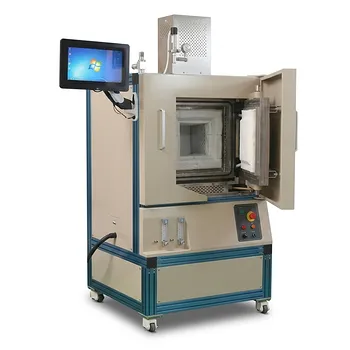
High Temperature Oxygen and Inert Atmosphere Controlled Furnace 8 Liter 1700C Sintering System for Advanced Materials RD
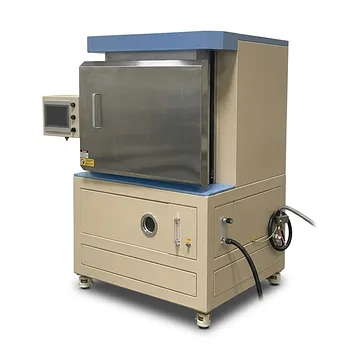
1650C High Temperature Atmosphere Controlled Box Furnace with 65L Chamber for Advanced Material Sintering and Industrial Heat Treatment
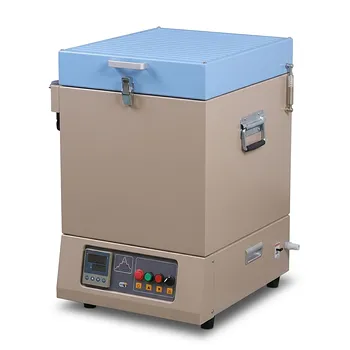
High Temperature Vertical Crucible Furnace with 22L Heating Chamber and 1200C Maximum Temperature
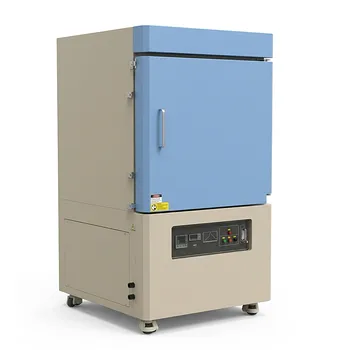
Industrial Large Box Furnace 1700C 216L High Temp Muffle Sintering System
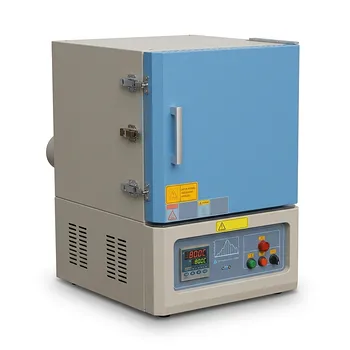
1800C Bench Top Muffle Furnace 18 Liters with Kanthal Super 1900 Heating Elements for High Purity Ceramic Sintering and Material Research
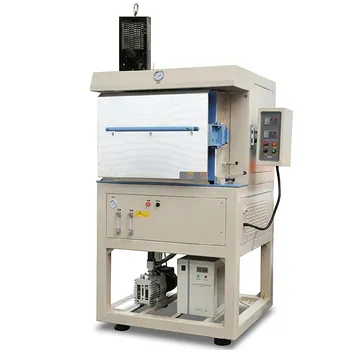
1200C Hydrogen Atmosphere Box Furnace with 5 Heated Sides and 64L Chamber
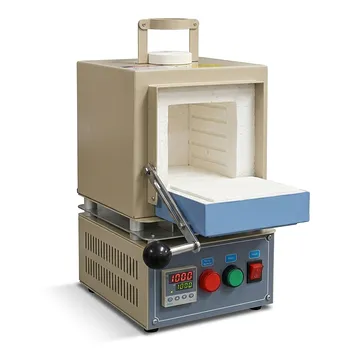
Compact 1000C Muffle Furnace with Programmable Controller and 2 Inch Top Port for Vacuum and Atmosphere Material Research
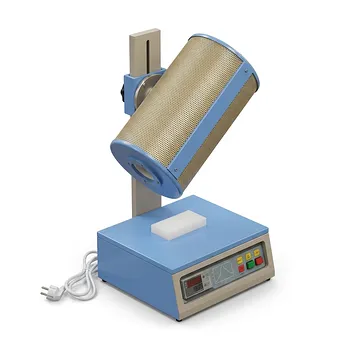
1100°C Vertical Laboratory Furnace for DIY Tubular Reactors with PID Temperature Controller
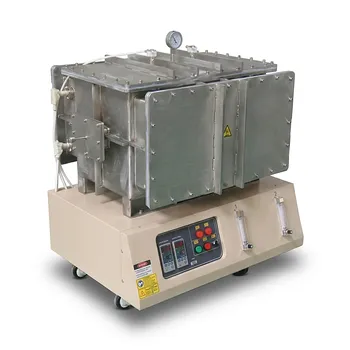
1500°C Atmosphere Controlled Rapid Heating Furnace for Material Science and Battery Powder Sintering
