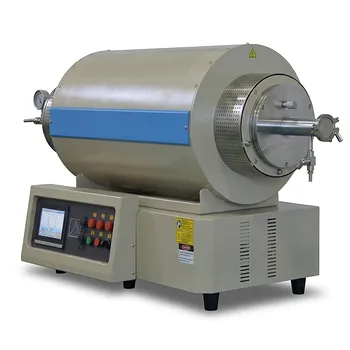
Why is it necessary to introduce high-purity nitrogen into an atmosphere tube furnace during the pyrolysis of macroalgae?
Updated 5 months ago
Introducing high-purity nitrogen is critical for successful macroalgae pyrolysis. It creates a strictly inert, oxygen-free environment within the furnace chamber. This prevents the biomass from undergoing combustion (burning) at high temperatures, ensuring the material decomposes into carbon-rich biochar rather than being reduced to ash.
The primary role of high-purity nitrogen is to displace oxygen, thereby shifting the process from combustion to thermal decomposition. This preserves the carbon skeleton of the macroalgae and allows for the precise control of biochar yield, pore structure, and chemical composition.
Preventing Undesired Oxidative Reactions
Eliminating Combustion at High Temperatures
Pyrolysis is fundamentally defined as the thermal decomposition of organic material in the absence of oxygen. If oxygen remains in the furnace, the macroalgae will catch fire and burn as soon as it reaches its ignition point.
Introducing nitrogen ensures that the energy provided by the furnace is used exclusively for chemical cracking rather than fueling a fire. This transition from aerobic to anaerobic conditions is what makes the production of biochar possible.
Protecting the Carbon Skeleton
High-purity nitrogen prevents the "oxidation" of the raw material's structure. By excluding oxygen, the process preserves the integrity of the carbon atoms within the algae.
This preservation ensures that the resulting biochar maintains a solid framework. Without this protective atmosphere, the yield would drop significantly as carbon is lost to the atmosphere as carbon dioxide.
Driving the Thermochemical Conversion
Facilitating Carbonization and Aromatization
In a nitrogen-rich environment, the macroalgae undergoes specific chemical transformations like devolatilization and aromatization. These reactions are responsible for converting raw biomass into a stable, carbon-dense material.
The inert atmosphere allows these complex chemical bonds to break and reform into "pyrochar." This material is characterized by high carbon content and specific chemical properties that are unattainable in the presence of oxygen.
Role as a Carrier Gas for Volatiles
The nitrogen does not just sit in the furnace; it typically flows through it as a carrier gas. This continuous stream sweeps away volatile organic compounds and tars that are released as the algae breaks down.
Moving these vapors away from the reaction zone prevents them from undergoing secondary reactions that could interfere with the quality of the char. It also transports these valuable byproducts to condensation systems for further analysis or collection.
Ensuring Structural Integrity and Purity
Developing Pore Structures
The "activation" and clean development of the biochar's internal pores depend on a steady nitrogen flow. By removing volatile "gunk" during the heating process, nitrogen keeps the emerging pore structures clear.
This is essential if the biochar is intended for use in filtration or as a catalyst support. A stagnant or oxygenated environment would result in blocked pores or a collapsed internal structure.
Protecting Active Surface Phases
In advanced applications where macroalgae might be treated alongside metals or catalysts, nitrogen prevents these components from rusting or oxidizing. It ensures that active species, such as zero-valent iron or nickel, remain in their effective states.
Nitrogen also facilitates the formation of protective "shells," such as graphene layers, around these active materials. This enhances the final product's electrical conductivity and chemical stability.
Understanding the Trade-offs
Nitrogen Purity vs. Product Quality
Using lower-purity nitrogen can be tempting to reduce costs, but trace amounts of oxygen can lead to "partial oxidation." This unintended reaction can change the surface chemistry of the biochar, making experimental results inconsistent.
Flow Rate and Temperature Stability
While a high flow rate is excellent for removing volatiles, it can sometimes cause temperature fluctuations within the tube furnace. Balancing the flow rate is necessary to ensure the macroalgae is heated uniformly without "cold spots" caused by the incoming gas.
Cost and Gas Consumption
Continuous purging with high-purity nitrogen requires significant gas volume, especially during long "slow pyrolysis" cycles. Researchers must balance the need for a perfectly inert environment with the logistical and financial costs of high-volume gas usage.
How to Apply This to Your Project
- If your primary focus is maximizing biochar yield: Ensure a high-purity nitrogen purge begins well before heating starts to displace every trace of oxygen.
- If your primary focus is pore development for filtration: Maintain a constant, slightly higher flow rate to effectively sweep away all volatile compounds as they are generated.
- If your primary focus is chemical analysis of gases/tars: Use nitrogen as a precise carrier gas to transport vapors directly into a condensation or sampling system without delay.
By meticulously controlling the nitrogen atmosphere, you transform a simple heating process into a precise thermochemical tool for material synthesis.
Summary Table:
| Key Role of Nitrogen | Practical Benefit | Impact on Final Product |
|---|---|---|
| Oxygen Displacement | Prevents biomass combustion | Converts material to biochar instead of ash |
| Carrier Gas Action | Sweeps away volatiles and tars | Develops clear and high-quality pore structures |
| Inert Environment | Protects the carbon skeleton | Ensures high carbon density and aromatization |
| Surface Protection | Prevents oxidation of active phases | Maintains integrity of catalysts or metal additives |
Optimize Your Pyrolysis Research with THERMUNITS
Precise atmospheric control is the backbone of successful material synthesis. THERMUNITS is a leading manufacturer of high-temperature laboratory equipment, providing the advanced thermal processing solutions you need to achieve consistent, high-purity results in material science and industrial R&D.
Whether you are performing macroalgae pyrolysis or advanced CVD synthesis, our comprehensive range—including Atmosphere Tube Furnaces, Vacuum Furnaces, Muffle Furnaces, Rotary Kilns, and VIM systems—is engineered for durability and precision.
Ready to elevate your laboratory’s capabilities?
Contact our expert team today to find the perfect furnace for your application.
References
- Anjon Kumar Mondal, Unnikrishnan Kuzhiumparambil. Macroalgae-based biochar: preparation and characterization of physicochemical properties for potential applications. DOI: 10.1039/d4su00008k
Mentioned Products
- Vertical 1700C Vacuum and Atmosphere Tube Furnace with 80mm Alumina Tube
- 1200C Hybrid Muffle and Tube Furnace for Material Research with Dual Atmosphere Control Quartz Tubes
- 1200°C Atmosphere Controlled Automatic Bottom Loading Furnace with 6 Inch Quartz Tube
- Compact Hybrid Muffle and Tube Furnace for 1000C Controlled Atmosphere Laboratory Material Sintering
- Compact Vertical Split Quartz Tube Furnace with Stainless Steel Vacuum Flanges for Rapid Thermal Quenching and Controlled Atmosphere Material Processing
People Also Ask
- How is an industrial-grade vertical tube furnace utilized in smelting leaching residues? Enhance Metal Recovery Efficiency
- What is the function of a laboratory-grade vertical tube furnace in fast pyrolysis? Optimize Composite Research.
- How does a vertical tube furnace facilitate thermoelectric alloy melting? Precision synthesis for material homogeneity.
- Why is a thermocouple sensor indispensable for monitoring the vertical tube furnace during gallium oxide nanowire production? Optimize VLS Growth
- What are the advantages of using a vertical tube furnace for crucible experiments simulating steel-slag interactions?

Tech Team · ThermUnits
Last updated on Apr 14, 2026
Related Products

Vertical 1700C Vacuum and Atmosphere Tube Furnace with 80mm Alumina Tube
1200C Hybrid Muffle and Tube Furnace for Material Research with Dual Atmosphere Control Quartz Tubes
1200°C Atmosphere Controlled Automatic Bottom Loading Furnace with 6 Inch Quartz Tube
Compact Hybrid Muffle and Tube Furnace for 1000C Controlled Atmosphere Laboratory Material Sintering

Compact Vertical Split Quartz Tube Furnace with Stainless Steel Vacuum Flanges for Rapid Thermal Quenching and Controlled Atmosphere Material Processing
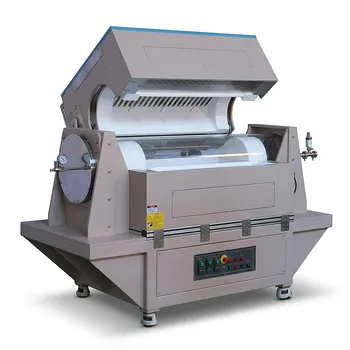
Three Zone Tube Furnace with 11 Inch or 15 Inch Quartz Tube and Hinged Flanges for Vacuum Atmosphere Heat Treatment
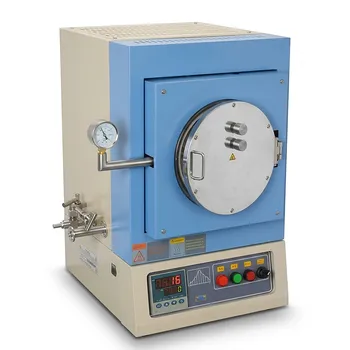
1100°C High Temperature Quartz Chamber Furnace 8 Inch OD with 7.6 Liter Capacity and Vacuum Atmosphere Capability
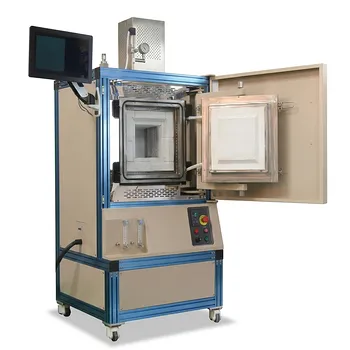
High Temperature Hydrogen Atmosphere Box Furnace 1650C Max Reducing Environment Material Synthesis System 8x8x8 Chamber

High Temperature 1700C Vertical Tube Furnace for Powder Spherification and Material Sintering

Compact High Temperature 1600C Tube Furnace with 50mm Alumina Tube and Vacuum Flanges for Material Sintering

High Temperature 1700C Tube Furnace with High Vacuum Turbomolecular Pump System and Multi Channel Mass Flow Controller Gas Mixer

High Temperature 1700C Six Zone Split Tube Furnace with Alumina Tube and Water Cooled Flanges

1800C High Temperature Compact Vacuum Tube Furnace with 60mm OD Alumina Tube and Kanthal MoSi2 Heating Elements

1100C Tube Furnace with Vacuum Flange and Programmable Temperature Controller for Material Science and Industrial Heat Treatment

High Temperature 1700C Benchtop Tube Furnace with 5 Inch Heating Zone High Purity Alumina Tube and Vacuum Sealing Flanges
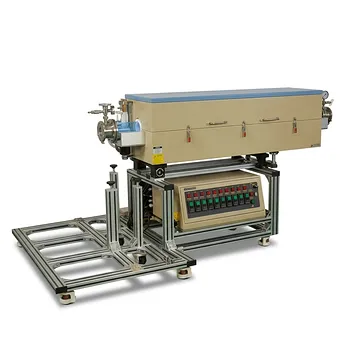
Ten Zone Multi Orientation Laboratory Tube Furnace for 1200C High Temperature Gradient Thermal Processing

1200C High Throughput Multi Channel Tube Furnace with 50mm Quartz Tubes for Annealing and Material Phase Diagram Research

High Temperature Automated 5 Inch Tube Furnace for Autonomous Material Research and Advanced Laboratory R&D
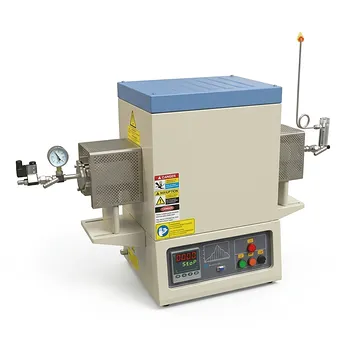
1700C Hydrogen Gas Tube Furnace with 60mm Alumina Process Tube and Integrated Hydrogen Safety Detector