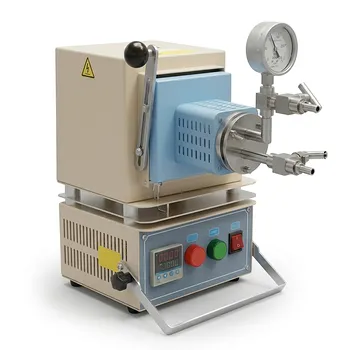
Why use a tube furnace with flowing argon for B-RAFM steel normalizing? Ensure Material Purity and Integrity at 1200°C
Updated 3 months ago
Normalizing B-RAFM steel at 1200 °C requires a tube furnace with flowing argon to create a sealed, non-oxidizing environment. This setup is critical because it prevents severe surface oxidation and decarburization while ensuring that the material's precise trace element content remains intact. By isolating the steel from atmospheric oxygen and moisture, the process guarantees that the mechanical and chemical properties of the surface are identical to those of the core.
The use of a tube furnace and flowing argon serves as a protective barrier that prevents chemical degradation of the steel surface. This ensures that the resulting microstructural changes are driven strictly by internal thermodynamics rather than unwanted chemical reactions with the surrounding air.
The Role of the Inert Atmosphere
Preventing Surface Oxidation and Scale
At temperatures as high as 1200 °C, steel reacts almost instantaneously with atmospheric oxygen. Without a protective argon shield, a thick layer of oxide scale would form on the surface, leading to significant material loss and dimensional changes.
Inhibiting Surface Decarburization
High-temperature exposure can cause carbon atoms near the surface to react with oxygen or hydrogen, escaping as gas. This decarburization creates a "soft skin" on the steel that lacks the intended hardness and strength, compromising the structural integrity of the component.
Excluding Moisture and Impurities
A flowing argon system does more than just replace oxygen; it actively flushes out residual moisture and other atmospheric contaminants. This is vital for maintaining high chemical purity and preventing internal oxygen diffusion, which can interfere with the steel's performance.
Preserving Material Integrity
Maintaining Precise Trace Element Content
B-RAFM (Reduced Activation Ferritic-Martensitic) steel relies on a highly specific balance of trace elements to achieve its specialized properties. The inert environment ensures these active elements do not react with nitrogen or oxygen, preserving the original design chemistry of the alloy.
Ensuring Microstructural Consistency
When the surface is protected, the microstructural evolution—such as the dissolution of carbides—occurs uniformly throughout the sample. This prevents a gradient where the surface properties differ from the core, ensuring the entire part behaves predictably under stress.
Isolating Thermodynamic Processes
The use of a tube furnace allows researchers to study the intrinsic properties of the steel without external interference. By eliminating surface chemical reactions, any observed changes in the material can be confidently attributed to the heat treatment itself rather than environmental contamination.
Understanding the Trade-offs
The Risk of Insufficient Gas Purity
The effectiveness of this method depends entirely on the purity of the argon. If the gas contains even trace amounts of oxygen or moisture, the B-RAFM steel can still undergo subtle oxidation or nitridation at 1200 °C.
Seal Integrity and Gas Flow Rates
A tube furnace must be perfectly sealed to maintain the protective environment. If the flow rate is too low, or if the seals are degraded, atmospheric back-diffusion can occur, leading to localized "spotting" or inconsistent surface quality across the specimen.
Cost and Complexity vs. Open-Air Heating
While an argon-shielded tube furnace is more expensive and complex to operate than a standard muffle furnace, the risk of material failure makes it mandatory. For high-performance alloys like B-RAFM, the cost of a ruined sample far outweighs the operational cost of the argon system.
How to Apply This to Your Heat Treatment
Recommendation for Success
Effective normalization requires careful control of the heating environment to ensure the final product meets design specifications.
- If your primary focus is surface integrity: Ensure the tube furnace is purged with argon for at least 15–30 minutes before raising the temperature to 1200 °C.
- If your primary focus is chemical homogenization: Maintain a constant, positive-pressure flow of high-purity argon throughout the entire heating and cooling cycle to prevent any atmospheric ingress.
- If your primary focus is microstructural analysis: Use a tube furnace with a proven uniform thermal field to ensure that the core and surface undergo identical phase transformations.
By strictly controlling the atmosphere during high-temperature normalizing, you protect the fundamental chemistry that gives B-RAFM steel its specialized performance characteristics.
Summary Table:
| Key Feature | Role in B-RAFM Steel Normalizing |
|---|---|
| Inert Argon Flow | Prevents surface oxidation, scale formation, and trace element loss. |
| Sealed Tube Design | Isolates the specimen from atmospheric oxygen, moisture, and impurities. |
| Controlled Environment | Inhibits surface decarburization to maintain core-to-surface hardness. |
| High-Temp Precision | Ensures uniform carbide dissolution and microstructural consistency. |
Elevate Your Material Research with THERMUNITS
Precision heat treatment is critical for high-performance alloys like B-RAFM steel. THERMUNITS is a leading manufacturer of high-temperature laboratory equipment, providing specialized solutions for material science and industrial R&D. From high-purity Tube and Atmosphere furnaces to advanced CVD/PECVD systems and Vacuum Induction Melting furnaces (VIM), we deliver the thermal accuracy your projects demand.
Don’t compromise on material integrity. Contact THERMUNITS today to discuss your specific heat treatment requirements and explore our full range of laboratory furnaces!
References
- Russell Goodall, Jack Haley. Development of a boron-containing reduced activation Ferritic-Martensitic (B-RAFM) steel. DOI: 10.1177/03019233241273484
Mentioned Products
- 1200C Tube Furnace with Internal Magnetic Sample Sliding for Direct Vaporizing Deposition and Rapid Thermal Processing
- High Temperature 1700C Vertical Tube Furnace for Powder Spherification and Material Sintering
- Compact Vertical Split Quartz Tube Furnace with Stainless Steel Vacuum Flanges for Rapid Thermal Quenching and Controlled Atmosphere Material Processing
- High Temperature Tube Furnace 1500C with Sliding Flanges and 50mm OD for Rapid Thermal Processing Fast Heating and Cooling
- Vertical 1700C Vacuum and Atmosphere Tube Furnace with 80mm Alumina Tube
People Also Ask
- What role does a SiC-coated graphite susceptor play in H2Se selenization? Boost RTP Thermal Uniformity & Film Purity.
- What are the functional advantages of an RTP system for surface deposition? Enhance Heterojunction Interface Integrity
- How are K-type Thermocouples configured and what are their functions in thermal monitoring? Enhance Your R&D Precision
- How does a K-type thermocouple contribute to temperature monitoring within a tube furnace reactor? Expert Insights
- What role does a Rapid Thermal Processing (RTP) furnace play in Selenium recovery? Efficient Material Separation.

Tech Team · ThermUnits
Last updated on Jun 02, 2026
Related Products
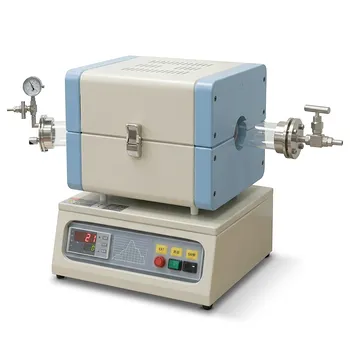
1200C Tube Furnace with Internal Magnetic Sample Sliding for Direct Vaporizing Deposition and Rapid Thermal Processing

High Temperature 1700C Vertical Tube Furnace for Powder Spherification and Material Sintering
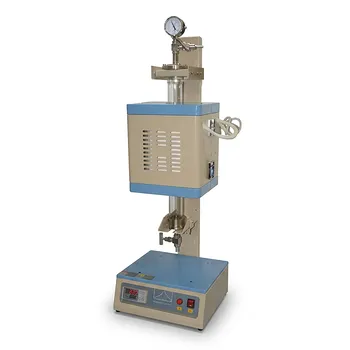
Compact Vertical Split Quartz Tube Furnace with Stainless Steel Vacuum Flanges for Rapid Thermal Quenching and Controlled Atmosphere Material Processing
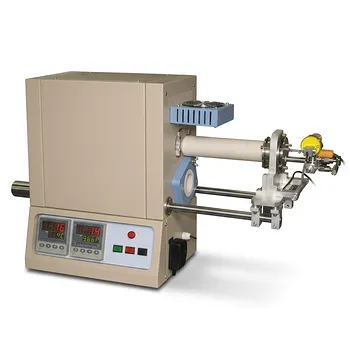
High Temperature Tube Furnace 1500C with Sliding Flanges and 50mm OD for Rapid Thermal Processing Fast Heating and Cooling
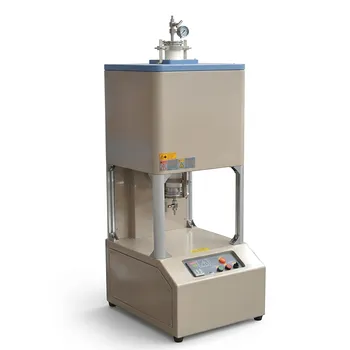
Vertical 1700C Vacuum and Atmosphere Tube Furnace with 80mm Alumina Tube
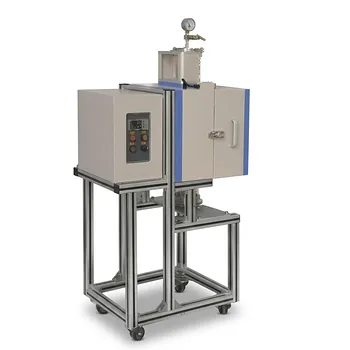
1200°C 5 Inch Vertical Quartz Tube Furnace with Stainless Steel Vacuum Flanges
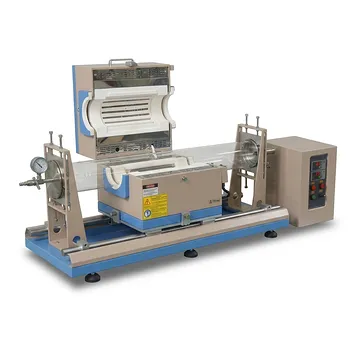
1200C High Temperature 5 Inch Sliding Tube Furnace for Rapid Thermal Processing RTP and Wafer Annealing
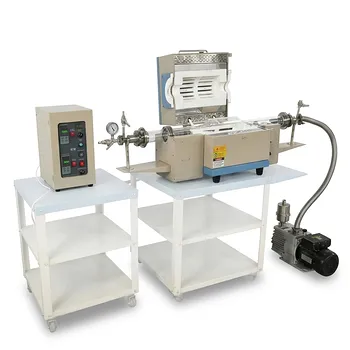
Two Zone Rotary Tube Furnace for Powder CVD Coating and Core Shell Material Synthesis 1100C
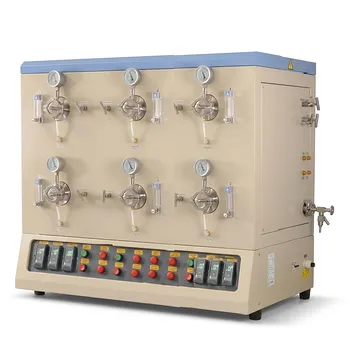
1200C High Throughput Multi Channel Tube Furnace with 50mm Quartz Tubes for Annealing and Material Phase Diagram Research
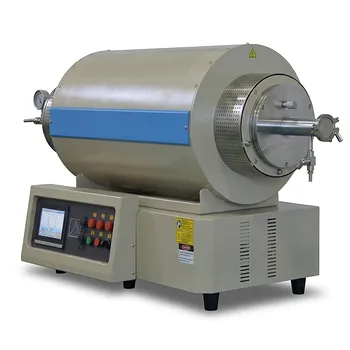
1200C Max Three Zone Tube Furnace 6 Inch OD Max with Tube and Flange
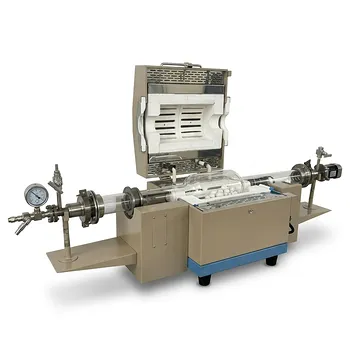
High Temperature Rotary Tube Furnace with Integrated Ball Milling and Gas Flow Function for Powder Nitriding
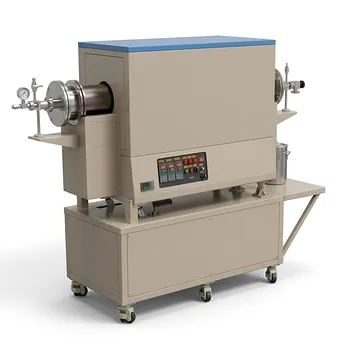
900°C Max Rotary Tube Furnace with 8 Inch 310S Alloy Tube and Optional Multi Zone Heating for Industrial Material Calcination

1800C High Temperature Compact Vacuum Tube Furnace with 60mm OD Alumina Tube and Kanthal MoSi2 Heating Elements
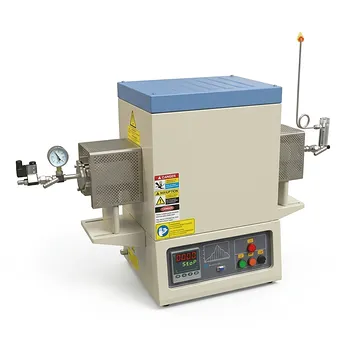
1700C Hydrogen Gas Tube Furnace with 60mm Alumina Process Tube and Integrated Hydrogen Safety Detector
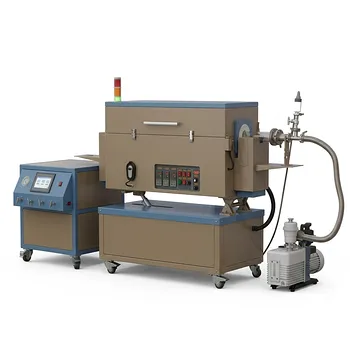
5 Inch Three Zone Rotary Tube Furnace with Integrated Gas Delivery System and 1200C Capability for Advanced Material CVD Processing

High Temperature 1700C Benchtop Tube Furnace with 5 Inch Heating Zone High Purity Alumina Tube and Vacuum Sealing Flanges
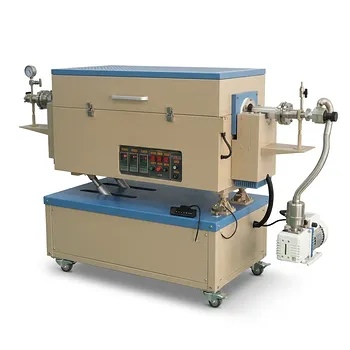
Three Zone Rotary Tube Furnace for High Temperature Powder Processing and Material Research
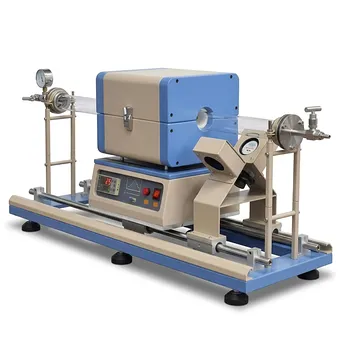
Automated Sliding Tube Furnace for Fast Heating and Cooling 2 Inch OD 1100C Max

High Temperature Automated 5 Inch Tube Furnace for Autonomous Material Research and Advanced Laboratory R&D