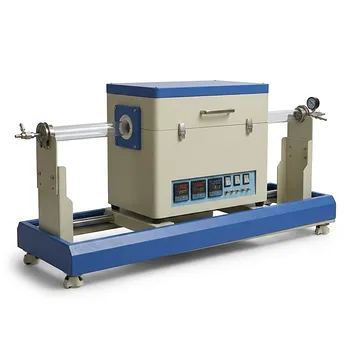
Why is a tube furnace system with vapor doping required for Ni-Mo-S-Se? Master Precise Atomic Substitution.
Updated 6 months ago
The synthesis of Ni-Mo-S-Se quaternary transition metal dichalcogenides (TMDs) requires a tube furnace with vapor doping capabilities to facilitate the precise atomic substitution of sulfur with selenium. This specific configuration allows selenium vapor to be generated upstream and transported to a host material, overcoming the high energy barriers necessary to transition a ternary Ni-Mo-S structure into a stable quaternary semiconductor at 650 °C.
The tube furnace acts as a controlled reactor that manages the complex thermodynamics of multisource vapor transport. By decoupling the evaporation of selenium from the host reaction zone, the system ensures uniform atomic substitution and high-crystallinity growth of multi-element 2D materials.
Overcoming Energy Barriers for Atomic Substitution
Thermal Activation at 650 °C
The transition from a ternary Ni-Mo-S host to a quaternary Ni-Mo-S-Se structure is not spontaneous and requires significant thermal energy. A tube furnace provides the stable 650 °C environment necessary to break existing chemical bonds and allow selenium atoms to integrate into the lattice.
Selenium Vapor Generation
In this setup, solid selenium powder is placed in an upstream heating zone where it undergoes thermal evaporation. This creates a consistent flux of selenium vapor that is ready to react once it reaches the target material at the furnace center.
Precision Control of Vapor Phase Dynamics
The Role of Carrier Gas Transport
A stable flow of high-purity carrier gas (such as Argon) is vital to move the evaporated selenium from the source to the host Ni-Mo-S material. This transport mechanism ensures that a continuous supply of dopant atoms reaches the substrate, maintaining the reaction momentum.
Controlled Atomic Substitution
The system is designed to induce substitution specifically at the sulfur sites within the host material. By controlling the vapor concentration and the duration of the exposure, researchers can achieve a uniform transition across the entire film, preventing localized clusters or defects.
The Necessity of Multi-Zone Temperature Management
Independent Heating Programs
Quaternary synthesis often requires different temperatures for the source material and the reaction site. Multi-zone tube furnaces allow the selenium source to be heated at its sublimation point while the reaction zone is maintained at the much higher 650 °C required for atomic assembly.
Preventing Premature Decomposition
By separating the precursor evaporation from the reaction zone, the system prevents the Ni-Mo-S host material from decomposing before the selenium vapor arrives. This synchronization is critical for achieving the correct stoichiometry and high crystallinity in the final quaternary film.
Understanding the Trade-offs and Pitfalls
Stoichiometric Imbalance
If the carrier gas flow rate or the upstream temperature fluctuates, the concentration of selenium vapor will vary. This leads to non-uniform doping, where some regions of the TMD remain ternary while others become overly selenized, altering the electronic properties of the semiconductor.
Vapor Saturation and Condensation
If the temperature gradient between the hot zone and the exhaust is too steep, selenium vapor may condense prematurely on the furnace walls. This not only wastes material but can also lead to cross-contamination in subsequent synthesis runs if the tube is not meticulously cleaned.
Implementing Vapor Doping for TMD Synthesis
To successfully synthesize quaternary Ni-Mo-S-Se, your hardware configuration and process parameters must align with your specific material requirements.
- If your primary focus is material uniformity: Prioritize a multi-zone furnace with high-precision mass flow controllers to ensure a steady, predictable delivery of selenium vapor to the host substrate.
- If your primary focus is high crystallinity: Ensure the reaction zone temperature is strictly maintained at 650 °C or higher to provide the kinetic energy necessary for perfect atomic lattice substitution.
- If your primary focus is scalability: Utilize a larger diameter quartz tube to maximize the surface area of the host Ni-Mo-S material while maintaining a laminar flow of the dopant gas.
The tube furnace provides the essential thermal and atmospheric precision required to engineer complex quaternary TMDs with predictable electronic characteristics.
Summary Table:
| Feature | Function in Ni-Mo-S-Se Synthesis | Benefit |
|---|---|---|
| Multi-zone Heating | Decouples precursor evaporation from reaction | Prevents decomposition and ensures stoichiometry |
| Vapor Doping Control | Facilitates selenium atomic substitution | Overcomes high energy barriers for quaternary TMDs |
| Carrier Gas System | Transports dopant vapor via laminar flow | Ensures uniform doping and prevents localized defects |
| 650°C Thermal Stability | Provides activation energy for lattice integration | Results in high-crystallinity semiconductor films |
Advance Your Material Research with THERMUNITS
As a leading manufacturer of high-temperature laboratory equipment for material science and industrial R&D, THERMUNITS offers the precision required for complex 2D material synthesis. Our comprehensive range of thermal solutions—including CVD/PECVD systems, multi-zone Tube furnaces, and Vacuum systems—is engineered to provide the stable vapor dynamics and temperature control necessary for quaternary TMD growth.
From Muffle and Atmosphere furnaces to Vacuum Induction Melting (VIM) and Rotary kilns, we empower researchers to achieve superior results in heat treatment.
Ready to optimize your synthesis process?
Contact our technical experts today to find the perfect thermal processing solution for your laboratory.
References
- Hye Yoon Jeon, Wooseok Song. Wafer‐Scale Atomic Assembly for 2D Multinary Transition Metal Dichalcogenides for Visible and NIR Photodetection. DOI: 10.1002/smll.202312120
Mentioned Products
- High Temperature 1700C Six Zone Split Tube Furnace with Alumina Tube and Water Cooled Flanges
- 1200C Tube Furnace with Internal Magnetic Sample Sliding for Direct Vaporizing Deposition and Rapid Thermal Processing
- Split Chamber CVD Tube Furnace with Vacuum Station Chemical Vapor Deposition System Machine
- 1500C Two Zone Split Tube Furnace with Vacuum Flange and 80mm Alumina Tube
- Six Zone Split Tube Furnace with Alumina Tube and Vacuum Flanges for 1500C High Temperature Thermal Processing and CVD
People Also Ask
- What is the primary function of a high-temperature split tube furnace in nitrogen metastable particle research? Expert Guide
- What role does a high-temperature tube furnace play in executing nitrogen absorption kinetic experiments? Expert Insights
- How does a high-temperature tube furnace contribute to MoS2/CNT photocathode formation? Optimizing Phase & Interface
- How does a high-temperature tube furnace facilitate MOF-derived Co3O4 synthesis? Precision Control for Advanced Materials
- What are the primary functions of a high-temperature tube furnace for Inconel 718? Master Debinding & Pre-sintering.

Tech Team · ThermUnits
Last updated on Apr 14, 2026
Related Products
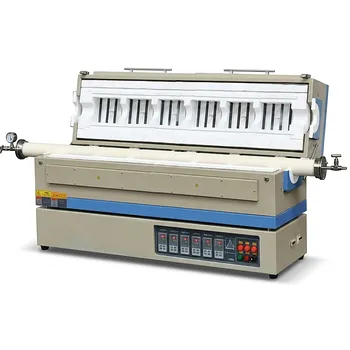
High Temperature 1700C Six Zone Split Tube Furnace with Alumina Tube and Water Cooled Flanges
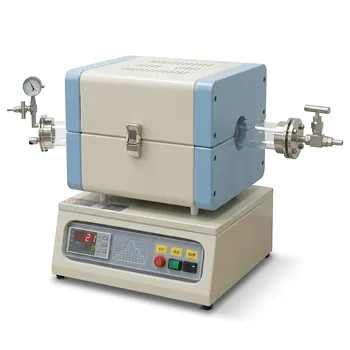
1200C Tube Furnace with Internal Magnetic Sample Sliding for Direct Vaporizing Deposition and Rapid Thermal Processing
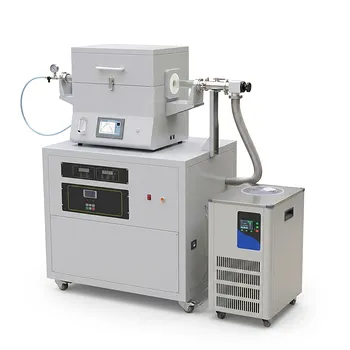
Split Chamber CVD Tube Furnace with Vacuum Station Chemical Vapor Deposition System Machine
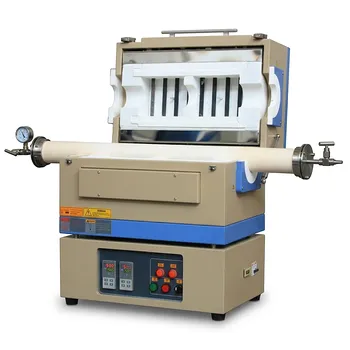
1500C Two Zone Split Tube Furnace with Vacuum Flange and 80mm Alumina Tube
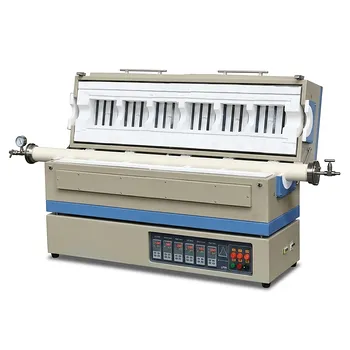
Six Zone Split Tube Furnace with Alumina Tube and Vacuum Flanges for 1500C High Temperature Thermal Processing and CVD
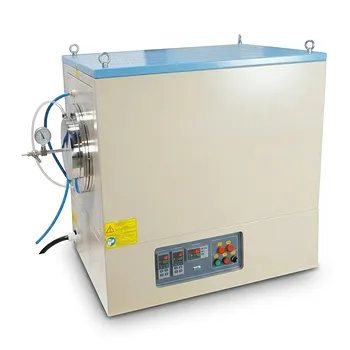
Dual Zone Tube Furnace 1100C with 11 Inch Quartz Tube and Vacuum Flanges for 8 Inch Wafer Processing
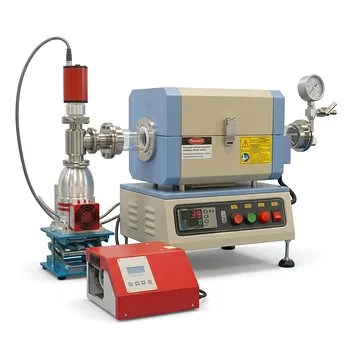
High Vacuum Compact Tube Furnace 1200C with Integrated Turbo Pump System and 8 Inch Heating Zone
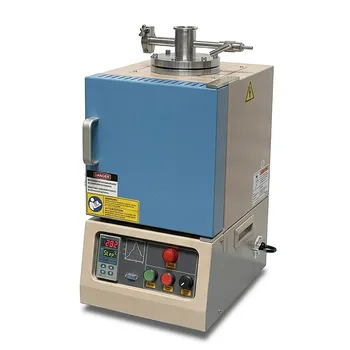
High Temperature Hybrid Muffle and Tube Furnace with Vacuum Capability and PID Control
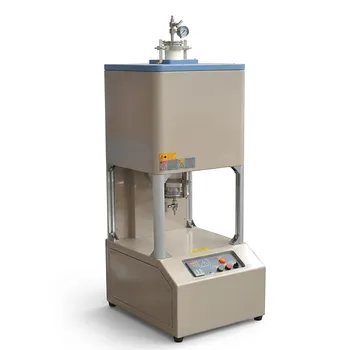
Vertical 1700C Vacuum and Atmosphere Tube Furnace with 80mm Alumina Tube
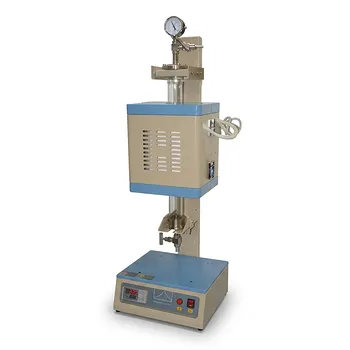
Compact Vertical Split Quartz Tube Furnace with Stainless Steel Vacuum Flanges for Rapid Thermal Quenching and Controlled Atmosphere Material Processing
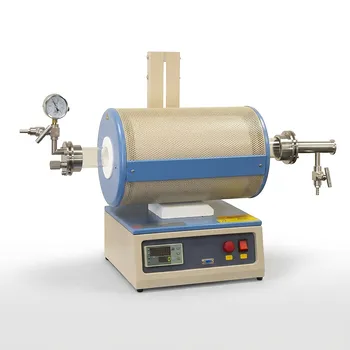
1100C Tube Furnace with Vacuum Flange and Programmable Temperature Controller for Material Science and Industrial Heat Treatment
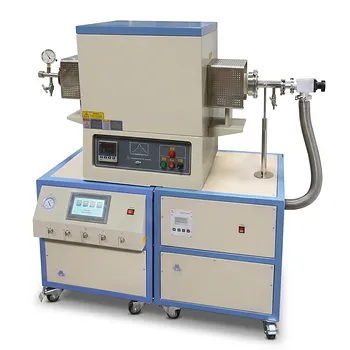
High Temperature 1700C Tube Furnace with High Vacuum Turbomolecular Pump System and Multi Channel Mass Flow Controller Gas Mixer
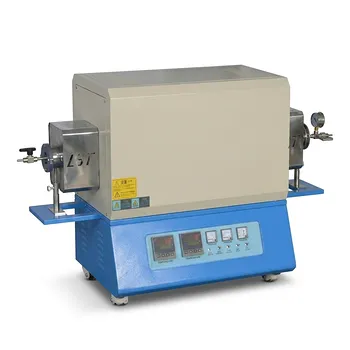
High Temperature Dual Zone Vacuum Tube Furnace for Material Research and CVD Processing
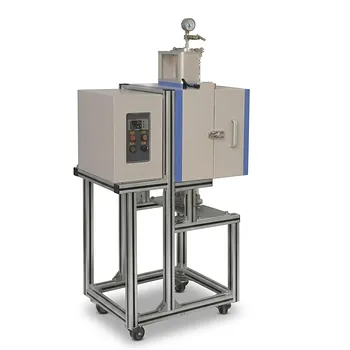
1200°C 5 Inch Vertical Quartz Tube Furnace with Stainless Steel Vacuum Flanges
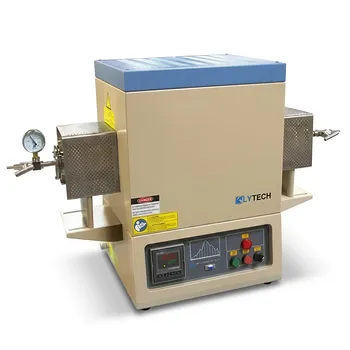
1800C High Temperature Compact Vacuum Tube Furnace with 60mm OD Alumina Tube and Kanthal MoSi2 Heating Elements
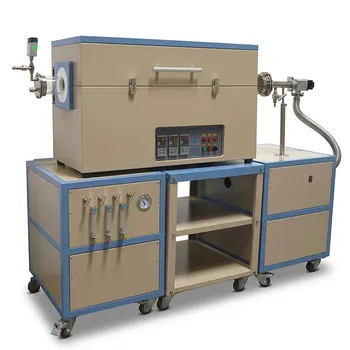
Three Zone Quartz Tube Furnace with 3 Channel Gas Mixer Vacuum Pump and Anti Corrosive Vacuum Gauge
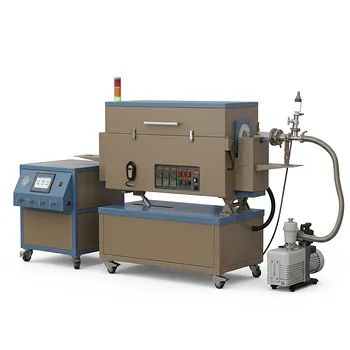
5 Inch Three Zone Rotary Tube Furnace with Integrated Gas Delivery System and 1200C Capability for Advanced Material CVD Processing
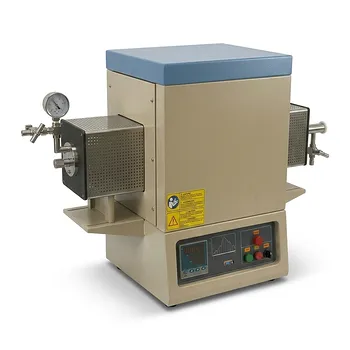
High Temperature 1700C Benchtop Tube Furnace with 5 Inch Heating Zone High Purity Alumina Tube and Vacuum Sealing Flanges
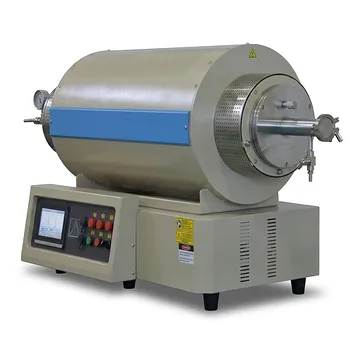
1200C Max Three Zone Tube Furnace 6 Inch OD Max with Tube and Flange