How are K-type Thermocouples configured and what are their functions in thermal monitoring? Enhance Your R&D Precision
Updated 3 months ago
K-type thermocouples are typically configured in dual-channel or multi-point setups to provide differential temperature monitoring and real-time feedback control. In thermal processing, they function as high-precision sensors that compare ambient chamber conditions against the internal temperature of a material sample to identify critical inflection points, such as the onset of spontaneous combustion.
Core Takeaway: The K-type thermocouple is the primary tool for synchronizing environmental heat with material response. By providing real-time electrical signals to closed-loop control systems, it allows for the precise management of exothermic reactions, deformation heat, and isothermal kinetic conditions.
Strategic Configuration Patterns
Dual-Channel Differential Setup
In spontaneous combustion monitoring, K-type thermocouples are configured in a dual-channel arrangement. One probe is placed within the heating chamber to track ambient temperature, while a second is inserted into the material sample core.
This configuration enables technicians to record and compare temperature differences in real-time. By identifying when the sample temperature exceeds the chamber temperature, they can determine the induction time and reactivity of the material.
Multi-Point and Redundant Arrays
For high-temperature tensile experiments, multi-point thermocouples are attached directly to or positioned along the specimen axis. This redundancy validates the accuracy of the heating zones and captures thermal fluctuations that single-point sensors might miss.
These arrays are essential for recording discrete thermal states, such as the transition of Lüders bands. They ensure that the temperature conditions during physical deformation are both reliable and reproducible.
Direct Contact and Embedded Placement
In catalytic reactors, the thermocouple is often placed in direct contact with the catalyst bed to detect "light-off" temperatures. In other industrial furnaces, sensors are embedded within the heating zone walls to provide continuous feedback for the primary control system.
Critical Functions in Thermal Monitoring
Real-Time Feedback and PID Control
K-type thermocouples convert thermal energy into electrical signals that serve as the input for Proportional-Integral-Derivative (PID) algorithms. This feedback loop ensures the heating system strictly follows preset temperature programs, such as specific heating rates (e.g., 10 °C/min).
This precision is vital for processes sensitive to thermal history, such as managing the pore size distribution in activated carbon. Without this tight feedback loop, experimental reproducibility is significantly compromised.
Compensation for Deformation Heat
In metallurgy, specifically with alloys like Ti-5Al-5V-5Mo-3Cr, thermocouples are welded to the sample side to monitor deformation heat. As the material deforms, it generates internal heat that can push it out of the target phase region.
The thermocouple allows for immediate compensation by the external heating source. This keeps the experiment strictly within the required alpha+beta phase region, preventing inaccurate data caused by localized overheating.
Validation of Simulation and Modeling
Thermocouples are frequently integrated with Data Acquisition (DAQ) systems to capture transient temperature signals. These high-precision curves are used to validate the accuracy of thermal simulations.
By comparing empirical data against digital models, researchers can refine their understanding of heat transfer coefficients. This ensures that simulated predictions align with physical reality in complex reaction chambers.
Understanding the Trade-offs
Sensitivity to Electromagnetic Interference
While highly versatile, K-type thermocouples are susceptible to electromagnetic interference (EMI) and measurement noise in industrial environments. This can lead to "jitter" in the data, potentially triggering incorrect responses from automated control systems.
To mitigate this, high-quality sensors must be paired with precise signal transmitters and shielded cabling. Failing to account for signal noise can result in unstable temperature oscillations rather than a steady-state environment.
Physical and Chemical Limitations
The placement of the thermocouple—whether welded, inserted, or embedded—can impact the integrity of the sample or the flow dynamics within a reactor. In fixed-bed reactors, the presence of a probe can create preferential flow paths or localized cold spots.
Additionally, at extreme temperatures (approaching 1373 K), the sensor materials can undergo degradation or calibration drift. Regular validation against a reference standard is required to maintain the high-precision monitoring necessary for kinetic testing.
How to Apply This to Your Project
Making the Right Choice for Your Goal
- If your primary focus is material reactivity or combustion: Utilize a dual-channel configuration to identify the exact inflection point where sample temperature surpasses ambient heat.
- If your primary focus is precision metallurgy: Weld the thermocouple directly to the specimen to compensate for internal heat generation during physical deformation.
- If your primary focus is chemical kinetics or catalysis: Place the sensor in direct contact with the reaction zone to capture "light-off" temperatures and maintain isothermal conditions.
- If your primary focus is system reliability and validation: Implement a multi-point redundant array integrated with a DAQ system to eliminate single-point failure risks and validate simulation models.
The K-type thermocouple remains the industry standard because it provides the essential bridge between raw thermal energy and actionable digital data.
Summary Table:
| Configuration Type | Primary Function | Ideal Application |
|---|---|---|
| Dual-Channel | Differential monitoring (ambient vs. sample) | Spontaneous combustion & reactivity testing |
| Multi-Point Array | Validates heating zones & redundancy | High-temperature tensile & deformation studies |
| Embedded/Contact | Real-time PID feedback control | Catalytic reactors & industrial furnace stability |
| Welded/Direct | Deformation heat compensation | Metallurgy & alloy phase region management |
Optimize Your Thermal Accuracy with THERMUNITS
Precise temperature monitoring is only as good as the furnace that supports it. THERMUNITS is a leading manufacturer of high-temperature laboratory equipment for material science and industrial R&D. We empower researchers with high-precision thermal processing solutions designed for seamless sensor integration and reliable data acquisition.
Our comprehensive range includes:
- Furnaces: Muffle, Vacuum, Atmosphere, Tube, Rotary, and Hot Press Furnaces.
- Advanced Systems: CVD/PECVD systems, Dental Furnaces, and Electric Rotary Kilns.
- Specialized Equipment: Vacuum Induction Melting Furnaces (VIM) and high-quality Thermal Elements.
Whether you are managing exothermic reactions or complex alloy metallurgy, our equipment ensures the stability and control your project demands.
Ready to elevate your heat treatment capabilities?
Contact our technical experts today to find the perfect solution for your lab.
References
- Kira Piechnik, Andrea Klippel. Self‐ignition of forest soil samples demonstrated through hot storage tests. DOI: 10.1002/fam.3198
Mentioned Products
- High Temperature Three Zone Tube Furnace 1700C with Alumina Tube and Water Cooled Flanges
- Triple Tube Compact Hybrid Muffle Furnace 1000C High Vacuum Thermal Processing System
- High Temperature Benchtop Muffle Furnace with Quartz Observation Window for Thermal Imaging and Material Analysis
- High Temperature Tube Furnace 1500C with Sliding Flanges and 50mm OD for Rapid Thermal Processing Fast Heating and Cooling
- 5 Inch Three Zone Rotary Tube Furnace with Integrated Gas Delivery System and 1200C Capability for Advanced Material CVD Processing
People Also Ask
- What functions does a 3-zone tube furnace provide for graphene-coated alumina fibers? Expert CVD Heat Treatment Guide
- What is the role of a high-temperature tube furnace in the calcination process of ZnO/In2O3 nanocomposites?
- How are high-temperature tube furnaces utilized to repair etching damage? Precision Lattice Restoration Solutions
- What is the function of a high-temperature tube furnace in the synthesis of graphene oxide? Mastering LPCVD Processes
- How does a high-temperature tube furnace facilitate MOF-derived Co3O4 synthesis? Precision Control for Advanced Materials

Tech Team · ThermUnits
Last updated on Jun 03, 2026
Related Products
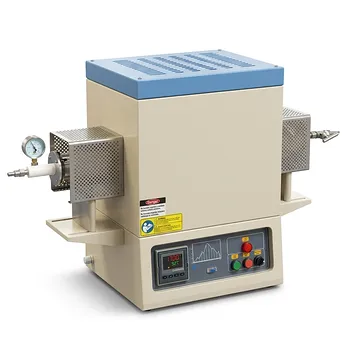
High Temperature Three Zone Tube Furnace 1700C with Alumina Tube and Water Cooled Flanges
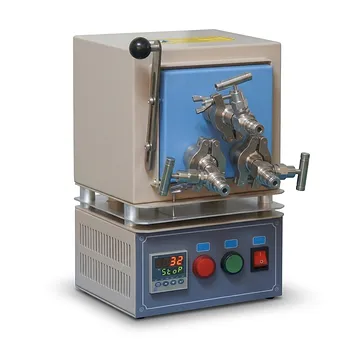
Triple Tube Compact Hybrid Muffle Furnace 1000C High Vacuum Thermal Processing System
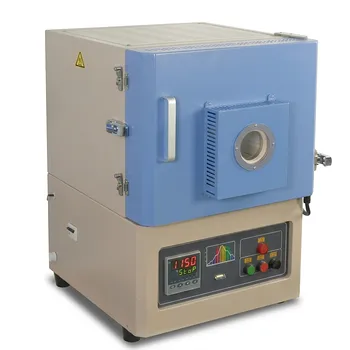
High Temperature Benchtop Muffle Furnace with Quartz Observation Window for Thermal Imaging and Material Analysis
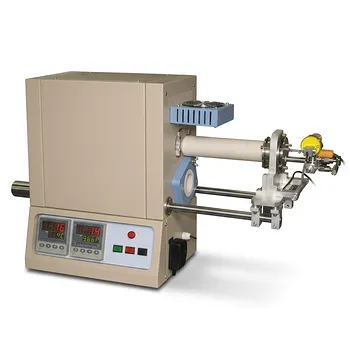
High Temperature Tube Furnace 1500C with Sliding Flanges and 50mm OD for Rapid Thermal Processing Fast Heating and Cooling
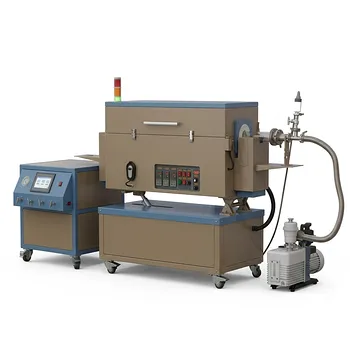
5 Inch Three Zone Rotary Tube Furnace with Integrated Gas Delivery System and 1200C Capability for Advanced Material CVD Processing
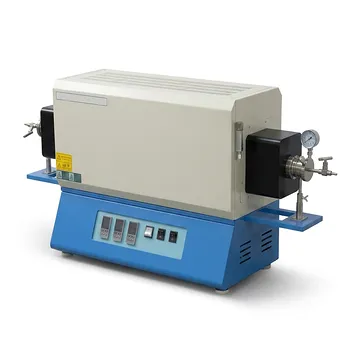
High Temperature Three Temperature Zone Tube Furnace for Advanced Material Science Sintering and Chemical Vapor Deposition Applications
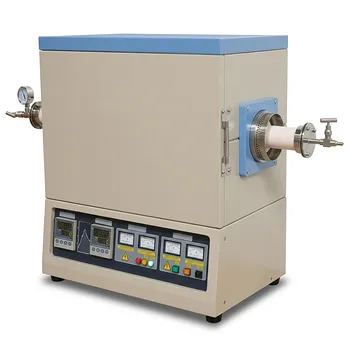
High Temperature 1700C Dual Zone Tube Furnace for Material Science and Industrial Chemical Vapor Deposition Research

1100°C High Temperature Quartz Chamber Furnace 8 Inch OD with 7.6 Liter Capacity and Vacuum Atmosphere Capability
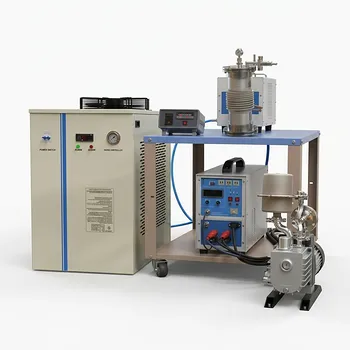
Induction Heating System with Temperature Control for High Temperature Vacuum Sintering and Melting
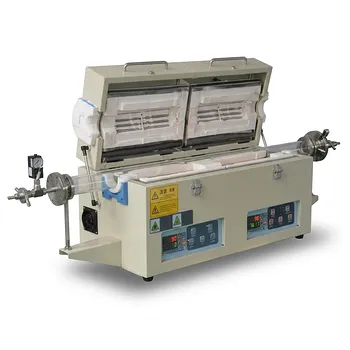
Elongated Two Temperature Zone Pipe Furnace for Industrial Heat Treatment and Material Science Research
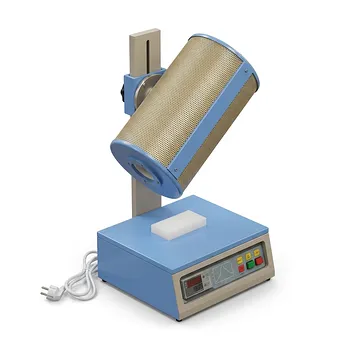
1100°C Vertical Laboratory Furnace for DIY Tubular Reactors with PID Temperature Controller
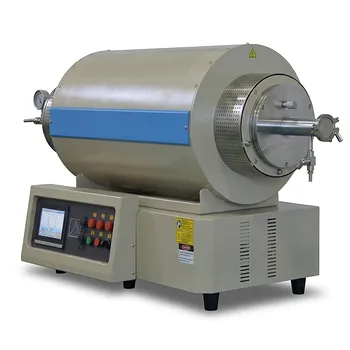
1200C Max Three Zone Tube Furnace 6 Inch OD Max with Tube and Flange
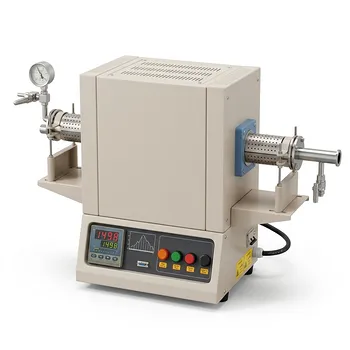
1500C High Temperature Compact Tube Furnace 2 Inch OD with Vacuum Flanges and Complete Accessories
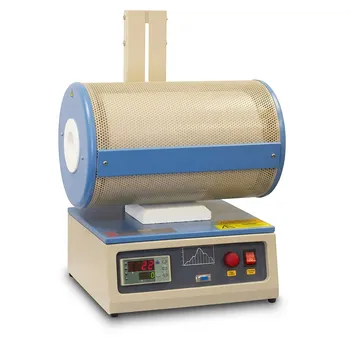
Multi Position Tube Furnace 1100C for Laboratory Material Research and Advanced Industrial Thermal Processing
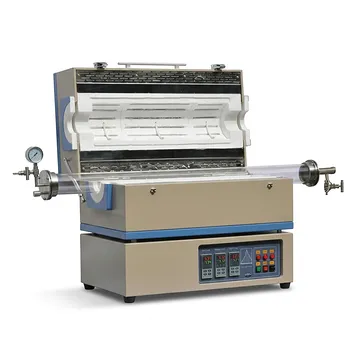
24 Inch Three Zone Split Tube Furnace with Optional Quartz Tube and Vacuum Flange System for High Temperature Material Synthesis
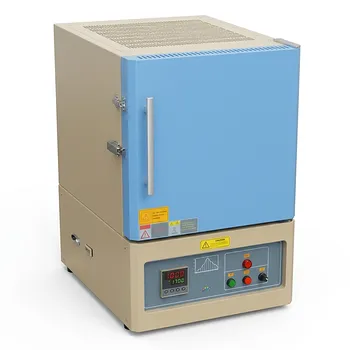
Large Bench Top 1700C High Temperature Muffle Furnace with 19L Chamber for Advanced Material Sintering and Annealing
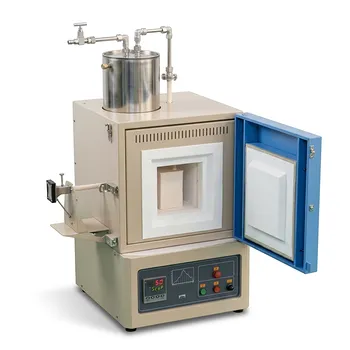
High Temperature Bench Top Muffle Furnace 1700C with Integrated Evaporating Particle Collection and 8x8x8 Alumina Fiber Chamber
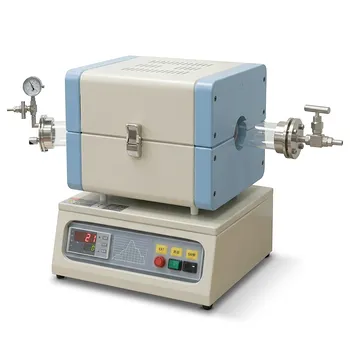
1200C Tube Furnace with Internal Magnetic Sample Sliding for Direct Vaporizing Deposition and Rapid Thermal Processing
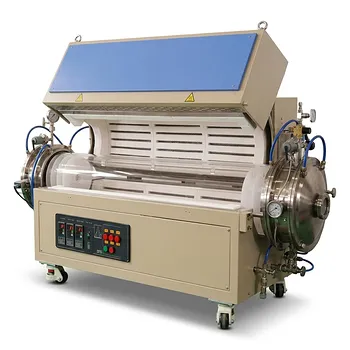
High Temperature Three Zone Split Tube Furnace 1200C Max 35.4 Inch Heating Length 8 Inch ID Tube