How does a K-type thermocouple contribute to temperature monitoring within a tube furnace reactor? Expert Insights
Updated 3 months ago
In tube furnace reactors, the K-type thermocouple serves as the primary sensing element responsible for real-time temperature synchronization between the reaction zone and the control system. It enables precise adherence to heating rates—such as 10 °C/min—and maintains steady-state conditions necessary for chemical reproducibility. By converting thermal energy into electrical signals, it provides the high-accuracy feedback required to manage the furnace's power output and protect sensitive material structures.
The K-type thermocouple transforms a tube furnace from a simple heater into a high-precision instrument by providing the real-time data needed for closed-loop control, thermal mapping, and safety monitoring.
The Role of Feedback in Reaction Precision
Maintaining Thermal Stability
The sensor converts heat into electrical signals to drive a closed-loop control system. This allows the furnace to maintain specific temperatures, often between 1173 K and 1373 K, which is critical for investigating fuel nitrogen conversion pathways.
Ensuring Experimental Reproducibility
For materials like activated carbon, where pore size distribution is highly sensitive to heat, the sensor ensures the furnace strictly follows preset programs. This precision guarantees that experimental results can be consistently reproduced across different trials.
Facilitating High-Rate Heating Programs
The feedback from the thermocouple allows the system to follow aggressive heating profiles without overshooting the target. This is essential for processes that require a linear temperature increase, ensuring the material experiences a uniform thermal history.
Advanced Monitoring and Safety Applications
Detecting Exothermic Reaction Shifts
In catalytic reactions, the thermocouple is often placed in direct contact with the catalyst bed. It detects "light-off" temperatures or sudden heat jumps from exothermic oxidation, allowing operators to modulate external power to maintain isothermal conditions.
Monitoring Sample vs. Ambient Temperature
In dual-channel configurations, one sensor monitors the chamber while another is inserted into the material sample core. By identifying the "inflection point" where the sample becomes hotter than the furnace, technicians can accurately determine the onset of spontaneous combustion.
Protecting Material Integrity
When processing materials with low thermal conductivity, such as glass wool, armored thermocouples prevent localized overheating. This ensures the material remains within a specific "processing window" to prevent fiber sintering during organic removal.
Calibration and Spatial Accuracy
Counteracting Gas Flow Cooling
In Chemical Vapor Deposition (CVD), gas flow can cause the actual temperature at different points in the tube to deviate from the center setpoint. K-type thermocouples allow for point-by-point measurements, identifying high-heat zones to optimize substrate placement and regional yields.
Multi-point Redundancy
For high-temperature tensile experiments, multiple sensors are positioned along the specimen axis. This redundant design validates the accuracy of the heating zones and captures thermal fluctuations during discrete material phase transitions.
Understanding the Trade-offs
Susceptibility to Interference
K-type thermocouples can encounter electromagnetic interference and measurement noise in industrial environments. To ensure stable control, they must be paired with high-quality signal transmitters and proper shielding.
Accuracy and Environmental Degradation
While versatile, these sensors are subject to measurement drift if the wires are contaminated or exposed to extreme atmospheres over long periods. In specific applications, armored versions are required to protect the sensing wires from physical damage or chemical attack within the furnace.
How to Apply This to Your Project
Recommendations for Implementation
- If your primary focus is material synthesis (e.g., activated carbon): Use the thermocouple to enforce strict ramp rates to ensure a consistent and predictable pore structure.
- If your primary focus is safety and reactivity: Implement a dual-channel setup to compare the sample core temperature against the ambient chamber temperature to identify ignition points.
- If your primary focus is gas-phase reactions (e.g., CVD): Perform a point-by-point thermal mapping of the tube to identify the "sweet spot" where gas preheating and furnace temperature align.
- If your primary focus is catalytic kinetics: Place the thermocouple in direct contact with the catalyst bed to sensitively detect the light-off temperature of exothermic reactions.
By integrating K-type thermocouples into a robust feedback loop, researchers can ensure their thermal processes are both safe and scientifically rigorous.
Summary Table:
| Feature | Function in Tube Furnaces | Key Benefit |
|---|---|---|
| Closed-Loop Feedback | Synchronizes reaction zone with control system | Maintains steady-state & precise heating rates |
| Differential Monitoring | Compares sample core vs. ambient chamber | Identifies exothermic shifts & ignition points |
| Thermal Mapping | Point-by-point spatial measurement | Optimizes substrate placement in CVD processes |
| Material Protection | Monitors temperature within a 'processing window' | Prevents localized overheating & fiber sintering |
Elevate Your Thermal Research with THERMUNITS Precision Solutions
As a leading manufacturer of high-temperature laboratory equipment for material science and industrial R&D, THERMUNITS understands that precise temperature monitoring is the backbone of scientific success. Our systems are engineered to integrate seamlessly with high-accuracy sensing technology to ensure your results are consistent and reproducible.
We offer a comprehensive range of thermal processing solutions tailored to your specific needs, including:
- Laboratory Furnaces: Muffle, Vacuum, Atmosphere, Tube, and Rotary designs.
- Advanced Systems: CVD/PECVD systems, Hot Press furnaces, and Vacuum Induction Melting (VIM) units.
- Specialized Equipment: Dental furnaces, electric rotary kilns, and premium Thermal Elements.
Ready to optimize your heat treatment processes? Contact our expert team today to discover how THERMUNITS can provide the reliability and precision your research demands.
References
- Amina Tahreen, Zahangir Alam. MORINGA OLEIFERA (MO) SEED SHELL BASED ADSORBENT FOR POTENTIAL CO2 CAPTURE: A CHARACTERIZATION STUDY. DOI: 10.22452/mjs.vol43sp1.7
Mentioned Products
- Multi Position Tube Furnace 1100C for Laboratory Material Research and Advanced Industrial Thermal Processing
- Double Temperature Revolving Tube Furnace with Precision Rotation and Adjustable Inclination for Advanced Material Research
- 1200C Dual Sliding Tube Furnace with Dual Tubes and Flanges for PECVD Processes
- 1100°C Vertical Laboratory Furnace for DIY Tubular Reactors with PID Temperature Controller
- 1700C Hydrogen Gas Tube Furnace with 60mm Alumina Process Tube and Integrated Hydrogen Safety Detector
People Also Ask
- Why use a tube furnace for oxygen annealing LaCrO3/LaMnO3? Optimize Phase Transition & Magnetic Performance.
- What key role does a laboratory high-temperature tube furnace play in the production of carbon nanofibers? Guide
- How is a laboratory high-temperature tube furnace utilized to research the products of aluminothermic reduction? Advanced Metallurgical Solutions
- What is the role of a laboratory tube furnace in the carbonization process of porous carbon foam (PCF)? Master 3D Synthesis
- What role does a laboratory tube furnace play in the pyrolysis and carbonization of biomass? Optimize Thermal Research.

Tech Team · ThermUnits
Last updated on Jun 03, 2026
Related Products
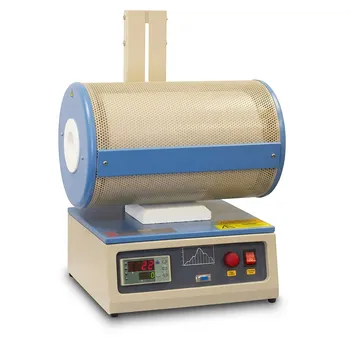
Multi Position Tube Furnace 1100C for Laboratory Material Research and Advanced Industrial Thermal Processing
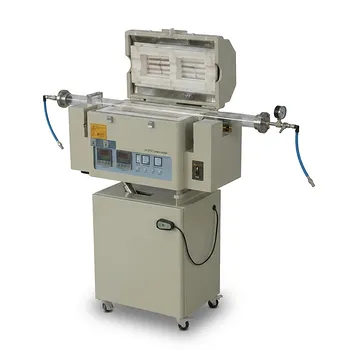
Double Temperature Revolving Tube Furnace with Precision Rotation and Adjustable Inclination for Advanced Material Research
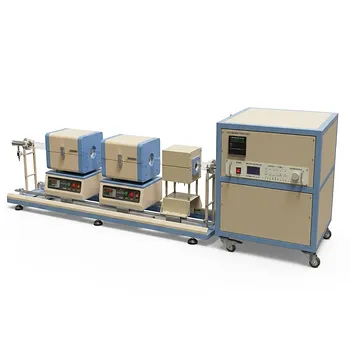
1200C Dual Sliding Tube Furnace with Dual Tubes and Flanges for PECVD Processes
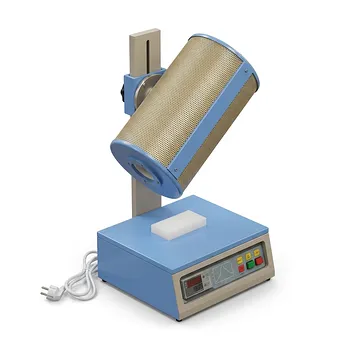
1100°C Vertical Laboratory Furnace for DIY Tubular Reactors with PID Temperature Controller
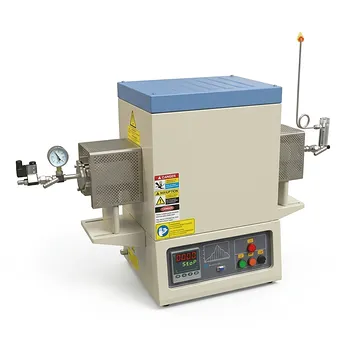
1700C Hydrogen Gas Tube Furnace with 60mm Alumina Process Tube and Integrated Hydrogen Safety Detector
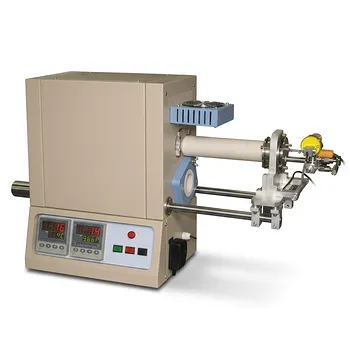
High Temperature Tube Furnace 1500C with Sliding Flanges and 50mm OD for Rapid Thermal Processing Fast Heating and Cooling
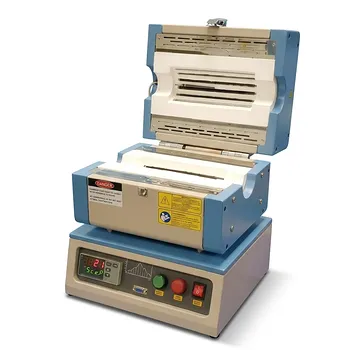
1250C Compact Split Tube Furnace with 8 Inch Heating Zone and Programmable Controller
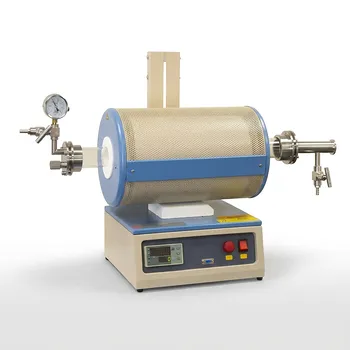
1100C Tube Furnace with Vacuum Flange and Programmable Temperature Controller for Material Science and Industrial Heat Treatment
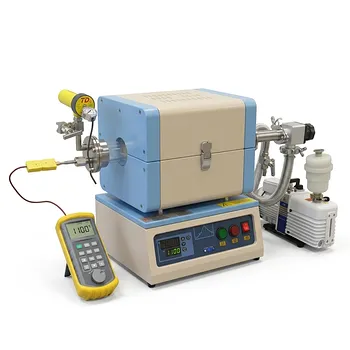
Compact Split Tube Furnace with Insertable Temperature Calibrator and Integrated Vacuum System
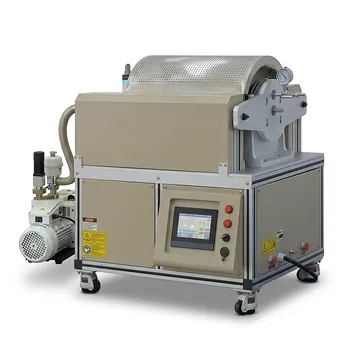
Automated 1200 C Tube Furnace for AI Material Research with 6 Inch OD and Sliding Flange
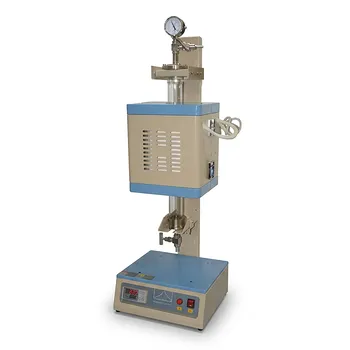
Compact Vertical Split Quartz Tube Furnace with Stainless Steel Vacuum Flanges for Rapid Thermal Quenching and Controlled Atmosphere Material Processing

High Temperature 1700C Vertical Tube Furnace for Powder Spherification and Material Sintering
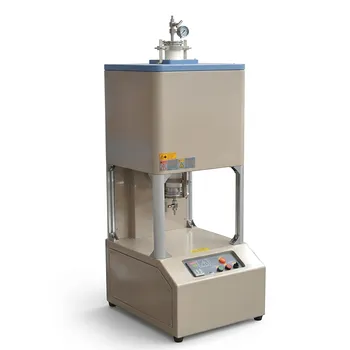
Vertical 1700C Vacuum and Atmosphere Tube Furnace with 80mm Alumina Tube
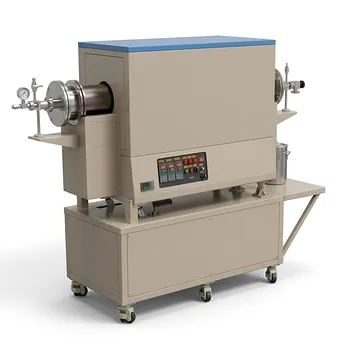
900°C Max Rotary Tube Furnace with 8 Inch 310S Alloy Tube and Optional Multi Zone Heating for Industrial Material Calcination
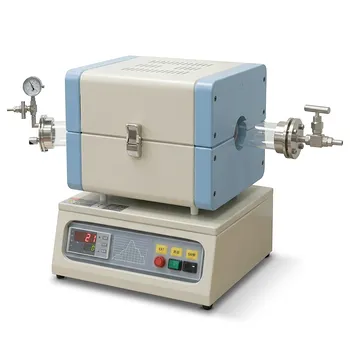
1200C Tube Furnace with Internal Magnetic Sample Sliding for Direct Vaporizing Deposition and Rapid Thermal Processing
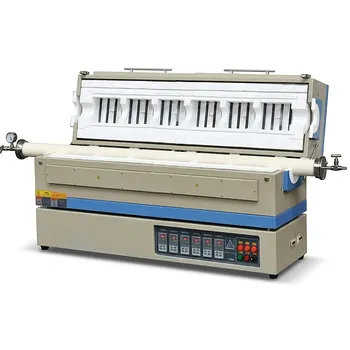
High Temperature 1700C Six Zone Split Tube Furnace with Alumina Tube and Water Cooled Flanges
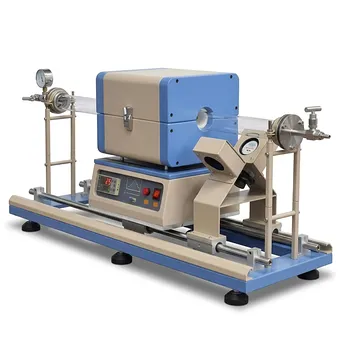
Automated Sliding Tube Furnace for Fast Heating and Cooling 2 Inch OD 1100C Max

High Temperature 1700C Benchtop Tube Furnace with 5 Inch Heating Zone High Purity Alumina Tube and Vacuum Sealing Flanges
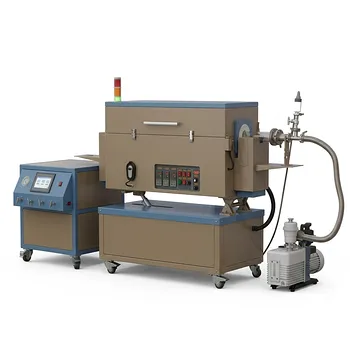
5 Inch Three Zone Rotary Tube Furnace with Integrated Gas Delivery System and 1200C Capability for Advanced Material CVD Processing