Why is precise heating rate control important in an atmosphere tube furnace used for biochar synthesis? Expert Insights
Updated 5 months ago
Precise heating rate control is the fundamental mechanism for governing the structural and chemical evolution of biomass during pyrolysis. In an atmosphere tube furnace, specific rates (such as 30°C per minute) dictate the thermal cracking pathways of organic molecules, directly determining the porosity, surface functional group density, and overall stability of the resulting biochar.
Precise control over the heating ramp allows for the orderly release of volatile matter and the preservation of the carbon skeleton. This technical precision prevents structural collapse and optimizes the biochar’s surface area, making it a critical requirement for specialized applications like adsorption and catalysis.
Preserving Structural Integrity and Porosity
Preventing Pore Wall Collapse
Rapid, uncontrolled heating can cause the sudden, violent release of volatile components from the biomass. This internal pressure often leads to the structural collapse of delicate pore walls, significantly reducing the final surface area.
By maintaining a steady heating curve, the furnace ensures that the formation of the pore architecture is gradual and stable. This precision is vital for creating high-quality biochar from diverse feedstocks, including macroalgae and sludge.
Managing Volatile Escape Velocity
The heating rate directly influences the escape velocity of gases produced during thermal decomposition. A controlled rate ensures that these volatiles exit the material at a speed that does not disrupt the developing carbon skeleton.
Properly managed gas escape facilitates the formation of honeycomb-like micropores. This microstructural development is essential for producing biochar with the high chemical activity required for metallurgical reductants or environmental adsorbents.
Directing Chemical Transformation and Pathways
Regulating Thermal Cracking Pathways
Precise temperature gradients dictate the specific thermal cracking pathways of organic molecules. By controlling the rate of energy input, researchers can favor the formation of desired surface functional groups over others.
This regulation allows for the fine-tuning of functional group density, such as aromatic structures. These controlled conditions directly influence the biochar yield and its long-term physicochemical stability.
Controlling Persistent Free Radicals (PFRs)
Specific pyrolysis temperature intervals and rates determine the conversion of phenolic substances and the stability of persistent free radicals (PFRs). These radicals are critical for the reduction activity of modified biochar.
An accurate heating environment ensures that the biochar achieves optimal performance in degrading contaminants. Without this precision, the resulting material may lack the necessary chemical reactivity for advanced environmental remediation.
Ensuring Material Uniformity and Activation
Uniform Nucleation of Active Components
For biochar-based catalysts, a steady heating rate facilitates the uniform nucleation and growth of active components, such as MgO, within the pores. This results in a catalyst with a high specific surface area and a rich mesoporous structure.
Uniformity prevents the "clumping" of active sites, which enhances the diffusion performance of the catalyst. This is a primary factor in the efficiency of biochar used in chemical synthesis and pollutant degradation.
Preventing Localized Overheating and Coking
Inconsistent heating can lead to localized overheating or "coking" within the raw material particles. This occurs when certain areas of the biomass crack too violently due to instantaneous high temperatures.
Precise control ensures that particles are heated homogeneously, preventing coking that would otherwise block pores. This uniformity is necessary for an orderly etching reaction during chemical activation, ensuring an optimized total pore volume.
Understanding the Trade-offs
While precise control is essential, researchers must balance heating rates against production efficiency. Extremely slow heating rates can produce superior pore structures but significantly increase energy consumption and processing time.
Conversely, while faster rates (e.g., 30°C/min) can optimize certain thermal cracking pathways for specific feedstocks, they increase the risk of uncontrolled pore size distribution. The choice of heating rate must be meticulously calibrated to the specific biomass type and the intended end-use of the biochar.
How to Apply This to Your Biochar Project
Making the Strategic Choice
The optimal heating rate depends entirely on your primary objective for the carbonaceous material. Use the following guidelines to calibrate your atmosphere tube furnace:
- If your primary focus is Adsorption Capacity: Utilize a slower, more stable heating rate (e.g., 6-10°C/min) to prevent pore collapse and maximize the development of microporous "honeycomb" structures.
- If your primary focus is Catalytic Activity: Prioritize precise ramp control to ensure the uniform nucleation of active metallic components and the stability of persistent free radicals.
- If your primary focus is Specific Chemical Functionality: Target specific heating rates (up to 30°C/min) that favor the cracking pathways of your feedstock's organic molecules, such as macroalgae or sludge.
By mastering the heating rate within an atmosphere tube furnace, you transition from simple waste carbonization to the precise engineering of advanced functional materials.
Summary Table:
| Key Factor | Impact of Precise Control | Benefit for Biochar |
|---|---|---|
| Structural Integrity | Prevents violent release of volatiles | Preserves pore architecture and surface area |
| Chemical Pathways | Regulates thermal cracking of molecules | Fine-tunes functional group density and stability |
| Radical Stability | Controls the formation of PFRs | Optimizes reduction activity for remediation |
| Uniformity | Facilitates steady nucleation of active sites | Enhances catalytic efficiency and diffusion |
| Particle Quality | Prevents localized overheating (coking) | Ensures homogeneous material and open pores |
Elevate Your Material Research with THERMUNITS Precision
Precision is the hallmark of high-quality biochar synthesis and advanced material engineering. At THERMUNITS, we provide the technical excellence required for your most demanding R&D projects. As a leading manufacturer of high-temperature laboratory equipment, we offer a comprehensive range of solutions, including:
- Furnaces: Atmosphere Tube, Vacuum, Muffle, Rotary, Hot Press, and Dental Furnaces.
- Advanced Systems: CVD/PECVD systems, Electric Rotary Kilns, and Vacuum Induction Melting (VIM) Furnaces.
- Components: High-quality Thermal Elements and specialized heat treatment tools.
Whether you are focusing on adsorption capacity or catalytic activity, our equipment ensures the stable heating rates and atmospheric purity your research deserves.
Ready to optimize your thermal processing? Contact our experts today to find the perfect solution for your laboratory!
References
- Anjon Kumar Mondal, Unnikrishnan Kuzhiumparambil. Macroalgae-based biochar: preparation and characterization of physicochemical properties for potential applications. DOI: 10.1039/d4su00008k
Mentioned Products
- Vertical 1700C Vacuum and Atmosphere Tube Furnace with 80mm Alumina Tube
- 1200C Hybrid Muffle and Tube Furnace for Material Research with Dual Atmosphere Control Quartz Tubes
- 1200°C Atmosphere Controlled Automatic Bottom Loading Furnace with 6 Inch Quartz Tube
- Compact Hybrid Muffle and Tube Furnace for 1000C Controlled Atmosphere Laboratory Material Sintering
- Compact Vertical Split Quartz Tube Furnace with Stainless Steel Vacuum Flanges for Rapid Thermal Quenching and Controlled Atmosphere Material Processing
People Also Ask
- How is an industrial-grade vertical tube furnace utilized in smelting leaching residues? Enhance Metal Recovery Efficiency
- What is the function of a laboratory-grade vertical tube furnace in fast pyrolysis? Optimize Composite Research.
- How does a vertical tube furnace facilitate thermoelectric alloy melting? Precision synthesis for material homogeneity.
- Why is a thermocouple sensor indispensable for monitoring the vertical tube furnace during gallium oxide nanowire production? Optimize VLS Growth
- What are the advantages of using a vertical tube furnace for crucible experiments simulating steel-slag interactions?

Tech Team · ThermUnits
Last updated on Apr 14, 2026
Related Products

Vertical 1700C Vacuum and Atmosphere Tube Furnace with 80mm Alumina Tube
1200C Hybrid Muffle and Tube Furnace for Material Research with Dual Atmosphere Control Quartz Tubes
1200°C Atmosphere Controlled Automatic Bottom Loading Furnace with 6 Inch Quartz Tube
Compact Hybrid Muffle and Tube Furnace for 1000C Controlled Atmosphere Laboratory Material Sintering

Compact Vertical Split Quartz Tube Furnace with Stainless Steel Vacuum Flanges for Rapid Thermal Quenching and Controlled Atmosphere Material Processing
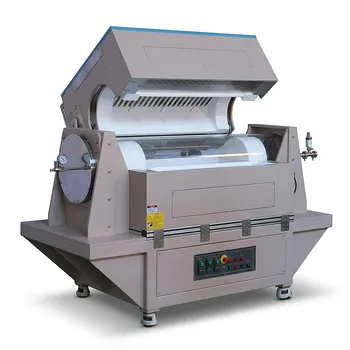
Three Zone Tube Furnace with 11 Inch or 15 Inch Quartz Tube and Hinged Flanges for Vacuum Atmosphere Heat Treatment
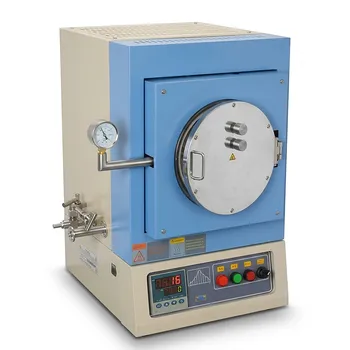
1100°C High Temperature Quartz Chamber Furnace 8 Inch OD with 7.6 Liter Capacity and Vacuum Atmosphere Capability
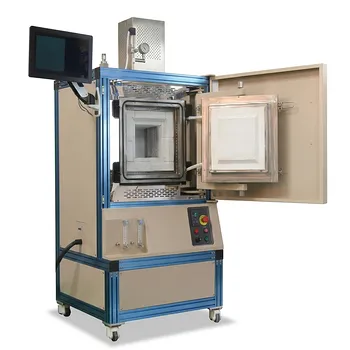
High Temperature Hydrogen Atmosphere Box Furnace 1650C Max Reducing Environment Material Synthesis System 8x8x8 Chamber

High Temperature 1700C Vertical Tube Furnace for Powder Spherification and Material Sintering

Compact High Temperature 1600C Tube Furnace with 50mm Alumina Tube and Vacuum Flanges for Material Sintering

High Temperature 1700C Six Zone Split Tube Furnace with Alumina Tube and Water Cooled Flanges

High Temperature 1700C Tube Furnace with High Vacuum Turbomolecular Pump System and Multi Channel Mass Flow Controller Gas Mixer

1800C High Temperature Compact Vacuum Tube Furnace with 60mm OD Alumina Tube and Kanthal MoSi2 Heating Elements

1100C Tube Furnace with Vacuum Flange and Programmable Temperature Controller for Material Science and Industrial Heat Treatment

High Temperature 1700C Benchtop Tube Furnace with 5 Inch Heating Zone High Purity Alumina Tube and Vacuum Sealing Flanges
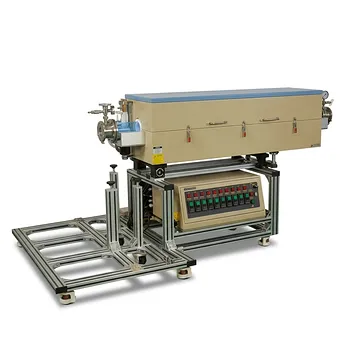
Ten Zone Multi Orientation Laboratory Tube Furnace for 1200C High Temperature Gradient Thermal Processing
1200C High Throughput Multi Channel Tube Furnace with 50mm Quartz Tubes for Annealing and Material Phase Diagram Research

High Temperature Automated 5 Inch Tube Furnace for Autonomous Material Research and Advanced Laboratory R&D
1200C Max Three Zone Tube Furnace 6 Inch OD Max with Tube and Flange