Why is precise temperature control in a Tube Furnace critical? Optimize Battery Recycling & Material Purity
Updated 3 months ago
Precise temperature control at 450 °C is the fundamental requirement for breaking the chemical bond between active cathode materials and the metal current collector. In the battery recycling process, a Tube Furnace uses pyrolysis to selectively decompose the organic binders and electrolyte residues that glue the powder to the aluminum foil. By maintaining an exact thermal environment, the furnace ensures these adhesives are completely removed without damaging the underlying foil or altering the chemical properties of the valuable cathode powders.
Precise temperature regulation ensures the complete thermal decomposition of organic binders while protecting the structural integrity of the metallic substrate. This balance is critical for maximizing material recovery rates and ensuring the high purity of the recycled battery components.
The Role of Pyrolysis in Binder Decomposition
Breaking the Adhesive Bond
At exactly 450 °C, the Tube Furnace triggers the thermal decomposition of PVDF (polyvinylidene fluoride) and other organic binders. This process turns the strong chemical adhesive into volatile gases, leaving the active cathode powder sitting loosely on the metal surface.
Removing Electrolyte Residues
Beyond binders, electrolyte residues can contaminate the recovery stream if not properly handled. Controlled heating effectively vaporizes these residues, ensuring that the remaining solid materials are clean and ready for subsequent mechanical separation.
Preserving the Integrity of the Current Collector
Avoiding Aluminum Degradation
Aluminum foil, the typical current collector, has a melting point near 660 °C and can become brittle well before that. Precise control prevents the furnace from overshooting the 450 °C target, which would risk melting the foil or causing it to fuse with the cathode powder, ruining the purity of the recovered material.
Minimizing Thermal Stress and Warping
Just as in the annealing of steel or the sintering of ceramics, the heating rate must be carefully managed. Stable temperature control prevents excessive thermal gradients that could cause the aluminum foil to warp or tear, which would make mechanical stripping and automated handling significantly more difficult.
Optimizing Recovery and Material Quality
Enhancing Mechanical Stripping Efficiency
Once the organic "glue" is removed via pyrolysis, the bond between the powder and the foil becomes purely physical and extremely weak. This allows for high-recovery mechanical stripping, where the active powder can be vibrated or brushed off the foil with minimal loss.
Preventing Microscopic Phase Transitions
Precision is vital because cathode materials are sensitive to their thermal environment. Maintaining a steady 450 °C ensures the binders are removed without triggering unwanted phase changes or microscopic cracks in the active powder particles, preserving their electrochemical performance for future use.
Understanding the Trade-offs
The Risk of Insufficient Heating
If the furnace temperature falls below the required threshold, the organic binders will only partially decompose. This results in a "sticky" material that refuses to separate from the foil, leading to low recovery rates and high mechanical effort.
The Danger of Excessive Heat
Overshooting the temperature can lead to the "thermal cracking" of the cathode materials themselves or the oxidation of the aluminum foil. This introduces impurities into the recycled powder, such as aluminum oxide flakes, which significantly degrades the quality of the final recycled product.
How to Apply This to Your Recycling Process
Implementation Strategy
To achieve the best results in a battery recycling workflow, your thermal processing strategy should be tailored to your specific material purity and throughput goals.
- If your primary focus is high-purity powder recovery: Utilize a programmable Tube Furnace to maintain a strict isothermal hold at 450 °C to ensure 100% binder decomposition without metal contamination.
- If your primary focus is preserving the foil for reuse: Implement controlled cooling rates to reduce internal thermal stress, preventing the foil from becoming brittle or deformed.
- If your primary focus is processing speed: Calibrate the heating ramp rate to the maximum stable limit (e.g., 30°C/min) to reach the pyrolysis window quickly without causing pore wall collapse in the cathode structure.
The precision of the thermal environment dictates the efficiency of the separation and the ultimate value of the recovered battery materials.
Summary Table:
| Key Factor | Optimal Requirement | Benefit of Precision |
|---|---|---|
| Decomposition Temp | 450 °C | Completely breaks PVDF bonds without damaging cathode properties. |
| Current Collector | Aluminum Foil | Prevents melting and brittleness by avoiding thermal overshooting. |
| Primary Process | Pyrolysis | Converts organic adhesives into gases for clean mechanical stripping. |
| Material Quality | High Purity | Eliminates impurities and electrolyte residues for superior recovery. |
| Heating Rate | Controlled Ramp | Minimizes thermal stress and prevents warping of the metallic substrate. |
Maximize Your Material Recovery with THERMUNITS Precision
In the competitive field of battery recycling and material science, the difference between high-purity recovery and wasted effort lies in thermal precision. THERMUNITS is a leading manufacturer of high-temperature laboratory equipment, providing the accuracy you need to scale your R&D and industrial processes.
Whether you require specialized Tube Furnaces for pyrolysis, or advanced Muffle, Vacuum, Atmosphere, Rotary, and Hot Press furnaces, our solutions are engineered for stability and performance. We also provide CVD/PECVD systems, Dental Furnaces, Vacuum Induction Melting (VIM) furnaces, and high-quality Thermal Elements to support your entire heat treatment workflow.
Ready to enhance your lab's efficiency and material quality? Contact our technical experts today to find the perfect thermal processing solution for your specific application.
References
- Md. Anik Hasan, Veena Sahajwalla. Sustainable regeneration of cathode active materials from spent lithium-ion batteries by repurposing waste coffee powder. DOI: 10.1039/d4gc05048g
Mentioned Products
- 4 Inch Two Zone Rotary CVD Tube Furnace for High Temperature Battery Material Synthesis and Advanced Material Calcination
- Roller Table Atmosphere Furnace 1500C High Temperature Battery Material Sintering System 112L Capacity
- 1500C 3-Zone Rotary Tube Furnace 60mm with Automatic Powder Feeding and Receiving System for Continuous Material Synthesis
- 5 Inch Rotary Tube Furnace with Automatic Feeding and Receiving System 1200C Three Zone CVD Powder Processing
- 1200°C 5 Inch Vertical Quartz Tube Furnace with Stainless Steel Vacuum Flanges
People Also Ask
- How does a rotary tube furnace improve the processing of granular materials? Enhance Uniformity and Reaction Kinetics
- Why use a rotary tube furnace for FACS carbonization? Ensure uniform morphology and prevent sphere agglomeration.
- Why is the precise optimization of residence time essential in the catalyst calcination process? Maximize Your Yields.
- In what ways do rotary tube furnaces enhance chemical and specialty mineral processing? Drive Precision and Uniformity.
- What parameters must operators control to maintain product quality in a rotary furnace? Master Your Heat Treatment.

Tech Team · ThermUnits
Last updated on Jun 03, 2026
Related Products
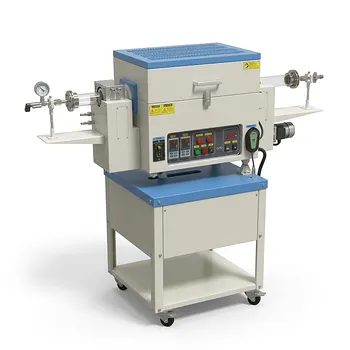
4 Inch Two Zone Rotary CVD Tube Furnace for High Temperature Battery Material Synthesis and Advanced Material Calcination
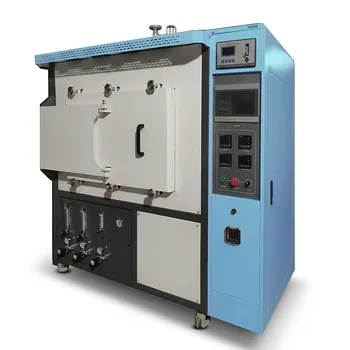
Roller Table Atmosphere Furnace 1500C High Temperature Battery Material Sintering System 112L Capacity
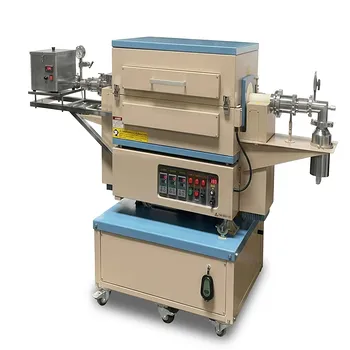
1500C 3-Zone Rotary Tube Furnace 60mm with Automatic Powder Feeding and Receiving System for Continuous Material Synthesis
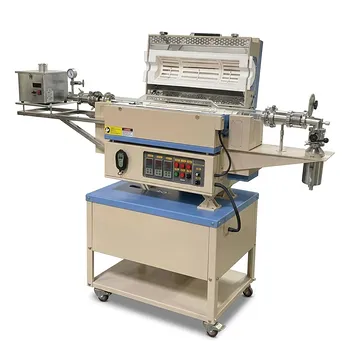
5 Inch Rotary Tube Furnace with Automatic Feeding and Receiving System 1200C Three Zone CVD Powder Processing

1200°C 5 Inch Vertical Quartz Tube Furnace with Stainless Steel Vacuum Flanges

High Temperature 1700C Vertical Tube Furnace for Powder Spherification and Material Sintering

Compact Vertical Split Quartz Tube Furnace with Stainless Steel Vacuum Flanges for Rapid Thermal Quenching and Controlled Atmosphere Material Processing

Vertical 1700C Vacuum and Atmosphere Tube Furnace with 80mm Alumina Tube
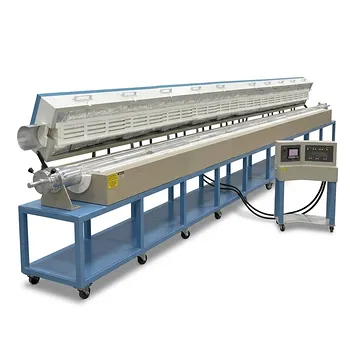
12 Zone Ultra Long Split Tube Furnace with 20 Foot Quartz Tube and 1100C Max Temperature
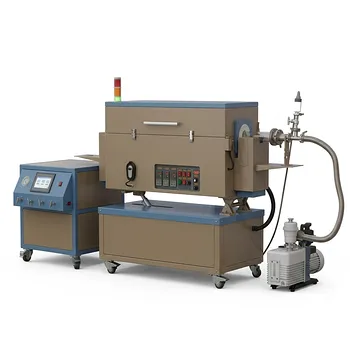
5 Inch Three Zone Rotary Tube Furnace with Integrated Gas Delivery System and 1200C Capability for Advanced Material CVD Processing
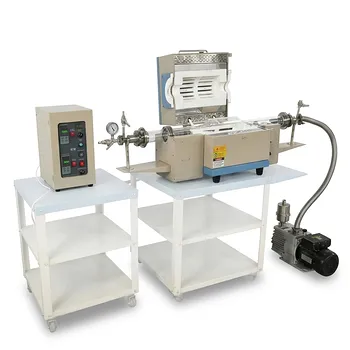
Two Zone Rotary Tube Furnace for Powder CVD Coating and Core Shell Material Synthesis 1100C
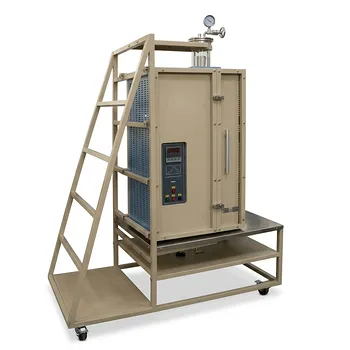
Split Vertical Tube Furnace with 1200C Quartz Tube and Stainless Steel Vacuum Flanges for Rapid Thermal Processing
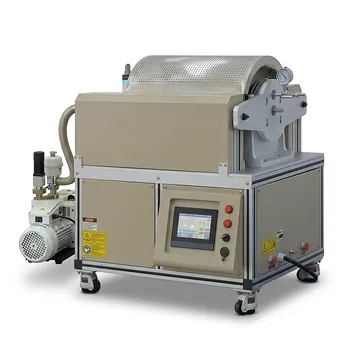
Automated 1200 C Tube Furnace for AI Material Research with 6 Inch OD and Sliding Flange
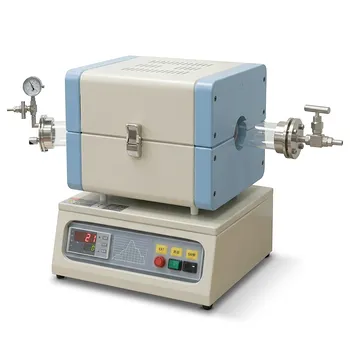
1200C Tube Furnace with Internal Magnetic Sample Sliding for Direct Vaporizing Deposition and Rapid Thermal Processing
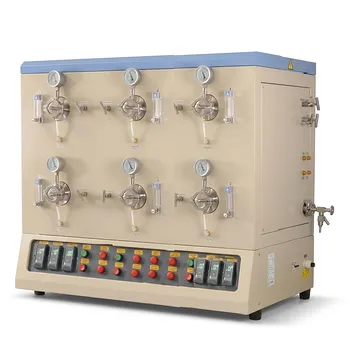
1200C High Throughput Multi Channel Tube Furnace with 50mm Quartz Tubes for Annealing and Material Phase Diagram Research

High Temperature 1700C Benchtop Tube Furnace with 5 Inch Heating Zone High Purity Alumina Tube and Vacuum Sealing Flanges

1800C High Temperature Compact Vacuum Tube Furnace with 60mm OD Alumina Tube and Kanthal MoSi2 Heating Elements
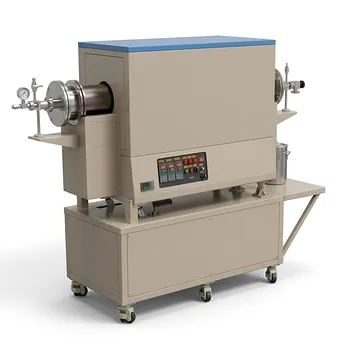
900°C Max Rotary Tube Furnace with 8 Inch 310S Alloy Tube and Optional Multi Zone Heating for Industrial Material Calcination
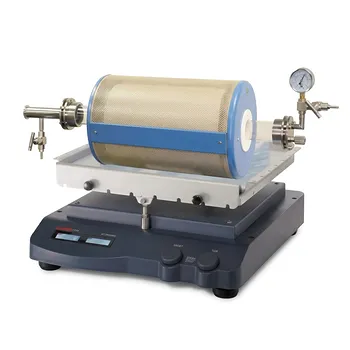
High Temperature Rocking Tube Furnace with Quartz Tube and Vacuum Flange for Materials Synthesis
