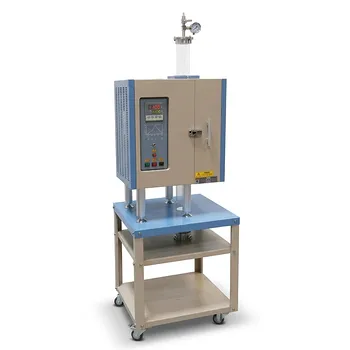
Why must a high-temperature tube furnace with argon be used for SiO2/Ag@PZS-C? Protect Silver & Enable Carbonization
Updated 3 months ago
The use of a high-temperature tube furnace with argon protection is the non-negotiable requirement for synthesizing $SiO_2/Ag@PZS-C$ composites. This specific setup provides the precise $800^\circ C$ thermal environment necessary for the simultaneous carbonization of polyphosphazene (PZS) and the chemical reduction of silver nitrate into silver nanoparticles. The argon atmosphere serves as a critical barrier that excludes oxygen, preventing the silver from oxidizing and ensuring the organic polymer transforms into a conductive carbon shell through pyrolysis rather than being destroyed by combustion.
Core Takeaway: To successfully synthesize $SiO_2/Ag@PZS-C$, you must use an inert atmosphere to facilitate "constructive" carbonization. Without argon, the high-temperature environment would cause the silver to oxidize and the organic framework to burn away, resulting in a loss of both the material's structural integrity and its electrical conductivity.
The Role of High-Temperature Thermal Processing
Driving the Carbonization of Polyphosphazene (PZS)
The synthesis requires a temperature of $800^\circ C$ to trigger the chemical transformation of the PZS polymer. At this energy level, the organic bonds break and rearrange to form a stable, conductive carbon shell (the "C" in $PZS-C$).
Facilitating the Reduction of Silver Nitrate
High heat acts as the catalyst for reducing silver nitrate precursors into metallic silver nanoparticles. This transformation is essential for embedding the silver within the composite structure to achieve the desired functional properties.
The Necessity of an Argon Protective Atmosphere
Preventing Oxidative Combustion
In the presence of oxygen, organic polymers like PZS will undergo direct combustion, effectively turning to ash and gas. An argon environment ensures pyrolysis, where the material decomposes thermally into solid carbon without burning away.
Protecting Silver Nanoparticles from Oxidation
Silver is highly susceptible to oxidation at elevated temperatures. The argon flow creates an anaerobic environment that maintains the silver in its metallic state, preserving the purity and performance of the nanoparticles within the $SiO_2$ matrix.
Inducing Graphitization and Conductivity
The inert atmosphere promotes in-situ graphitization, turning the organic carbon into a more ordered, conductive structure. This process is what allows the final composite to transition from an insulating state to a conductive or semiconductive material.
Preserving Microscopic Morphology and Purity
Maintaining Structural Integrity
Using a tube furnace allows for a stable, continuous flow of argon that carries away gaseous byproducts like $CO$ and $CO_2$. This constant displacement prevents secondary reactions that could lead to material ablation or the degradation of the microscopic pore structure.
Ensuring Chemical Purity
High-purity argon excludes nitrogen and oxygen, which could cause unwanted nitridation or oxidation of the components. By controlling the atmosphere, the reaction is forced to follow the intended thermodynamic pathway, ensuring the final product matches the $SiO_2/Ag@PZS-C$ specification exactly.
Understanding the Trade-offs and Risks
Gas Flow Management Risks
If the argon flow rate is too low, trace oxygen may remain, leading to partial oxidation and decreased electrical conductivity. Conversely, excessively high flow rates can cause temperature fluctuations within the tube, leading to non-uniform carbonization.
Cost and Complexity
Operating a high-purity argon system increases the operational cost and technical complexity of the synthesis. However, attempting the process in a standard air furnace or with lower-grade inert gases will result in the total failure of the composite synthesis.
How to Apply This to Your Synthesis Goals
Strategic Recommendations for Success
- If your primary focus is maximum electrical conductivity: Ensure the argon flow is consistent and the temperature is held strictly at $800^\circ C$ to maximize the graphitization of the carbon shell.
- If your primary focus is nanoparticle purity: Use high-purity (99.99%) argon and ensure the furnace tube is properly sealed before heating to prevent any "back-diffusion" of atmospheric oxygen.
- If your primary focus is morphology preservation: Monitor the exhaust of the tube furnace to ensure that gaseous byproducts are being effectively removed without creating a pressure imbalance.
By strictly controlling both the thermal energy and the chemical atmosphere, you can successfully engineer a composite that balances structural stability with high-performance metallic properties.
Summary Table:
| Parameter | Requirement | Role in Synthesis |
|---|---|---|
| Temperature | $800^\circ C$ | Triggers PZS carbonization and silver nitrate reduction. |
| Atmosphere | High-purity Argon | Prevents PZS combustion and silver oxidation. |
| Process Type | Pyrolysis | Transforms polymer into a conductive carbon shell. |
| Gas Management | Continuous Flow | Removes $CO/CO_2$ to maintain structural integrity and purity. |
| Final Property | Conductivity | Promotes in-situ graphitization of the carbon matrix. |
Elevate Your Material Research with THERMUNITS Precision
To achieve successful synthesis of advanced composites like $SiO_2/Ag@PZS-C$, precision in temperature and atmospheric control is non-negotiable. THERMUNITS is a leading manufacturer of high-temperature laboratory equipment, providing the reliability and accuracy needed for cutting-edge material science and industrial R&D.
Our comprehensive range of thermal processing solutions includes:
- Furnaces: Muffle, Vacuum, Atmosphere, Tube, Rotary, and Hot Press furnaces.
- Systems: CVD/PECVD systems and Vacuum Induction Melting (VIM) furnaces.
- Specialized Equipment: Dental Furnaces, Electric Rotary Kilns, and high-quality Thermal Elements.
Whether you are scaling up production or conducting sensitive laboratory heat treatments, THERMUNITS delivers the technology to ensure your materials reach their full potential.
Ready to optimize your synthesis process? Contact our expert team today for a tailored solution!
References
- Zhengping Zhao, Jia Wei Chew. Preparation and lithium storage performance of SiO2/Ag composite materials coated with polyphosphazene. DOI: 10.3144/expresspolymlett.2024.75
Mentioned Products
- 1700C Hydrogen Gas Tube Furnace with 60mm Alumina Process Tube and Integrated Hydrogen Safety Detector
- Vertical 1700C Vacuum and Atmosphere Tube Furnace with 80mm Alumina Tube
- High Temperature 1700C Six Zone Split Tube Furnace with Alumina Tube and Water Cooled Flanges
- Compact High Temperature 1600C Tube Furnace with 50mm Alumina Tube and Vacuum Flanges for Material Sintering
- 1800C High Temperature Compact Vacuum Tube Furnace with 60mm OD Alumina Tube and Kanthal MoSi2 Heating Elements
People Also Ask
- Why is an Ar/H2 (95/5) mixed atmosphere necessary when annealing Si/Al2O3/RGO materials in a tube furnace?
- What is the function of a high-temperature tube furnace in the preparation of Ni/Fe@NDC catalysts? Key Roles Explained
- Why is precision temperature programming in a tube furnace critical for the synthesis of molybdenum-based metal nitrides?
- Why is a strictly maintained argon environment necessary for 900 °C FeCoNi@CNTs annealing? Prevent Oxidative Destruction
- Why is high-precision programmable temperature control in a tube furnace necessary for cooling YBCO-358? Peak Performance.

Tech Team · ThermUnits
Last updated on Jun 03, 2026
Related Products
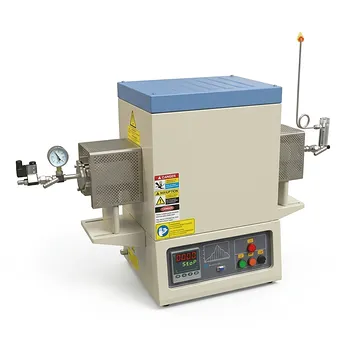
1700C Hydrogen Gas Tube Furnace with 60mm Alumina Process Tube and Integrated Hydrogen Safety Detector
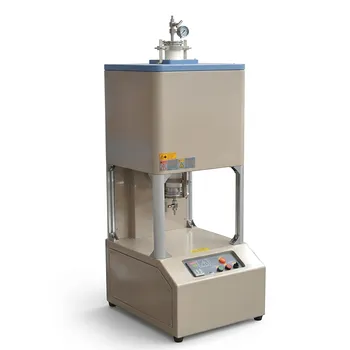
Vertical 1700C Vacuum and Atmosphere Tube Furnace with 80mm Alumina Tube
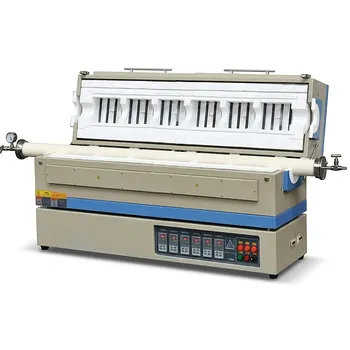
High Temperature 1700C Six Zone Split Tube Furnace with Alumina Tube and Water Cooled Flanges

Compact High Temperature 1600C Tube Furnace with 50mm Alumina Tube and Vacuum Flanges for Material Sintering

1800C High Temperature Compact Vacuum Tube Furnace with 60mm OD Alumina Tube and Kanthal MoSi2 Heating Elements
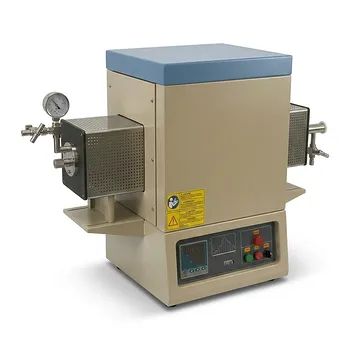
High Temperature 1700C Benchtop Tube Furnace with 5 Inch Heating Zone High Purity Alumina Tube and Vacuum Sealing Flanges
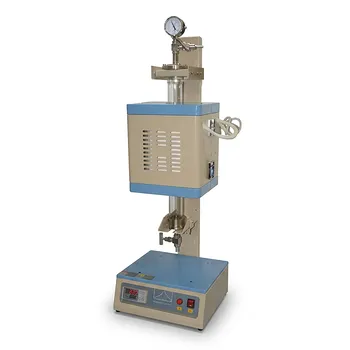
Compact Vertical Split Quartz Tube Furnace with Stainless Steel Vacuum Flanges for Rapid Thermal Quenching and Controlled Atmosphere Material Processing
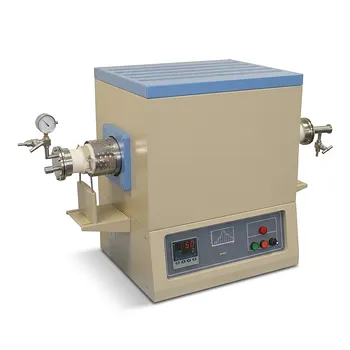
1700C High Temperature Alumina Tube Furnace with 18 Inch Heated Zone and Vacuum Sealing Flanges
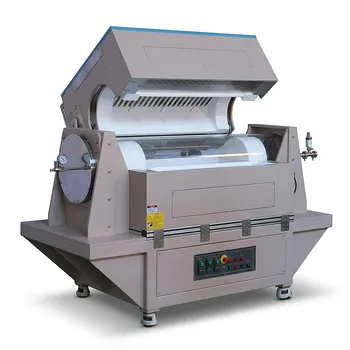
Three Zone Tube Furnace with 11 Inch or 15 Inch Quartz Tube and Hinged Flanges for Vacuum Atmosphere Heat Treatment
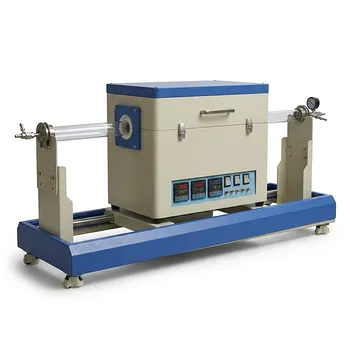
Double Temperature Zone Double Cover Tube Furnace for High Temperature CVD and Vacuum Annealing

High Temperature 1700C Vertical Tube Furnace for Powder Spherification and Material Sintering
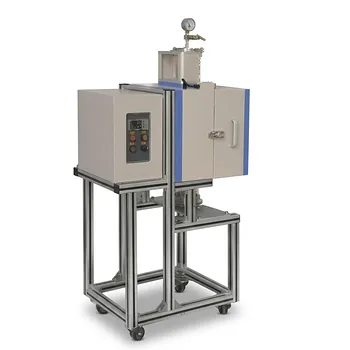
1200°C 5 Inch Vertical Quartz Tube Furnace with Stainless Steel Vacuum Flanges
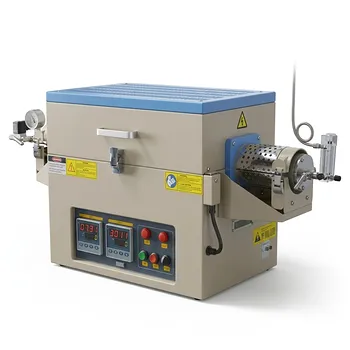
1100C Dual Zone Hydrogen Gas Tube Furnace with Quartz Tube and Integrated H2 Leak Detection System
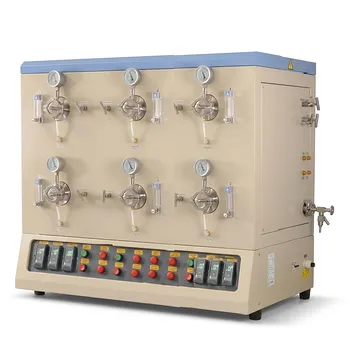
1200C High Throughput Multi Channel Tube Furnace with 50mm Quartz Tubes for Annealing and Material Phase Diagram Research
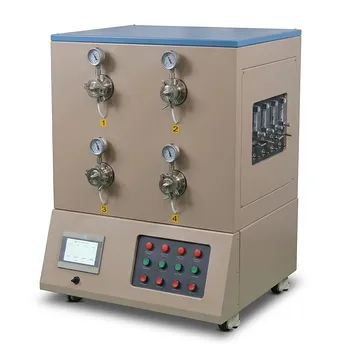
High Throughput 1200C Four Channel Tube Furnace with 3 Inch Quartz Tubes for Multi Zone Annealing and Material Research
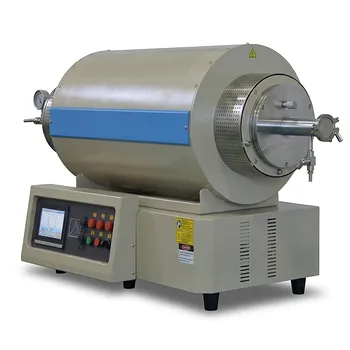
1200C Max Three Zone Tube Furnace 6 Inch OD Max with Tube and Flange

High Temperature Automated 5 Inch Tube Furnace for Autonomous Material Research and Advanced Laboratory R&D
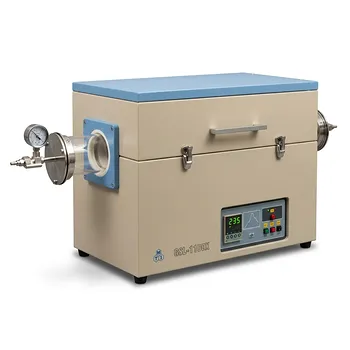
Single Zone Tube Furnace 5 Inch Quartz Tube 36 Inch Heating Zone Vacuum Flanges
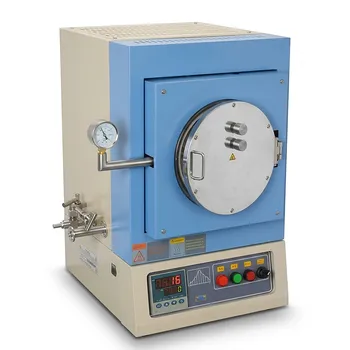
1100°C High Temperature Quartz Chamber Furnace 8 Inch OD with 7.6 Liter Capacity and Vacuum Atmosphere Capability