What is the function of a high-temperature tube furnace in the preparation of Ni/Fe@NDC catalysts? Key Roles Explained
Updated 3 months ago
The high-temperature tube furnace serves as the critical reactor for "in-situ encapsulation," a process where heat and atmosphere are precisely managed to build the catalyst's structure. In the synthesis of Ni/Fe@NDC, the furnace provides an anaerobic environment at approximately 800 °C to simultaneously reduce metal nitrates into Ni-Fe alloys and carbonize organic precursors into nitrogen-doped graphene layers.
Core Takeaway: The tube furnace facilitates a dual chemical transformation—metal reduction and organic carbonization—within a protected nitrogen atmosphere to create stable, high-performance bimetallic nanoparticles encapsulated in a conductive carbon framework.
The Role of Controlled Thermal Processing
Maintaining an Anaerobic Atmosphere
The tube furnace provides a strictly controlled oxygen-free environment by maintaining a continuous flow of nitrogen. This is vital to prevent the oxidation of the carbon framework and the active metal sites, ensuring the resulting material remains conductive and chemically active.
Driving Chemical Phase Transitions
Under the intense heat of the furnace (typically 800 °C), metal nitrates are reduced into Ni-Fe alloys. This thermal energy is the catalyst for solid-phase reactions that would not occur at lower temperatures, allowing the precursors to reorganize into their final, stable metallic forms.
Achieving Precise Temperature Uniformity
The design of the tube furnace ensures that heat is distributed evenly across the precursor material. This temperature uniformity is essential for creating a high density of active sites and ensuring that the electrical conductivity is consistent throughout the entire batch of the Ni/Fe@NDC catalyst.
Structural Engineering and Encapsulation
Carbonization and Graphitization
The furnace facilitates the pyrolysis of organic ligands, such as melamine and citric acid. During this process, volatile components are removed, and the remaining carbon atoms are rearranged into nitrogen-doped graphene layers, providing the "NDC" (Nitrogen-Doped Carbon) component of the catalyst.
Preventing Nanoparticle Agglomeration
A primary function of the furnace is to enable in-situ encapsulation. By forming the carbon shell at the same time the metal alloy is created, the furnace prevents the Ni-Fe nanoparticles from clumping together (agglomeration), which preserves the high surface area necessary for catalytic reactions.
Formation of Porous Architectures
The controlled ramping of temperatures allows for the development of porous structures. As organic components decompose into gases and escape, they leave behind a network of pores that allow reactants to reach the active Ni-Fe sites more efficiently during electrocatalytic processes.
Understanding the Trade-offs
Temperature Sensitivity
While higher temperatures (e.g., 1,000 °C) can improve graphitization and conductivity, they also risk excessive metal grain growth. If the furnace is set too high, the nanoparticles may become too large, significantly reducing the active surface area and overall catalytic efficiency.
Atmospheric Purity Requirements
The success of the synthesis is entirely dependent on the sealing performance of the tube furnace. Even minor oxygen leaks can lead to the formation of inactive metal oxides instead of the desired alloys, or the premature combustion of the carbon matrix, ruining the catalyst's structural integrity.
Energy Consumption and Throughput
High-temperature tube furnaces are energy-intensive and often limited by the volume of the quartz or ceramic tube. This creates a trade-off between precision control and large-scale production, as maintaining uniform conditions becomes increasingly difficult as the furnace size increases.
How to Apply This to Your Synthesis
Making the Right Choice for Your Goal
To achieve the best results with a high-temperature tube furnace, tailor your parameters based on your specific material requirements:
- If your primary focus is high electrical conductivity: Aim for the higher end of the temperature range (900 °C - 1,000 °C) to promote deeper graphitization of the carbon framework.
- If your primary focus is maximum active surface area: Use a lower calcination temperature (around 800 °C) and a slower heating ramp to prevent the Ni-Fe nanoparticles from growing too large.
- If your primary focus is stable nitrogen doping: Maintain a consistent flow of nitrogen or a nitrogen/ammonia mix to ensure effective anchoring of nitrogen atoms into the carbon lattice during pyrolysis.
By mastering the thermal and atmospheric variables of the tube furnace, you can precisely engineer the interface between the Ni-Fe alloy and its protective nitrogen-doped carbon shell.
Summary Table:
| Furnace Function | Specific Process | Impact on Ni/Fe@NDC Catalyst |
|---|---|---|
| Atmosphere Control | Nitrogen flow (Oxygen-free) | Prevents oxidation; ensures pure metal alloys & conductive carbon. |
| Thermal Reduction | Solid-phase reaction at ~800°C | Converts metal nitrates into active Ni-Fe bimetallic alloys. |
| Pyrolysis/Carbonization | Organic precursor decomposition | Forms the Nitrogen-Doped Carbon (NDC) framework for stability. |
| In-situ Encapsulation | Simultaneous shell/core formation | Prevents nanoparticle agglomeration; maintains high surface area. |
| Morphology Control | Controlled ramping & gas release | Develops porous architectures for efficient reactant diffusion. |
Optimize Your Catalyst Synthesis with THERMUNITS Precision Heating
Superior material performance starts with precise thermal control. THERMUNITS is a leading manufacturer of high-temperature laboratory equipment, providing material science researchers and industrial R&D professionals with the tools to master complex processes like in-situ encapsulation and graphitization.
Whether you are synthesizing Ni/Fe@NDC catalysts or developing next-generation energy materials, our comprehensive product range is engineered for excellence:
- Advanced Tube & Atmosphere Furnaces: For perfect anaerobic environments and nitrogen-doping.
- Precision CVD/PECVD Systems: For controlled carbon framework growth.
- Versatile Solutions: Including Vacuum, Muffle, Rotary, and Hot Press furnaces, alongside Electric Rotary Kilns and VIM systems.
Ready to achieve superior temperature uniformity and atmospheric purity?
Contact our technical experts today to find the ideal heat treatment solution for your lab!
References
- Siyi Mi, Jianguo Liu. Selective hydrogenation of vanillin over a graphene-encapsulated nitrogen-doped bimetallic magnetic Ni/Fe@NDC nano-catalyst. DOI: 10.1039/d4ra02729a
Mentioned Products
- High Temperature Tube Furnace 1500C with Sliding Flanges and 50mm OD for Rapid Thermal Processing Fast Heating and Cooling
- Vertical 1700C Vacuum and Atmosphere Tube Furnace with 80mm Alumina Tube
- 1100C Tube Furnace with Vacuum Flange and Programmable Temperature Controller for Material Science and Industrial Heat Treatment
- Compact High Temperature 1600C Tube Furnace with 50mm Alumina Tube and Vacuum Flanges for Material Sintering
- 900°C Max Rotary Tube Furnace with 8 Inch 310S Alloy Tube and Optional Multi Zone Heating for Industrial Material Calcination
People Also Ask
- How are high-temperature tube furnaces utilized to repair etching damage? Precision Lattice Restoration Solutions
- What role does a high-temperature tube furnace play in CVD synthesis of silicon nanowires? Master VLS Growth Precision.
- What core conditions does a high-temperature tube furnace provide for rGO aerogels? Mastering Precision Synthesis.
- What role does a high-temperature tube furnace play in the sulfidation heat treatment of CoS@C/MXene nanocomposites? Guide
- How does precision tube furnace control influence CoFe nanoparticle formation? Master Your Bimetallic Synthesis.

Tech Team · ThermUnits
Last updated on Jun 02, 2026
Related Products
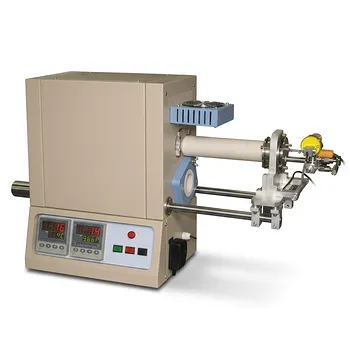
High Temperature Tube Furnace 1500C with Sliding Flanges and 50mm OD for Rapid Thermal Processing Fast Heating and Cooling

Vertical 1700C Vacuum and Atmosphere Tube Furnace with 80mm Alumina Tube

1100C Tube Furnace with Vacuum Flange and Programmable Temperature Controller for Material Science and Industrial Heat Treatment

Compact High Temperature 1600C Tube Furnace with 50mm Alumina Tube and Vacuum Flanges for Material Sintering
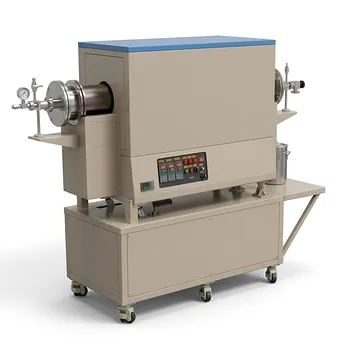
900°C Max Rotary Tube Furnace with 8 Inch 310S Alloy Tube and Optional Multi Zone Heating for Industrial Material Calcination

1700C Hydrogen Gas Tube Furnace with 60mm Alumina Process Tube and Integrated Hydrogen Safety Detector

High Temperature 1700C Tube Furnace with High Vacuum Turbomolecular Pump System and Multi Channel Mass Flow Controller Gas Mixer
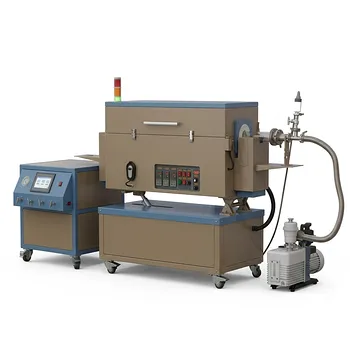
5 Inch Three Zone Rotary Tube Furnace with Integrated Gas Delivery System and 1200C Capability for Advanced Material CVD Processing

1200C High Throughput Multi Channel Tube Furnace with 50mm Quartz Tubes for Annealing and Material Phase Diagram Research
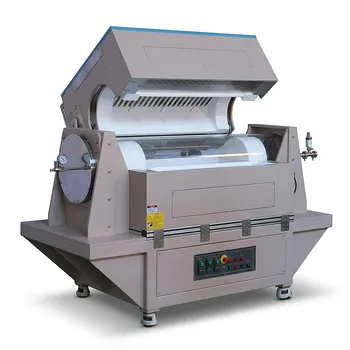
Three Zone Tube Furnace with 11 Inch or 15 Inch Quartz Tube and Hinged Flanges for Vacuum Atmosphere Heat Treatment

1200°C 5 Inch Vertical Quartz Tube Furnace with Stainless Steel Vacuum Flanges

1800C High Temperature Compact Vacuum Tube Furnace with 60mm OD Alumina Tube and Kanthal MoSi2 Heating Elements

High Temperature 1700C Benchtop Tube Furnace with 5 Inch Heating Zone High Purity Alumina Tube and Vacuum Sealing Flanges
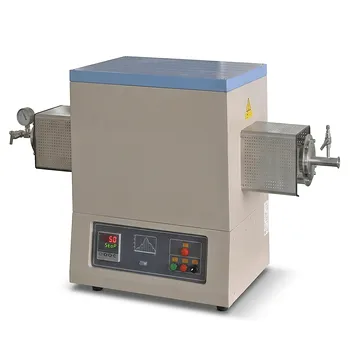
High Temperature 1700C Tube Furnace with 4 Inch OD Alumina Tube and Vacuum Sealing Flanges

High Temperature 1700C Six Zone Split Tube Furnace with Alumina Tube and Water Cooled Flanges

Compact Vertical Split Quartz Tube Furnace with Stainless Steel Vacuum Flanges for Rapid Thermal Quenching and Controlled Atmosphere Material Processing
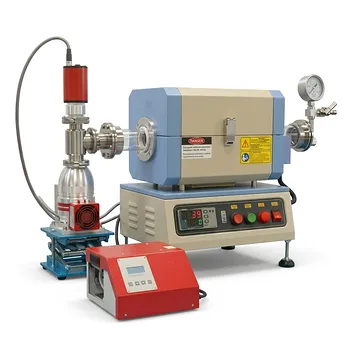
High Vacuum Compact Tube Furnace 1200C with Integrated Turbo Pump System and 8 Inch Heating Zone
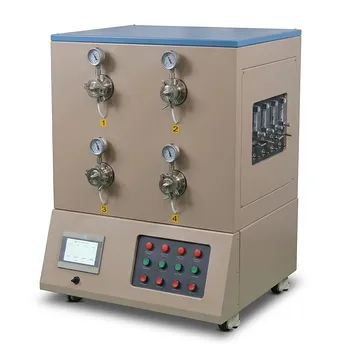
High Throughput 1200C Four Channel Tube Furnace with 3 Inch Quartz Tubes for Multi Zone Annealing and Material Research

High Temperature 1700C Vertical Tube Furnace for Powder Spherification and Material Sintering
