Why is high-precision programmable temperature control in a tube furnace necessary for cooling YBCO-358? Peak Performance.
Updated 3 months ago
High-precision programmable temperature control is the essential mechanism for managing the delicate phase transition and structural integrity of YBCO-358 during synthesis. By strictly adhering to specific cooling rates (such as 10°C/min) and maintaining an extended isothermal hold at 500°C, the furnace enables the material to fully absorb oxygen. This precise thermal management facilitates the critical transformation from a non-superconducting tetragonal phase to a high-performance orthorhombic phase while preventing destructive micro-cracks.
Core Takeaway: Precision temperature control is required to navigate the "oxygenation window" at 500°C, where YBCO-358 acquires its superconducting properties. Failure to maintain this narrow thermal path results in structural defects, impurity phases, and the loss of superconducting functionality.
Managing the Critical Phase Transformation
Driving the Tetragonal-to-Orthorhombic Transition
The transition from a tetragonal to an orthorhombic structure is the defining moment in creating high-temperature superconductors. This structural change relies entirely on the material's ability to absorb oxygen as it cools. A programmable furnace ensures the material remains in the 500°C critical zone long enough for this diffusion to occur, ensuring the final product reaches its ideal stoichiometric phase.
Preventing Micro-Cracks and Thermal Stress
Rapid or uneven cooling creates significant temperature gradients within the YBCO-358 sample. These gradients lead to localized thermal expansion differences, which trigger the formation of micro-cracks. High-precision control allows for a slow, linear cooling rate that minimizes internal stress and preserves the material’s physical durability.
Optimizing Grain Growth and Morphology
Just as with Metal-Organic Frameworks or perovskites, the microscopic structure of YBCO is highly sensitive to thermal fluctuations. Precise control prevents grain coarsening and ensures that the "skeleton structure" of the material is maintained. This leads to a more uniform material with reduced defects at the grain boundaries, which is vital for efficient current flow in superconductors.
Ensuring Phase Purity and Repeatability
Eliminating Impurity Phases
Research into similar compounds like Yb123 shows that phase purity is extremely sensitive, often requiring accuracy within a narrow window (e.g., 927°C to 937°C). Even minor deviations can cause the formation of impurity phases such as BaCuO2 or Yb211. A high-precision controller, paired with quality thermocouples, locks the reaction environment within these strict limits to ensure a pure superconducting sample.
Achieving Chemical Equilibrium
The decomposition of precursors and the formation of covalent bonds are thermally dependent reactions that require stable equilibrium points. Precision furnaces allow researchers to capture subtle process variations and maintain the necessary isothermal stages. This stability ensures that precursors decompose fully and consistently across different experimental runs.
Understanding the Trade-offs
Equipment Cost vs. Precision Requirements
While high-precision programmable controllers significantly increase the cost of a tube furnace, they are non-negotiable for YBCO-358. Utilizing a basic manual or low-precision controller often results in a high "scrap" rate of failed samples. In a research or production environment, the initial investment in precision hardware is typically offset by the increased yield of high-quality superconducting material.
Thermal Lag and Sensor Placement
A common pitfall is ignoring the thermal lag between the furnace heating elements and the actual sample. Even the most precise controller can only react to the data it receives from the thermocouple. If the sensor is poorly placed, the controller may maintain a perfect curve that does not reflect the actual temperature of the YBCO-358 material, leading to phase errors.
How to Apply This to Your Process
Choosing the right control profile is dependent on your specific material goals and the geometry of your furnace.
- If your primary focus is Maximum Superconductivity: Prioritize an extended isothermal hold at 500°C in a flowing oxygen environment to ensure a complete transition to the orthorhombic phase.
- If your primary focus is Structural Durability: Implement a very slow, programmable cooling ramp (less than 10°C/min) to prevent the formation of micro-cracks and internal voids.
- If your primary focus is Phase Purity: Use high-quality thermocouples and a controller with a high sampling rate to eliminate "overshoot" and stay within the narrow 10°C temperature window required for pure phase formation.
By mastering these precise thermal gradients, you ensure that YBCO-358 transcends being a mere ceramic and becomes a functional high-temperature superconductor.
Summary Table:
| Key Requirement | Process Function | Impact on YBCO-358 Superconductivity |
|---|---|---|
| 500°C Isothermal Hold | Oxygenation Window | Facilitates Tetragonal-to-Orthorhombic phase transition. |
| Precise Cooling Rates | Stress Mitigation | Prevents micro-cracks and preserves structural integrity. |
| Narrow Process Window | Purity Control | Eliminates impurity phases like BaCuO2 and Yb211. |
| Programmable Ramps | Grain Morphology | Ensures uniform grain growth and efficient current flow. |
Elevate Your Superconductor Research with THERMUNITS
Precision is the difference between a high-performance superconductor and a failed ceramic sample. As a leading manufacturer of high-temperature laboratory equipment, THERMUNITS provides the thermal accuracy required for the most demanding material science R&D.
Whether you are synthesizing YBCO-358 or developing next-generation oxides, our comprehensive range of solutions—including Tube, Muffle, Vacuum, Atmosphere, Rotary, and Hot Press furnaces, as well as CVD/PECVD systems, Dental Furnaces, and Vacuum Induction Melting (VIM) units—ensures ultimate control over your thermal profiles.
Don't let thermal fluctuations compromise your results. Partner with experts who understand the nuances of high-precision heat treatment.
Contact THERMUNITS Today for a Custom Solution
References
- Fatih Bulut. Application and comparison of theoretical approaches to mechanical properties of bulk YBCO-358 ceramic superconductors. DOI: 10.17714/gumusfenbil.1462251
Mentioned Products
- High Temperature Tube Furnace 1500C with Sliding Flanges and 50mm OD for Rapid Thermal Processing Fast Heating and Cooling
- Vertical 1700C Vacuum and Atmosphere Tube Furnace with 80mm Alumina Tube
- 1100C Tube Furnace with Vacuum Flange and Programmable Temperature Controller for Material Science and Industrial Heat Treatment
- Compact High Temperature 1600C Tube Furnace with 50mm Alumina Tube and Vacuum Flanges for Material Sintering
- 900°C Max Rotary Tube Furnace with 8 Inch 310S Alloy Tube and Optional Multi Zone Heating for Industrial Material Calcination
People Also Ask
- How are high-temperature tube furnaces utilized to repair etching damage? Precision Lattice Restoration Solutions
- What core conditions does a high-temperature tube furnace provide for rGO aerogels? Mastering Precision Synthesis.
- What role does a high-temperature tube furnace play in CVD synthesis of silicon nanowires? Master VLS Growth Precision.
- How does precision tube furnace control influence CoFe nanoparticle formation? Master Your Bimetallic Synthesis.
- What role does a high-temperature tube furnace play in the sulfidation heat treatment of CoS@C/MXene nanocomposites? Guide

Tech Team · ThermUnits
Last updated on Jun 02, 2026
Related Products
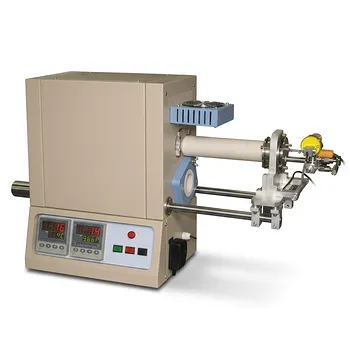
High Temperature Tube Furnace 1500C with Sliding Flanges and 50mm OD for Rapid Thermal Processing Fast Heating and Cooling

Vertical 1700C Vacuum and Atmosphere Tube Furnace with 80mm Alumina Tube
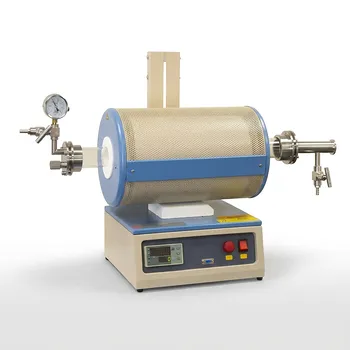
1100C Tube Furnace with Vacuum Flange and Programmable Temperature Controller for Material Science and Industrial Heat Treatment

Compact High Temperature 1600C Tube Furnace with 50mm Alumina Tube and Vacuum Flanges for Material Sintering
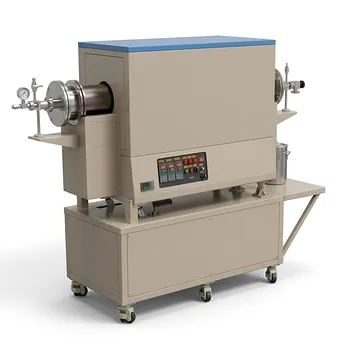
900°C Max Rotary Tube Furnace with 8 Inch 310S Alloy Tube and Optional Multi Zone Heating for Industrial Material Calcination
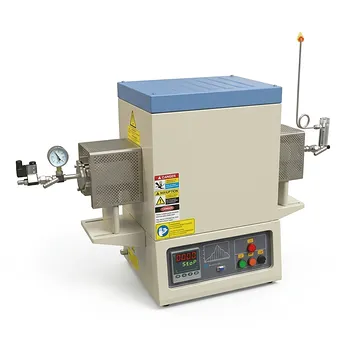
1700C Hydrogen Gas Tube Furnace with 60mm Alumina Process Tube and Integrated Hydrogen Safety Detector

High Temperature 1700C Tube Furnace with High Vacuum Turbomolecular Pump System and Multi Channel Mass Flow Controller Gas Mixer
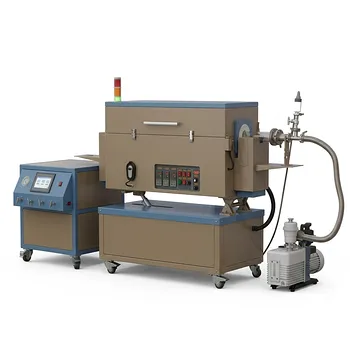
5 Inch Three Zone Rotary Tube Furnace with Integrated Gas Delivery System and 1200C Capability for Advanced Material CVD Processing
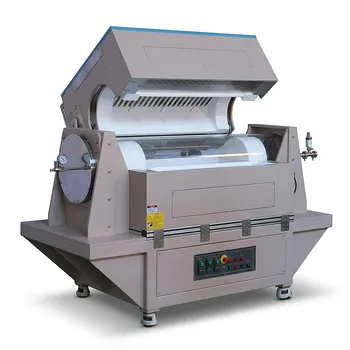
Three Zone Tube Furnace with 11 Inch or 15 Inch Quartz Tube and Hinged Flanges for Vacuum Atmosphere Heat Treatment
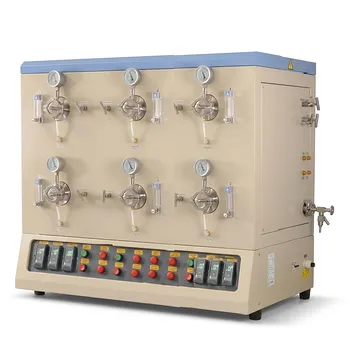
1200C High Throughput Multi Channel Tube Furnace with 50mm Quartz Tubes for Annealing and Material Phase Diagram Research

1200°C 5 Inch Vertical Quartz Tube Furnace with Stainless Steel Vacuum Flanges

High Temperature 1700C Six Zone Split Tube Furnace with Alumina Tube and Water Cooled Flanges
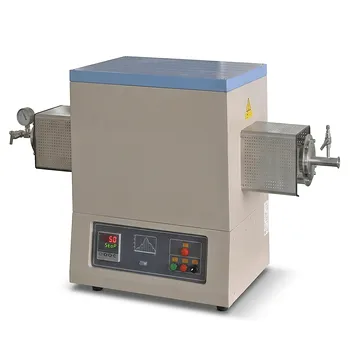
High Temperature 1700C Tube Furnace with 4 Inch OD Alumina Tube and Vacuum Sealing Flanges

High Temperature 1700C Benchtop Tube Furnace with 5 Inch Heating Zone High Purity Alumina Tube and Vacuum Sealing Flanges

Compact Vertical Split Quartz Tube Furnace with Stainless Steel Vacuum Flanges for Rapid Thermal Quenching and Controlled Atmosphere Material Processing

1800C High Temperature Compact Vacuum Tube Furnace with 60mm OD Alumina Tube and Kanthal MoSi2 Heating Elements
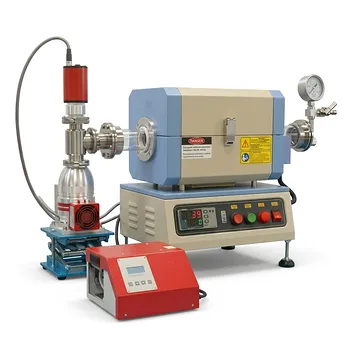
High Vacuum Compact Tube Furnace 1200C with Integrated Turbo Pump System and 8 Inch Heating Zone
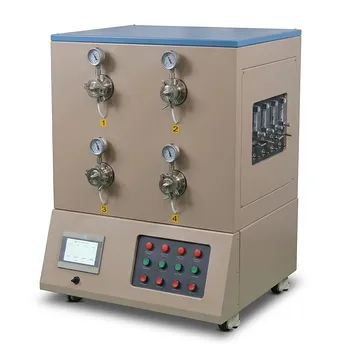
High Throughput 1200C Four Channel Tube Furnace with 3 Inch Quartz Tubes for Multi Zone Annealing and Material Research

High Temperature Automated 5 Inch Tube Furnace for Autonomous Material Research and Advanced Laboratory R&D
