Why is an Ar/H2 (95/5) mixed atmosphere necessary when annealing Si/Al2O3/RGO materials in a tube furnace?
Updated 3 months ago
Annealing Si/Al₂O₃/RGO materials in an Ar/H₂ (95/5) atmosphere is essential to simultaneously prevent silicon oxidation and restore the electrical conductivity of the graphene component. The argon acts as an inert shield for the sub-micron silicon, while the hydrogen chemically removes oxygen-containing functional groups from the graphene oxide. This dual-action environment ensures the final composite maintains the high electrochemical activity required for lithium-ion battery applications.
The Ar/H₂ mixture creates a "reductive-inert" environment where argon provides a passive barrier against oxidation and hydrogen actively restores the material's chemical structure. This synergy is critical for transforming Graphene Oxide (GO) into highly conductive Reduced Graphene Oxide (RGO) without degrading the sensitive silicon nanoparticles.
The Dual Role of the Gas Mixture
Argon as the Passive Protective Guard
Argon is a noble gas used to displace oxygen and moisture within the tube furnace chamber. During high-temperature annealing, sub-micron silicon particles are highly susceptible to secondary oxidation, which would create an insulating silica layer and ruin performance.
Hydrogen as the Active Reducing Agent
The 5% hydrogen component serves as a chemical tool to "strip" oxygen away from the Graphene Oxide. By reacting with oxygen-containing functional groups, hydrogen facilitates the transition to Reduced Graphene Oxide (RGO), which is necessary for electron transport.
Maintaining Stoichiometric Integrity
A controlled atmosphere prevents the formation of multi-metal oxide impurities or unintended chemical phases. This ensures that the Al₂O₃ and Silicon maintain their intended chemical states and micro-morphology throughout the thermal cycle.
Impact on Material Performance
Optimization of Electrical Conductivity
Without the reductive action of hydrogen, the graphene layer remains in an oxidized, non-conductive state. The Ar/H₂ atmosphere ensures the RGO layer achieves the high metallic-like conductivity needed for high-rate battery charging and discharging.
Protection of Surface Active Sites
Silicon and RGO composites rely on specific surface interactions to store lithium ions effectively. The inert argon environment prevents the "poisoning" of these surface sites by atmospheric oxygen or trace moisture during the cooling phase.
Precision in Micro-structural Reconstruction
The stable environment of a tube furnace allows for the internal diffusion and coarsening of silicon nanocrystals. Because the atmosphere is non-reactive, these structural changes happen predictably without altering the external morphology of the nanoparticles.
Understanding the Trade-offs
The Safety Threshold of Hydrogen
A 5% hydrogen concentration is specifically chosen because it is typically below the lower flammability limit in air. While higher concentrations of hydrogen would increase the reducing power, they introduce significant explosion risks that require specialized furnace safety systems.
Balancing Reduction and Material Loss
While hydrogen removes unwanted oxygen, excessive exposure at very high temperatures can occasionally lead to the etching of certain carbon structures. The 95/5 ratio provides a controlled reduction rate that maximizes conductivity without compromising the structural integrity of the RGO.
Limitations of "Inert-Only" Environments
Using pure argon would prevent the silicon from oxidizing but would fail to reduce the graphene oxide. In a pure inert environment, the oxygen already present within the GO would remain trapped, resulting in a composite with poor electrical performance.
How to Apply This to Your Project
Recommendations for Atmospheric Control
- If your primary focus is maximum electrical conductivity: Ensure the H₂ flow is consistent and consider longer annealing dwell times to allow the 5% concentration to thoroughly reduce the GO layers.
- If your primary focus is preventing silicon degradation: Prioritize the purging phase of the tube furnace with pure argon before introducing the H₂ mix to ensure all residual oxygen is removed.
- If your primary focus is safety in a laboratory setting: Stick to the 95/5 Ar/H₂ ratio (Forming Gas), as it provides a robust reducing environment while remaining non-flammable at room temperature.
The precise coordination of an inert shield and a chemical reducer is the definitive factor in producing high-performance silicon-graphene energy materials.
Summary Table:
| Gas Component | Role in Process | Impact on Si/Al2O3/RGO Material |
|---|---|---|
| Argon (95%) | Inert Protective Shield | Prevents sub-micron silicon oxidation and silica layer formation. |
| Hydrogen (5%) | Active Reducing Agent | Strips oxygen from Graphene Oxide to restore electrical conductivity. |
| The Mixture | Dual-Action Environment | Ensures stoichiometric integrity and optimal electrochemical activity. |
Elevate Your Material Research with THERMUNITS Precision Furnaces
Achieving the perfect "reductive-inert" environment requires absolute atmospheric control. THERMUNITS is a leading manufacturer of high-temperature laboratory equipment, providing the precision needed for complex material science and industrial R&D.
Whether you are annealing sensitive Si/Al2O3/RGO composites or developing next-gen energy materials, our comprehensive range of thermal solutions—including Tube, Atmosphere, Vacuum, and CVD/PECVD furnaces—ensures uniform heating and reliable gas mixing.
Why choose THERMUNITS?
- Precision Control: Expertly designed for Ar/H2, Nitrogen, and Vacuum environments.
- Versatile Solutions: From Rotary and Hot Press furnaces to Dental and Vacuum Induction Melting (VIM) systems.
- Built for R&D: High-durability thermal elements and advanced safety features for hydrogen-rich processes.
Ready to optimize your heat treatment workflow? Contact our technical team today to find the ideal furnace for your specific application!
References
- Xiangyu Tan, Xin Cai. Reduced graphene oxide-encaged submicron-silicon anode interfacially stabilized by Al<sub>2</sub>O<sub>3</sub> nanoparticles for efficient lithium-ion batteries. DOI: 10.1039/d4ra00751d
Mentioned Products
- High Temperature Tube Furnace 1500C with Sliding Flanges and 50mm OD for Rapid Thermal Processing Fast Heating and Cooling
- Vertical 1700C Vacuum and Atmosphere Tube Furnace with 80mm Alumina Tube
- 1100C Tube Furnace with Vacuum Flange and Programmable Temperature Controller for Material Science and Industrial Heat Treatment
- Compact High Temperature 1600C Tube Furnace with 50mm Alumina Tube and Vacuum Flanges for Material Sintering
- 900°C Max Rotary Tube Furnace with 8 Inch 310S Alloy Tube and Optional Multi Zone Heating for Industrial Material Calcination
People Also Ask
- How are high-temperature tube furnaces utilized to repair etching damage? Precision Lattice Restoration Solutions
- What core conditions does a high-temperature tube furnace provide for rGO aerogels? Mastering Precision Synthesis.
- What role does a high-temperature tube furnace play in CVD synthesis of silicon nanowires? Master VLS Growth Precision.
- How does precision tube furnace control influence CoFe nanoparticle formation? Master Your Bimetallic Synthesis.
- What role does a high-temperature tube furnace play in the sulfidation heat treatment of CoS@C/MXene nanocomposites? Guide

Tech Team · ThermUnits
Last updated on Jun 02, 2026
Related Products
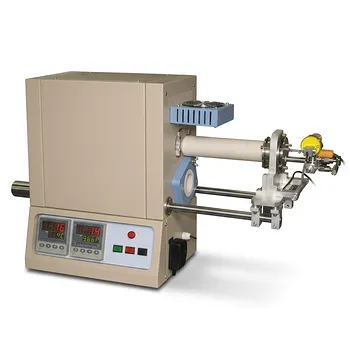
High Temperature Tube Furnace 1500C with Sliding Flanges and 50mm OD for Rapid Thermal Processing Fast Heating and Cooling

Vertical 1700C Vacuum and Atmosphere Tube Furnace with 80mm Alumina Tube

1100C Tube Furnace with Vacuum Flange and Programmable Temperature Controller for Material Science and Industrial Heat Treatment

Compact High Temperature 1600C Tube Furnace with 50mm Alumina Tube and Vacuum Flanges for Material Sintering
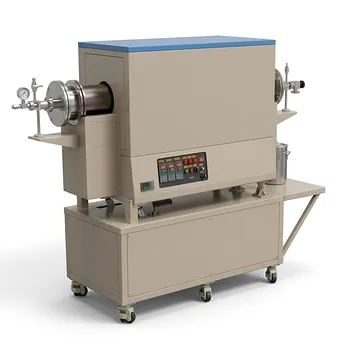
900°C Max Rotary Tube Furnace with 8 Inch 310S Alloy Tube and Optional Multi Zone Heating for Industrial Material Calcination
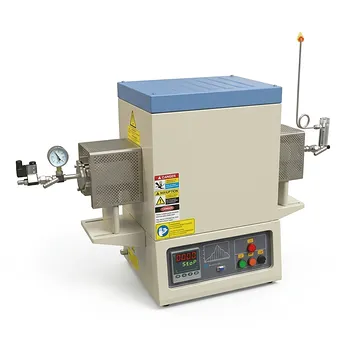
1700C Hydrogen Gas Tube Furnace with 60mm Alumina Process Tube and Integrated Hydrogen Safety Detector

High Temperature 1700C Tube Furnace with High Vacuum Turbomolecular Pump System and Multi Channel Mass Flow Controller Gas Mixer
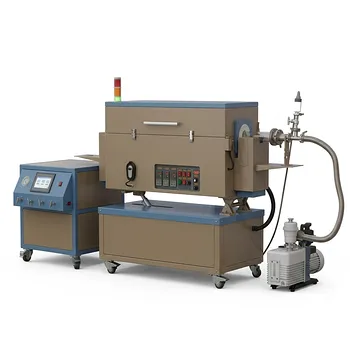
5 Inch Three Zone Rotary Tube Furnace with Integrated Gas Delivery System and 1200C Capability for Advanced Material CVD Processing

Three Zone Tube Furnace with 11 Inch or 15 Inch Quartz Tube and Hinged Flanges for Vacuum Atmosphere Heat Treatment
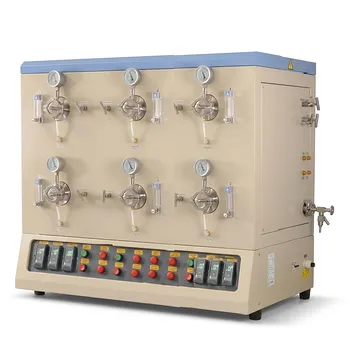
1200C High Throughput Multi Channel Tube Furnace with 50mm Quartz Tubes for Annealing and Material Phase Diagram Research

1200°C 5 Inch Vertical Quartz Tube Furnace with Stainless Steel Vacuum Flanges

High Temperature 1700C Six Zone Split Tube Furnace with Alumina Tube and Water Cooled Flanges
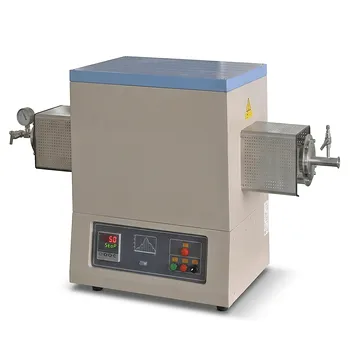
High Temperature 1700C Tube Furnace with 4 Inch OD Alumina Tube and Vacuum Sealing Flanges

Compact Vertical Split Quartz Tube Furnace with Stainless Steel Vacuum Flanges for Rapid Thermal Quenching and Controlled Atmosphere Material Processing

High Temperature 1700C Benchtop Tube Furnace with 5 Inch Heating Zone High Purity Alumina Tube and Vacuum Sealing Flanges

1800C High Temperature Compact Vacuum Tube Furnace with 60mm OD Alumina Tube and Kanthal MoSi2 Heating Elements
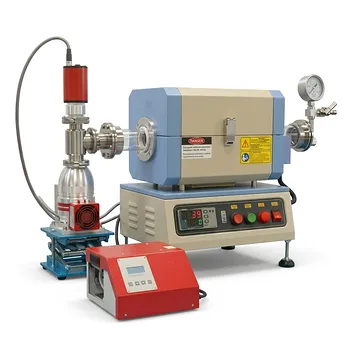
High Vacuum Compact Tube Furnace 1200C with Integrated Turbo Pump System and 8 Inch Heating Zone
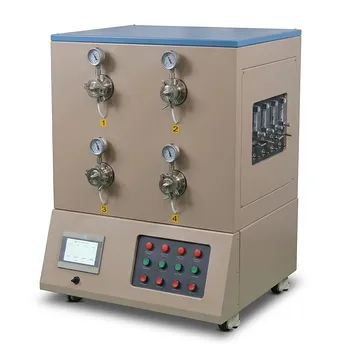
High Throughput 1200C Four Channel Tube Furnace with 3 Inch Quartz Tubes for Multi Zone Annealing and Material Research

High Temperature Automated 5 Inch Tube Furnace for Autonomous Material Research and Advanced Laboratory R&D