Why use a H2/Ar tube furnace for Pt/TiNxOy catalysts? Create SFLPs and Optimize CO2 Conversion Performance.
Updated 3 months ago
The use of a tube furnace with a high-purity $H_2/Ar$ atmosphere is critical because it creates a precise reducing environment that transforms platinum precursors into active states while simultaneously inducing a "hydrogen spillover effect." This specific chemical process is required to form surface frustrated Lewis pairs (SFLPs) on the titanium nitride substrate, which are the essential active structures for the photocatalytic conversion of $CO_2$.
Core Takeaway: The tube furnace functions as a controlled chemical reactor where the $H_2/Ar$ mixture facilitates the reduction of metal precursors and the engineering of surface defects (SFLPs). Without this precise atmosphere, the catalyst would lack the necessary electronic structure and active sites required for efficient catalytic performance.
The Chemical Necessity of the Hydrogen Component
Reduction of Platinum Precursors
The primary role of the $H_2$ gas is to act as a reducing agent that converts platinum precursors into their catalytically active metallic or ionic states. This transition is essential for the catalyst to facilitate electron transfer during chemical reactions.
Induction of the Hydrogen Spillover Effect
High-purity hydrogen enables the hydrogen spillover effect, where hydrogen atoms dissociated on the platinum surface migrate onto the titanium nitride ($TiN_xO_y$) support. This migration is the driving force behind the modification of the support's surface chemistry.
Formation of Surface Frustrated Lewis Pairs (SFLPs)
The spillover effect promotes the formation of surface frustrated Lewis pairs (SFLPs) on the titanium nitride. These SFLPs act as the primary active sites for capturing and activating $CO_2$ molecules, a process that is otherwise difficult to achieve with standard thermal treatments.
The Protective Role of the Argon Atmosphere
Maintaining an Oxygen-Free Environment
High-purity argon serves as an inert shield that completely excludes oxygen from the reaction zone. This is vital to prevent the undesired oxidation of the platinum or the titanium nitride, which would destroy the catalyst's intended chemical properties.
Removal of Volatile Byproducts
The continuous flow of argon effectively carries away volatile organic compounds and nitrogen gas released during the decomposition of ligands. By purging these byproducts, the furnace prevents contamination and ensures the pore structure of the catalyst remains open and accessible.
Protection Against Material Ablation
In the presence of even trace amounts of oxygen at high temperatures, carbon-based components or sensitive metal structures can undergo ablation. Argon ensures that the thermal energy only facilitates structural transitions rather than the combustion of the material.
The Technical Advantages of the Tube Furnace
Precise Temperature Control
Tube furnaces provide the exact thermal environment (typically between 280°C and 700°C) required for optimal crystal transition. This precision ensures that platinum nanoparticles are optimized for electrochemical activity and long-term durability.
Homogeneous Atmosphere Distribution
The design of the tube furnace allows for a stable, long temperature zone where the $H_2/Ar$ gas mixture interacts uniformly with the catalyst surface. This uniformity is critical for achieving consistent distribution of active sites across the entire sample.
Regulation of Electronic Conductivity
By operating in an oxygen-deficient, reducing environment, the furnace induces the formation of oxygen vacancies within the lattice. This process can significantly lower the material's bandgap, which enhances electronic conductivity and improves overall catalytic efficiency.
Understanding the Trade-offs
Balancing Reduction and Agglomeration
While high temperatures and $H_2$ flow are necessary for activation, excessive heat can cause metal atoms to migrate and agglomerate. This reduces the surface area of the active sites, effectively lowering the catalyst's performance.
Gas Purity and Cost
The requirement for "high-purity" gas is non-negotiable; trace impurities like moisture or oxygen can poison the catalyst's active sites. However, maintaining this level of purity increases the operational complexity and cost of the synthesis process.
Sensitivity to Cooling Rates
The state of the SFLPs and oxygen vacancies created at high temperatures can be sensitive to how the material is cooled. Rapid cooling may be required to "lock" these metastable states in place, requiring precise control over the furnace's cooling cycle.
How to Apply This to Your Project
Recommendations for Catalyst Synthesis
- If your primary focus is maximizing $CO_2$ conversion: Prioritize the $H_2$ concentration and flow rate to ensure the maximum formation of SFLPs through the spillover effect.
- If your primary focus is long-term catalyst durability: Focus on the precise calibration of the furnace temperature to ensure stable crystal transitions and prevent nanoparticle agglomeration.
- If your primary focus is electronic conductivity: Ensure a strictly oxygen-free argon environment to maximize the creation of oxygen vacancies within the $TiN_xO_y$ lattice.
The tube furnace is not merely a heater, but a sophisticated chemical tool that defines the final electronic and structural architecture of the $Pt/TiN_xO_y$ catalyst.
Summary Table:
| Component | Key Function | Impact on Catalyst |
|---|---|---|
| Hydrogen (H2) | Reduction & Spillover | Forms active SFLPs and metallic Pt states |
| Argon (Ar) | Inert Shielding | Prevents oxidation and maintains pore accessibility |
| Thermal Control | Precise Heat (280-700°C) | Ensures optimal crystal transition and durability |
| Atmosphere Flow | Contaminant Removal | Purges volatile byproducts to ensure material purity |
Maximize Your Research Precision with THERMUNITS
Elevate your catalyst synthesis with THERMUNITS, a leading manufacturer of high-temperature laboratory equipment for material science. Our advanced thermal processing solutions—including specialized Tube Furnaces, Atmosphere Furnaces, CVD/PECVD systems, and Vacuum Induction Melting (VIM) Furnaces—are engineered to provide the precise gas control and temperature uniformity required for complex $Pt/TiN_xO_y$ preparations.
Ready to enhance your lab's efficiency and industrial R&D outcomes? Contact us today to find the ideal heat treatment solution tailored to your specific project needs!
References
- Yunjie Zou, Lan Ling. Surface frustrated Lewis pairs in titanium nitride enable gas phase heterogeneous CO2 photocatalysis. DOI: 10.1038/s41467-024-54951-2
Mentioned Products
- 1100C Hydrogen Gas Atmosphere Tube Furnace with 5 Inch Fused Quartz Tube and Integrated Safety Monitoring System
- 1200C Hybrid Muffle and Tube Furnace for Material Research with Dual Atmosphere Control Quartz Tubes
- Compact Vertical Split Quartz Tube Furnace with Stainless Steel Vacuum Flanges for Rapid Thermal Quenching and Controlled Atmosphere Material Processing
- 1200C Hydrogen Atmosphere Box Furnace with 5 Heated Sides and 64L Chamber
- Vertical 1700C Vacuum and Atmosphere Tube Furnace with 80mm Alumina Tube
People Also Ask
- Why is a hydrogen-reducing atmosphere tube furnace required for Eu2+ silicate? Essential for Precise Valence Control.
- Why use an atmosphere protection tube furnace for TiO2–TiN/S sulfur melt-diffusion? Protect Material Integrity
- What functions does an atmosphere-protected High-Temperature Tube Furnace serve for iridium? Precise Material Synthesis
- Why is an atmosphere-protected tube furnace typically selected for the homogenization treatment of Al0.25CoCrCuFeNi HEA?
- Why is an atmosphere-protected tube furnace used for the annealing process of two-dimensional electronic ink thin films? - Tips

Tech Team · ThermUnits
Last updated on Jun 02, 2026
Related Products
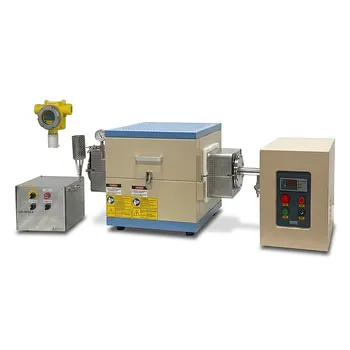
1100C Hydrogen Gas Atmosphere Tube Furnace with 5 Inch Fused Quartz Tube and Integrated Safety Monitoring System
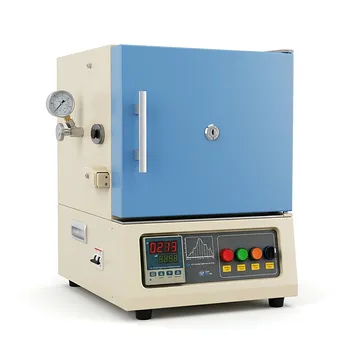
1200C Hybrid Muffle and Tube Furnace for Material Research with Dual Atmosphere Control Quartz Tubes

Compact Vertical Split Quartz Tube Furnace with Stainless Steel Vacuum Flanges for Rapid Thermal Quenching and Controlled Atmosphere Material Processing
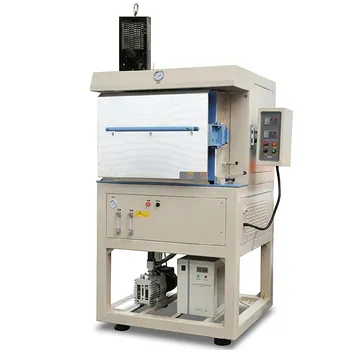
1200C Hydrogen Atmosphere Box Furnace with 5 Heated Sides and 64L Chamber

Vertical 1700C Vacuum and Atmosphere Tube Furnace with 80mm Alumina Tube
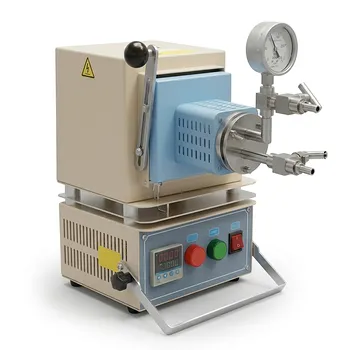
Compact Hybrid Muffle and Tube Furnace for 1000C Controlled Atmosphere Laboratory Material Sintering
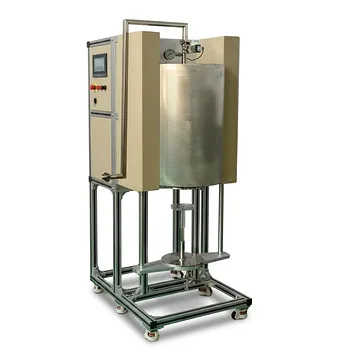
1200°C Atmosphere Controlled Automatic Bottom Loading Furnace with 6 Inch Quartz Tube
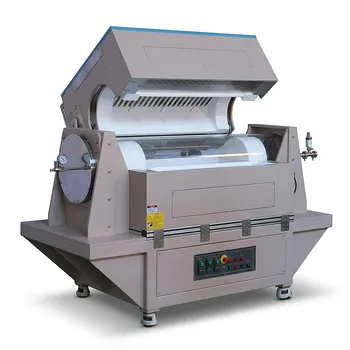
Three Zone Tube Furnace with 11 Inch or 15 Inch Quartz Tube and Hinged Flanges for Vacuum Atmosphere Heat Treatment
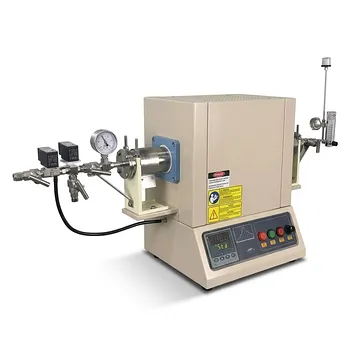
1500C Compact Hydrogen Gas Tube Furnace with 2 Inch Alumina Tube and Hydrogen Detector
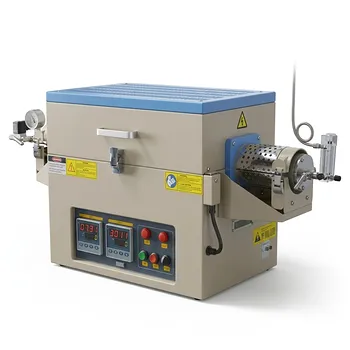
1100C Dual Zone Hydrogen Gas Tube Furnace with Quartz Tube and Integrated H2 Leak Detection System
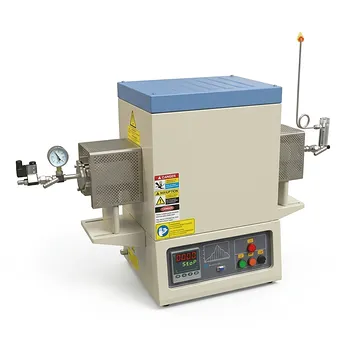
1700C Hydrogen Gas Tube Furnace with 60mm Alumina Process Tube and Integrated Hydrogen Safety Detector
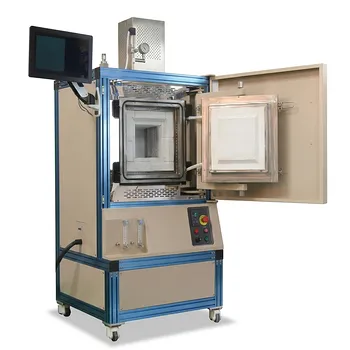
High Temperature Hydrogen Atmosphere Box Furnace 1650C Max Reducing Environment Material Synthesis System 8x8x8 Chamber
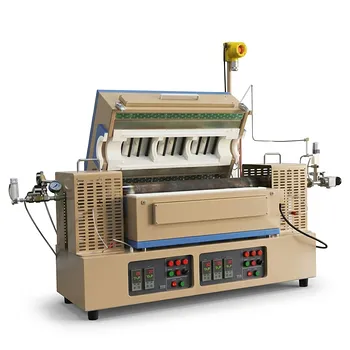
Three Zone Hydrogen Gas Tube Furnace with 82mm Superalloy Tube and Dual Hydrogen Detectors 1200C High Temperature Material Processing System
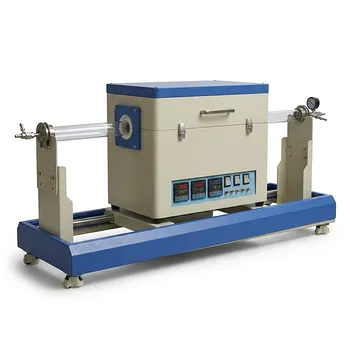
Double Temperature Zone Double Cover Tube Furnace for High Temperature CVD and Vacuum Annealing
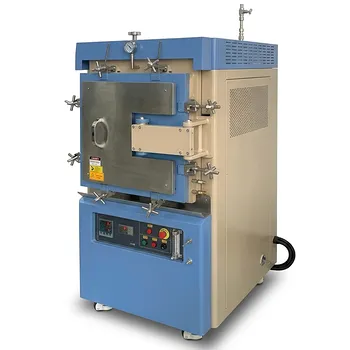
Atmosphere Controlled Muffle Furnace 1700C Maximum Temperature 80L High Capacity Vacuum Inert Gas Box Furnace
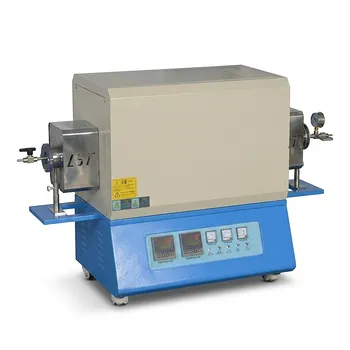
High Temperature Dual Zone Vacuum Tube Furnace for Material Research and CVD Processing

High Temperature Automated 5 Inch Tube Furnace for Autonomous Material Research and Advanced Laboratory R&D
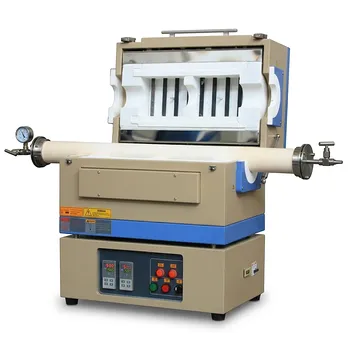
1500C Two Zone Split Tube Furnace with Vacuum Flange and 80mm Alumina Tube

High Temperature 1700C Vertical Tube Furnace for Powder Spherification and Material Sintering
