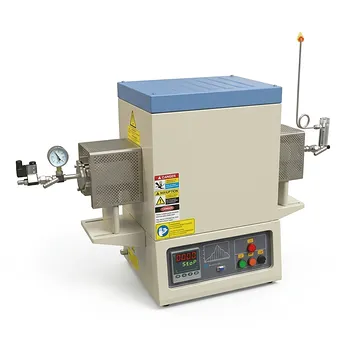
Why use an atmosphere protection tube furnace for TiO2–TiN/S sulfur melt-diffusion? Protect Material Integrity
Updated 3 months ago
The atmosphere protection tube furnace is essential because it prevents the oxidation of elemental sulfur and the $TiO_2–TiN$ host while enabling precise thermal control for melt-diffusion. By maintaining an inert environment—typically using argon—the furnace ensures that molten sulfur can effectively penetrate the nanometer-sized slits of the composite structure without undergoing detrimental side reactions or escaping as gas.
Core Takeaway: The tube furnace acts as a controlled reaction chamber that preserves the chemical purity of sulfur and the structural integrity of the titanium-based host, ensuring maximum loading and strong polysulfide anchoring through a specialized isothermal process.
Preventing Chemical Degradation and Oxidation
The High Reactivity of Molten Sulfur
At the required processing temperature of 155 °C, elemental sulfur is in a molten state and highly susceptible to oxidation if exposed to air. An atmosphere protection tube furnace replaces oxygen with an inert gas (like Argon), preventing the formation of sulfur dioxide ($SO_2$) or other unwanted byproducts.
Protecting the $TiO_2–TiN$ Heterostructure
The titanium nitride ($TiN$) component of the host material is sensitive to high-temperature environments where it could revert to $TiO_2$ or lose its conductive properties. The oxygen-free environment maintained by the tube furnace ensures the $TiN$ retains its high catalytic activity and strong chemical adsorption capabilities for polysulfides.
Eliminating Side Reactions
Without a sealed, inert atmosphere, the composite components could react with moisture or atmospheric gases. The tube furnace provides a closed system that ensures the only transition occurring is the physical melt and subsequent diffusion of sulfur into the host's pores.
Facilitating the Melt-Diffusion Process
Precision Isothermal Control
The melt-diffusion process requires a stable 155 °C isothermal environment to optimize the viscosity of the sulfur. The programmable nature of the tube furnace allows for exact temperature maintenance, ensuring the sulfur remains fluid enough to move but not so hot that it vaporizes excessively.
Achieving Deep Nanometer Penetration
The primary goal of this process is to "anchor" sulfur within the nanometer-sized slits of the $TiO_2–TiN$ composite. The controlled pressure and heat within the tube furnace facilitate capillary action, allowing the molten sulfur to saturate the internal voids of the host material completely.
Enhancing Physical and Chemical Adsorption
By providing a stable environment for diffusion, the furnace ensures that sulfur achieves intimate contact with the $TiO_2–TiN$ surfaces. This maximizes the strong physical and chemical adsorption necessary to prevent the "shuttle effect" in battery applications, where polysulfides otherwise dissolve into the electrolyte.
Understanding the Trade-offs and Risks
Gas Flow Rate Sensitivity
While an inert atmosphere is required, the flow rate of the carrier gas must be carefully managed. If the flow is too high, it may carry sulfur vapor away from the host material before it can diffuse, leading to lower-than-intended sulfur loading in the final composite.
Thermal Gradient Challenges
In larger tube furnaces, temperature gradients can exist between the center and the edges of the tube. If the sample is not placed in the "sweet spot" of the furnace, the sulfur may not melt uniformly, resulting in an inconsistent distribution of active material across the $TiO_2–TiN$ framework.
Equipment Sealing Integrity
The effectiveness of the process is entirely dependent on the vacuum-tight seals of the furnace. Even a minor leak can introduce trace amounts of oxygen, which at 155 °C can catalyze the degradation of the $TiN$ surface and reduce the overall electronic conductivity of the composite.
How to Apply This to Your Project
The use of an atmosphere protection tube furnace is a non-negotiable requirement for high-performance sulfur cathodes. Your specific settings should be dictated by your material goals.
- If your primary focus is Maximum Sulfur Loading: Ensure the furnace is perfectly leveled and utilize a slow ramp-up to 155 °C to allow sulfur to melt and pool evenly before diffusion begins.
- If your primary focus is Improving Conductivity: Prioritize the purity of your Argon gas and ensure a strict oxygen-free purge cycle to prevent any surface oxidation of the $TiN$ particles.
- If your primary focus is Long-Term Cycling Stability: Use a longer isothermal dwell time at 155 °C within the furnace to ensure sulfur is deeply sequestered within the host slits, maximizing chemical anchoring.
By mastering the atmosphere and thermal profile of the tube furnace, you ensure the $TiO_2–TiN/S$ composite achieves its full potential as a high-capacity, stable electronic material.
Summary Table:
| Key Feature | Benefit for Sulfur Melt-Diffusion | Critical Parameter |
|---|---|---|
| Inert Atmosphere | Prevents sulfur oxidation and $TiN$ degradation | Oxygen-free (Argon) |
| Isothermal Control | Optimizes sulfur viscosity for deep pore penetration | Stable 155 °C |
| Sealed Chamber | Facilitates capillary action into nanometer slits | Vacuum-tight sealing |
| Programmable Ramp | Prevents excessive sulfur vaporization | Controlled heating rate |
Optimize Your Material Synthesis with THERMUNITS
Ready to achieve superior sulfur loading and material stability? THERMUNITS is a leading manufacturer of high-temperature laboratory equipment for material science and industrial R&D. We provide the precision atmosphere control necessary for complex processes like sulfur melt-diffusion in $TiO_2–TiN$ composites.
Our comprehensive range of thermal processing solutions includes:
- Tube & Atmosphere Furnaces (Ideal for inert gas processing)
- Vacuum, Muffle, and Rotary Furnaces
- Hot Press & CVD/PECVD Systems
- Vacuum Induction Melting (VIM) & Dental Furnaces
Ensure your research achieves maximum conductivity and cycling stability with our expert-grade hardware. Contact our technical team today to find the perfect furnace for your laboratory!
References
- Ka Chun Li, Xijun Hu. Single-step synthesis of titanium nitride-oxide composite and AI-driven aging forecast for lithium–sulfur batteries. DOI: 10.1039/d4ta00234b
Mentioned Products
- 1100C Hydrogen Gas Atmosphere Tube Furnace with 5 Inch Fused Quartz Tube and Integrated Safety Monitoring System
- Compact Vertical Split Quartz Tube Furnace with Stainless Steel Vacuum Flanges for Rapid Thermal Quenching and Controlled Atmosphere Material Processing
- Vertical 1700C Vacuum and Atmosphere Tube Furnace with 80mm Alumina Tube
- 1200C Hybrid Muffle and Tube Furnace for Material Research with Dual Atmosphere Control Quartz Tubes
- Three Zone Tube Furnace with 11 Inch or 15 Inch Quartz Tube and Hinged Flanges for Vacuum Atmosphere Heat Treatment
People Also Ask
- Why use a H2/Ar tube furnace for Pt/TiNxOy catalysts? Create SFLPs and Optimize CO2 Conversion Performance.
- Why is a hydrogen-reducing atmosphere tube furnace required for Eu2+ silicate? Essential for Precise Valence Control.
- What functions does an atmosphere-protected High-Temperature Tube Furnace serve for iridium? Precise Material Synthesis
- Why is an atmosphere-protected tube furnace typically selected for the homogenization treatment of Al0.25CoCrCuFeNi HEA?
- Why is an atmosphere-protected tube furnace used for the annealing process of two-dimensional electronic ink thin films? - Tips

Tech Team · ThermUnits
Last updated on Jun 02, 2026
Related Products
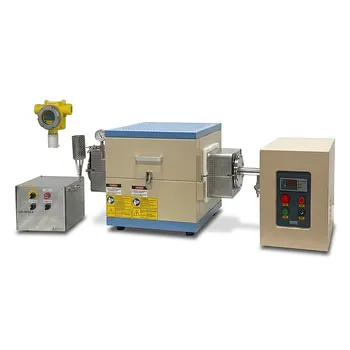
1100C Hydrogen Gas Atmosphere Tube Furnace with 5 Inch Fused Quartz Tube and Integrated Safety Monitoring System

Compact Vertical Split Quartz Tube Furnace with Stainless Steel Vacuum Flanges for Rapid Thermal Quenching and Controlled Atmosphere Material Processing

Vertical 1700C Vacuum and Atmosphere Tube Furnace with 80mm Alumina Tube
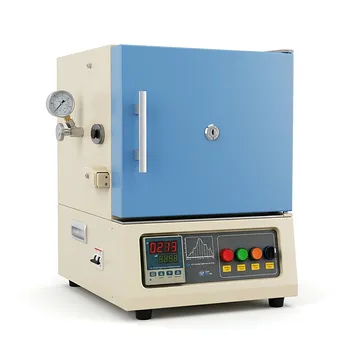
1200C Hybrid Muffle and Tube Furnace for Material Research with Dual Atmosphere Control Quartz Tubes
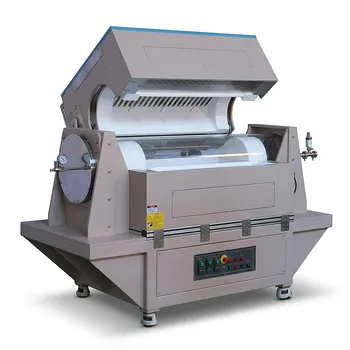
Three Zone Tube Furnace with 11 Inch or 15 Inch Quartz Tube and Hinged Flanges for Vacuum Atmosphere Heat Treatment
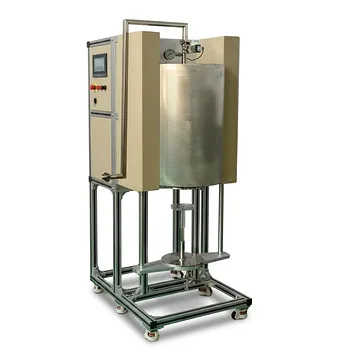
1200°C Atmosphere Controlled Automatic Bottom Loading Furnace with 6 Inch Quartz Tube

1750°C High Temperature Benchtop Vacuum Atmosphere Tube Furnace with Kanthal Super 1800 Heating Elements and 60mm Alumina Processing Tube
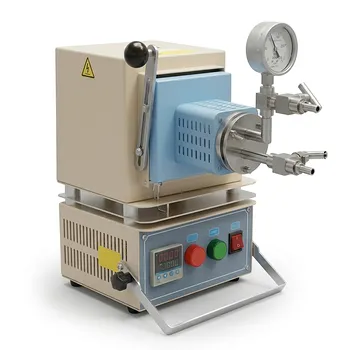
Compact Hybrid Muffle and Tube Furnace for 1000C Controlled Atmosphere Laboratory Material Sintering
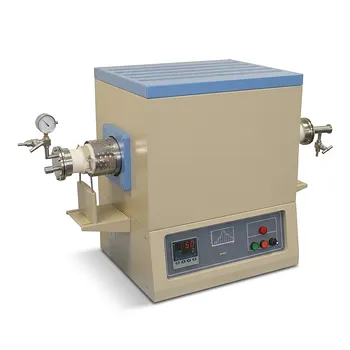
1700C High Temperature Alumina Tube Furnace with 18 Inch Heated Zone and Vacuum Sealing Flanges
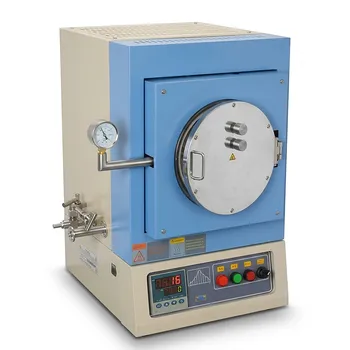
1100°C High Temperature Quartz Chamber Furnace 8 Inch OD with 7.6 Liter Capacity and Vacuum Atmosphere Capability
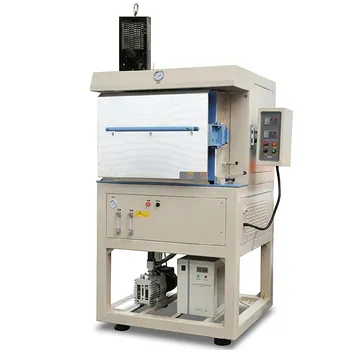
1200C Hydrogen Atmosphere Box Furnace with 5 Heated Sides and 64L Chamber
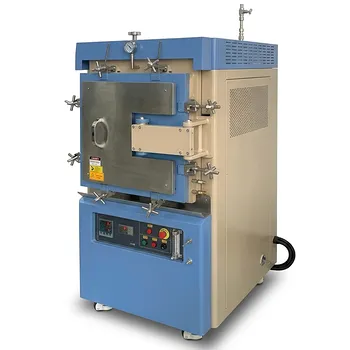
Atmosphere Controlled Muffle Furnace 1700C Maximum Temperature 80L High Capacity Vacuum Inert Gas Box Furnace
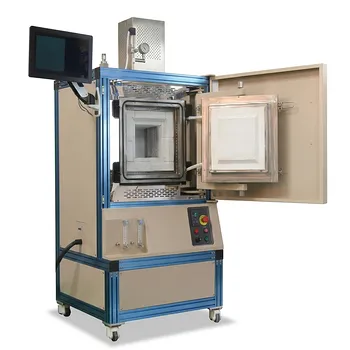
High Temperature Hydrogen Atmosphere Box Furnace 1650C Max Reducing Environment Material Synthesis System 8x8x8 Chamber

High Temperature 1700C Vertical Tube Furnace for Powder Spherification and Material Sintering
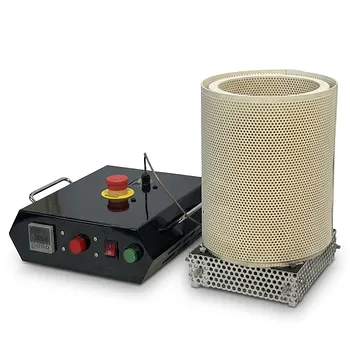
1250 C Compact Vertical Box Furnace for Glovebox Material Research Air Sensitive Samples
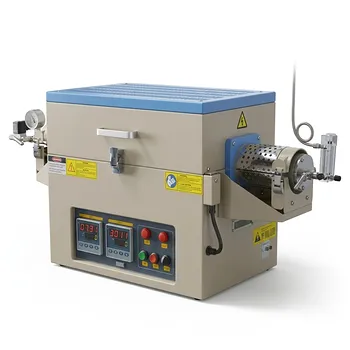
1100C Dual Zone Hydrogen Gas Tube Furnace with Quartz Tube and Integrated H2 Leak Detection System

High Temperature 1700C Six Zone Split Tube Furnace with Alumina Tube and Water Cooled Flanges

High Temperature 1700C Tube Furnace with High Vacuum Turbomolecular Pump System and Multi Channel Mass Flow Controller Gas Mixer

Compact High Temperature 1600C Tube Furnace with 50mm Alumina Tube and Vacuum Flanges for Material Sintering