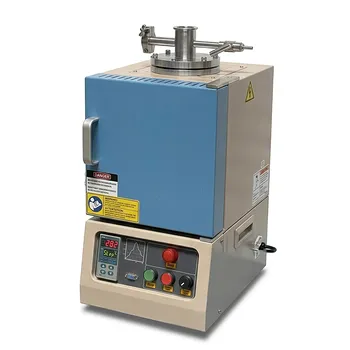
Why is an atmosphere-protected tube furnace used for the annealing process of two-dimensional electronic ink thin films? - Tips
Updated 3 months ago
Atmosphere-protected tube furnaces are essential for 2D electronic ink annealing because they prevent the oxidative degradation of sensitive materials while providing the thermal energy needed to remove chemical impurities. This process eliminates residual solvents and ligands, facilitating better electrical contact between nanosheets and significantly boosting carrier mobility.
The primary role of an atmosphere-protected tube furnace is to create a controlled, oxygen-free environment for high-temperature refinement. This ensures that 2-D materials like MoS2 or WSe2 can undergo structural repair and contaminant removal without reacting with the air.
Preventing Oxidative Degradation
Shielding Vulnerable 2D Nanosheets
At temperatures above 300 °C, two-dimensional materials such as MoS2 and WSe2 are highly susceptible to oxidation. In a standard air environment, these materials react with oxygen to form non-conductive oxides, which destroys their semiconductor properties.
Creating an Inert Environment
The tube furnace allows for the introduction of high-purity Argon (Ar) or Nitrogen (Ar) gases. These inert gases act as a protective blanket, displacing oxygen and moisture to ensure the chemical integrity of the thin film is maintained throughout the heating cycle.
The Role of Reducing Gases
In many cases, a Hydrogen-Argon (H2/Ar) mixture is used to create a reducing atmosphere. This specific gas blend is effective at removing surface oxides and preventing the oxidation of metal-based components within the ink, such as silver particles or carbon nanotubes.
Removing Processing Contaminants
Eliminating Residual Solvents and Binders
Electronic inks rely on organic solvents, binders, and ligands to maintain a liquid state for printing or coating. These organic components are electrically insulating and must be completely removed through thermal decomposition to allow for functional device operation.
Enhancing Inter-Sheet Conductivity
As the tube furnace drives off organic residues, the individual nanosheets within the thin film are brought into closer physical proximity. This reduction in the physical gap significantly improves electrical contact and optimizes the flow of charge carriers across the film.
Surface Decontamination
The controlled environment is also used to strip away other surface contaminants like tape residues or chemical binders. Removing these impurities is critical for activating dopant atoms and ensuring the stability of the material during electrochemical cycling.
Promoting Structural Integrity and Crystallinity
Lattice Repair and Thermal Diffusion
The high-temperature environment provides atoms with the necessary energy for thermal diffusion. This allows the atoms to rearrange into their ideal lattice sites, repairing structural defects that may have occurred during the ink formulation or deposition process.
Phase Transitions and Grain Growth
Annealing facilitates the transition of films from an amorphous state to a crystalline phase, such as the orthorhombic phase in Sb2S3. Furthermore, it promotes grain growth, which reduces the number of grain boundaries that typically scatter electrons and hinder performance.
Eliminating Internal Stress
Thermal treatment helps eliminate internal stresses generated during the initial sputtering or printing stages. By relaxing the lattice, the furnace improves the overall electrical stability and optical transparency of the electronic thin film.
Understanding the Trade-offs
Risk of Volatile Element Loss
While high temperatures are necessary for crystallinity, they can lead to the loss of volatile elements like sulfur or selenium. If the atmosphere is not precisely managed (e.g., using H2S), the film can lose its stoichiometric balance, resulting in degraded semiconductor properties.
Material Sintering and Cracking
Excessive thermal energy can lead to over-sintering, where nanoparticles grow too large or the film shrinks unevenly. This can cause micro-cracks in the thin film, which interrupt the conductive path and decrease the mechanical durability of the electronic device.
How to Apply This to Your Project
When utilizing an atmosphere-protected tube furnace for 2D electronic inks, your technical goals should dictate your furnace settings:
- If your primary focus is maximizing electrical conductivity: Use a reducing atmosphere like H2/Ar to aggressively remove organic ligands and surface oxides that act as insulators.
- If your primary focus is lattice integrity and crystallinity: Aim for higher temperatures (above 500 °C) to facilitate thermal diffusion and the repair of structural defects.
- If your primary focus is preventing material decomposition: Ensure the furnace atmosphere is saturated with the volatile components of your film (such as Sulfur or Selenium) to prevent elemental loss.
By precisely controlling the thermal and chemical environment, you transform a raw, printed ink into a high-performance electronic component.
Summary Table:
| Annealing Objective | Method/Environment | Key Benefit |
|---|---|---|
| Prevent Oxidation | Inert Gases (Argon/Nitrogen) | Maintains semiconductor properties of MoS2/WSe2 |
| Remove Impurities | Controlled Thermal Energy | Eliminates insulating solvents and organic ligands |
| Enhance Conductivity | Reducing Gas (H2/Ar Mixture) | Strips surface oxides and optimizes carrier mobility |
| Structural Repair | High-Temp Thermal Diffusion | Repairs lattice defects and promotes grain growth |
Elevate Your 2D Material Research with THERMUNITS
Precision is paramount when processing sensitive electronic inks. THERMUNITS is a leading manufacturer of high-temperature laboratory equipment, specializing in advanced thermal solutions for material science and industrial R&D. Our high-performance Atmosphere-Protected Tube Furnaces and CVD/PECVD systems are specifically designed to provide the oxygen-free, stable environments required for superior thin-film annealing.
From Muffle, Vacuum, and Rotary Furnaces to Vacuum Induction Melting (VIM) and Hot Press systems, we empower researchers with the tools needed for structural repair and impurity removal.
Ready to optimize your heat treatment process? Contact our technical experts today to find your solution!
References
- Shengqi Wang, Zhaoyang Lin. A library of 2D electronic material inks synthesized by liquid-metal-assisted intercalation of crystal powders. DOI: 10.1038/s41467-024-50697-z
Mentioned Products
- 1100C Hydrogen Gas Atmosphere Tube Furnace with 5 Inch Fused Quartz Tube and Integrated Safety Monitoring System
- Vertical 1700C Vacuum and Atmosphere Tube Furnace with 80mm Alumina Tube
- 1200°C Atmosphere Controlled Automatic Bottom Loading Furnace with 6 Inch Quartz Tube
- Three Zone Tube Furnace with 11 Inch or 15 Inch Quartz Tube and Hinged Flanges for Vacuum Atmosphere Heat Treatment
- 1200C Hybrid Muffle and Tube Furnace for Material Research with Dual Atmosphere Control Quartz Tubes
People Also Ask
- Why use a H2/Ar tube furnace for Pt/TiNxOy catalysts? Create SFLPs and Optimize CO2 Conversion Performance.
- Why is a hydrogen-reducing atmosphere tube furnace required for Eu2+ silicate? Essential for Precise Valence Control.
- Why use an atmosphere protection tube furnace for TiO2–TiN/S sulfur melt-diffusion? Protect Material Integrity
- What functions does an atmosphere-protected High-Temperature Tube Furnace serve for iridium? Precise Material Synthesis
- Why is an atmosphere-protected tube furnace typically selected for the homogenization treatment of Al0.25CoCrCuFeNi HEA?

Tech Team · ThermUnits
Last updated on Jun 02, 2026
Related Products
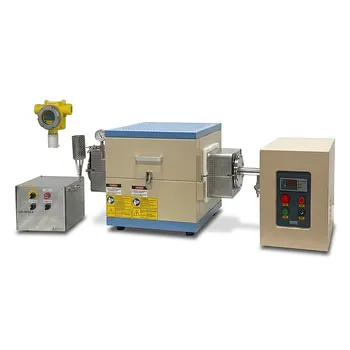
1100C Hydrogen Gas Atmosphere Tube Furnace with 5 Inch Fused Quartz Tube and Integrated Safety Monitoring System

Vertical 1700C Vacuum and Atmosphere Tube Furnace with 80mm Alumina Tube
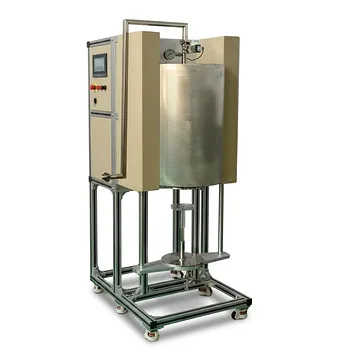
1200°C Atmosphere Controlled Automatic Bottom Loading Furnace with 6 Inch Quartz Tube
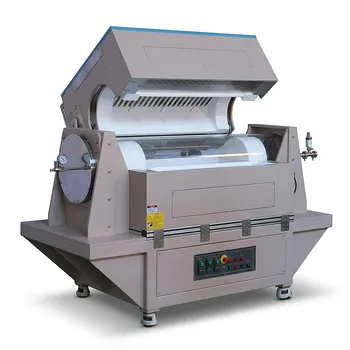
Three Zone Tube Furnace with 11 Inch or 15 Inch Quartz Tube and Hinged Flanges for Vacuum Atmosphere Heat Treatment
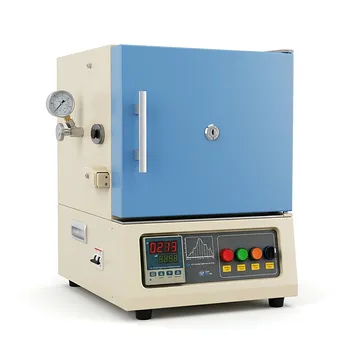
1200C Hybrid Muffle and Tube Furnace for Material Research with Dual Atmosphere Control Quartz Tubes
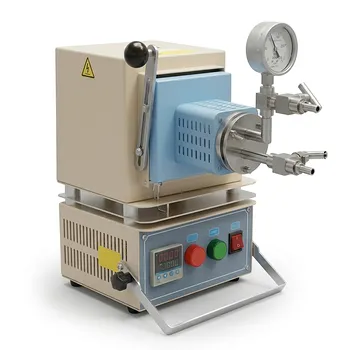
Compact Hybrid Muffle and Tube Furnace for 1000C Controlled Atmosphere Laboratory Material Sintering
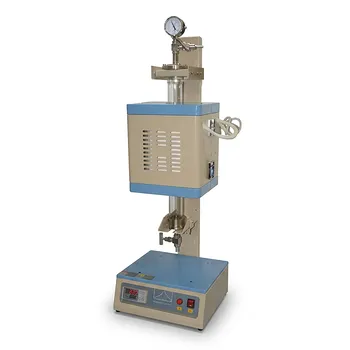
Compact Vertical Split Quartz Tube Furnace with Stainless Steel Vacuum Flanges for Rapid Thermal Quenching and Controlled Atmosphere Material Processing

1750°C High Temperature Benchtop Vacuum Atmosphere Tube Furnace with Kanthal Super 1800 Heating Elements and 60mm Alumina Processing Tube

1700C High Temperature Alumina Tube Furnace with 18 Inch Heated Zone and Vacuum Sealing Flanges

1100°C High Temperature Quartz Chamber Furnace 8 Inch OD with 7.6 Liter Capacity and Vacuum Atmosphere Capability
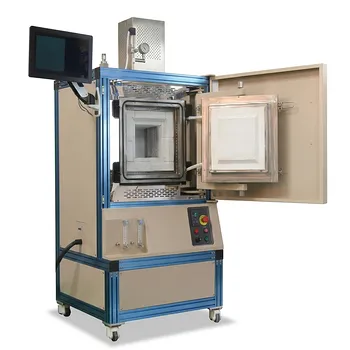
High Temperature Hydrogen Atmosphere Box Furnace 1650C Max Reducing Environment Material Synthesis System 8x8x8 Chamber
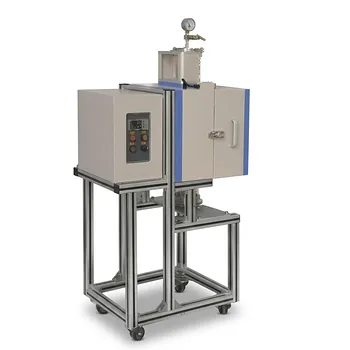
1200°C 5 Inch Vertical Quartz Tube Furnace with Stainless Steel Vacuum Flanges
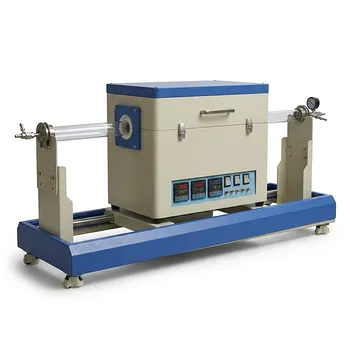
Double Temperature Zone Double Cover Tube Furnace for High Temperature CVD and Vacuum Annealing
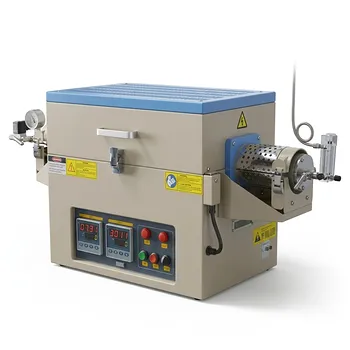
1100C Dual Zone Hydrogen Gas Tube Furnace with Quartz Tube and Integrated H2 Leak Detection System

High Temperature Automated 5 Inch Tube Furnace for Autonomous Material Research and Advanced Laboratory R&D
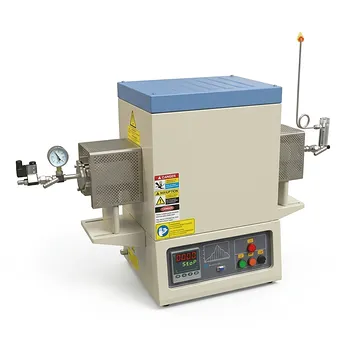
1700C Hydrogen Gas Tube Furnace with 60mm Alumina Process Tube and Integrated Hydrogen Safety Detector

Compact High Temperature 1600C Tube Furnace with 50mm Alumina Tube and Vacuum Flanges for Material Sintering

High Temperature 1700C Vertical Tube Furnace for Powder Spherification and Material Sintering

High Temperature 1700C Six Zone Split Tube Furnace with Alumina Tube and Water Cooled Flanges