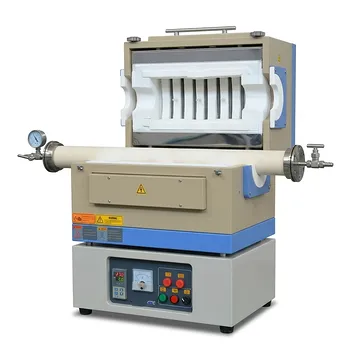
What functions does an atmosphere-protected High-Temperature Tube Furnace serve for iridium? Precise Material Synthesis
Updated 3 months ago
The atmosphere-protected High-Temperature Tube Furnace is the fundamental tool for controlling the oxidation state and crystalline structure of iridium species. It provides a precise thermal environment—typically around 500 °C—combined with strict nitrogen atmosphere protection to isolate the sample from reactive gases. By excluding oxygen, the furnace prevents metallic iridium from over-oxidizing into iridium dioxide, which is essential for accurate physical phase identification and catalyst characterization.
The tube furnace functions as a controlled reaction chamber that decouples thermal energy from atmospheric interference, allowing researchers to steer iridium crystal growth toward specific phases. This precision is vital for correlating a material's physical structure with its chemical performance.
Precise Atmospheric and Thermal Regulation
Preventing Unwanted Phase Transitions
The primary function of the furnace is to exclude oxygen during high-temperature exposure. In the study of Ir/TiO2 catalysts, oxygen interference can prematurely convert metallic iridium into iridium dioxide (IrO2), obscuring the intended research results.
Maintaining Stable Thermal Fields
Tube furnaces provide a stable thermal environment that is critical for uniform crystalline evolution. Whether maintaining a constant 500 °C or a higher range of 650 °C to 1000 °C, the furnace ensures that the thermal energy supplied to the iridium species is consistent across the entire sample.
Enabling Accurate XRD Identification
By providing a "clean" thermal environment under nitrogen protection, the furnace allows for the development of distinct physical phases. This results in high-quality data during X-ray diffraction (XRD) analysis, as the peaks reflect the intended crystal growth rather than random oxidation products.
Advanced Crystallization and Structural Optimization
Elimination of Lattice Defects
At higher temperatures, such as 650 °C to 1000 °C, the furnace facilitates the conversion of hydrous precursors into rutile-type iridium oxide. This process is essential for eliminating lattice defects, which significantly enhances the thermodynamic stability of the material in harsh environments.
Managing Sublimation and Vapor Transport
Using a temperature gradient within the tube allows for Physical Vapor Transport (PVT). The furnace can heat source material to sublimation at one end while maintaining a lower crystallization temperature at the other, enabling the growth of high-purity crystals with specific thicknesses.
Optimizing Electronic Structures
Thermal treatment in the furnace promotes interfacial interactions between active iridium components and their supports (such as Ta2O5). This optimization of the electronic structure is critical for enhancing the chemical stability and performance of catalysts during the oxygen evolution reaction (OER).
Understanding the Trade-offs
Atmospheric Purity vs. Contamination
While nitrogen protection is effective, any trace oxygen or leaks in the furnace seals can lead to partial oxidation. This creates a mixed-phase sample that can complicate the interpretation of electrochemical data and structural analysis.
Temperature Gradients vs. Uniformity
High-temperature tube furnaces can suffer from thermal lag or non-uniformity if the sample is too large or the heating elements are improperly calibrated. These gradients can lead to uneven crystal sizes or varying degrees of crystallinity within a single batch.
Ramp Rates and Phase Purity
Moving too quickly through temperature zones (high ramp rates) can "freeze" amorphous structures or trap impurities. Conversely, excessively long dwell times may lead to sintering, where iridium particles aggregate and lose the high surface area required for catalytic efficiency.
How to Apply This to Your Research
To achieve the best results when studying iridium species, your furnace parameters must align strictly with your desired material phase.
- If your primary focus is Metallic Iridium stability: Utilize strict nitrogen or inert gas protection at moderate temperatures (approx. 500 °C) to prevent the formation of IrO2.
- If your primary focus is Rutile-type IrO2 Synthesis: Operate at higher temperatures (650 °C - 1000 °C) to ensure the complete removal of lattice defects and the formation of a stable, non-reducible structure.
- If your primary focus is Catalyst Support Interaction: Use controlled thermal treatment to facilitate strong interfacial bonding between the iridium and the support material, such as Ta2O5 or TiO2.
By masterfully controlling the intersection of temperature and atmosphere, the tube furnace transforms a simple precursor into a high-performance, predictable crystalline material.
Summary Table:
| Application Focus | Temperature Range | Key Function & Benefit |
|---|---|---|
| Metallic Iridium Stability | ~500 °C | Excludes oxygen via N2 protection to prevent unwanted IrO2 conversion. |
| Rutile IrO2 Synthesis | 650 °C - 1000 °C | Eliminates lattice defects and enhances thermodynamic stability. |
| Crystalline Evolution | Variable | Provides stable thermal fields for high-quality XRD identification. |
| Electronic Optimization | Variable | Promotes interfacial interactions for improved OER catalytic performance. |
Elevate Your Material Research with THERMUNITS
As a leading manufacturer of high-temperature laboratory equipment, THERMUNITS provides the precision needed for advanced material science and industrial R&D. Whether you are synthesizing iridium catalysts or exploring complex crystal structures, our comprehensive range of thermal solutions—including Tube, Muffle, Vacuum, Atmosphere, and Rotary furnaces, as well as CVD/PECVD systems and Hot Press furnaces—ensures stable thermal fields and strict atmospheric integrity.
Why partner with THERMUNITS?
- Unmatched Precision: Achieve exact oxidation states with advanced atmosphere regulation.
- Comprehensive Range: Solutions from laboratory Dental Furnaces to industrial Vacuum Induction Melting (VIM) systems.
- Tailored for R&D: Optimized heating elements and thermal zones designed for uniform crystal growth and lattice refinement.
Ready to optimize your thermal processing workflow? Contact our experts today to find the perfect heat treatment solution for your laboratory!
References
- Peng Huang, Jie Zhang. Preparation of Ir/TiO<sub>2</sub> Composite Oxygen Evolution Catalyst and Load Analysis as Anode Catalyst Layer of Proton Exchange Membrane Water Electrolyzer. DOI: 10.1021/acsomega.4c02299
Mentioned Products
- 1750°C High Temperature Benchtop Vacuum Atmosphere Tube Furnace with Kanthal Super 1800 Heating Elements and 60mm Alumina Processing Tube
- High Temperature Split Tube Furnace 1500C for Material Research Vacuum and Atmosphere Thermal Processing
- 1700C High Temperature Alumina Tube Furnace with 18 Inch Heated Zone and Vacuum Sealing Flanges
- 1100C Hydrogen Gas Atmosphere Tube Furnace with 5 Inch Fused Quartz Tube and Integrated Safety Monitoring System
- Vertical 1700C Vacuum and Atmosphere Tube Furnace with 80mm Alumina Tube
People Also Ask
- What core functions does a high-temperature vacuum tube furnace provide? Optimize np-CuSn Sintering & Joint Integrity
- What is the role of a high-temperature tube furnace in the calcination process of ZnO/In2O3 nanocomposites?
- What role does a high-temperature tube furnace play in the sulfidation heat treatment of CoS@C/MXene nanocomposites? Guide
- Why is a high-temperature tube furnace required for CuAlO2 heat treatment? Master Phase Transformation Today
- What role does a high-temperature tube furnace play in executing nitrogen absorption kinetic experiments? Expert Insights

Tech Team · ThermUnits
Last updated on Jun 03, 2026
Related Products

1750°C High Temperature Benchtop Vacuum Atmosphere Tube Furnace with Kanthal Super 1800 Heating Elements and 60mm Alumina Processing Tube
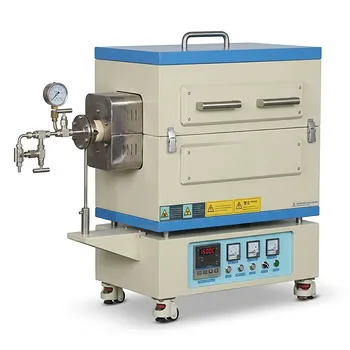
High Temperature Split Tube Furnace 1500C for Material Research Vacuum and Atmosphere Thermal Processing
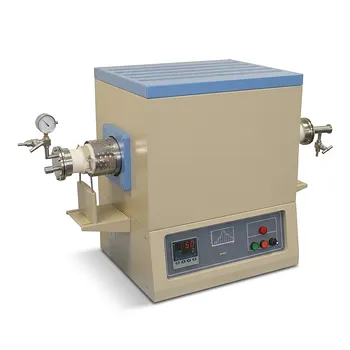
1700C High Temperature Alumina Tube Furnace with 18 Inch Heated Zone and Vacuum Sealing Flanges
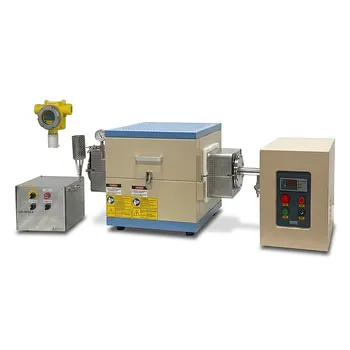
1100C Hydrogen Gas Atmosphere Tube Furnace with 5 Inch Fused Quartz Tube and Integrated Safety Monitoring System

Vertical 1700C Vacuum and Atmosphere Tube Furnace with 80mm Alumina Tube
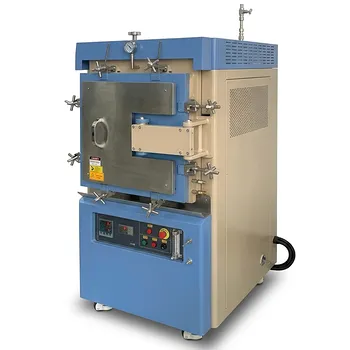
Atmosphere Controlled Muffle Furnace 1700C Maximum Temperature 80L High Capacity Vacuum Inert Gas Box Furnace
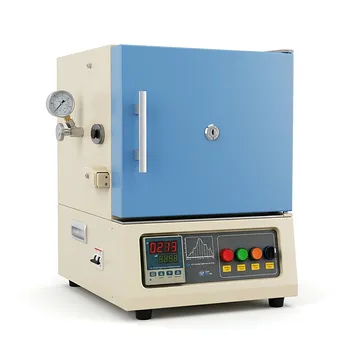
1200C Hybrid Muffle and Tube Furnace for Material Research with Dual Atmosphere Control Quartz Tubes
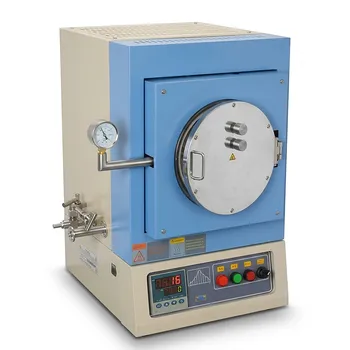
1100°C High Temperature Quartz Chamber Furnace 8 Inch OD with 7.6 Liter Capacity and Vacuum Atmosphere Capability

High Temperature Tube Furnace 1500C with Sliding Flanges and 50mm OD for Rapid Thermal Processing Fast Heating and Cooling

High Temperature 1700C Vertical Tube Furnace for Powder Spherification and Material Sintering

High Temperature 1700C Tube Furnace with High Vacuum Turbomolecular Pump System and Multi Channel Mass Flow Controller Gas Mixer
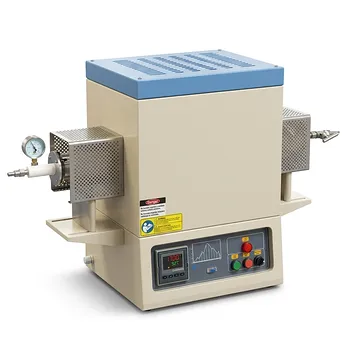
High Temperature Three Zone Tube Furnace 1700C with Alumina Tube and Water Cooled Flanges

High Temperature 1700C Benchtop Tube Furnace with 5 Inch Heating Zone High Purity Alumina Tube and Vacuum Sealing Flanges

High Temperature 1700C Six Zone Split Tube Furnace with Alumina Tube and Water Cooled Flanges

High Temperature 1700C Tube Furnace with 4 Inch OD Alumina Tube and Vacuum Sealing Flanges

Compact High Temperature 1600C Tube Furnace with 50mm Alumina Tube and Vacuum Flanges for Material Sintering

1800C High Temperature Compact Vacuum Tube Furnace with 60mm OD Alumina Tube and Kanthal MoSi2 Heating Elements

High Temperature Automated 5 Inch Tube Furnace for Autonomous Material Research and Advanced Laboratory R&D

1700C Hydrogen Gas Tube Furnace with 60mm Alumina Process Tube and Integrated Hydrogen Safety Detector