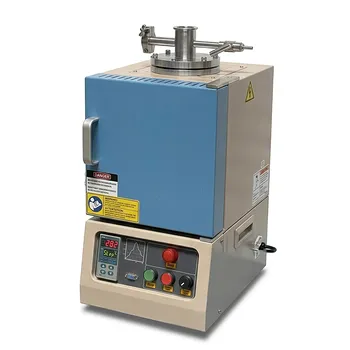
Why is an atmosphere-protected tube furnace typically selected for the homogenization treatment of Al0.25CoCrCuFeNi HEA?
Updated 3 months ago
Atmosphere-protected tube furnaces are selected for Al0.25CoCrCuFeNi homogenization because they provide the precise 1100°C thermal stability and inert environment required to eliminate chemical segregation. By maintaining a continuous flow of high-purity argon gas, these furnaces allow for extended heating cycles—often up to 10 hours—that drive atomic diffusion without allowing surface oxidation. This dual-action capability is essential for transforming the non-uniform, as-cast dendritic structure into a balanced, high-performance metallurgical state.
Core Takeaway: The use of an atmosphere-protected tube furnace solves the fundamental challenge of high-entropy alloy (HEA) fabrication: achieving a chemically uniform microstructure while shielding reactive transition metals from oxygen-induced degradation at extreme temperatures.
Overcoming Structural Inhomogeneity
Eliminating Copper-Rich Segregation
As-cast Al0.25CoCrCuFeNi alloys inherently suffer from compositional segregation, most notably a "copper-rich" phenomenon between dendrites. The tube furnace provides a sustained 1100°C environment that supplies the thermal energy necessary for copper atoms and other elements to redistribute via solid-state diffusion.
Transitioning from Dendritic to Equiaxed Microstructures
The stable thermal field within the furnace allows the alloy to move away from its brittle, as-cast dendritic morphology. Over long holding times, this process facilitates microstructure regulation, resulting in an equiaxed grain structure that offers more isotropic mechanical properties and structural stability.
Driving Atomic Diffusion Toward Equilibrium
High-entropy alloys rely on the "sluggish diffusion" effect, which requires precise temperature control to reach a single-phase or multi-phase equilibrium state. The tube furnace ensures the thermal consistency needed to drive cross-regional element diffusion, specifically between Al-Ni enriched regions and Cr-Fe enriched regions.
Safeguarding Material Integrity
Preventing Surface Oxidation
At temperatures reaching 1100°C, transition metals in the HEA matrix are highly susceptible to oxidation. The furnace’s ability to maintain a continuous flow of argon (e.g., 10 mL/min) creates a pure inert environment that suppresses the formation of oxide scales, which would otherwise lead to material brittleness.
Ensuring Data Accuracy for Experiments
By providing a precise, long-term constant environment, the furnace ensures that the resulting alloy is free from residual stresses and micro-segregation. This metallurgical "blank slate" is critical for researchers to obtain accurate, repeatable data during subsequent mechanical or electrochemical testing.
Protection of Reactive Elements
Just as reactive metals like Magnesium require protection at lower temperatures, the complex mix of elements in Al0.25CoCrCuFeNi necessitates an oxygen-free zone. The high-purity argon atmosphere ensures that the chemical composition of the bulk material remains unchanged throughout the 10-hour treatment.
Understanding the Trade-offs
Heating and Cooling Rate Limitations
While tube furnaces offer exceptional thermal stability, they often have slower heating and cooling rates compared to box furnaces or induction systems. This can lead to longer overall processing times, which must be accounted for to prevent unintended phase precipitation during the cooling phase.
Volume and Geometry Constraints
The cylindrical nature of the "tube" limits the batch size and geometry of the alloy samples. While ideal for laboratory-scale research on HEAs, this setup may not be suitable for large-scale industrial components without transitioning to larger atmosphere-controlled pit or car-bottom furnaces.
Gas Consumption Costs
Maintaining a continuous flow of high-purity argon for 10 to 24 hours introduces operational costs and requires robust gas management systems. Failure to maintain a positive pressure of inert gas can result in atmospheric contamination, ruining the homogenization batch.
How to Apply This to Your Project
Recommendations Based on Research Goals
- If your primary focus is mechanical ductility: Prioritize longer holding times at 1100°C to ensure the full elimination of dendritic morphology and the creation of equiaxed grains.
- If your primary focus is surface chemistry or coating: Use the highest purity argon available (99.999%) to ensure no oxide interlayer forms that could compromise subsequent surface treatments.
- If your primary focus is phase stability study: Ensure the furnace is equipped with a programmable controller to manage the cooling curve accurately, preventing the formation of brittle secondary phases.
By precisely controlling the thermal and atmospheric variables, the tube furnace ensures that the Al0.25CoCrCuFeNi alloy reaches its full theoretical performance potential.
Summary Table:
| Key Requirement | Furnace Feature | Benefit for Al0.25CoCrCuFeNi |
|---|---|---|
| Thermal Stability | High-precision 1100°C control | Eliminates copper-rich segregation and drives diffusion. |
| Oxidation Control | Argon gas flow (Inert atmosphere) | Prevents material brittleness by shielding reactive metals. |
| Microstructure | Programmable heating cycles | Transforms dendritic structures into stable equiaxed grains. |
| Data Integrity | Sustained constant environment | Ensures repeatable results for mechanical/electrochemical tests. |
Elevate Your HEA Research with Precision Thermal Solutions
Ready to achieve metallurgical perfection in your high-entropy alloy fabrication? THERMUNITS is a leading manufacturer of high-temperature laboratory equipment designed specifically for material science and industrial R&D.
We provide a comprehensive range of thermal processing solutions tailored to your exacting standards, including:
- Atmosphere & Tube Furnaces for precise homogenization.
- Vacuum, Rotary, and Hot Press Furnaces for advanced material synthesis.
- CVD/PECVD Systems and Vacuum Induction Melting (VIM) Furnaces.
- Dental Furnaces and high-quality Thermal Elements.
Don't let oxidation or chemical segregation compromise your results. Partner with THERMUNITS for reliable, high-performance heat treatment equipment.
Contact Our Engineering Team Today to discuss your specific application and find the ideal furnace for your laboratory!
References
- Fadhli Muhammad, Eddy Agus Basuki. Microstructural Stability and High-Temperature Oxidation Behavior of Al0.25CoCrCuFeNi High Entropy Alloy. DOI: 10.55981/metalurgi.2024.745
Mentioned Products
- 1100C Hydrogen Gas Atmosphere Tube Furnace with 5 Inch Fused Quartz Tube and Integrated Safety Monitoring System
- Vertical 1700C Vacuum and Atmosphere Tube Furnace with 80mm Alumina Tube
- 1200°C Atmosphere Controlled Automatic Bottom Loading Furnace with 6 Inch Quartz Tube
- Three Zone Tube Furnace with 11 Inch or 15 Inch Quartz Tube and Hinged Flanges for Vacuum Atmosphere Heat Treatment
- Compact Hybrid Muffle and Tube Furnace for 1000C Controlled Atmosphere Laboratory Material Sintering
People Also Ask
- Why use a H2/Ar tube furnace for Pt/TiNxOy catalysts? Create SFLPs and Optimize CO2 Conversion Performance.
- Why is a hydrogen-reducing atmosphere tube furnace required for Eu2+ silicate? Essential for Precise Valence Control.
- Why use an atmosphere protection tube furnace for TiO2–TiN/S sulfur melt-diffusion? Protect Material Integrity
- What functions does an atmosphere-protected High-Temperature Tube Furnace serve for iridium? Precise Material Synthesis
- Why is an atmosphere-protected tube furnace used for the annealing process of two-dimensional electronic ink thin films? - Tips

Tech Team · ThermUnits
Last updated on Jun 02, 2026
Related Products
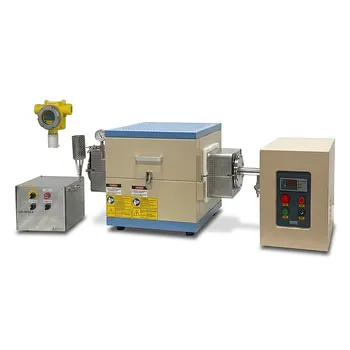
1100C Hydrogen Gas Atmosphere Tube Furnace with 5 Inch Fused Quartz Tube and Integrated Safety Monitoring System

Vertical 1700C Vacuum and Atmosphere Tube Furnace with 80mm Alumina Tube
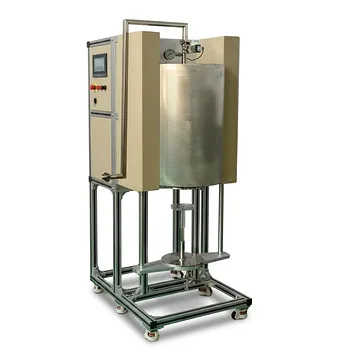
1200°C Atmosphere Controlled Automatic Bottom Loading Furnace with 6 Inch Quartz Tube

Three Zone Tube Furnace with 11 Inch or 15 Inch Quartz Tube and Hinged Flanges for Vacuum Atmosphere Heat Treatment
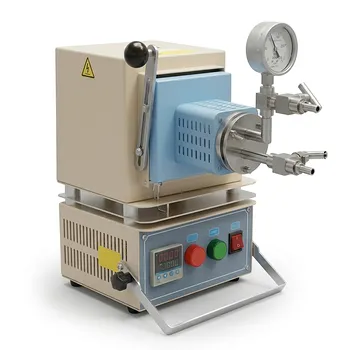
Compact Hybrid Muffle and Tube Furnace for 1000C Controlled Atmosphere Laboratory Material Sintering
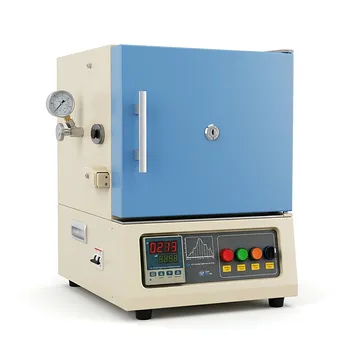
1200C Hybrid Muffle and Tube Furnace for Material Research with Dual Atmosphere Control Quartz Tubes

Compact Vertical Split Quartz Tube Furnace with Stainless Steel Vacuum Flanges for Rapid Thermal Quenching and Controlled Atmosphere Material Processing

1750°C High Temperature Benchtop Vacuum Atmosphere Tube Furnace with Kanthal Super 1800 Heating Elements and 60mm Alumina Processing Tube
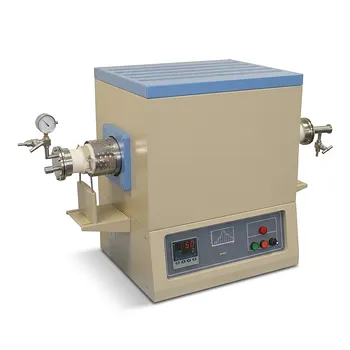
1700C High Temperature Alumina Tube Furnace with 18 Inch Heated Zone and Vacuum Sealing Flanges
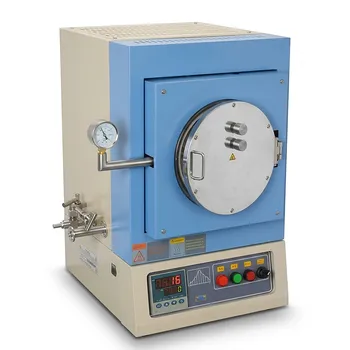
1100°C High Temperature Quartz Chamber Furnace 8 Inch OD with 7.6 Liter Capacity and Vacuum Atmosphere Capability
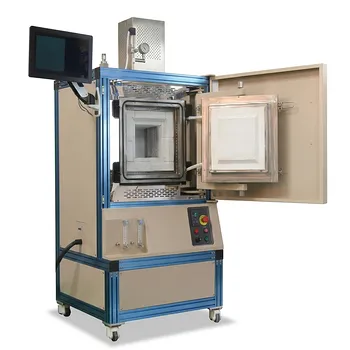
High Temperature Hydrogen Atmosphere Box Furnace 1650C Max Reducing Environment Material Synthesis System 8x8x8 Chamber
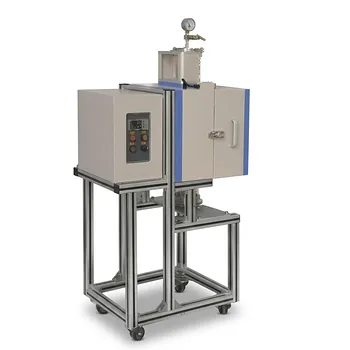
1200°C 5 Inch Vertical Quartz Tube Furnace with Stainless Steel Vacuum Flanges
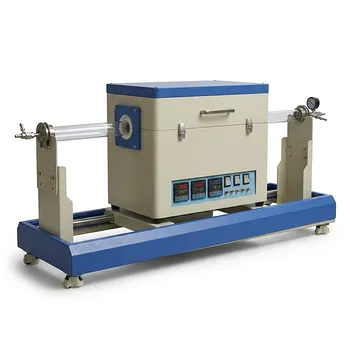
Double Temperature Zone Double Cover Tube Furnace for High Temperature CVD and Vacuum Annealing
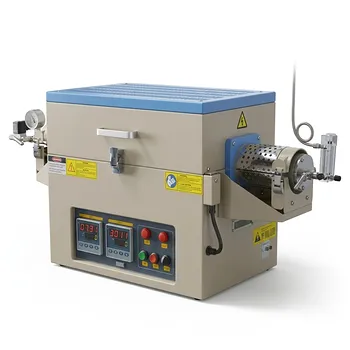
1100C Dual Zone Hydrogen Gas Tube Furnace with Quartz Tube and Integrated H2 Leak Detection System

High Temperature Automated 5 Inch Tube Furnace for Autonomous Material Research and Advanced Laboratory R&D

1700C Hydrogen Gas Tube Furnace with 60mm Alumina Process Tube and Integrated Hydrogen Safety Detector

Compact High Temperature 1600C Tube Furnace with 50mm Alumina Tube and Vacuum Flanges for Material Sintering

High Temperature 1700C Vertical Tube Furnace for Powder Spherification and Material Sintering

High Temperature 1700C Six Zone Split Tube Furnace with Alumina Tube and Water Cooled Flanges