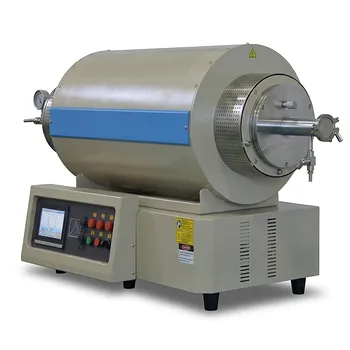
Why must coal tar undergo carbonization in an atmosphere tube furnace? Essential Steps for High-Quality Graphitization
Updated 3 months ago
Pre-carbonization in an atmosphere tube furnace acts as the essential "structural stabilizer" for coal tar. This process transforms volatile organic matter into a solid, ordered carbon precursor—specifically mesophase coke—at moderate temperatures (approximately 600 °C). Without this preliminary stage, the raw coal tar would undergo violent decomposition or oxidative combustion, leading to total structural failure or material loss when exposed to the extreme heat of a graphitization furnace.
To successfully produce high-quality graphite or graphene, coal tar must first be converted into a stable solid through controlled pyrolysis. This intermediate step ensures the material develops a molecular framework capable of rearranging into ordered layers at ultra-high temperatures.
Preventing Structural Failure and Material Loss
Mitigation of Violent Decomposition
Raw coal tar contains a high concentration of volatile organic compounds that react aggressively to heat. If subjected directly to the extreme environments of a graphitization furnace (up to 2800 °C), these compounds would undergo violent decomposition, causing the material structure to collapse or explode into fine dust. The tube furnace allows for slow heating, which facilitates a gradual release of volatiles and prevents structural disintegration.
The Role of the Inert Atmosphere
At the high temperatures required for carbonization, carbon becomes highly reactive to oxygen. The atmosphere tube furnace introduces inert gases like nitrogen or argon to displace oxygen within the chamber. This prevents oxidative combustion, ensuring the coal tar pitch undergoes pure pyrolysis rather than simply burning away at 600–700 °C.
Maximizing Carbon Yield
Controlled carbonization ensures that the maximum amount of carbon is retained in the solid-state. By utilizing dehydration and dehydrogenation reactions in an oxygen-free environment, the furnace maximizes the "carbon yield." This preserves the carbon skeleton necessary for subsequent processes, such as the formation of micropores or the growth of graphene sheets.
Building the Molecular Foundation
Formation of Mesophase Coke
During the medium-temperature stage, the coal tar undergoes cross-linking and solidification. This chemical transition creates mesophase coke, a structurally stable intermediate that serves as the blueprint for the final product. This solid matrix is far more resilient than the liquid or semi-soft pitch from which it originated.
Facilitating Graphitic Alignment
The 2800 °C environment of a graphitization furnace is designed to trigger the structural reorganization of carbon atoms into ordered, layered aromatic structures. However, this reorganization is only possible if the atoms have already begun to align during the pre-carbonization phase. The tube furnace establishes the material foundation for this long-range ordering, making the final transition to a graphitic state possible.
Template and Pore Regulation
In many technical applications, additives like zinc oxide are used as "hard templates" to regulate the pore structure of the carbon. The atmosphere furnace provides the stable thermal field needed for these templates to embed themselves within the coal matrix. This ensures that the primary pore structure is locked in place before the material reaches the extreme temperatures that finalize the carbon framework.
Understanding the Trade-offs
The Necessity of Slow Processing
The primary trade-off in pre-carbonization is time versus structural integrity. Attempting to accelerate the carbonization process to increase throughput often leads to internal stresses and cracks in the mesophase coke. A slow, controlled ramp-up in temperature is mandatory to ensure the evolution of gases does not compromise the density of the final carbon material.
Atmosphere Purity and Cost
Maintaining a strict inert environment requires high-purity nitrogen or argon, which increases operational costs. However, any compromise in atmosphere purity can lead to "chemical etching" or surface oxidation. This can inadvertently alter the electrochemical activity or the crystallinity of the material, making the precision of the tube furnace's sealing mechanism a critical factor.
How to Apply This to Your Project
Before moving your samples to an ultra-high temperature graphitization furnace, ensure your pre-carbonization protocol is optimized for your specific material goals.
- If your primary focus is high-quality graphene or graphite: Use a slow heating rate in the tube furnace to ensure the formation of a highly ordered mesophase coke that can easily reorganize at 2800 °C.
- If your primary focus is carbon yield and density: Prioritize the integrity of the nitrogen atmosphere to prevent any oxidative burn-off during the 600 °C stage.
- If your primary focus is porous electrode materials: Ensure the tube furnace temperature is precisely calibrated (e.g., 700 °C) to allow chemical activation agents or templates to function without destroying the carbon skeleton.
Properly executed pre-carbonization is the difference between a high-performance carbon material and a failed, structural collapse.
Summary Table:
| Process Stage | Equipment Used | Temperature | Key Outcome |
|---|---|---|---|
| Pre-carbonization | Atmosphere Tube Furnace | ~600°C - 700°C | Formation of stable mesophase coke; removal of volatiles. |
| Graphitization | Ultra-High Temp Furnace | Up to 2800°C | Reorganization of carbon atoms into ordered graphitic layers. |
| Atmosphere Control | Inert Gas (N2/Ar) System | Ambient to Peak | Prevents oxidative combustion and ensures high carbon yield. |
Elevate Your Material Research with THERMUNITS Precision
Are you looking to optimize your carbonization or graphitization workflows? THERMUNITS is a leading manufacturer of high-temperature laboratory equipment specifically designed for material science and industrial R&D. We understand that the transition from raw coal tar to high-performance graphite requires exact thermal control and atmospheric purity.
Our comprehensive range of thermal processing solutions includes:
- Atmosphere & Tube Furnaces (Perfect for stable pre-carbonization)
- Muffle & Vacuum Furnaces
- Rotary & Hot Press Furnaces
- CVD/PECVD Systems
- Vacuum Induction Melting (VIM) & Dental Furnaces
Ensure the structural integrity of your materials and maximize your carbon yield with our industry-leading technology. Contact THERMUNITS today to consult with our experts and find the ideal equipment for your laboratory heat treatment needs.
References
- Akshay Gharpure, Randy L. Vander Wal. Structural Characteristics and Graphitizability of Tars from Thermal versus Microwave Plasma Pyrolysis of Coals. DOI: 10.1021/acsomega.3c06666
Mentioned Products
- Vertical 1700C Vacuum and Atmosphere Tube Furnace with 80mm Alumina Tube
- 1200C Hybrid Muffle and Tube Furnace for Material Research with Dual Atmosphere Control Quartz Tubes
- 1200°C Atmosphere Controlled Automatic Bottom Loading Furnace with 6 Inch Quartz Tube
- Compact Hybrid Muffle and Tube Furnace for 1000C Controlled Atmosphere Laboratory Material Sintering
- Compact Vertical Split Quartz Tube Furnace with Stainless Steel Vacuum Flanges for Rapid Thermal Quenching and Controlled Atmosphere Material Processing
People Also Ask
- How is an industrial-grade vertical tube furnace utilized in smelting leaching residues? Enhance Metal Recovery Efficiency
- What is the function of a laboratory-grade vertical tube furnace in fast pyrolysis? Optimize Composite Research.
- How does a vertical tube furnace facilitate thermoelectric alloy melting? Precision synthesis for material homogeneity.
- Why is a thermocouple sensor indispensable for monitoring the vertical tube furnace during gallium oxide nanowire production? Optimize VLS Growth
- What are the advantages of using a vertical tube furnace for crucible experiments simulating steel-slag interactions?

Tech Team · ThermUnits
Last updated on Jun 02, 2026
Related Products

Vertical 1700C Vacuum and Atmosphere Tube Furnace with 80mm Alumina Tube
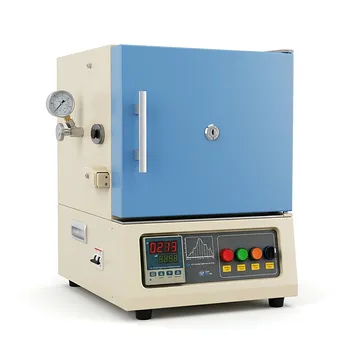
1200C Hybrid Muffle and Tube Furnace for Material Research with Dual Atmosphere Control Quartz Tubes
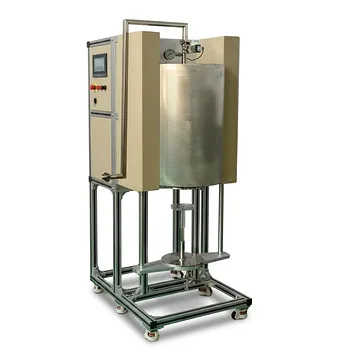
1200°C Atmosphere Controlled Automatic Bottom Loading Furnace with 6 Inch Quartz Tube
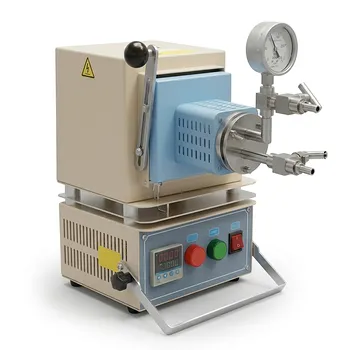
Compact Hybrid Muffle and Tube Furnace for 1000C Controlled Atmosphere Laboratory Material Sintering

Compact Vertical Split Quartz Tube Furnace with Stainless Steel Vacuum Flanges for Rapid Thermal Quenching and Controlled Atmosphere Material Processing
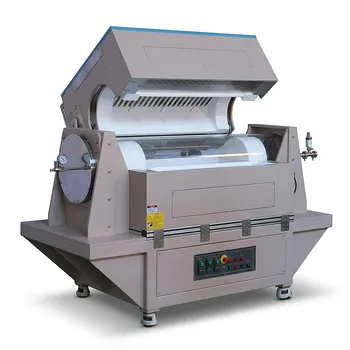
Three Zone Tube Furnace with 11 Inch or 15 Inch Quartz Tube and Hinged Flanges for Vacuum Atmosphere Heat Treatment
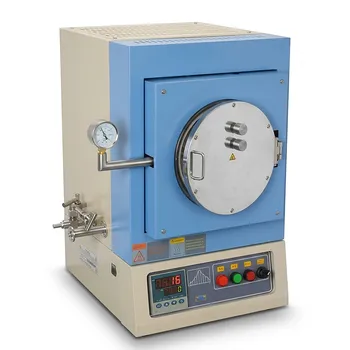
1100°C High Temperature Quartz Chamber Furnace 8 Inch OD with 7.6 Liter Capacity and Vacuum Atmosphere Capability
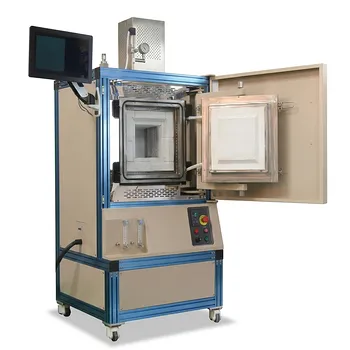
High Temperature Hydrogen Atmosphere Box Furnace 1650C Max Reducing Environment Material Synthesis System 8x8x8 Chamber

High Temperature 1700C Vertical Tube Furnace for Powder Spherification and Material Sintering

Compact High Temperature 1600C Tube Furnace with 50mm Alumina Tube and Vacuum Flanges for Material Sintering

High Temperature 1700C Six Zone Split Tube Furnace with Alumina Tube and Water Cooled Flanges

High Temperature 1700C Tube Furnace with High Vacuum Turbomolecular Pump System and Multi Channel Mass Flow Controller Gas Mixer

1800C High Temperature Compact Vacuum Tube Furnace with 60mm OD Alumina Tube and Kanthal MoSi2 Heating Elements

1100C Tube Furnace with Vacuum Flange and Programmable Temperature Controller for Material Science and Industrial Heat Treatment

High Temperature 1700C Benchtop Tube Furnace with 5 Inch Heating Zone High Purity Alumina Tube and Vacuum Sealing Flanges

1200C High Throughput Multi Channel Tube Furnace with 50mm Quartz Tubes for Annealing and Material Phase Diagram Research
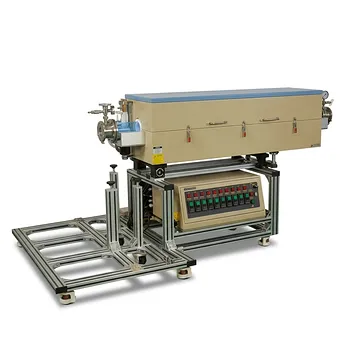
Ten Zone Multi Orientation Laboratory Tube Furnace for 1200C High Temperature Gradient Thermal Processing

High Temperature Automated 5 Inch Tube Furnace for Autonomous Material Research and Advanced Laboratory R&D

1700C Hydrogen Gas Tube Furnace with 60mm Alumina Process Tube and Integrated Hydrogen Safety Detector