The Architecture of Transformation: Why 1000°C is the Rubicon for Conductive Wood
Apr 30, 2026
The Controlled Defiance of Combustion
In the presence of heat and oxygen, wood has one inevitable destiny: it becomes ash.
For the material scientist, this is the primary obstacle. To create a conductive precursor, we are not looking for destruction, but for a specific kind of "ordered ghost." We want the cellular structure of the wood to remain, while its chemical soul is rewritten.
At 1000°C, the stakes are binary. You either achieve a high-performance carbon skeleton or you lose the sample to the air.
This transformation requires more than just heat; it requires the systematic exclusion of reality—specifically, the exclusion of oxygen.
The Alchemy of the sp2 Lattice
Conductivity is not an accident. It is a geometry.
At the microscopic level, the difference between an insulator and a conductor is the arrangement of electrons. By pushing wood-based precursors and graphene oxide (GO) to the 1000°C threshold, we are performing a structural repair.
- Restoring the sp2 Hybridization: This temperature provides the kinetic energy to rearrange atoms into the hexagonal lattice required for electron flow.
- Stripping the Oxygen: Graphene oxide is essentially "broken" graphene. The furnace acts as a chemical scalpel, removing oxygen-containing functional groups that block conductivity.
- The Carbon Skeleton: As non-carbon elements are driven off, what remains is a high-surface-area architecture. It is nature’s design, hardened by industrial heat.
The Vacuum of Risk: Why Atmosphere Control Matters
In engineering, precision is often defined by what you prevent.
At 1000°C, a single leak in a furnace seal isn't just a technical flaw; it is a catastrophic event. The introduction of even trace oxygen triggers immediate combustion.
High-temperature atmosphere furnaces create a sanctuary for chemical change. By displacing oxygen with inert gases—typically Nitrogen or Argon—the equipment allows for pyrolysis instead of burning.
| Feature | Mechanism at 1000°C | Critical Outcome |
|---|---|---|
| Inert Atmosphere | Oxygen displacement | Prevents ash formation; allows pyrolysis |
| Thermal Reduction | Stripping of oxygen groups | Converts insulators to conductors |
| Uniform Distribution | Constant thermal gradient | Prevents structural cracking |
| Sealed Integration | Environmental purity | Eliminates contamination in R&D |
The "Engineer’s Romanticism" of Precise Cooling
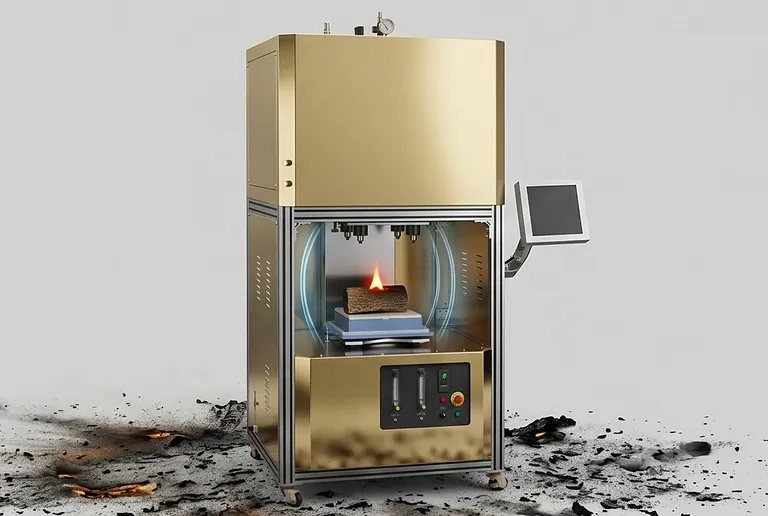
There is a hidden psychology in heating rates.
If you heat too fast, the internal gases generated during decomposition escape violently, shattering the delicate cellular walls of the wood. If you heat too slow, you waste energy and time.
The laboratory furnace is a tool of modulation. It manages the "stress" of the material. By controlling the heating rate—often as low as 1°C per minute—we allow the wood to "breathe" out its volatile components without collapsing its own ribcage.
Choosing the Instrument for the Transition
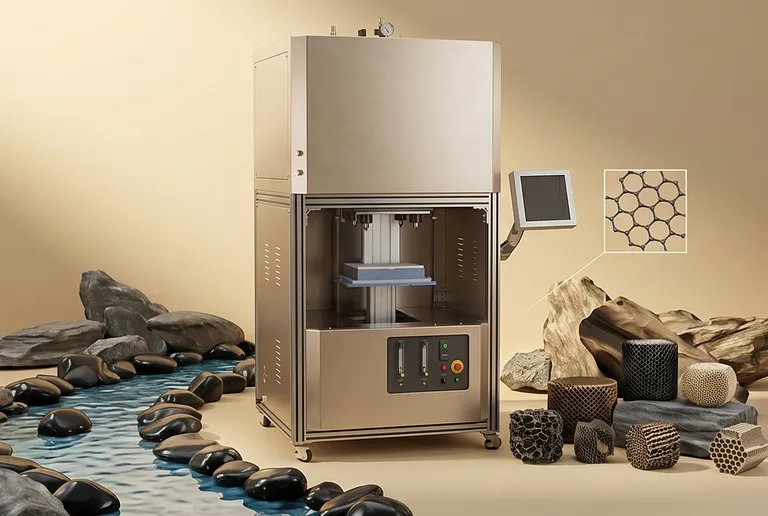
Success in material synthesis is a function of equipment reliability. When the goal is a conductive carbon skeleton, the "trade-offs" of cheap equipment become visible in the final data.
- For Maximum Conductivity: You need a furnace that doesn't just "reach" 1000°C, but holds it with absolute stability to fully restore the sp2 lattice.
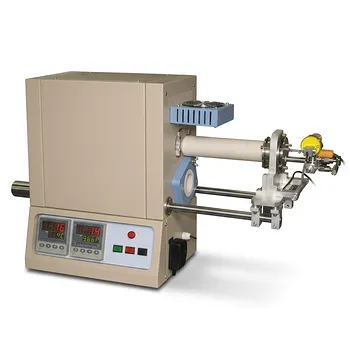
- For Structural Purity: You need a tube furnace with superior seal integrity to ensure that the "atmosphere" remains truly inert.
- For Scaling: You need systems like Rotary or CVD furnaces that can replicate these microscopic conditions across larger batches or thin-film applications.
At THERMUNITS, we understand that a furnace is not just a box that gets hot. It is a controlled environment where the laws of nature are temporarily suspended to allow for innovation.
From Muffle and Vacuum furnaces to advanced CVD and Hot Press systems, our equipment is designed for the rigor of material science R&D. We provide the thermal precision required to turn organic precursors into the conductive foundations of tomorrow.
To master the 1000°C threshold and ensure the integrity of your conductive materials, Contact Our Experts
Quick Links
Suggested Products
1100°C High Temperature Quartz Chamber Furnace 8 Inch OD with 7.6 Liter Capacity and Vacuum Atmosphere Capability High Temperature Oxygen and Inert Atmosphere Controlled Furnace 8 Liter 1700C Sintering System for Advanced Materials RD 1200C Hydrogen Atmosphere Box Furnace with 5 Heated Sides and 64L Chamber Bottom Loaded Inert Gas Atmosphere Box Furnace 1700C 1300C 216L Large Capacity Industrial Thermal Processing System Atmosphere Controlled Muffle Furnace 1700C Maximum Temperature 80L High Capacity Vacuum Inert Gas Box FurnaceFurther Reading
The Geometry of Heat: Engineering Magnetic Biochar Through Controlled Pyrolysis The Architecture of Absence: Why Atmosphere Control Defines the Fate of Mesoporous Carbon The Thermodynamic Sanctuary: Managing Atomic Migration in High-Vacuum Furnaces The Geometry of Heat: Why Atmosphere Control is the Silent Architect of Micro-Copper The Geometry of Stability: Why LFP Regeneration Demands Atmospheric Discipline
ThermUnits
Last updated on Apr 15, 2026
Related Products
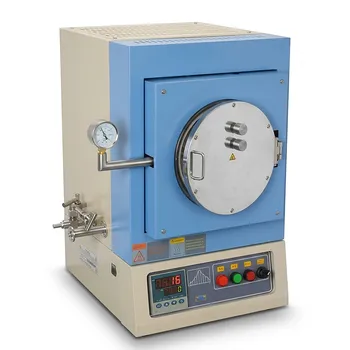
1100°C High Temperature Quartz Chamber Furnace 8 Inch OD with 7.6 Liter Capacity and Vacuum Atmosphere Capability
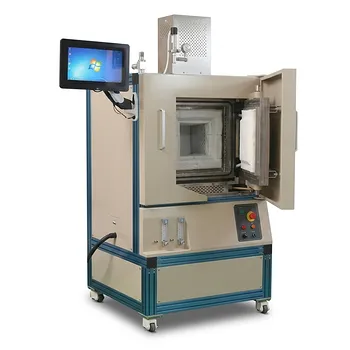
High Temperature Oxygen and Inert Atmosphere Controlled Furnace 8 Liter 1700C Sintering System for Advanced Materials RD
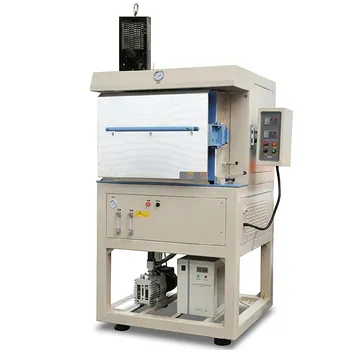
1200C Hydrogen Atmosphere Box Furnace with 5 Heated Sides and 64L Chamber
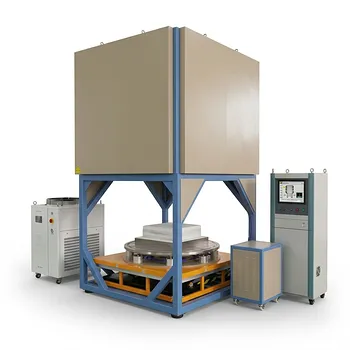
Bottom Loaded Inert Gas Atmosphere Box Furnace 1700C 1300C 216L Large Capacity Industrial Thermal Processing System
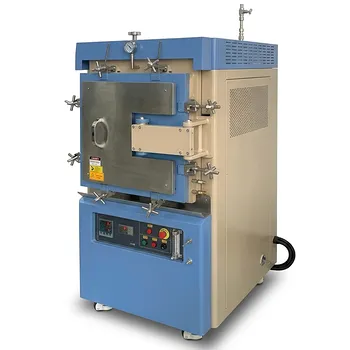
Atmosphere Controlled Muffle Furnace 1700C Maximum Temperature 80L High Capacity Vacuum Inert Gas Box Furnace
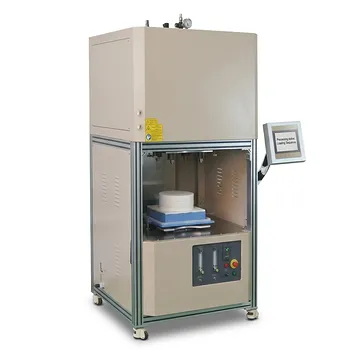
High Temperature Vertical Atmosphere Controlled Furnace with Automatic Bottom Loading and 1700°C Capacity for Advanced Material Research
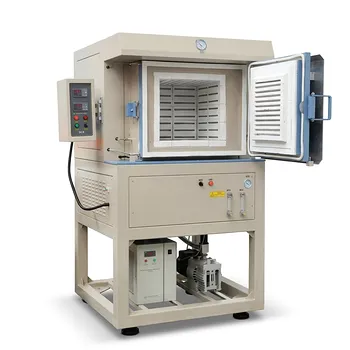
1200°C Five Side Heating Atmosphere Controlled Muffle Furnace 64 Liter High Uniformity Box Furnace for Material Synthesis
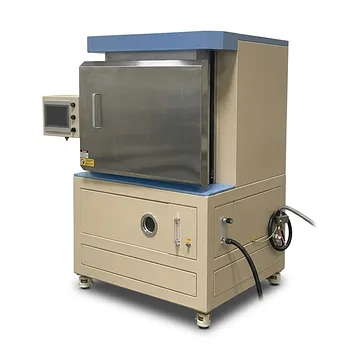
1650C High Temperature Atmosphere Controlled Box Furnace with 65L Chamber for Advanced Material Sintering and Industrial Heat Treatment
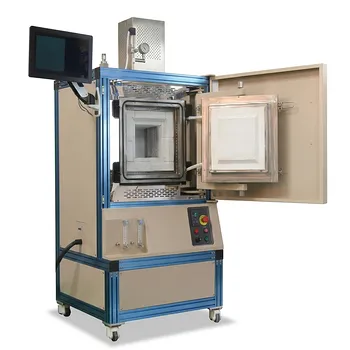
High Temperature Hydrogen Atmosphere Box Furnace 1650C Max Reducing Environment Material Synthesis System 8x8x8 Chamber
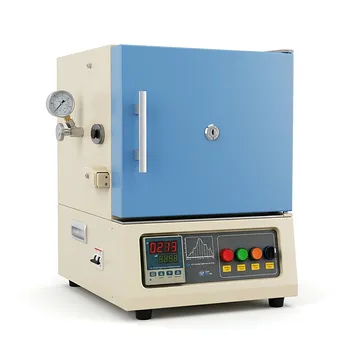
1200C Hybrid Muffle and Tube Furnace for Material Research with Dual Atmosphere Control Quartz Tubes

1750°C High Temperature Benchtop Vacuum Atmosphere Tube Furnace with Kanthal Super 1800 Heating Elements and 60mm Alumina Processing Tube
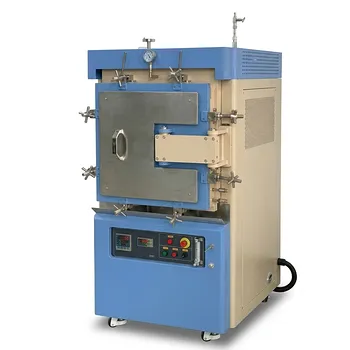
High Temperature Economic Hydrogen Gas Box Furnace 1600C Atmosphere Controlled Thermal Processing System 65L Capacity
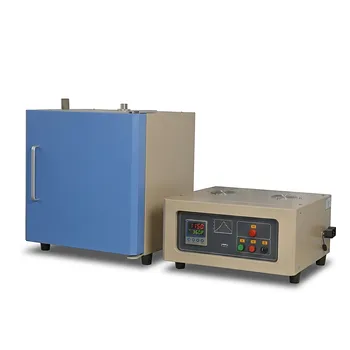
High Temperature Muffle Furnace with Alloy Chamber for Debinding and Sintering Applications
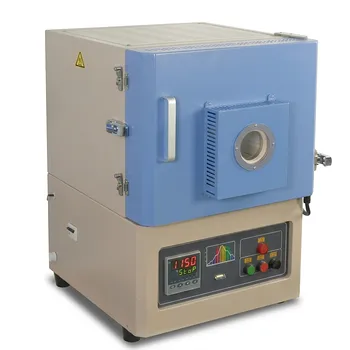
High Temperature Benchtop Muffle Furnace with Quartz Observation Window for Thermal Imaging and Material Analysis
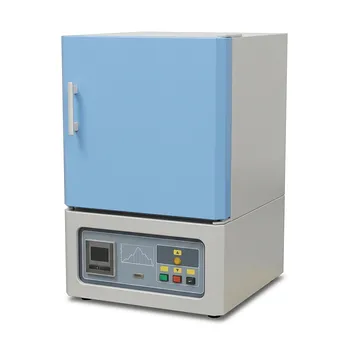
1800C Bench Top Muffle Furnace with Kanthal Super 1900 Heating Elements and 3.6L Alumina Fiber Chamber
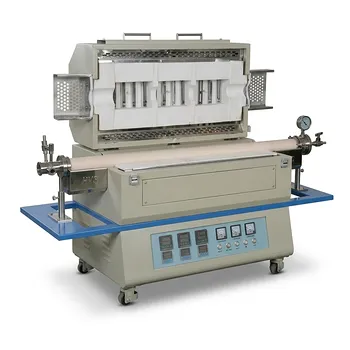
Three Temperature Zone Fast Heating Furnace 1500C Laboratory High Precision Thermal Processing System
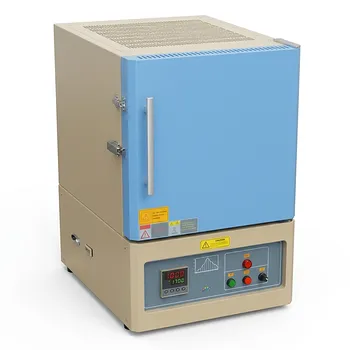
Large Bench Top 1700C High Temperature Muffle Furnace with 19L Chamber for Advanced Material Sintering and Annealing
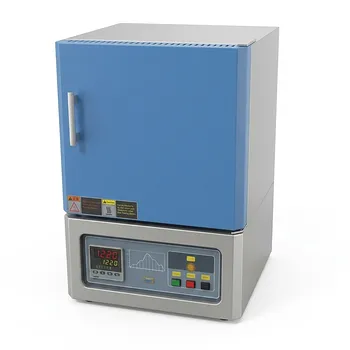
High Temperature Benchtop Muffle Furnace 1700C 10L Chamber Alumina Fiber Insulation MoSi2 Heating Elements
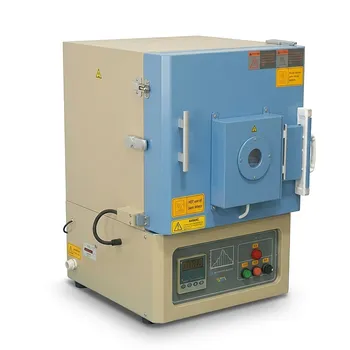
High Temperature Benchtop Muffle Furnace 1500C with 3.6L Chamber and Quartz Observation Window