The Architecture of Isolation: Why 1250°C Demands a Vacuum-Sealed Micro-Environment
Apr 29, 2026
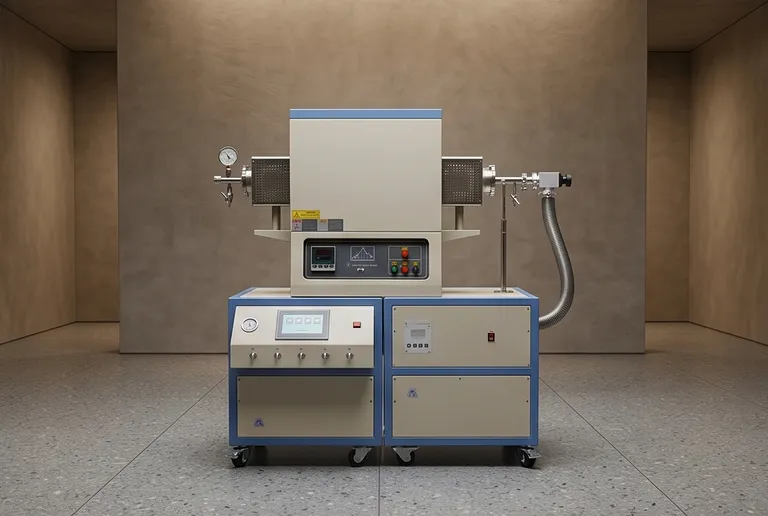
The Margin of Error at 1,250 Degrees
In material science, 1250°C is a threshold of extreme volatility. At this temperature, Fe-based superalloys are not just hot; they are chemically hyper-reactive. The atmosphere becomes an enemy, eager to strip the alloy of its integrity.
We often focus on the furnace—the massive source of heat. But the real work of preservation happens in a space no larger than a few cubic centimeters: the vacuum-sealed quartz tube.
This is the "invisible barrier" that separates a successful metallurgical experiment from a failed piece of oxidized scrap.
The Chemistry of Surface Defense
When an alloy meets oxygen at four-digit temperatures, the reaction is violent and immediate. Without a hermetic seal, the specimen doesn't just change; it degrades.
1. Stopping the Oxidation Cascade
At 1250°C, iron and nickel react with even trace oxygen to form complex oxides like $FeNi_2O_4$. This scale isn't just a surface blemish; it alters the dimensions and the surface chemistry of the sample. The quartz tube acts as a physical wall, keeping the "reactive chaos" of the furnace atmosphere away from the metal.
2. Preventing "Chemical Leakage"
Heat provides the energy for elements to move. Decarburization—the loss of carbon from the surface—weakens the alloy's structural "skeleton." Similarly, volatile alloying elements can literally evaporate off the surface. A vacuum seal ensures that what is inside the alloy stays inside the alloy.
3. Precision Kinetics
Research isn't just about reaching a temperature; it's about controlling the path to get there. By removing air and backfilling with high-purity argon, researchers can study carburization kinetics and corrosion resistance without the interference of stray atmospheric variables.
Engineering the Gamma-Prime Phase
The goal of solution treatment is usually the management of the gamma ($\gamma$) and gamma-prime ($\gamma'$) phases. These are the microscopic structures that give superalloys their legendary high-temperature strength.
- Thermodynamic Equilibrium: To achieve a uniform phase distribution, the sample must often sit at 1250°C for hundreds of hours.
- The Micro-Vacuum: The quartz tube maintains a consistent internal pressure, allowing atomic sites to rearrange in an ordered, predictable fashion.
- The Quench Baseline: To "lock in" these high-temperature phases, the sample must be cooled rapidly. The quartz tube allows the sample to be handled and quenched while still protected, providing an objective baseline for age-hardening studies.
The Engineer’s Dilemma: The Softening Point
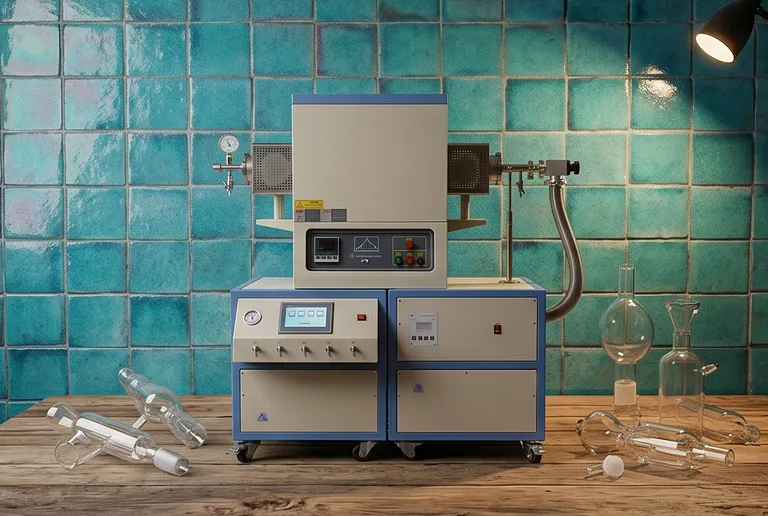
Every material has its limits. For quartz, 1250°C is dangerously close to its softening point. It is a moment of technical tension: the container is nearly as vulnerable as the content.
| Technical Risk | Impact on Process | Mitigation Strategy |
|---|---|---|
| Tube Deformation | High vacuum can cause the softened quartz to collapse. | Backfill with partial argon to balance external pressure. |
| Silicon Diffusion | Fe-based alloys can react with the quartz wall. | Wrap the specimen in tantalum foil as a secondary barrier. |
| Pressure Differential | Implosion risk due to thermal expansion. | Precise calculation of gas volume vs. temperature. |
Designing for Certainty
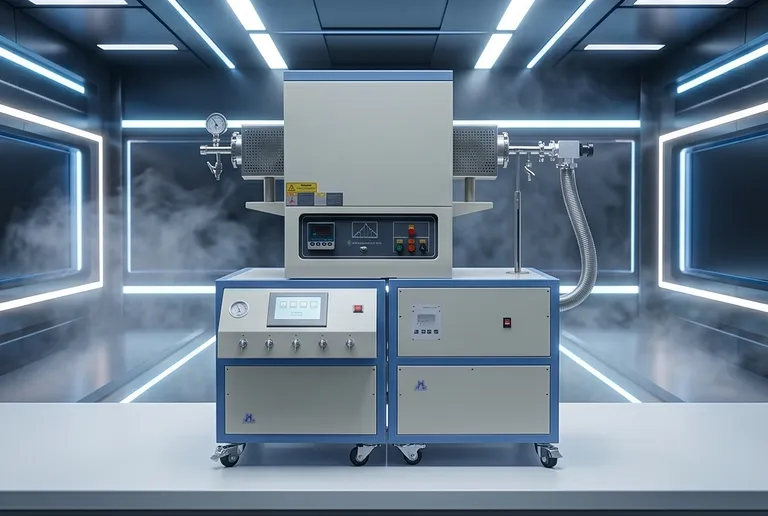
If your focus is surface-sensitive analysis, a high vacuum ($10^{-3}$ Pa) is non-negotiable. If your focus is long-term homogenization, physical separation via foil is the priority.
In both cases, the hardware matters. A furnace that cannot provide stable, uniform heat across the length of the quartz tube renders the most careful sealing useless.
The THERMUNITS Standard
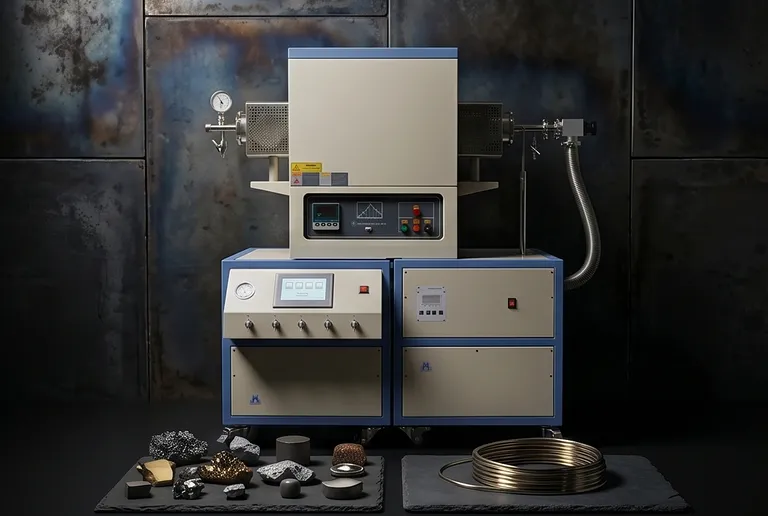
At THERMUNITS, we build the systems that make this level of precision possible. We understand that a furnace is more than just a heating element; it is a tool for creating controlled environments.
Our range of Tube Furnaces, Vacuum Induction Melting (VIM) systems, and Atmosphere Furnaces are engineered specifically for high-stakes R&D. We provide the thermal stability required to keep your quartz tubes—and your research—intact at 1250°C and beyond.
The integrity of your material depends on the environment you create. Contact Our Experts
Quick Links
Suggested Products
1200°C 5 Inch Vertical Quartz Tube Furnace with Stainless Steel Vacuum Flanges Dual Zone Quartz Tube Furnace with 80mm Diameter 1200C Max Temperature 3 Channel Gas Mixer and Vacuum Pump System High Temperature 1200C Split Tube Furnace with Hinged Vacuum Flanges and 4 Inch Quartz Tube for Laboratory Research High Temperature Automated 5 Inch Tube Furnace for Autonomous Material Research and Advanced Laboratory R&D Split Vertical Tube Furnace with 1200C Quartz Tube and Stainless Steel Vacuum Flanges for Rapid Thermal ProcessingFurther Reading
The Architecture of Isolation: Why Atmosphere Defines Material Destiny The Invisible Architect: Precision Thermal Oxidation in NiO@Ni Synthesis The Silent Guardian of Kinetics: The Engineering Logic Behind Stable Molten Salt Environments The Architecture of Absence: Engineering the Carbon Lattice through Precision Pyrolysis Controlled Chaos: The Engineering Logic of Ammonia Nitridation
ThermUnits
Last updated on Apr 15, 2026
Related Products

1200°C 5 Inch Vertical Quartz Tube Furnace with Stainless Steel Vacuum Flanges
Dual Zone Quartz Tube Furnace with 80mm Diameter 1200C Max Temperature 3 Channel Gas Mixer and Vacuum Pump System
High Temperature 1200C Split Tube Furnace with Hinged Vacuum Flanges and 4 Inch Quartz Tube for Laboratory Research

High Temperature Automated 5 Inch Tube Furnace for Autonomous Material Research and Advanced Laboratory R&D
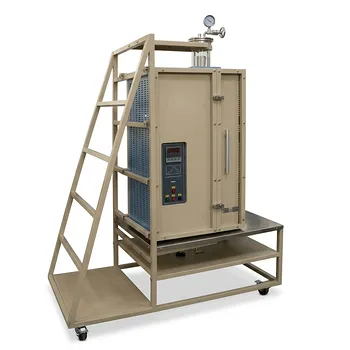
Split Vertical Tube Furnace with 1200C Quartz Tube and Stainless Steel Vacuum Flanges for Rapid Thermal Processing

Compact Vertical Split Quartz Tube Furnace with Stainless Steel Vacuum Flanges for Rapid Thermal Quenching and Controlled Atmosphere Material Processing
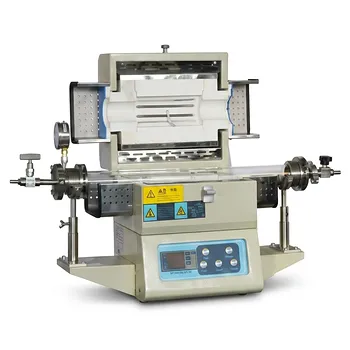
High Temperature 1200C Split Tube Furnace for CVD Research and Vacuum Atmosphere Heat Treatment
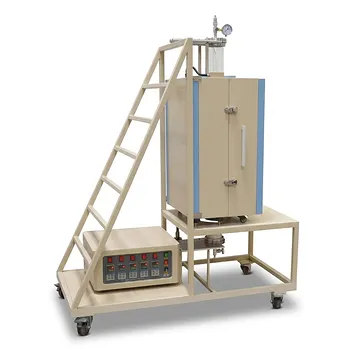
Five Zone Split Vertical Tube Furnace 1200C Max with 4 Inch Quartz Tube and Stainless Steel Vacuum Flanges
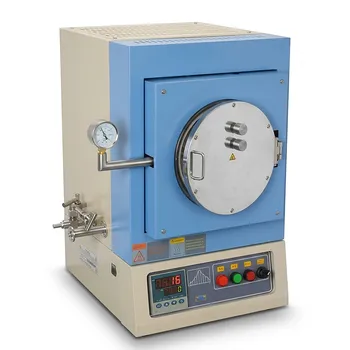
1100°C High Temperature Quartz Chamber Furnace 8 Inch OD with 7.6 Liter Capacity and Vacuum Atmosphere Capability
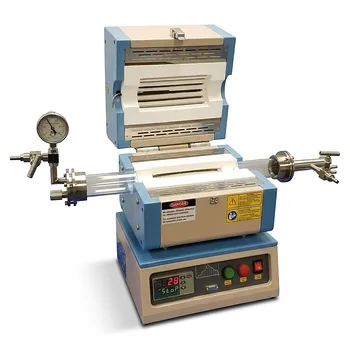
Compact Split Tube Furnace with Integrated Vacuum System and Precision Temperature Calibrator
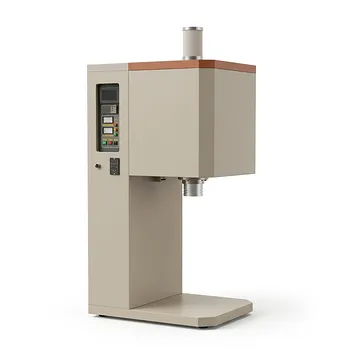
Vertical Openable Tube Furnace 0-1700c High Temperature Laboratory System for CVD and Vacuum Heat Treatment
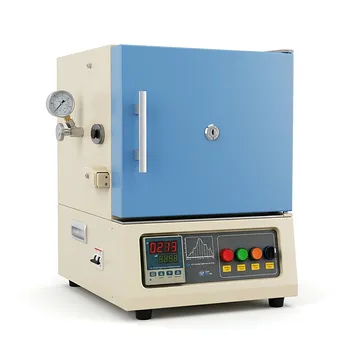
1200C Hybrid Muffle and Tube Furnace for Material Research with Dual Atmosphere Control Quartz Tubes
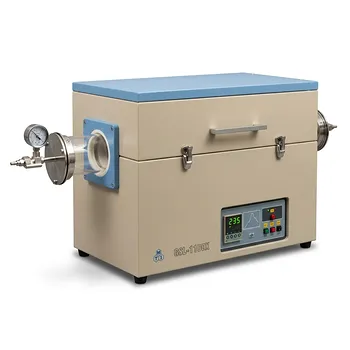
Single Zone Tube Furnace 5 Inch Quartz Tube 36 Inch Heating Zone Vacuum Flanges
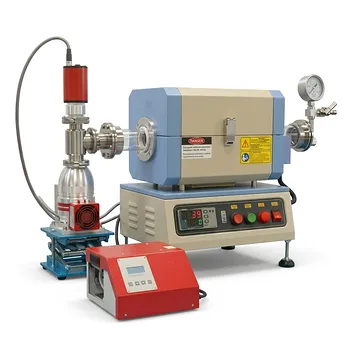
High Vacuum Compact Tube Furnace 1200C with Integrated Turbo Pump System and 8 Inch Heating Zone
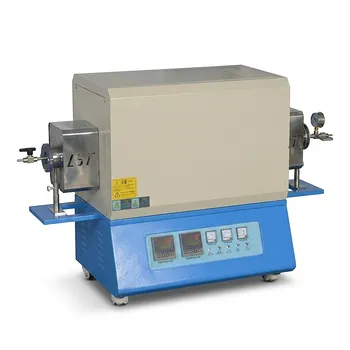
High Temperature Dual Zone Vacuum Tube Furnace for Material Research and CVD Processing
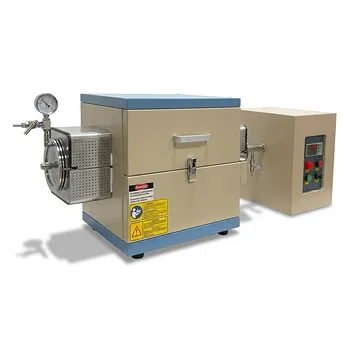
1200C High Temperature 5 Inch Split Vacuum Tube Furnace with 12 Inch Heating Zone and Separated PID Controller

High Temperature 1700C Benchtop Tube Furnace with 5 Inch Heating Zone High Purity Alumina Tube and Vacuum Sealing Flanges
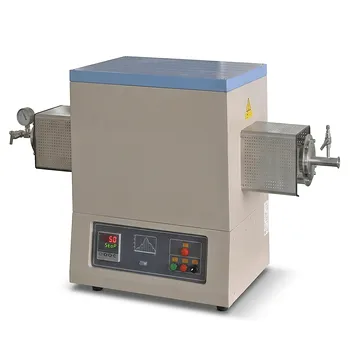
High Temperature 1700C Tube Furnace with 4 Inch OD Alumina Tube and Vacuum Sealing Flanges

1100C Tube Furnace with Vacuum Flange and Programmable Temperature Controller for Material Science and Industrial Heat Treatment