The Invisible Chemistry of High Heat: Designing Certainty into Vacuum Hot-Zones
Jul 28, 2026
The Architecture of Extreme Environments
Science at high temperatures is not just about heat; it is about the behavior of atoms under duress. Inside a vacuum furnace, the "hot-zone"—the insulated cradle where the work occurs—is more than a container. It is a chemical environment that either supports or sabotages your material’s integrity.
When engineers choose between graphite and refractory metals, they are making a high-stakes trade-off between mechanical endurance and chemical purity.
As Atul Gawande suggests with medical checklists, the success of a complex system often depends on the most basic structural choices. In thermal processing, that choice starts with the hot-zone.
Graphite: The Paradox of Heat and Strength
In most materials, heat begets weakness. Graphite is the outlier. It is one of the few materials on Earth whose mechanical strength actually increases as temperatures climb toward 2,400°C.
Built for Pressure
In applications like vacuum hot pressing, the furnace is a vice. The hot-zone must endure uniaxial pressure without deformation. Graphite dies offer a structural integrity that refractory metals cannot match at extreme temperatures, facilitating solid-state diffusion in rugged environments.
The Economic Incentive
Morgan Housel often notes that the best financial plan is the one you can stick to. In industrial R&D, graphite is the "sustainable" plan.
- Cost-Efficiency: Lower initial capital expenditure.
- Resilience: Less sensitive to minor vacuum leaks than metal systems.
- Repairability: Components can be swapped or repaired with lower complexity.
Refractory Metals: The Purist’s Mandate
If graphite is the rugged workhorse, refractory metals—specifically Molybdenum and Tungsten—are the precision instruments. Some materials are "carbon-sensitive." For them, a graphite environment is a source of contamination.
The Problem of Carbon Migration
At high temperatures and low pressures, carbon atoms don't stay still. They migrate. In a graphite hot-zone, trace carbon vapor can infiltrate sensitive alloys, leading to unwanted carbide formation or surface embrittlement.
The All-Metal Environment
Refractory metal furnaces replace carbon-felt insulation with reflective metal radiation shields.
- Particle-Free: No fibrous particles to contaminate the sample.
- Reduced Outgassing: Faster pump-down times to reach high-vacuum levels.
- Metals for Metals: Essential for high-purity metallurgy where "zero contamination" is the only acceptable metric.
The Cost of Fragility
The choice of refractory metals comes with a psychological and operational price: high sensitivity. A molybdenum hot-zone is an unforgiving environment.
A single leak that introduces oxygen at high temperatures can cause rapid oxidation and catastrophic embrittlement of the shielding. While graphite can "absorb" certain operational errors, refractory metals demand absolute system integrity.
Deciding Your Thermal Strategy
Selecting a hot-zone is a matter of aligning your material's chemical requirements with your operational reality.
| Feature | Graphite Hot-Zone | Refractory Metal (Mo/W) |
|---|---|---|
| Max Temperature | Up to 2,400°C | Generally up to 2,000°C |
| Mechanical Strength | Increases with temp | Decreases with temp |
| Vulnerability | Robust / Oxidation tolerant | Extremely sensitive to oxygen |
| Purity Profile | Trace carbon migration | Ultra-pure "all-metal" |
| Primary Use Case | Hot Pressing / Sintering | Aerospace / Nuclear / High-Purity R&D |
Engineering the Future with THERMUNITS
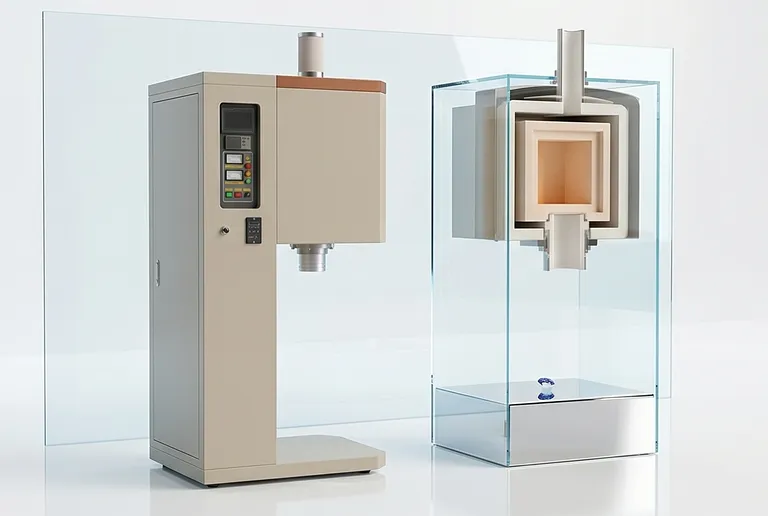
At THERMUNITS, we understand that the difference between a breakthrough and a failure is often measured in parts per million. Our engineering philosophy treats every furnace not just as a piece of equipment, but as a system designed to solve a specific material challenge.
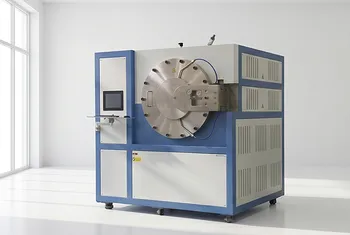
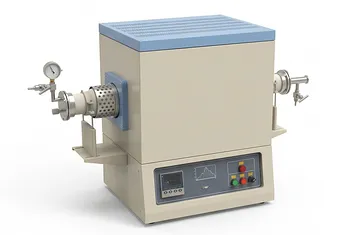
From robust graphite Hot Press furnaces capable of handling intense mechanical loads to All-Metal Vacuum furnaces designed for high-purity R&D and CVD/PECVD systems, we provide the hardware for your next discovery.
The right hot-zone material ensures that your results are a reflection of your science, not a byproduct of your equipment.
Quick Links
Suggested Products
Vertical Vacuum Furnace 1100C High Temperature 8 Inch Quartz Chamber Water Cold Flange System High Temperature 1000C Vacuum Furnace with 8 Inch ID Chamber for Material Sintering and Research Annealing Ultra High Temperature Induction Heated Vacuum Furnace with Molten Salt Electrolysis Capability and 3000 Degree Precision Control High Temperature Vacuum Lamination Hot Press Furnace Machine for Semiconductor Wafer Bonding and Advanced Composite Thermal Processing High Temperature Cold Wall High Vacuum Chamber Furnace 1400C for Advanced Material ProcessingFurther Reading
The Purity of Absence: Why the Human Body Demands Vacuum-Processed Metallurgy The Geometry of Force: Why Vacuum Hot Pressing Redefines Ceramic Integrity The Architecture of Density: Mastering the Mechanics of Vacuum Hot Pressing The Choreography of Density: Mastering the Vacuum Hot Press Sequence The Purity of Nothing: Why the Vacuum is the Architect of Material Integrity
ThermUnits
Last updated on Apr 14, 2026
Related Products
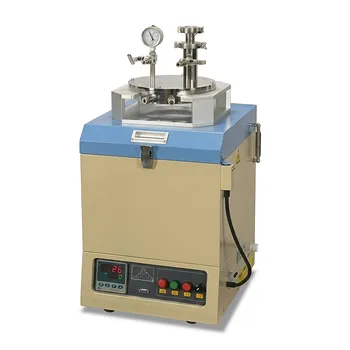
Vertical Vacuum Furnace 1100C High Temperature 8 Inch Quartz Chamber Water Cold Flange System
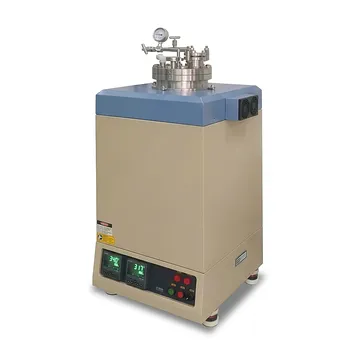
High Temperature 1000C Vacuum Furnace with 8 Inch ID Chamber for Material Sintering and Research Annealing
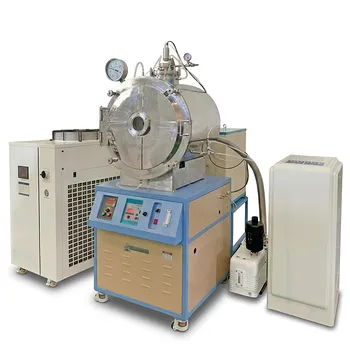
Ultra High Temperature Induction Heated Vacuum Furnace with Molten Salt Electrolysis Capability and 3000 Degree Precision Control
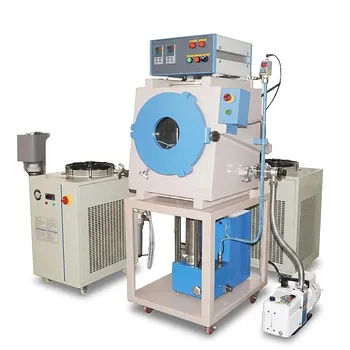
High Temperature Vacuum Lamination Hot Press Furnace Machine for Semiconductor Wafer Bonding and Advanced Composite Thermal Processing
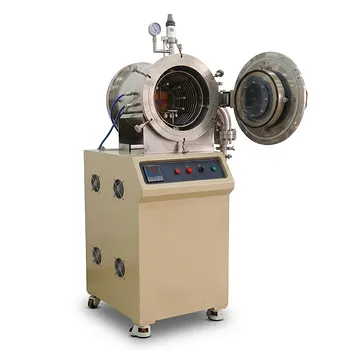
High Temperature Cold Wall High Vacuum Chamber Furnace 1400C for Advanced Material Processing
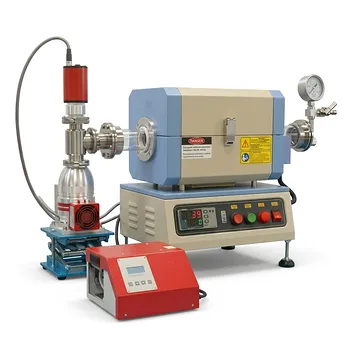
High Vacuum Compact Tube Furnace 1200C with Integrated Turbo Pump System and 8 Inch Heating Zone
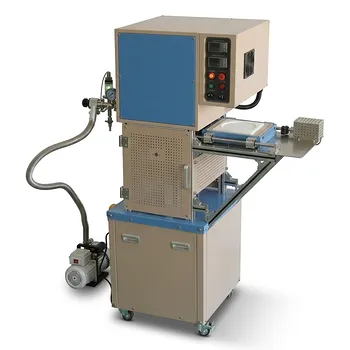
1200°C Bottom Loading Vacuum Furnace with Rapid Gas Cooling and 8.6 Inch Diameter Quartz Chamber
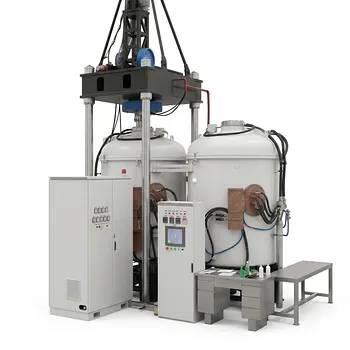
High Pressure 600T Vacuum Induction Hot Press Furnace for Advanced Material Heat Treatment and Sintering
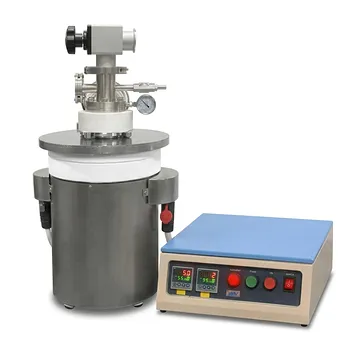
1100C High Temperature Vacuum Crucible Furnace with Quartz Chamber for Thermal Processing and Sintering
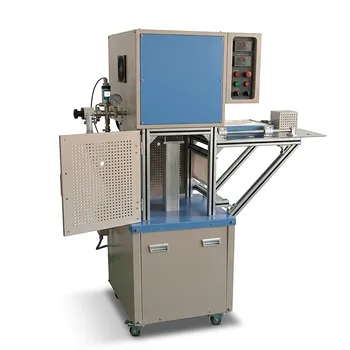
Bottom Loading Vacuum Furnace 1200C Rapid Cooling Atmosphere Control Quartz Chamber

1750°C High Temperature Benchtop Vacuum Atmosphere Tube Furnace with Kanthal Super 1800 Heating Elements and 60mm Alumina Processing Tube
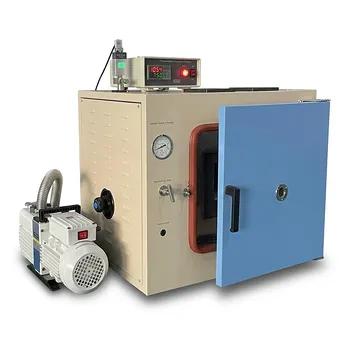
Compact High Vacuum Box Furnace 1050C Max 6.2L Ceramic Chamber Stainless Steel Shell Programmable Temperature Controller for Material Science Research
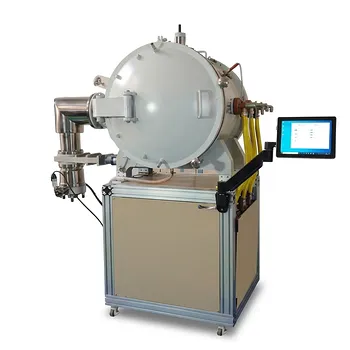
High Temperature Cold Wall Vacuum Furnace for Advanced Material Sintering and Annealing 1600C Heating Area 200x200x300mm

1800C High Temperature Compact Vacuum Tube Furnace with 60mm OD Alumina Tube and Kanthal MoSi2 Heating Elements
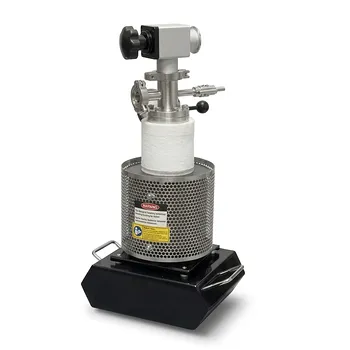
High Temperature 1100C Compact Top Loading Vertical Vacuum Tube Furnace for High Vacuum Noble Metal Melting and Material Research
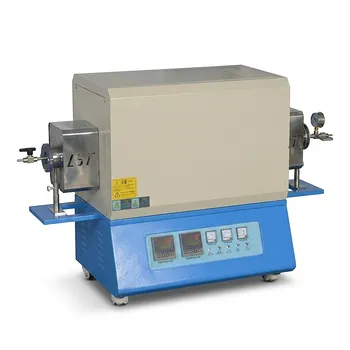
High Temperature Dual Zone Vacuum Tube Furnace for Material Research and CVD Processing
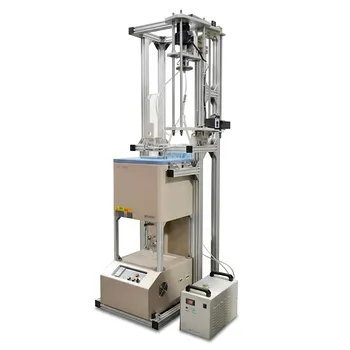
500C Vacuum Vertical Tube Furnace 84mm OD Sample Rotation Lifting System
High Vacuum Melting Casting Furnace with Mechanical Stirring and Secondary Charge for Metallic Alloy Research
Three Temperature Zone High Temperature Vacuum Tube Furnace for CVD and Material Sintering