The Silent Guardian of Luminescence: Why High-Purity Quartz Governs Phosphor Synthesis
Jun 02, 2026
The Invisible Quencher
In the world of material science, silence is often the loudest indicator of success.
When a phosphor fails to glow with the expected brilliance, the culprit is rarely a lack of heat. It is almost always a "quencher"—a trace metallic ion, perhaps a single atom of iron or nickel, that has migrated from the crucible into the crystal lattice.
Phosphor synthesis is a high-stakes game of chemical purity. At temperatures exceeding 1000°C, the container is no longer a passive vessel; it becomes a potential participant in the reaction. High-purity quartz boats are the industry’s answer to this systematic risk.
The Chemistry of Non-Interference
The primary virtue of high-purity quartz is its refusal to engage.
Eliminating the Metallic Migration
Standard ceramics often contain trace amounts of transition metals. Under the duress of 1100°C, these metals become mobile, leaching into the phosphor matrix. Quartz is engineered to be a "sterile" stage, ensuring that no unwanted guests disrupt the quantum yield of your material.
Defying Volatile Precursors
During calcination, precursors release vapors that can be highly aggressive. Quartz remains indifferent to these gases—whether they are sulfides, selenides, or alkaline activators—maintaining the integrity of the solid-state reaction without sacrificial erosion.
The Physics of Rapid Transitions
Time is a variable in R&D. We often heat materials faster than they want to be heated.
Most materials suffer from "thermal anxiety"—the internal stress caused by uneven expansion. Quartz, however, possesses an incredibly low coefficient of thermal expansion. This allows it to survive the violent swing from room temperature to 1000°C and back again without shattering.
For the researcher, this means reproducibility. You can cycle your experiments rapidly without the constant fear of losing a batch to a cracked boat.
Geometry and the Uniformity of Heat
Success in calcination is not just about reaching a temperature; it is about ensuring every grain of powder experiences that temperature identically.
| Feature | Technical Advantage | Impact on Phosphor |
|---|---|---|
| Chemical Purity | Zero metallic ion leaching | Prevents quenching; maximizes brightness. |
| Thermal Resilience | Exceptional shock resistance | Allows rapid cycling without breakage. |
| Flat Geometry | High surface-to-volume ratio | Ensures uniform gas exposure and heating. |
| Atmospheric Seal | Reliable vacuum/gas integrity | Protects sensitive phosphidation processes. |
The flat, open design of a quartz boat maximizes the surface area exposed to the furnace’s atmosphere. This facilitates a uniform gas-solid phase reaction, ensuring that the material at the bottom of the boat is identical to the material at the top.
The Entropy of Choice: Understanding the Limits
Engineering is the art of trade-offs. Quartz is magnificent, but it is not immortal.
- The 1200°C Ceiling: Beyond this point, quartz begins the process of devitrification. It attempts to return to a crystalline state, becoming brittle and milky.
- Mechanical Fragility: While it handles heat with grace, it handles physical impact poorly. A single scratch can become a stress concentrator that leads to eventual failure.
- Chemical Vulnerability: Quartz bows to hydrofluoric acid and certain strong bases.
Knowing when to use quartz—and when to pivot to alumina or platinum—is the mark of a sophisticated thermal process.
The Systemic Solution
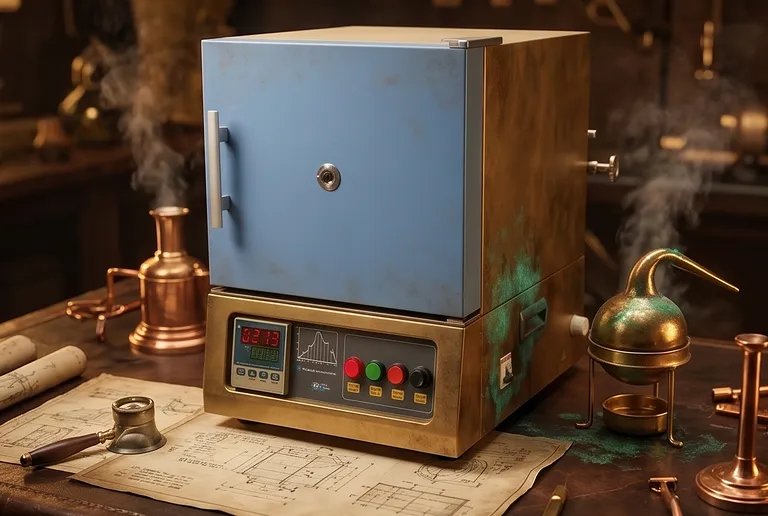
A high-purity quartz boat is only as effective as the environment it sits within. At THERMUNITS, we understand that precision heat treatment requires a symphony of the right vessel and the right machine.
From Tube Furnaces designed for precise atmospheric control to Vacuum Induction Melting systems, we provide the hardware that allows your chemistry to thrive. We don't just sell equipment; we provide the controlled environment where material breakthroughs happen.
To ensure your next synthesis achieves its peak quantum potential, Contact Our Experts.
Quick Links
Suggested Products
1100°C High Temperature Quartz Chamber Furnace 8 Inch OD with 7.6 Liter Capacity and Vacuum Atmosphere Capability 1200°C 5 Inch Vertical Quartz Tube Furnace with Stainless Steel Vacuum Flanges High Temperature 1200C Split Tube Furnace with Hinged Vacuum Flanges and 4 Inch Quartz Tube for Laboratory Research High Temperature Vertical Atmosphere Controlled Furnace with Automatic Bottom Loading and 1700°C Capacity for Advanced Material Research 1100C High Temperature Vacuum Crucible Furnace with Quartz Chamber for Thermal Processing and SinteringFurther Reading
The Geometry of Heat: Engineering Magnetic Biochar Through Controlled Pyrolysis The Architecture of Absence: Why Atmosphere Control Defines the Fate of Mesoporous Carbon The Thermodynamic Sanctuary: Managing Atomic Migration in High-Vacuum Furnaces The Geometry of Heat: Why Atmosphere Control is the Silent Architect of Micro-Copper The Geometry of Stability: Why LFP Regeneration Demands Atmospheric Discipline
ThermUnits
Last updated on Apr 14, 2026
Related Products
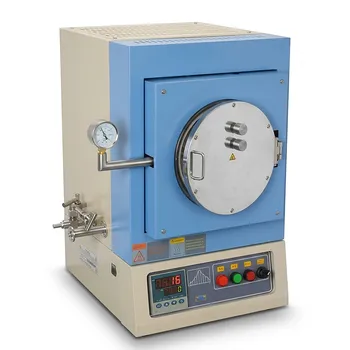
1100°C High Temperature Quartz Chamber Furnace 8 Inch OD with 7.6 Liter Capacity and Vacuum Atmosphere Capability

1200°C 5 Inch Vertical Quartz Tube Furnace with Stainless Steel Vacuum Flanges
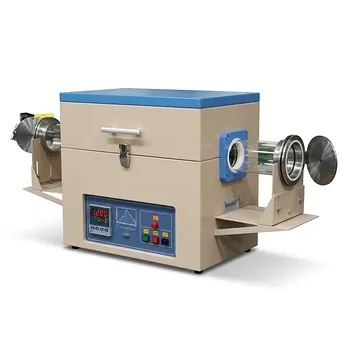
High Temperature 1200C Split Tube Furnace with Hinged Vacuum Flanges and 4 Inch Quartz Tube for Laboratory Research
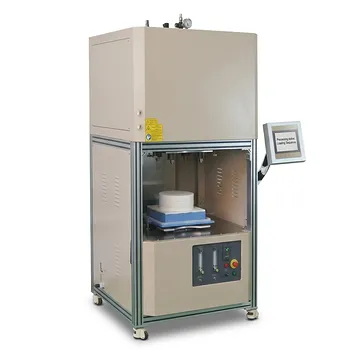
High Temperature Vertical Atmosphere Controlled Furnace with Automatic Bottom Loading and 1700°C Capacity for Advanced Material Research
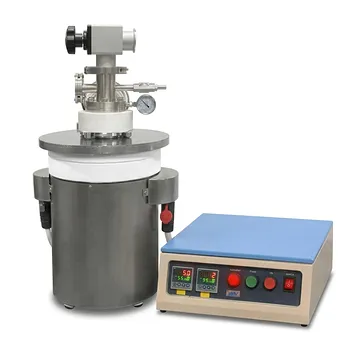
1100C High Temperature Vacuum Crucible Furnace with Quartz Chamber for Thermal Processing and Sintering
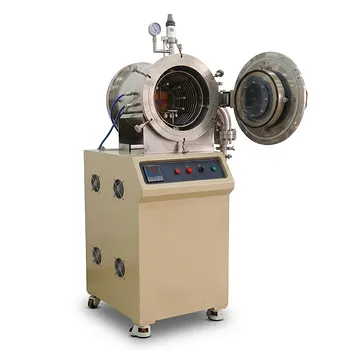
High Temperature Cold Wall High Vacuum Chamber Furnace 1400C for Advanced Material Processing
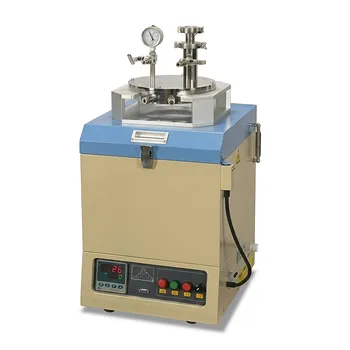
Vertical Vacuum Furnace 1100C High Temperature 8 Inch Quartz Chamber Water Cold Flange System
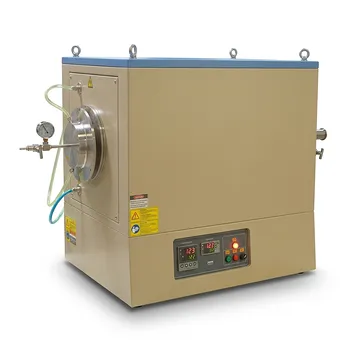
1100°C Large Diameter Quartz Tube Furnace with 24 Inch Heating Zone and Water Cooled Flanges
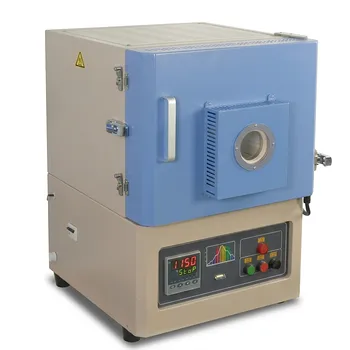
High Temperature Benchtop Muffle Furnace with Quartz Observation Window for Thermal Imaging and Material Analysis
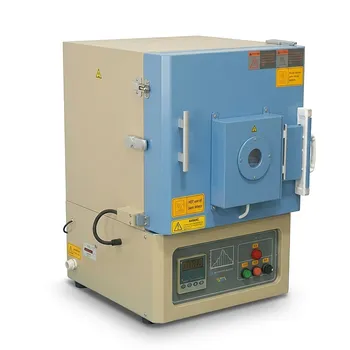
High Temperature Benchtop Muffle Furnace 1500C with 3.6L Chamber and Quartz Observation Window
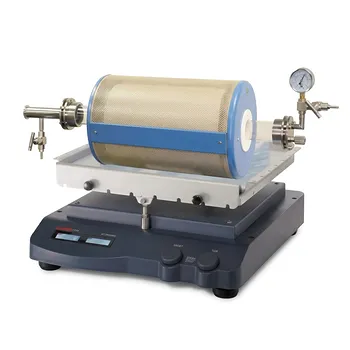
High Temperature Rocking Tube Furnace with Quartz Tube and Vacuum Flange for Materials Synthesis

High Temperature Automated 5 Inch Tube Furnace for Autonomous Material Research and Advanced Laboratory R&D