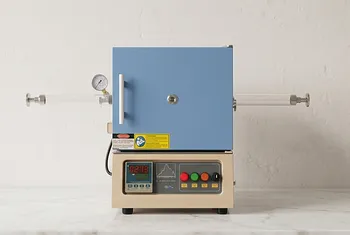
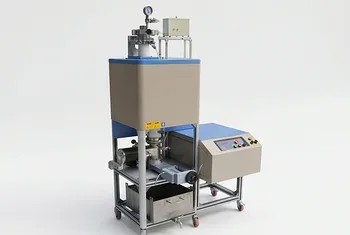
The Geometry of Heat: Engineering Magnetic Biochar Through Controlled Pyrolysis
Jun 25, 2026
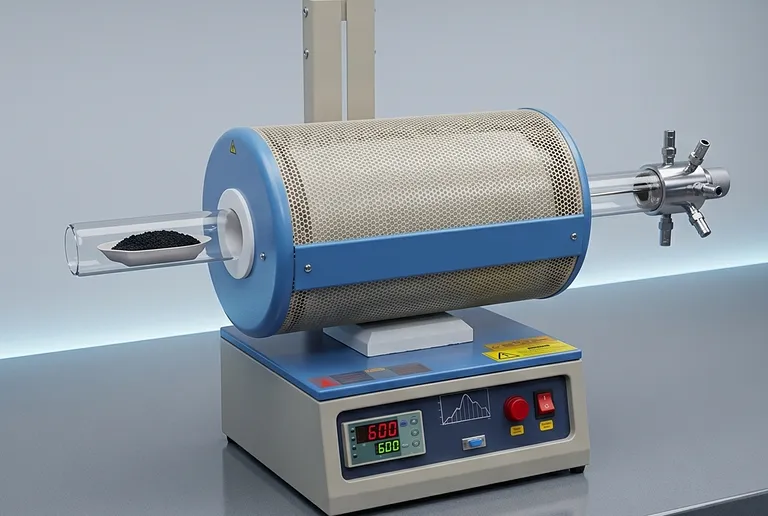
The Scalpel in the Flame
We often think of high heat as a force of destruction—a blunt instrument that reduces complexity to ash. But in the realm of material science, heat is a scalpel.
The transformation of a discarded lemon peel into a high-performance Magnetic Lemon Peel Biochar (MLPB) is not a simple burn. It is a choreographed sequence of thermochemical events.
To turn biomass into a functional adsorbent, we must navigate a narrow corridor between two failures: incomplete carbonization and total structural collapse. This is why the high-temperature tube furnace is not just a heater; it is the foundational reactor for modern R&D.
The Thermodynamics of a Second Chance
At its core, pyrolysis is about stripping away the volatile and leaving behind the "ghost" of the plant—the carbon skeleton.
Engineering the Carbon Skeleton
At the threshold of 600 °C, the furnace drives a systemic purge. Hemicellulose, cellulose, and lignin degrade. What remains is a high-fixed-carbon structure riddled with micropores.
This surface area is the currency of environmental science. If the furnace fails to maintain thermal uniformity, the pores clog or collapse, and the material's value vanishes.
The In-Situ Birth of Magnetism
While the carbon skeleton forms, a second miracle occurs. Impregnated iron salts are chemically coerced into magnetic crystalline phases: magnetite (Fe3O4) and hematite (α-Fe2O3).
The tube furnace provides the specific activation energy to embed these crystals into the carbon matrix. This grants the biochar a "magnetic soul," allowing it to be recovered from water systems using simple magnets after its work is done.
The Margin of Error: Why Kinetics Matter
In engineering, as in life, the way you get to a destination matters as much as the destination itself. Morgan Housel often notes that "everything has a price." In pyrolysis, the price of speed is structural integrity.
- The 10 °C/min Rule: A controlled ramp rate prevents the internal pressure of escaping gases from rupturing the pore walls.
- The Anaerobic Mandate: The presence of even trace oxygen turns a precision synthesis into a common bonfire. High-purity nitrogen (N2) creates the "vacuum of distraction" needed for pure pyrolysis.
- The Sintering Trap: Exceeding optimal temperatures causes nanoparticles to aggregate. You gain density but lose the surface area that makes the material useful.
Strategic Trade-offs in MLPB Synthesis
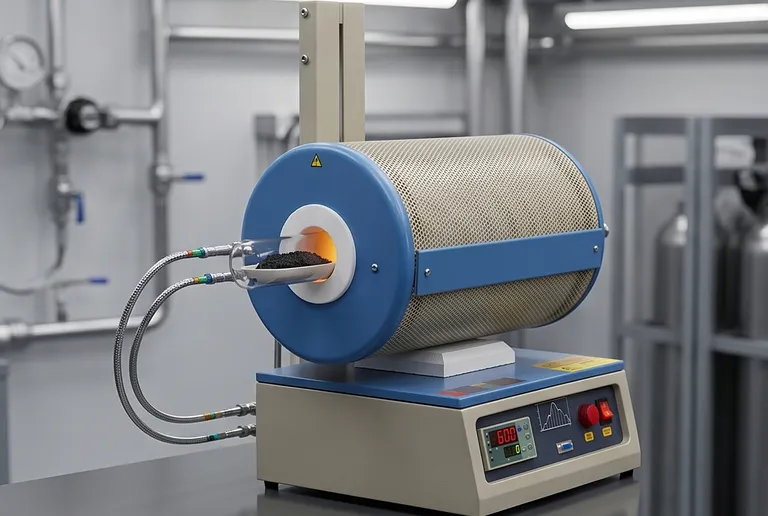
Every researcher must choose a priority. Your furnace settings are the levers of that choice.
| Research Goal | Primary Variable | The "Why" |
|---|---|---|
| Max Surface Area | Ramp Rate (10 °C/min) | Preserves delicate micropore architectures. |
| High Magnetic Recovery | Temperature (600 °C) | Optimizes the phase transition of iron oxides. |
| Functional Group Density | Lower Temp (400-500 °C) | Prevents the total degradation of surface oxygen groups. |
| Batch Consistency | Thermal Uniformity | Ensures the entire sample reacts at the same metabolic rate. |
The Engineer’s Romanticism: Precision as a Standard
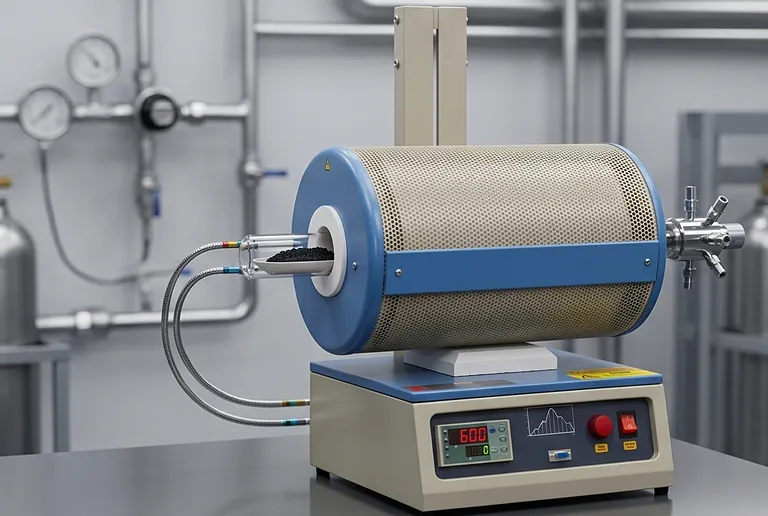
There is a certain "engineer’s romance" in the realization that a lemon peel, subjected to 873 Kelvin in a nitrogen-purged quartz tube, can become a solution for heavy metal removal. But this romance requires a reliable stage.
At THERMUNITS, we design the stages where these transformations happen. We understand that a tube furnace isn't just a box that gets hot—it is a system for controlling entropy.
Whether you are working with Tube, Vacuum, or Atmosphere furnaces, or exploring the boundaries of CVD/PECVD and Vacuum Induction Melting (VIM), the goal remains the same: total control over the thermal environment.
The quality of your material is capped by the precision of your equipment. For those synthesizing the next generation of adsorbents or R&D catalysts, the margin for error is zero.
Quick Links
Suggested Products
High Temperature Tube Furnace 1500C with Sliding Flanges and 50mm OD for Rapid Thermal Processing Fast Heating and Cooling High Temperature 1700C Tube Furnace with High Vacuum Turbomolecular Pump System and Multi Channel Mass Flow Controller Gas Mixer High Temperature 1700C Benchtop Tube Furnace with 5 Inch Heating Zone High Purity Alumina Tube and Vacuum Sealing Flanges 1750°C High Temperature Benchtop Vacuum Atmosphere Tube Furnace with Kanthal Super 1800 Heating Elements and 60mm Alumina Processing Tube Compact High Temperature 1600C Tube Furnace with 50mm Alumina Tube and Vacuum Flanges for Material SinteringFurther Reading
The Architecture of Absence: Why Atmosphere Control Defines the Fate of Mesoporous Carbon The Architecture of Isolation: Why Atmosphere Defines Material Destiny The Invisible Architect: Precision Thermal Oxidation in NiO@Ni Synthesis The Geometry of Heat: Forging the Structural DNA of Dicalcium Ferrite The Architecture of Heat: Why Verticality Defines Modern Metallurgical Simulation
ThermUnits
Last updated on Apr 14, 2026
Related Products
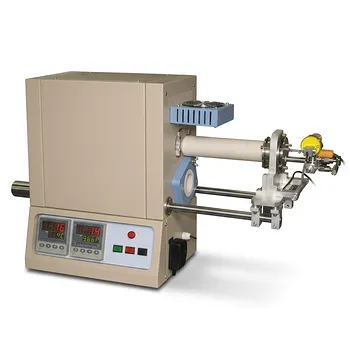
High Temperature Tube Furnace 1500C with Sliding Flanges and 50mm OD for Rapid Thermal Processing Fast Heating and Cooling

High Temperature 1700C Tube Furnace with High Vacuum Turbomolecular Pump System and Multi Channel Mass Flow Controller Gas Mixer

High Temperature 1700C Benchtop Tube Furnace with 5 Inch Heating Zone High Purity Alumina Tube and Vacuum Sealing Flanges
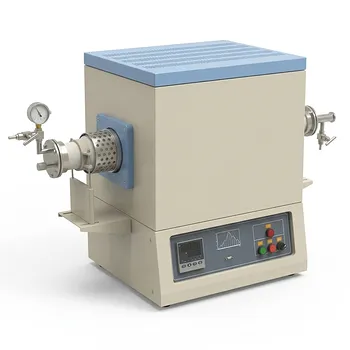
1750°C High Temperature Benchtop Vacuum Atmosphere Tube Furnace with Kanthal Super 1800 Heating Elements and 60mm Alumina Processing Tube

Compact High Temperature 1600C Tube Furnace with 50mm Alumina Tube and Vacuum Flanges for Material Sintering
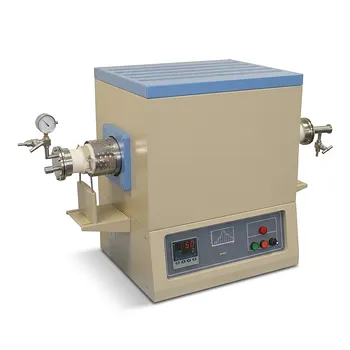
1700C High Temperature Alumina Tube Furnace with 18 Inch Heated Zone and Vacuum Sealing Flanges

1800C High Temperature Compact Vacuum Tube Furnace with 60mm OD Alumina Tube and Kanthal MoSi2 Heating Elements
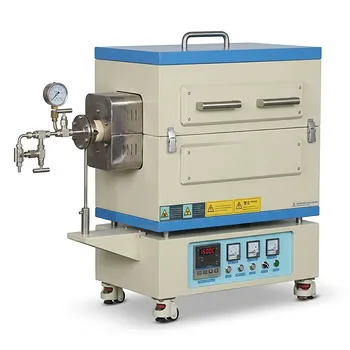
High Temperature Split Tube Furnace 1500C for Material Research Vacuum and Atmosphere Thermal Processing

High Temperature 1700C Vertical Tube Furnace for Powder Spherification and Material Sintering
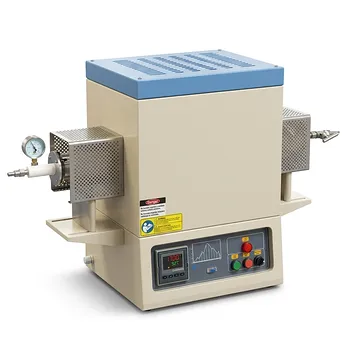
High Temperature Three Zone Tube Furnace 1700C with Alumina Tube and Water Cooled Flanges

High Temperature 1700C Six Zone Split Tube Furnace with Alumina Tube and Water Cooled Flanges
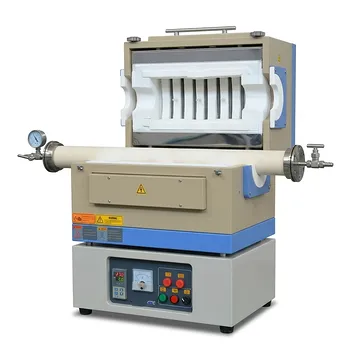
High Temperature 1600C Split Tube Furnace Vacuum Flanges Valves Optional 60mm 80mm Alumina Tube

High Temperature Automated 5 Inch Tube Furnace for Autonomous Material Research and Advanced Laboratory R&D

1100C Tube Furnace with Vacuum Flange and Programmable Temperature Controller for Material Science and Industrial Heat Treatment
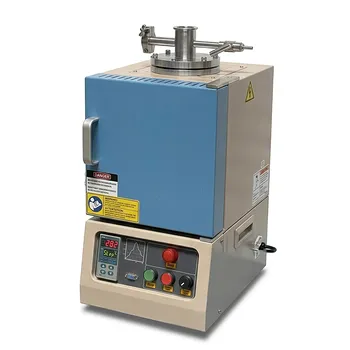
High Temperature Hybrid Muffle and Tube Furnace with Vacuum Capability and PID Control
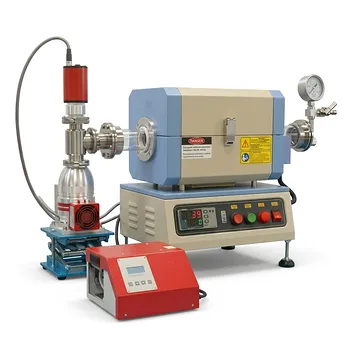
High Vacuum Compact Tube Furnace 1200C with Integrated Turbo Pump System and 8 Inch Heating Zone

1700C Hydrogen Gas Tube Furnace with 60mm Alumina Process Tube and Integrated Hydrogen Safety Detector
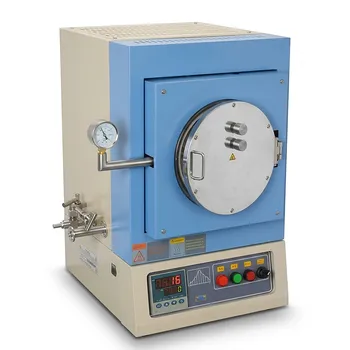
1100°C High Temperature Quartz Chamber Furnace 8 Inch OD with 7.6 Liter Capacity and Vacuum Atmosphere Capability
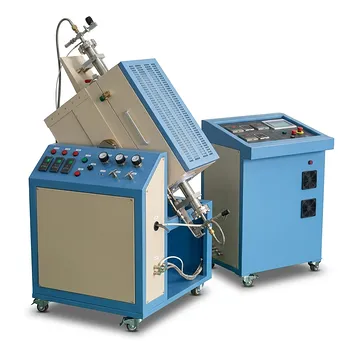
1100C High Pressure Rocking Tube Furnace with 2 Inch Super Alloy Processing Tube for Material Synthesis