The Silent Variable: Why Material Purity Begins with the Vessel
Aug 07, 2026
The Architecture of an Honest Result
In the precision-driven world of material science, we often obsess over the "talent"—the catalysts, the precursors, and the feedstocks. We meticulously measure their mass and purity. Yet, the most critical variable is often the one we treat as a given: the environment where the reaction occurs.
In high-temperature pyrolysis, the container is not merely a holder. It is a participant.
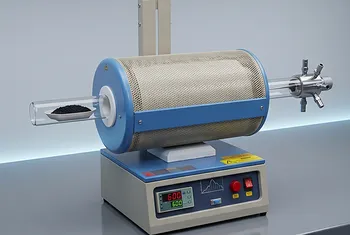
If the vessel reacts, the data is no longer a reflection of your chemistry; it is a post-mortem of a contaminated system. This is why high-purity quartz boats have become the silent standard for synthesis up to 1000°C.
The Chemistry of Non-Interference
The primary duty of a reaction vessel is to do nothing.
High-purity quartz glass is chemically indifferent to the aggressive volatiles released during the degradation of organic matter—be it plastics, biomass, or complex polymers. This neutrality ensures a "clean stage" for your research.
Stopping Elemental Migration
When synthesizing carbon nanotubes or porous carbons, trace impurities are catastrophic.
- Metal Leaching: Inferior materials can shed metal ions into the sample.
- Conductivity Shifts: Even parts-per-million contamination can alter the electrical properties of the final product.
- Catalytic Poisoning: High-purity quartz prevents the migration of unwanted oxides that could deactivate your primary catalysts, such as iron or cobalt.
Resilience Against Corrosive Activators
Chemical activation often involves harsh environments, such as KOH vapors. High-purity quartz provides the necessary resistance to alkaline erosion, ensuring that the carbon matrix—like that derived from Mangifera indica—remains untainted by the vessel's own structural components.
The Physics of Thermal Resilience
Thermal processing is a violent event. Rapidly moving a sample from room temperature into a 1000°C furnace zone creates immense internal stress.
Quartz glass possesses an exceptionally low coefficient of thermal expansion. It does not fight the heat; it absorbs the transition. This thermal shock resistance prevents the micro-cracking and catastrophic failures common in less stable ceramics.
Optimizing the Gas-Solid Interface
The geometry of the boat matters as much as the material. A flat, open quartz boat maximizes the surface area of the precursor. In a tube furnace, this ensures:
- Uniform Gas Diffusion: Every particle of catalyst is equally exposed to the reaction gas.
- Consistent Growth: Preventing "dead zones" where the reaction might stall.
- Accurate Positioning: Maintaining structural rigidity ensures the sample stays exactly within the furnace's uniform temperature zone.
The Limits of the Material
Every engineering solution has a boundary. For quartz, that boundary is defined by devitrification.
| Feature | The Technical Benefit | Critical Limitation |
|---|---|---|
| Purity | Eliminates metal ion migration | Vulnerable to Hydrofluoric Acid (HF) |
| Thermal Shock | Survives rapid cooling/heating | Limit of ~1100°C to 1200°C |
| Inertness | No reaction with most volatiles | Sensitive to certain molten salts |
| Stability | Maintains shape for gas flow | Becomes brittle if devitrified |
When your research pushes past 1200°C, the "glassy" state of quartz begins to reorganize into a crystalline structure. It becomes brittle. At these extremes, moving toward high-purity alumina or specialized ceramics becomes the necessary trade-off.
Precision by Design
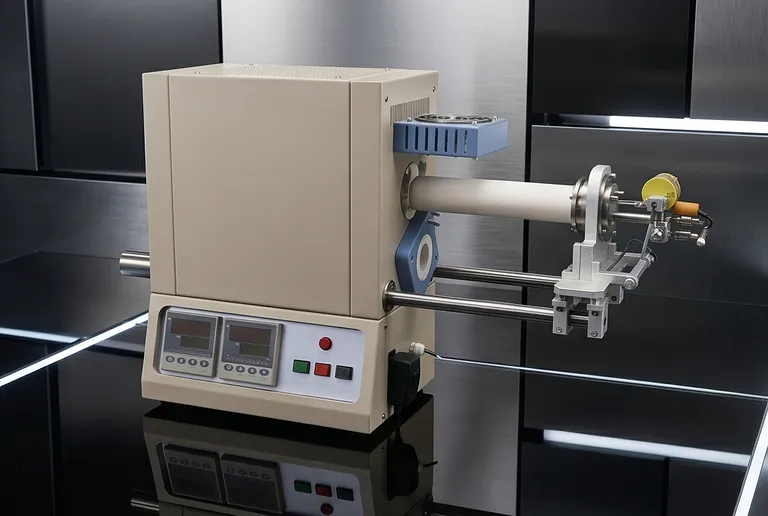
Choosing the right vessel is a strategic decision to eliminate experimental variables. If your goal is high-throughput testing with rapid cycling, quartz is your ally. If your goal is the synthesis of ultra-pure nanostructures, quartz is your shield.
At THERMUNITS, we understand that a furnace is only as good as the environment it creates. We design high-performance thermal solutions—from Tube and Rotary furnaces to CVD and Vacuum Induction Melting (VIM) systems—specifically to support the rigorous demands of material R&D.
True innovation requires a controlled environment. We provide the control; you provide the innovation.
Quick Links
Suggested Products
1100°C High Temperature Quartz Chamber Furnace 8 Inch OD with 7.6 Liter Capacity and Vacuum Atmosphere Capability 1200°C 5 Inch Vertical Quartz Tube Furnace with Stainless Steel Vacuum Flanges High Temperature 1200C Split Tube Furnace with Hinged Vacuum Flanges and 4 Inch Quartz Tube for Laboratory Research High Temperature Vertical Atmosphere Controlled Furnace with Automatic Bottom Loading and 1700°C Capacity for Advanced Material Research High Temperature Cold Wall High Vacuum Chamber Furnace 1400C for Advanced Material ProcessingFurther Reading
The Geometry of Heat: Engineering Magnetic Biochar Through Controlled Pyrolysis The Architecture of Absence: Why Atmosphere Control Defines the Fate of Mesoporous Carbon The Thermodynamic Sanctuary: Managing Atomic Migration in High-Vacuum Furnaces The Geometry of Heat: Why Atmosphere Control is the Silent Architect of Micro-Copper The Geometry of Stability: Why LFP Regeneration Demands Atmospheric Discipline
ThermUnits
Last updated on Apr 14, 2026
Related Products
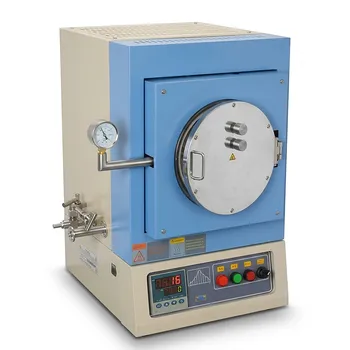
1100°C High Temperature Quartz Chamber Furnace 8 Inch OD with 7.6 Liter Capacity and Vacuum Atmosphere Capability

1200°C 5 Inch Vertical Quartz Tube Furnace with Stainless Steel Vacuum Flanges
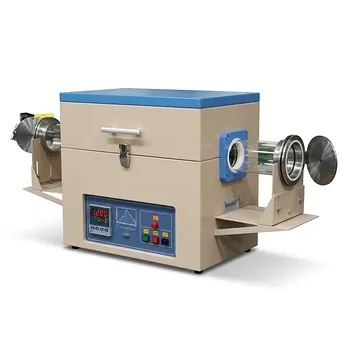
High Temperature 1200C Split Tube Furnace with Hinged Vacuum Flanges and 4 Inch Quartz Tube for Laboratory Research
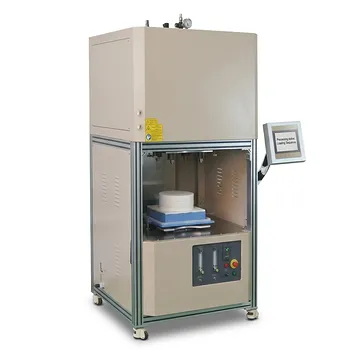
High Temperature Vertical Atmosphere Controlled Furnace with Automatic Bottom Loading and 1700°C Capacity for Advanced Material Research
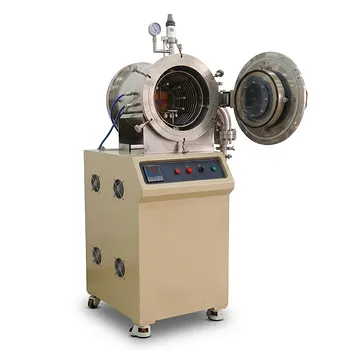
High Temperature Cold Wall High Vacuum Chamber Furnace 1400C for Advanced Material Processing
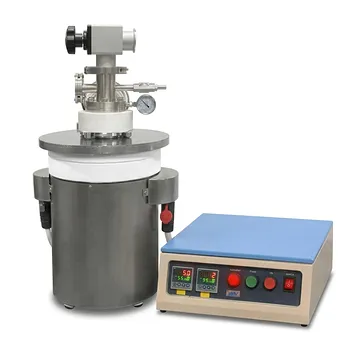
1100C High Temperature Vacuum Crucible Furnace with Quartz Chamber for Thermal Processing and Sintering
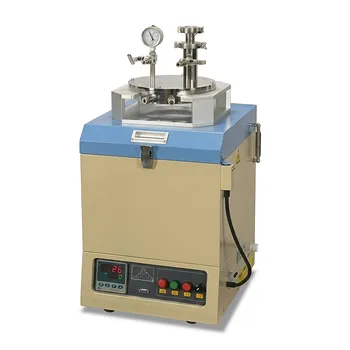
Vertical Vacuum Furnace 1100C High Temperature 8 Inch Quartz Chamber Water Cold Flange System
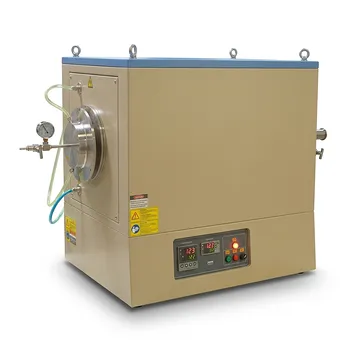
1100°C Large Diameter Quartz Tube Furnace with 24 Inch Heating Zone and Water Cooled Flanges
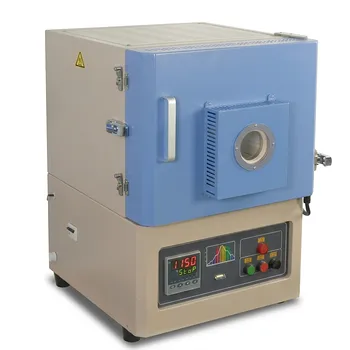
High Temperature Benchtop Muffle Furnace with Quartz Observation Window for Thermal Imaging and Material Analysis
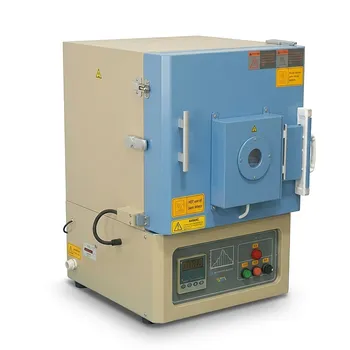
High Temperature Benchtop Muffle Furnace 1500C with 3.6L Chamber and Quartz Observation Window

High Temperature Automated 5 Inch Tube Furnace for Autonomous Material Research and Advanced Laboratory R&D
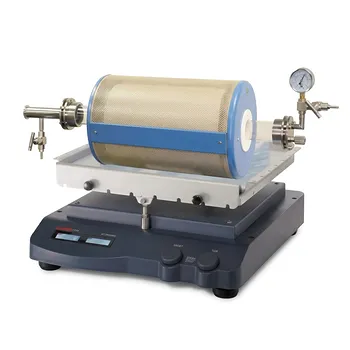
High Temperature Rocking Tube Furnace with Quartz Tube and Vacuum Flange for Materials Synthesis