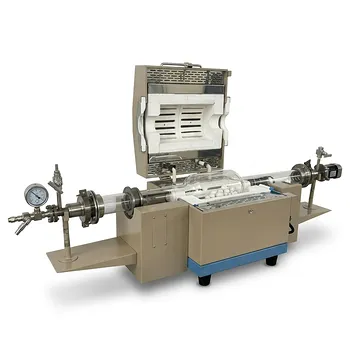
How do industrial tube furnaces ensure stable experimental conditions? Achieve Precision Slag & Battery Waste Reduction
Updated 3 months ago
Industrial tube furnaces ensure stable experimental conditions by integrating high-precision thermal control with rigorous atmospheric isolation. These systems maintain temperatures exceeding 1350°C with a precision of ±3°C, creating a consistent thermodynamic environment necessary for the reduction of nickel slag and battery waste. This stability allows for the reliable sedimentation of metal droplets and the formation of distinct alloy or matte phases without external interference.
Core Takeaway: Successful nickel reduction smelting requires the isolation of chemical and thermal variables. Industrial tube furnaces achieve this by combining microprocessor-controlled heating zones with hermetically sealed gas systems, ensuring that the resulting phase equilibrium and microscopic structures are a product of experimental design rather than environmental fluctuation.
Precision Thermal Management for Kinetic Control
Maintaining Constant Thermodynamic Force
The high-temperature environment, often reaching 1500°C in specialized silicon-slag or nickel-slag systems, provides the necessary energy to reach phase equilibrium. Modern furnaces utilize single-phase vertical configurations to ensure the heat distribution remains uniform across the reaction zone.
This thermal consistency is critical for the reduction reactions of oxides found in industrial waste. By keeping the temperature stable within a few degrees, researchers can accurately predict reaction kinetics and avoid unpredictable shifts in the chemical potential of the system.
Vertical Configuration and Sample Positioning
Industrial-grade vertical tube furnaces utilize suspension devices to place samples precisely in the center of the constant temperature thermal zone. This positioning eliminates the temperature gradients often found near the ends of the furnace tube.
Such precision is vital when studying the sedimentation of metal droplets. A stable thermal field ensures that the viscosity of the slag remains constant, allowing metal particles to settle predictably into a continuous matte or alloy phase.
Rigorous Control of the Chemical Atmosphere
Regulation of Reducing Gas Proxies
To convert oxide-state catalysts and ores into active metallic states, these furnaces precisely regulate the flow of reducing gases like hydrogen/argon (H2/Ar) mixtures. This controlled environment provides the driving force for nickel exsolution, where nickel cations migrate to the surface of the lattice.
By adjusting the ratio of these gases, researchers can control the partial pressure of oxygen. This allows for the formation of Pt-Ni alloy nanoparticles with a very narrow size distribution or the introduction of specific microporous structures through volume contraction.
Prevention of Oxidation and Nitridation
The sealed nature of the industrial tube furnace tube guarantees an oxygen-free atmosphere. This prevents premature oxidation of active metals and excludes atmospheric nitrogen, which could otherwise lead to unwanted nitridation in silicon or slag systems.
High-purity Argon (Ar) is typically used to displace air before the reduction process begins. This ensures that the final metallic nickel nanoparticles or slag impurities are studied under a pure, highly specific physicochemical environment.
Advanced Structural and Phase Preservation
Instantaneous Quenching Mechanisms
A unique advantage of vertical furnace designs is the ability to perform instantaneous water quenching. Using a mechanical release device at the bottom of the furnace tube, samples can be dropped directly into a quenching medium.
This process "freezes" the microscopic structure and phase equilibrium state present at high temperatures. Without this rapid cooling, the sample's chemistry could shift during a slower cooling phase, leading to inaccurate data regarding the high-temperature state of the slag.
Preserving Surface Roughness and Catalyst Activity
By strictly regulating reduction parameters like temperature and time, the furnace prevents excessive sintering and agglomeration of metal particles. This preservation of surface area is critical for maintaining a high number of active sites in nickel-based catalysts.
Controlled oxidation phases can also be used to create micron-scale rough structures on materials like nickel foam. This utilizes the volume expansion effect of oxidation to increase the electrochemical active area for subsequent applications.
Understanding the Trade-offs and Pitfalls
Thermal Stress vs. Material Longevity
Rapid heating and cooling cycles can enhance productivity but often lead to thermal shock in the ceramic furnace tubes. This can result in microscopic cracks that compromise the seal, allowing oxygen to leak in and ruin the reduction environment.
Scaling and Volume Challenges
While tube furnaces provide exceptional control for laboratory and pilot-scale experiments, they face challenges in mass transfer during larger-scale smelting. The localized stability provided by the tube's geometry does not always translate directly to massive industrial rotary kilns or electric arc furnaces.
Gas Mixture Hazards
Using high-concentration hydrogen mixtures requires robust safety protocols to prevent explosions. The trade-off for high reduction efficiency is the increased cost of monitoring equipment and specialized gas handling systems required to maintain a safe working environment.
Applying Furnace Precision to Your Research Goals
To achieve the best results in reduction smelting or catalyst preparation, you must align your furnace parameters with your specific material objectives.
- If your primary focus is phase equilibrium analysis: Utilize a vertical furnace with a mechanical release for instantaneous quenching to capture high-temperature structures accurately.
- If your primary focus is nanoparticle size control: Focus on the precise flow regulation of Ar/H2 mixtures and maintain strict temperature stability to prevent sintering and agglomeration.
- If your primary focus is metal recovery from slag: Ensure the furnace provides a stable 1350°C+ thermal field to facilitate the physical sedimentation of metal droplets from the slag phase.
By leveraging the precise thermal and atmospheric control of an industrial tube furnace, you can transform volatile industrial waste into predictable, high-value metallic products.
Summary Table:
| Feature | Specification | Benefit for Reduction Smelting |
|---|---|---|
| Temperature Precision | ±3°C up to 1500°C | Ensures constant thermodynamic force and predictable kinetics. |
| Atmosphere Control | H2/Ar Gas Regulation | Maintains specific oxygen partial pressure for nickel exsolution. |
| Configuration | Vertical Suspension | Eliminates gradients; optimizes metal droplet sedimentation. |
| Phase Preservation | Instantaneous Quenching | "Freezes" high-temperature microstructures for accurate analysis. |
| System Integrity | Hermetic Sealing | Prevents oxidation and nitridation of active metallic states. |
Elevate Your Material Research with THERMUNITS Precision
Are you looking to optimize nickel recovery or refine battery waste recycling processes? THERMUNITS provides world-class high-temperature laboratory equipment specifically designed for the demanding needs of material science and industrial R&D.
From Tube and Rotary furnaces for continuous processing to Vacuum and Atmosphere systems for sensitive reduction reactions, our equipment ensures the stability and precision your experiments require. Our range also includes Muffle, Hot Press, CVD/PECVD systems, and specialized Electric Rotary Kilns to cover every stage of your heat treatment workflow.
Ready to transform industrial waste into high-value metallic products?
Contact THERMUNITS Today to discuss your specific thermal processing needs and get a customized solution from our experts!
References
- Anna Klemettinen, Rodrigo Serna-Guerrero. Towards Integration of Ni-Slag Cleaning Process and Lithium-Ion Battery Recycling for an Efficient Recovery of Valuable Metals. DOI: 10.1007/s11663-024-03185-0
Mentioned Products
- 900°C Max Rotary Tube Furnace with 8 Inch 310S Alloy Tube and Optional Multi Zone Heating for Industrial Material Calcination
- Continuous Feeding Rotary Tube Furnace for Industrial Powder Heat Treatment and Material Research
- 1100C Tube Furnace with Vacuum Flange and Programmable Temperature Controller for Material Science and Industrial Heat Treatment
- Laboratory Tilting Rotary Tubular Furnaces for Material Science and Industrial Heat Treatment
- Compact High Temperature 1600C Tube Furnace with 50mm Alumina Tube and Vacuum Flanges for Material Sintering
People Also Ask
- How does a rotary tube furnace improve the processing of granular materials? Enhance Uniformity and Reaction Kinetics
- Why use a rotary tube furnace for FACS carbonization? Ensure uniform morphology and prevent sphere agglomeration.
- Why is the precise optimization of residence time essential in the catalyst calcination process? Maximize Your Yields.
- In what ways do rotary tube furnaces enhance chemical and specialty mineral processing? Drive Precision and Uniformity.
- What parameters must operators control to maintain product quality in a rotary furnace? Master Your Heat Treatment.

Tech Team · ThermUnits
Last updated on Jun 02, 2026
Related Products
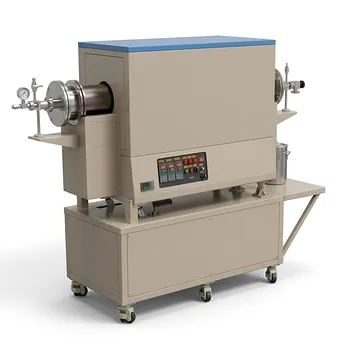
900°C Max Rotary Tube Furnace with 8 Inch 310S Alloy Tube and Optional Multi Zone Heating for Industrial Material Calcination
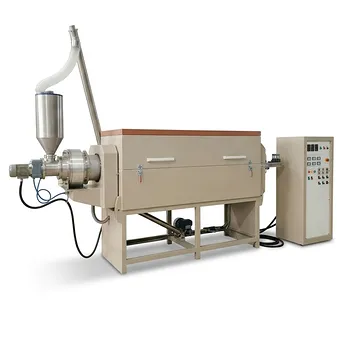
Continuous Feeding Rotary Tube Furnace for Industrial Powder Heat Treatment and Material Research

1100C Tube Furnace with Vacuum Flange and Programmable Temperature Controller for Material Science and Industrial Heat Treatment
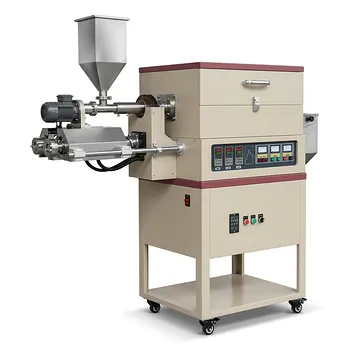
Laboratory Tilting Rotary Tubular Furnaces for Material Science and Industrial Heat Treatment

Compact High Temperature 1600C Tube Furnace with 50mm Alumina Tube and Vacuum Flanges for Material Sintering

High Temperature 1700C Tube Furnace with High Vacuum Turbomolecular Pump System and Multi Channel Mass Flow Controller Gas Mixer

High Temperature 1700C Vertical Tube Furnace for Powder Spherification and Material Sintering

Vertical 1700C Vacuum and Atmosphere Tube Furnace with 80mm Alumina Tube

1800C High Temperature Compact Vacuum Tube Furnace with 60mm OD Alumina Tube and Kanthal MoSi2 Heating Elements

High Temperature 1700C Six Zone Split Tube Furnace with Alumina Tube and Water Cooled Flanges
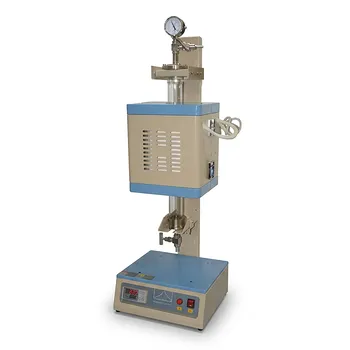
Compact Vertical Split Quartz Tube Furnace with Stainless Steel Vacuum Flanges for Rapid Thermal Quenching and Controlled Atmosphere Material Processing
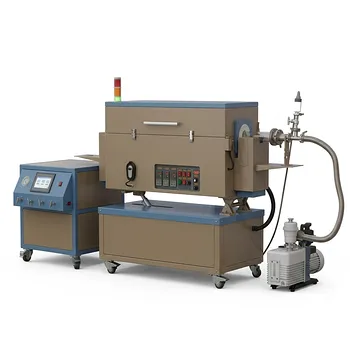
5 Inch Three Zone Rotary Tube Furnace with Integrated Gas Delivery System and 1200C Capability for Advanced Material CVD Processing
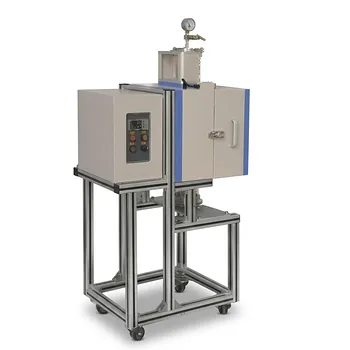
1200°C 5 Inch Vertical Quartz Tube Furnace with Stainless Steel Vacuum Flanges

High Temperature 1700C Benchtop Tube Furnace with 5 Inch Heating Zone High Purity Alumina Tube and Vacuum Sealing Flanges

High Temperature Automated 5 Inch Tube Furnace for Autonomous Material Research and Advanced Laboratory R&D
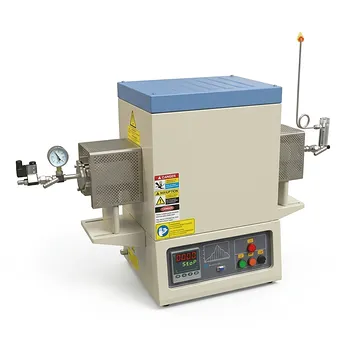
1700C Hydrogen Gas Tube Furnace with 60mm Alumina Process Tube and Integrated Hydrogen Safety Detector
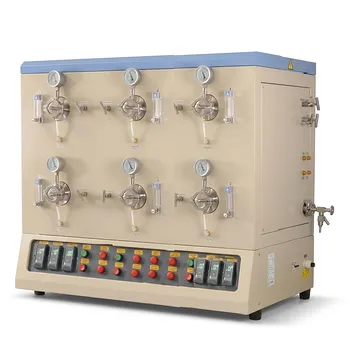
1200C High Throughput Multi Channel Tube Furnace with 50mm Quartz Tubes for Annealing and Material Phase Diagram Research

High Temperature 1700C Tube Furnace with 4 Inch OD Alumina Tube and Vacuum Sealing Flanges
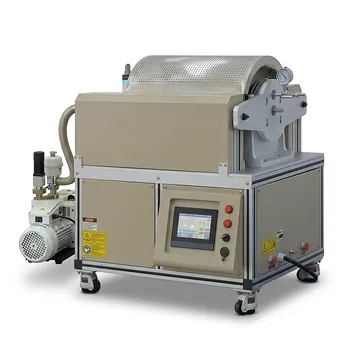
Automated 1200 C Tube Furnace for AI Material Research with 6 Inch OD and Sliding Flange