What are the primary components and operating principles of a tube furnace? Optimize Your Lab's Heat Treatment
Updated 5 months ago
The primary components of a tube furnace are an electric heating element, a thermally insulating matrix, and a removable cylindrical work tube. This device operates on the principle of Joule (resistive) heating, where electrical energy is converted into thermal energy and transferred radially inward to process samples within a controlled environment.
A tube furnace provides highly uniform thermal processing by surrounding a central work tube with resistance-heating elements. This configuration allows for precise temperature regulation and the isolation of materials from external contaminants or specific atmospheric conditions.
The Architectural Foundation: Key Components
The Heating Elements and Insulating Matrix
The "heart" of the furnace consists of high-resistance heating elements embedded within a thermally insulating matrix. This matrix is designed to reflect heat inward and minimize energy loss to the external environment.
This cylindrical chamber ensures that heat is distributed evenly around the circumference of the process area. By using high-performance insulation, the furnace can maintain stable temperatures for extended periods.
The Removable Work Tube
The work tube is the vessel where the actual material processing occurs. This component is typically removable, allowing users to choose materials (such as ceramic, quartz, or metal) that are compatible with their specific chemical or thermal requirements.
Because the tube is separate from the heating elements, it serves as a critical barrier. It protects the sample from the heating elements and prevents the elements from being damaged by volatile process gases.
Control System and Thermocouples
Modern tube furnaces rely on thermocouple feedback to maintain precise thermal conditions. Sensors placed near the heating elements or the work tube provide real-time data to a digital controller.
This system supports multi-zone control, allowing for different temperature profiles across the length of the tube. It also enables programmable profiles, which automate the complex ramping, soaking, and cooling phases of a process.
Operating Principles: How It Works
The Principle of Resistive Heating
The furnace functions through Joule heating, also known as resistive heating. When an electric current passes through the high-resistance elements, it generates thermal energy proportional to the resistance and the square of the current.
This method is highly efficient for targeted thermal applications. It allows the furnace to reach the extreme temperatures necessary for sintering, calcination, or chemical synthesis.
Radiant and Conductive Heat Transfer
Heat moves from the elements to the work tube via conduction, convection, and radiation. At lower temperatures, conduction through the matrix and convection of the gas inside the chamber play significant roles.
However, at high temperatures, infrared radiation becomes the dominant mode of heat transfer. The heating elements emit radiation that is absorbed by the outer surface of the work tube, which then heats the sample inside.
Controlled Atmosphere and Vacuum
One of the primary operating principles is the ability to maintain a controlled atmosphere. By sealing the ends of the work tube, users can introduce inert gases like Argon or Nitrogen, or reactive gases for processes like Chemical Vapor Deposition (CVD).
This isolation is essential for preventing oxidation or other unwanted chemical reactions. It allows for the purification of inorganic compounds and the treatment of sensitive materials in a pristine environment.
Critical Trade-offs and Considerations
Material Limitations of the Work Tube
The choice of tube material involves a direct trade-off between temperature resistance and chemical inertness. For example, quartz allows for visibility and high purity but may soften at temperatures where alumina remains rigid.
Thermal Shock and Cool-down Rates
Because the work tube is often a ceramic material, it is susceptible to thermal shock. Rapidly ramping the temperature or cooling the furnace too quickly can cause the tube to crack or shatter.
Precision vs. Throughput
Tube furnaces are optimized for uniformity and precision rather than high-volume processing. While they offer superior control over the environment and temperature gradients, they are generally limited by the volume of the work tube compared to larger batch furnaces.
Applying Tube Furnace Technology to Your Goals
Proper Selection for Specific Workflows
- If your primary focus is Chemical Vapor Deposition (CVD): Prioritize a multi-zone furnace with precise gas flow controls to ensure a uniform coating across the substrate.
- If your primary focus is Material Synthesis at extreme heat: Select a furnace with high-alumina insulation and elements rated for temperatures exceeding your target by at least 200°C.
- If your primary focus is preventing sample contamination: Utilize a high-purity quartz or ceramic work tube that can be easily removed and cleaned between different material batches.
By understanding these core components and thermal principles, you can effectively leverage the tube furnace to achieve high-precision results in your thermal processing applications.
Summary Table:
| Feature | Function/Detail | Key Benefit |
|---|---|---|
| Heating Elements | High-resistance coils embedded in insulation | Efficient heat generation and inward reflection |
| Work Tube | Removable ceramic, quartz, or metal vessel | Sample isolation and protection from contamination |
| Control System | Digital controller with thermocouple feedback | Precise temperature regulation and programmable cycles |
| Joule Heating | Conversion of electrical energy to thermal energy | Rapid reach of extreme temperatures for sintering |
| Atmosphere Control | Sealed environment for inert or reactive gases | Prevention of oxidation; ideal for CVD processes |
Elevate Your Research with Precision Thermal Solutions
Choosing the right heat treatment equipment is critical for achieving consistent, high-purity results in material science and industrial R&D. THERMUNITS is a leading manufacturer specializing in high-performance laboratory equipment designed to meet the most demanding thermal requirements.
Whether you need standard Tube Furnaces and CVD/PECVD systems or specialized Muffle, Vacuum, Atmosphere, Rotary, and Hot Press furnaces, we provide comprehensive solutions for advanced sintering, calcination, and synthesis. Our extensive product line also includes Dental Furnaces, Electric Rotary Kilns, Vacuum Induction Melting (VIM) furnaces, and Thermal Elements.
Let our experts help you find the ideal thermal processing configuration to ensure maximum uniformity and process efficiency. Contact THERMUNITS today to discuss your project requirements and receive a professional consultation!
Mentioned Products
- High Temperature Tube Furnace 1500C with Sliding Flanges and 50mm OD for Rapid Thermal Processing Fast Heating and Cooling
- Vertical 1700C Vacuum and Atmosphere Tube Furnace with 80mm Alumina Tube
- 1100C Tube Furnace with Vacuum Flange and Programmable Temperature Controller for Material Science and Industrial Heat Treatment
- Compact High Temperature 1600C Tube Furnace with 50mm Alumina Tube and Vacuum Flanges for Material Sintering
- 900°C Max Rotary Tube Furnace with 8 Inch 310S Alloy Tube and Optional Multi Zone Heating for Industrial Material Calcination
People Also Ask
- How are high-temperature tube furnaces utilized to repair etching damage? Precision Lattice Restoration Solutions
- What core conditions does a high-temperature tube furnace provide for rGO aerogels? Mastering Precision Synthesis.
- What role does a high-temperature tube furnace play in CVD synthesis of silicon nanowires? Master VLS Growth Precision.
- How does precision tube furnace control influence CoFe nanoparticle formation? Master Your Bimetallic Synthesis.
- What role does a high-temperature tube furnace play in the sulfidation heat treatment of CoS@C/MXene nanocomposites? Guide

Tech Team · ThermUnits
Last updated on Apr 14, 2026
Related Products

High Temperature Tube Furnace 1500C with Sliding Flanges and 50mm OD for Rapid Thermal Processing Fast Heating and Cooling

Vertical 1700C Vacuum and Atmosphere Tube Furnace with 80mm Alumina Tube

1100C Tube Furnace with Vacuum Flange and Programmable Temperature Controller for Material Science and Industrial Heat Treatment

Compact High Temperature 1600C Tube Furnace with 50mm Alumina Tube and Vacuum Flanges for Material Sintering
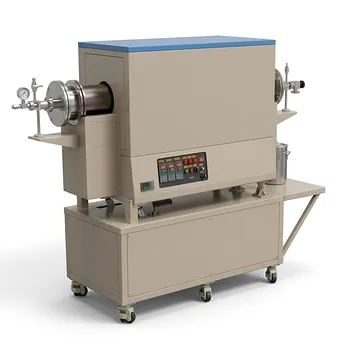
900°C Max Rotary Tube Furnace with 8 Inch 310S Alloy Tube and Optional Multi Zone Heating for Industrial Material Calcination

1700C Hydrogen Gas Tube Furnace with 60mm Alumina Process Tube and Integrated Hydrogen Safety Detector

High Temperature 1700C Tube Furnace with High Vacuum Turbomolecular Pump System and Multi Channel Mass Flow Controller Gas Mixer

5 Inch Three Zone Rotary Tube Furnace with Integrated Gas Delivery System and 1200C Capability for Advanced Material CVD Processing

Three Zone Tube Furnace with 11 Inch or 15 Inch Quartz Tube and Hinged Flanges for Vacuum Atmosphere Heat Treatment

1200C High Throughput Multi Channel Tube Furnace with 50mm Quartz Tubes for Annealing and Material Phase Diagram Research
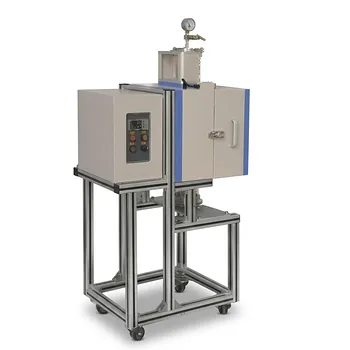
1200°C 5 Inch Vertical Quartz Tube Furnace with Stainless Steel Vacuum Flanges
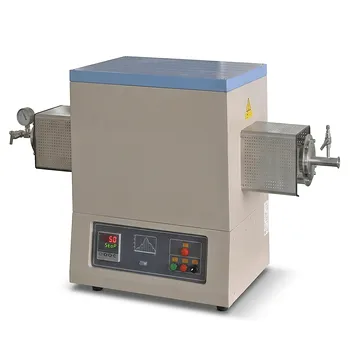
High Temperature 1700C Tube Furnace with 4 Inch OD Alumina Tube and Vacuum Sealing Flanges

High Temperature 1700C Benchtop Tube Furnace with 5 Inch Heating Zone High Purity Alumina Tube and Vacuum Sealing Flanges

High Temperature 1700C Six Zone Split Tube Furnace with Alumina Tube and Water Cooled Flanges

Compact Vertical Split Quartz Tube Furnace with Stainless Steel Vacuum Flanges for Rapid Thermal Quenching and Controlled Atmosphere Material Processing

1800C High Temperature Compact Vacuum Tube Furnace with 60mm OD Alumina Tube and Kanthal MoSi2 Heating Elements
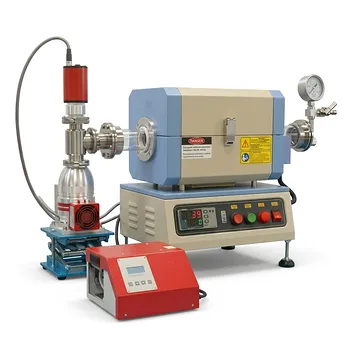
High Vacuum Compact Tube Furnace 1200C with Integrated Turbo Pump System and 8 Inch Heating Zone
High Throughput 1200C Four Channel Tube Furnace with 3 Inch Quartz Tubes for Multi Zone Annealing and Material Research

High Temperature Automated 5 Inch Tube Furnace for Autonomous Material Research and Advanced Laboratory R&D
