Why is the temperature control precision of a tube furnace vital? Optimize Co3O4@layered-TiO2 Synthesis Quality
Updated 3 months ago
Temperature precision is the definitive factor in the synthesis of Co3O4@layered-TiO2 composites.
During the annealing process, a precision tube furnace executes a strict heating profile—typically a 2 °C/min ramp to a 300 °C isothermal stage. This exactitude ensures that cobalt precursors decompose steadily into Co3O4 nanoparticles while simultaneously promoting the moderate oxidation of Ti3C2 MXene into layered TiO2. Without this level of control, the delicate balance required to form Co–O–Ti covalent bonds is lost, leading to material sintering or detrimental phase changes.
Core Takeaway: High-precision thermal management transforms a generic heating process into a controlled chemical reaction. For Co3O4@layered-TiO2, this precision ensures that phase transitions and covalent bonding occur simultaneously and uniformly, preventing the loss of nanostructure through over-oxidation or thermal coarsening.
Synchronizing Chemical Transformations
Controlled Decomposition of Cobalt Precursors
The transition from cobalt precursors to Co3O4 nanoparticles is a kinetic process sensitive to the rate of energy input. A precise 2 °C/min ramp rate allows for a steady release of volatile components, preventing the rapid gas evolution that could rupture the developing nanostructure.
Regulated Oxidation of Ti3C2 MXene
The transformation of Ti3C2 MXene into layered TiO2 must be "moderate" to maintain the desired composite architecture. Precision control prevents the aggressive oxidation that would otherwise collapse the layered structure into bulk titania particles, thereby preserving the high specific surface area.
Interfacial Engineering and Structural Stability
Facilitating Co–O–Ti Covalent Bonding
The primary goal of this specific annealing stage is the creation of Co–O–Ti covalent bonds at the interface of the two materials. These bonds are essential for structural stability and efficient charge transfer; however, they only form within a narrow thermodynamic window provided by a stable 300 °C environment.
Preventing Sintering and Phase Transitions
Excessive temperatures or uncontrolled fluctuations can trigger sintering, where individual nanoparticles fuse into larger, less active masses. Precision control keeps the thermal energy below the threshold for grain coarsening, ensuring the material retains its engineered "skeleton" and fiber-stacked morphology.
Understanding the Trade-offs
The Risks of Thermal Over-Shooting
If the furnace temperature exceeds the target by even a small margin, the van der Waals forces and covalent structures can degrade. This leads to abnormal grain growth and the potential destruction of the conductive network, a phenomenon seen in other sensitive materials like vanadium dioxide and bismuth telluride.
The Consequences of Inadequate Heating
Conversely, insufficient precision resulting in lower-than-required temperatures fails to initiate interface diffusion. Without enough thermal energy to bridge the gap between the cobalt and titanium layers, the Co–O–Ti bonds will not form, resulting in a weak mechanical mixture rather than a high-performance composite.
Optimizing the Annealing Profile for Your Goal
How to Apply This to Your Project
To achieve the highest performance for Co3O4@layered-TiO2 materials, your thermal strategy must align with your specific structural objectives:
- If your primary focus is maximizing interfacial bond strength: Prioritize the isothermal holding time at 300 °C to allow for complete covalent bonding without initiating phase changes.
- If your primary focus is maintaining a high surface area: Ensure the heating ramp rate is strictly limited (e.g., 2 °C/min) to prevent the rapid collapse of the MXene layers during oxidation.
- If your primary focus is preventing nanoparticle coarsening: Utilize a furnace with high-precision cooling rates to "lock in" the nanostructure immediately after the isothermal stage.
Precise thermodynamic management is the invisible hand that guides the microscopic evolution of advanced materials from simple precursors into complex, functional architectures.
Summary Table:
| Parameter | Targeted Control | Impact on Co3O4@layered-TiO2 |
|---|---|---|
| Heating Ramp | 2 °C/min | Prevents nanostructure rupture from rapid gas evolution |
| Annealing Temp | 300 °C (Exact) | Enables Co–O–Ti covalent bonding & moderate MXene oxidation |
| Atmosphere | Controlled Environment | Prevents over-oxidation of TiO2 layers and phase loss |
| Cooling Rate | Precision Cooling | "Locks in" nanostructure and prevents grain coarsening |
Elevate Your Advanced Material Synthesis with THERMUNITS
Precision is the difference between a failed experiment and a breakthrough. At THERMUNITS, we provide the high-performance thermal solutions required for sensitive material engineering like Co3O4@layered-TiO2 composites. Our state-of-the-art Tube Furnaces, CVD/PECVD systems, and Vacuum Atmosphere Furnaces offer the industry-leading temperature stability and ramp control necessary to prevent sintering and ensure perfect interfacial bonding.
As a global leader in high-temperature laboratory equipment for material science and industrial R&D, we offer a comprehensive range of solutions including:
- Muffle, Vacuum, and Atmosphere Furnaces
- Rotary and Hot Press Furnaces
- Dental and Vacuum Induction Melting (VIM) Furnaces
- Thermal Elements and Specialized Electric Kilns
Don't let thermal fluctuations compromise your research. Contact THERMUNITS today to find the perfect precision heating solution for your laboratory's needs!
References
- Hong Tang, Hiroshi Sakaguchi. Ampere-level oxygen evolution reaction driven by Co<sub>3</sub>O<sub>4</sub> nanoparticles supported on layered TiO<sub>2</sub>. DOI: 10.1039/d4cy00557k
Mentioned Products
- High Temperature Tube Furnace 1500C with Sliding Flanges and 50mm OD for Rapid Thermal Processing Fast Heating and Cooling
- Vertical 1700C Vacuum and Atmosphere Tube Furnace with 80mm Alumina Tube
- 1100C Tube Furnace with Vacuum Flange and Programmable Temperature Controller for Material Science and Industrial Heat Treatment
- Compact High Temperature 1600C Tube Furnace with 50mm Alumina Tube and Vacuum Flanges for Material Sintering
- 900°C Max Rotary Tube Furnace with 8 Inch 310S Alloy Tube and Optional Multi Zone Heating for Industrial Material Calcination
People Also Ask
- How are high-temperature tube furnaces utilized to repair etching damage? Precision Lattice Restoration Solutions
- What core conditions does a high-temperature tube furnace provide for rGO aerogels? Mastering Precision Synthesis.
- What role does a high-temperature tube furnace play in CVD synthesis of silicon nanowires? Master VLS Growth Precision.
- How does precision tube furnace control influence CoFe nanoparticle formation? Master Your Bimetallic Synthesis.
- What role does a high-temperature tube furnace play in the sulfidation heat treatment of CoS@C/MXene nanocomposites? Guide

Tech Team · ThermUnits
Last updated on Jun 03, 2026
Related Products

High Temperature Tube Furnace 1500C with Sliding Flanges and 50mm OD for Rapid Thermal Processing Fast Heating and Cooling

Vertical 1700C Vacuum and Atmosphere Tube Furnace with 80mm Alumina Tube

1100C Tube Furnace with Vacuum Flange and Programmable Temperature Controller for Material Science and Industrial Heat Treatment

Compact High Temperature 1600C Tube Furnace with 50mm Alumina Tube and Vacuum Flanges for Material Sintering
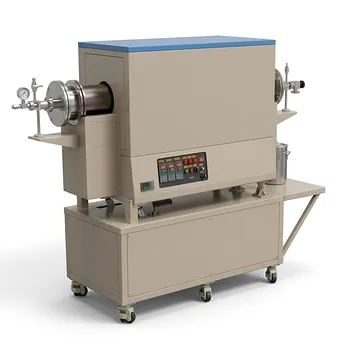
900°C Max Rotary Tube Furnace with 8 Inch 310S Alloy Tube and Optional Multi Zone Heating for Industrial Material Calcination
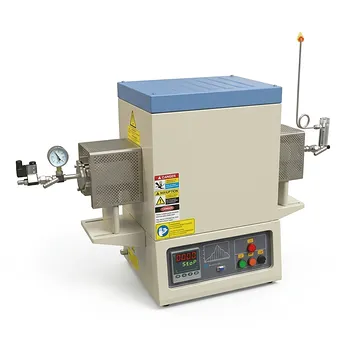
1700C Hydrogen Gas Tube Furnace with 60mm Alumina Process Tube and Integrated Hydrogen Safety Detector

High Temperature 1700C Tube Furnace with High Vacuum Turbomolecular Pump System and Multi Channel Mass Flow Controller Gas Mixer
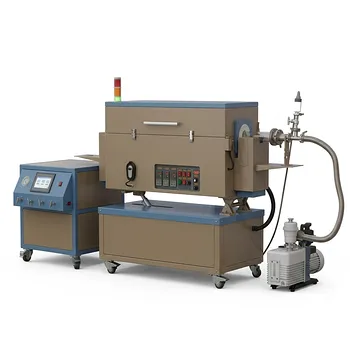
5 Inch Three Zone Rotary Tube Furnace with Integrated Gas Delivery System and 1200C Capability for Advanced Material CVD Processing
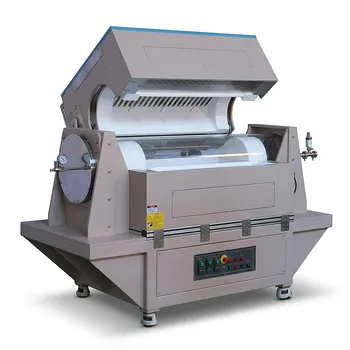
Three Zone Tube Furnace with 11 Inch or 15 Inch Quartz Tube and Hinged Flanges for Vacuum Atmosphere Heat Treatment
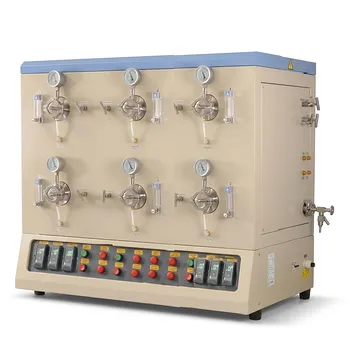
1200C High Throughput Multi Channel Tube Furnace with 50mm Quartz Tubes for Annealing and Material Phase Diagram Research

1200°C 5 Inch Vertical Quartz Tube Furnace with Stainless Steel Vacuum Flanges

High Temperature 1700C Benchtop Tube Furnace with 5 Inch Heating Zone High Purity Alumina Tube and Vacuum Sealing Flanges
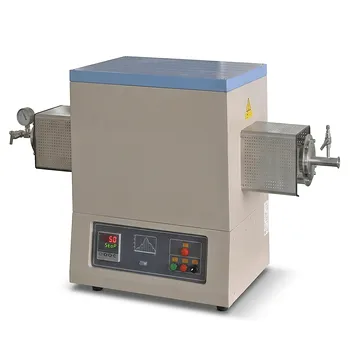
High Temperature 1700C Tube Furnace with 4 Inch OD Alumina Tube and Vacuum Sealing Flanges

1800C High Temperature Compact Vacuum Tube Furnace with 60mm OD Alumina Tube and Kanthal MoSi2 Heating Elements

High Temperature 1700C Six Zone Split Tube Furnace with Alumina Tube and Water Cooled Flanges

Compact Vertical Split Quartz Tube Furnace with Stainless Steel Vacuum Flanges for Rapid Thermal Quenching and Controlled Atmosphere Material Processing

High Vacuum Compact Tube Furnace 1200C with Integrated Turbo Pump System and 8 Inch Heating Zone
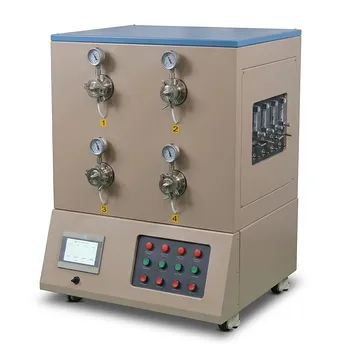
High Throughput 1200C Four Channel Tube Furnace with 3 Inch Quartz Tubes for Multi Zone Annealing and Material Research

High Temperature Automated 5 Inch Tube Furnace for Autonomous Material Research and Advanced Laboratory R&D
