What are the cross-cutting advantages of tube furnaces in terms of energy efficiency and scalability? Efficiency & Scale
Updated 5 months ago
Tube furnaces represent a peak in thermal processing efficiency, primarily due to their low-mass insulation and precise electric heating elements. These systems allow for seamless scalability by enabling the interchange of work-tube diameters and heated lengths, facilitating a range of production from microgram samples to multi-kilogram batches within a single modular framework.
The core advantage of the tube furnace lies in its ability to marry high-purity environmental control with a modular design, ensuring that energy is concentrated on the sample rather than the surrounding structure while allowing for rapid scaling of throughput.
The Architecture of Thermal Efficiency
Advanced Low-Mass Insulation
Modern tube furnaces utilize low-mass ceramic fiber insulation, which has a very low thermal conductivity and low heat storage capacity. This ensures that the energy consumed is used primarily to heat the process environment rather than the furnace body itself, leading to faster heat-up times.
Precision Electric Heating
By utilizing electric heating elements positioned directly around the work tube, these furnaces achieve high thermal transfer efficiency. This proximity allows for granular control over the temperature profile, minimizing energy waste during long-duration annealing or reduction processes.
Environmental Isolation and Heat Retention
The gas-tight containment of the work tube not only protects the material from contamination but also prevents heat loss associated with air convection. Because the heated volume is strictly confined to the tube's interior, the system maintains a stable thermal equilibrium with minimal power input.
Modular Scalability for Diverse Workloads
Interchangeable Work-Tube Geometry
The primary strength of the tube furnace is its modular architecture, where different work-tube diameters and lengths can be swapped into the same heating unit. This allows researchers to transition from small-scale testing to larger pilot runs without investing in entirely new furnace infrastructures.
Scaling from Micrograms to Kilograms
Because the heated zones are adaptable, a single system can process microgram quantities for high-end material synthesis or multi-kilogram batches for industrial production. This flexibility is critical for facilities that need to balance experimental R&D with small-batch manufacturing.
Split-Tube Designs for Rapid Throughput
The implementation of a split-tube furnace design allows the heating chamber to be opened lengthwise for easy access. This enables rapid cooling of the process tube and faster sample changeovers, effectively scaling the operational capacity by reducing downtime between cycles.
Understanding the Technical Constraints
Volumetric Limitations
While tube furnaces are highly efficient, they are inherently limited by the cylindrical geometry of the work tube. This makes them less suitable for bulky or irregularly shaped components compared to box furnaces, which offer more versatile internal volumes.
Temperature Gradients and Zone Control
As the length of the tube increases to accommodate higher throughput, maintaining thermal uniformity becomes more challenging. Users must often implement multi-zone heating controls to compensate for heat loss at the tube ends, which adds complexity to the system configuration.
Material Compatibility and Tube Wear
High-temperature operations or the use of corrosive gases can lead to degradation of the work tube over time. Scaling up production increases the thermal stress on these components, requiring a careful selection of tube materials (e.g., quartz, alumina, or metal alloys) to match the process chemistry.
Optimizing Your Furnace Configuration
Selecting the right setup depends on your specific balance of throughput, purity, and budget.
- If your primary focus is rapid material prototyping: Utilize a split-tube furnace with interchangeable quartz tubes to allow for fast cooling and high-visibility monitoring of reaction progress.
- If your primary focus is high-purity production scaling: Invest in a multi-zone furnace with gas-tight end seals and vacuum capability to ensure uniform heating across large-volume batches.
- If your primary focus is energy cost reduction: Prioritize systems with high-grade low-mass insulation and digital interlocks that optimize heating cycles based on real-time load requirements.
By leveraging the modular nature of tube furnaces, you can achieve a highly efficient thermal process that grows alongside your production requirements while maintaining absolute environmental integrity.
Summary Table:
| Feature | Efficiency & Scalability Benefit |
|---|---|
| Low-Mass Insulation | Reduces heat storage; enables faster heat-up times and lower power consumption. |
| Modular Geometry | Allows interchangeable work-tubes for scaling from micro-samples to pilot batches. |
| Gas-Tight Seals | Minimizes convective heat loss and ensures a high-purity processing environment. |
| Split-Tube Design | Enables rapid cooling and high throughput by reducing downtime between cycles. |
Elevate Your Research with THERMUNITS Thermal Solutions
As a leading manufacturer of high-temperature laboratory equipment, THERMUNITS specializes in delivering energy-efficient and scalable thermal processing systems. Whether you require Tube, Muffle, Vacuum, or Atmosphere furnaces, or specialized systems like CVD/PECVD, Dental, Electric Rotary Kilns, and Vacuum Induction Melting (VIM) units, we provide the precision and reliability needed for advanced material science.
Why choose THERMUNITS?
- Versatile Design: Scale your production seamlessly with our modular tube furnace systems.
- Energy Efficiency: Benefit from cutting-edge low-mass insulation and precision heating.
- Expert Support: Our team helps you optimize configurations for R&D and industrial growth.
Contact THERMUNITS Today to Optimize Your Lab
Mentioned Products
- High Temperature Tube Furnace 1500C with Sliding Flanges and 50mm OD for Rapid Thermal Processing Fast Heating and Cooling
- Vertical 1700C Vacuum and Atmosphere Tube Furnace with 80mm Alumina Tube
- 1100C Tube Furnace with Vacuum Flange and Programmable Temperature Controller for Material Science and Industrial Heat Treatment
- Compact High Temperature 1600C Tube Furnace with 50mm Alumina Tube and Vacuum Flanges for Material Sintering
- 900°C Max Rotary Tube Furnace with 8 Inch 310S Alloy Tube and Optional Multi Zone Heating for Industrial Material Calcination
People Also Ask
- How are high-temperature tube furnaces utilized to repair etching damage? Precision Lattice Restoration Solutions
- What core conditions does a high-temperature tube furnace provide for rGO aerogels? Mastering Precision Synthesis.
- What role does a high-temperature tube furnace play in CVD synthesis of silicon nanowires? Master VLS Growth Precision.
- How does precision tube furnace control influence CoFe nanoparticle formation? Master Your Bimetallic Synthesis.
- What role does a high-temperature tube furnace play in the sulfidation heat treatment of CoS@C/MXene nanocomposites? Guide

Tech Team · ThermUnits
Last updated on Apr 14, 2026
Related Products

High Temperature Tube Furnace 1500C with Sliding Flanges and 50mm OD for Rapid Thermal Processing Fast Heating and Cooling

Vertical 1700C Vacuum and Atmosphere Tube Furnace with 80mm Alumina Tube

1100C Tube Furnace with Vacuum Flange and Programmable Temperature Controller for Material Science and Industrial Heat Treatment

Compact High Temperature 1600C Tube Furnace with 50mm Alumina Tube and Vacuum Flanges for Material Sintering
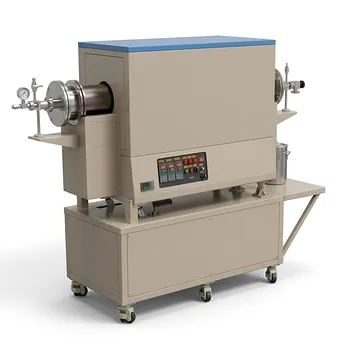
900°C Max Rotary Tube Furnace with 8 Inch 310S Alloy Tube and Optional Multi Zone Heating for Industrial Material Calcination
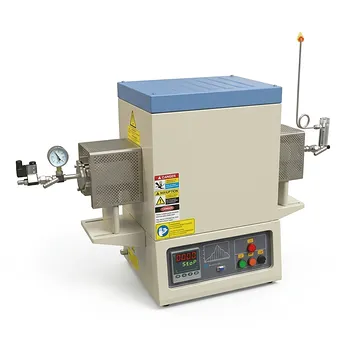
1700C Hydrogen Gas Tube Furnace with 60mm Alumina Process Tube and Integrated Hydrogen Safety Detector

High Temperature 1700C Tube Furnace with High Vacuum Turbomolecular Pump System and Multi Channel Mass Flow Controller Gas Mixer
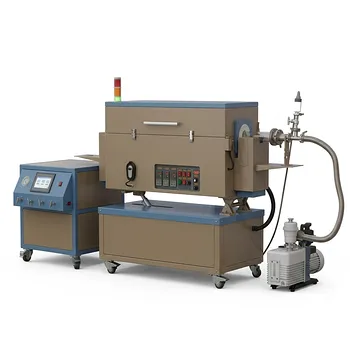
5 Inch Three Zone Rotary Tube Furnace with Integrated Gas Delivery System and 1200C Capability for Advanced Material CVD Processing
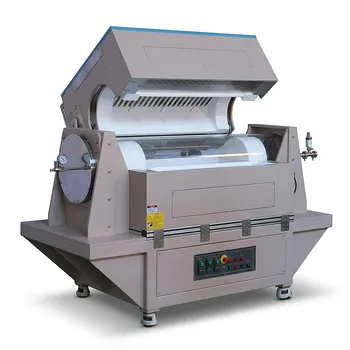
Three Zone Tube Furnace with 11 Inch or 15 Inch Quartz Tube and Hinged Flanges for Vacuum Atmosphere Heat Treatment
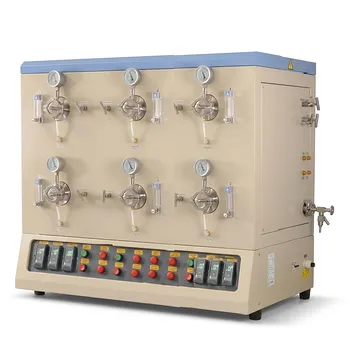
1200C High Throughput Multi Channel Tube Furnace with 50mm Quartz Tubes for Annealing and Material Phase Diagram Research

1200°C 5 Inch Vertical Quartz Tube Furnace with Stainless Steel Vacuum Flanges
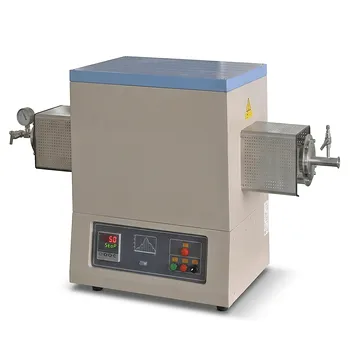
High Temperature 1700C Tube Furnace with 4 Inch OD Alumina Tube and Vacuum Sealing Flanges

High Temperature 1700C Benchtop Tube Furnace with 5 Inch Heating Zone High Purity Alumina Tube and Vacuum Sealing Flanges

High Temperature 1700C Six Zone Split Tube Furnace with Alumina Tube and Water Cooled Flanges

Compact Vertical Split Quartz Tube Furnace with Stainless Steel Vacuum Flanges for Rapid Thermal Quenching and Controlled Atmosphere Material Processing

1800C High Temperature Compact Vacuum Tube Furnace with 60mm OD Alumina Tube and Kanthal MoSi2 Heating Elements

High Vacuum Compact Tube Furnace 1200C with Integrated Turbo Pump System and 8 Inch Heating Zone
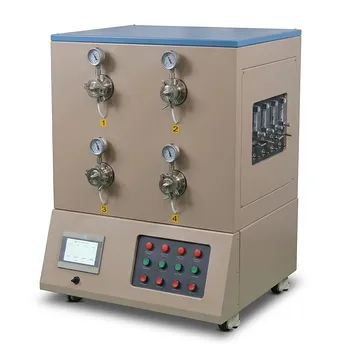
High Throughput 1200C Four Channel Tube Furnace with 3 Inch Quartz Tubes for Multi Zone Annealing and Material Research

High Temperature Automated 5 Inch Tube Furnace for Autonomous Material Research and Advanced Laboratory R&D
