Why is inert atmosphere protection essential when performing phosphorization treatments in a precision tube furnace? Ensure High-Purity Synthesis
Updated 3 months ago
Inert atmosphere protection is the critical safeguard against the rapid oxidation of reactants and products during high-temperature phosphorization. Without a strict flow of high-purity inert gas like argon or nitrogen, phosphorus sources and the resulting transition metal phosphides (TMPs) would react with oxygen, leading to impure phases and degraded material performance. This controlled environment ensures that the chemical transformation occurs in a neutral or reducing state, which is essential for synthesizing high-purity phosphorus-doped nano-arrays.
Core Takeaway: Inert atmosphere protection prevents the oxidative destruction of air-sensitive phosphorus precursors and transition metal phosphides at high temperatures, ensuring the structural and electronic integrity of the final material.
Preventing Material Degradation and Oxidation
Protecting Phosphorus Sources
Phosphorus sources, such as sodium hypophosphite, are highly susceptible to oxidation when heated. In a precision tube furnace, these sources decompose to release phosphorus vapor or phosphine gas. If oxygen is present, these vapors will oxidize prematurely, preventing the intended doping or phosphorization of the target substrate.
Stability of Transition Metal Phosphides
The target products, known as transition metal phosphides (TMPs), are inherently unstable in air at elevated temperatures. An inert atmosphere ensures that once these phosphides are formed, they do not revert to oxides or incorporate oxygen impurities. This protection is vital for maintaining the specific chemical identity of the synthesized nano-arrays.
Preserving Electrocatalytic and Structural Integrity
Controlling Electronic Valence States
The presence of even trace amounts of oxygen can introduce impurities that alter the electronic valence states of the material's active sites. For applications like electrocatalysis, these changes can significantly diminish the material's efficiency. A strictly oxygen-free environment maintains the precise electronic structure required for high-performance catalytic reactions.
Preventing Substrate Combustion
Phosphorization often involves organic components or carbon substrates that act as supports for the metal species. At high temperatures (e.g., 450°C to 700°C), these carbon materials will undergo oxidative combustion if exposed to air. An inert flow prevents the "burn-off" of these supports, preserving the highly conductive carbon skeleton.
The Role of Inert Gas as a Process Facilitator
Uniform Anion Exchange
In gas-phase phosphidation, the inert gas acts as a carrier for the phosphorus vapor generated during the process. This continuous flow ensures a uniform solid-gas interface, allowing for a consistent anion exchange reaction across the entire sample. This uniformity is necessary to achieve complex structures with abundant lattice defects.
Thermal and Chemical Homogenization
A precision tube furnace provides a stable thermal environment, but the gas flow adds a layer of chemical homogenization. By displacing reactive gases, the inert environment allows for precise control over the heating rate and holding time. This ensures that polymer precursors decompose predictably to form well-distributed active species.
Understanding the Trade-offs
Gas Purity and Flow Rate Risks
While inert atmospheres are essential, the purity of the gas (e.g., 99.999% Argon) is a common point of failure. Using lower-grade gases can introduce trace moisture or oxygen, which still leads to surface oxidation. Additionally, an improperly calibrated flow rate may fail to carry phosphorus vapor effectively or, conversely, may cool the furnace work zone unevenly.
System Sealing and Vacuum Integrity
The effectiveness of an inert atmosphere is entirely dependent on the mechanical integrity of the tube furnace. Small leaks in the vacuum seals or flange connections can allow atmospheric oxygen to enter via diffusion, even under positive gas pressure. This can lead to localized oxidation "hotspots" on the samples, resulting in inconsistent experimental data.
How to Apply This to Your Project
Making the Right Choice for Your Goal
- If your primary focus is high-purity catalytic TMPs: Use high-purity argon and a pre-treatment vacuum cycle to ensure all residual oxygen is purged before heating.
- If your primary focus is carbon-supported phosphorus arrays: Maintain a continuous positive pressure of nitrogen to prevent the oxidative combustion of the carbon skeleton at temperatures exceeding 400°C.
- If your primary focus is uniform lattice defects: Calibrate your gas flow rate to ensure the phosphorus vapor is carried consistently across the substrate surface during the anion exchange phase.
Maintaining a rigorous inert environment is the only way to ensure the chemical path of phosphorization remains predictable and the resulting materials remain high-performing.
Summary Table:
| Function | Key Benefit | Critical Requirement |
|---|---|---|
| Reactant Protection | Prevents oxidation of P sources & TMPs | 99.999% High-purity inert gas |
| Structural Integrity | Prevents carbon substrate combustion | Continuous positive gas pressure |
| Reaction Uniformity | Facilitates gas-phase anion exchange | Calibrated flow rate control |
| Electronic Precision | Maintains target valence states | Vacuum-sealed tube environment |
Elevate Your Material Research with THERMUNITS Precision
As a global leader in high-temperature laboratory equipment, THERMUNITS provides the advanced thermal processing solutions required for complex chemical transformations like phosphorization. Our precision Tube Furnaces, Atmosphere Furnaces, and CVD/PECVD systems are engineered with superior vacuum integrity and sophisticated gas control to eliminate oxidation risks and ensure the purity of your nano-arrays.
From Vacuum Induction Melting (VIM) to Rotary Kilns and Hot Press Furnaces, we support material science and industrial R&D with robust, reliable heat treatment technology.
Ready to optimize your thermal process? Contact our expert team today for a tailored solution that secures your experimental results.
References
- Siyang Xing, Jie Ma. Reactive P and S co-doped porous hollow nanotube arrays for high performance chloride ion storage. DOI: 10.1038/s41467-024-49319-5
Mentioned Products
- High Temperature Tube Furnace 1500C with Sliding Flanges and 50mm OD for Rapid Thermal Processing Fast Heating and Cooling
- Vertical 1700C Vacuum and Atmosphere Tube Furnace with 80mm Alumina Tube
- 1100C Tube Furnace with Vacuum Flange and Programmable Temperature Controller for Material Science and Industrial Heat Treatment
- Compact High Temperature 1600C Tube Furnace with 50mm Alumina Tube and Vacuum Flanges for Material Sintering
- 900°C Max Rotary Tube Furnace with 8 Inch 310S Alloy Tube and Optional Multi Zone Heating for Industrial Material Calcination
People Also Ask
- How are high-temperature tube furnaces utilized to repair etching damage? Precision Lattice Restoration Solutions
- What role does a high-temperature tube furnace play in CVD synthesis of silicon nanowires? Master VLS Growth Precision.
- What core conditions does a high-temperature tube furnace provide for rGO aerogels? Mastering Precision Synthesis.
- What role does a high-temperature tube furnace play in the sulfidation heat treatment of CoS@C/MXene nanocomposites? Guide
- How does precision tube furnace control influence CoFe nanoparticle formation? Master Your Bimetallic Synthesis.

Tech Team · ThermUnits
Last updated on Jun 03, 2026
Related Products
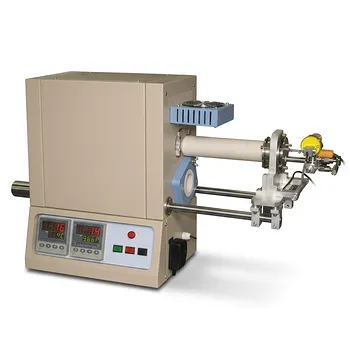
High Temperature Tube Furnace 1500C with Sliding Flanges and 50mm OD for Rapid Thermal Processing Fast Heating and Cooling

Vertical 1700C Vacuum and Atmosphere Tube Furnace with 80mm Alumina Tube

1100C Tube Furnace with Vacuum Flange and Programmable Temperature Controller for Material Science and Industrial Heat Treatment

Compact High Temperature 1600C Tube Furnace with 50mm Alumina Tube and Vacuum Flanges for Material Sintering
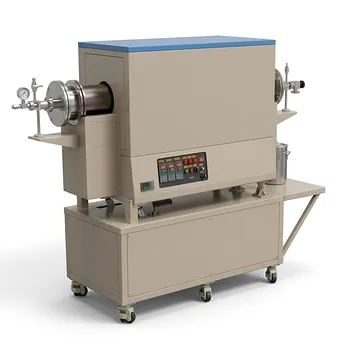
900°C Max Rotary Tube Furnace with 8 Inch 310S Alloy Tube and Optional Multi Zone Heating for Industrial Material Calcination
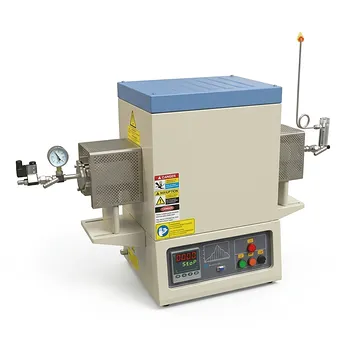
1700C Hydrogen Gas Tube Furnace with 60mm Alumina Process Tube and Integrated Hydrogen Safety Detector

High Temperature 1700C Tube Furnace with High Vacuum Turbomolecular Pump System and Multi Channel Mass Flow Controller Gas Mixer
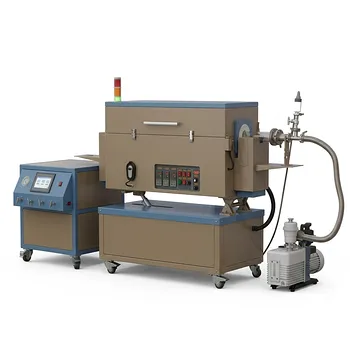
5 Inch Three Zone Rotary Tube Furnace with Integrated Gas Delivery System and 1200C Capability for Advanced Material CVD Processing
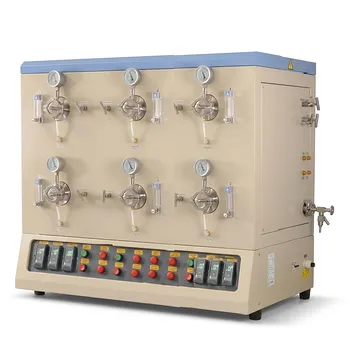
1200C High Throughput Multi Channel Tube Furnace with 50mm Quartz Tubes for Annealing and Material Phase Diagram Research

Three Zone Tube Furnace with 11 Inch or 15 Inch Quartz Tube and Hinged Flanges for Vacuum Atmosphere Heat Treatment

1200°C 5 Inch Vertical Quartz Tube Furnace with Stainless Steel Vacuum Flanges
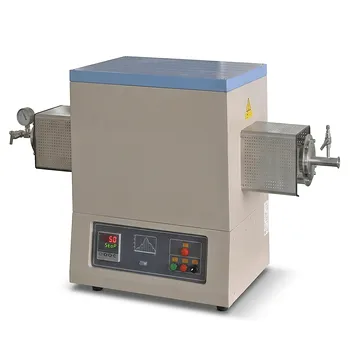
High Temperature 1700C Tube Furnace with 4 Inch OD Alumina Tube and Vacuum Sealing Flanges

High Temperature 1700C Benchtop Tube Furnace with 5 Inch Heating Zone High Purity Alumina Tube and Vacuum Sealing Flanges

High Temperature 1700C Six Zone Split Tube Furnace with Alumina Tube and Water Cooled Flanges

Compact Vertical Split Quartz Tube Furnace with Stainless Steel Vacuum Flanges for Rapid Thermal Quenching and Controlled Atmosphere Material Processing

1800C High Temperature Compact Vacuum Tube Furnace with 60mm OD Alumina Tube and Kanthal MoSi2 Heating Elements
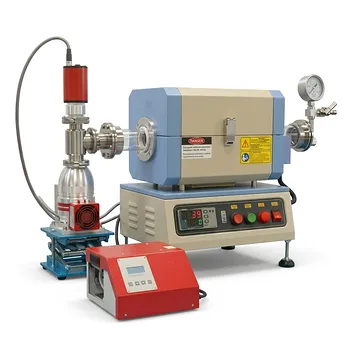
High Vacuum Compact Tube Furnace 1200C with Integrated Turbo Pump System and 8 Inch Heating Zone
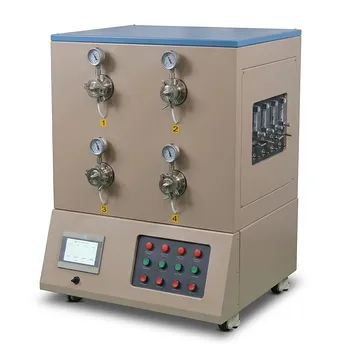
High Throughput 1200C Four Channel Tube Furnace with 3 Inch Quartz Tubes for Multi Zone Annealing and Material Research

High Temperature Automated 5 Inch Tube Furnace for Autonomous Material Research and Advanced Laboratory R&D
