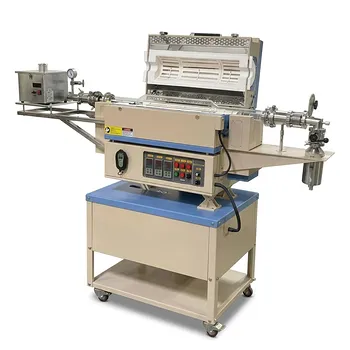
How does a controlled atmosphere tube furnace facilitate the phosphorization of MOF-CoFe-P? Expert Synthesis Guide
Updated 6 months ago
A controlled atmosphere tube furnace facilitates the phosphorization of MOF-CoFe-P by providing a precise thermal environment and a stable inert gas flow that drives gas-solid phase reactions. It enables the directional delivery of phosphorus vapor—generated from the thermal decomposition of a source like sodium hypophosphite—directly to the MOF precursor, ensuring phosphorus doping without oxidizing the metal components or destroying the carbon framework.
Core Takeaway: The tube furnace acts as a specialized chemical reactor that manages the spatial delivery of phosphorus vapor under an inert argon shroud. This precise control allows for the chemical transformation of metal-organic frameworks into transition metal phosphides while preserving their intricate nanomorphology and electrical conductivity.
The Mechanics of Gas-Phase Phosphorization
Directional Vapor Transport
The tube furnace utilizes a directional gas flow to transport phosphorus vapor from an upstream source to the downstream MOF precursor. By placing the phosphorus source (such as sodium hypophosphite) in a quartz boat at the front of the gas stream, the carrier gas (argon) ensures the vapor passes uniformly through the precursor powder.
Thermal Decomposition Management
The furnace maintains a precise temperature field, typically around 300°C, which is necessary to trigger the thermal decomposition of the phosphorus source. This controlled heat ensures a steady release of phosphorus-containing gas, allowing for a consistent depth of phosphorization and a uniform distribution of phosphorus atoms within the CoFe matrix.
Kinetic Control of the Reaction
By adjusting the heating rate (e.g., 5°C/min) and the gas flow rate, the tube furnace allows researchers to fine-tune the kinetics of the phosphorization process. This precision is vital for achieving a complete structural transition to the iron/cobalt phosphide phase without causing the material to sinter or lose its active surface area.
Preserving Material Integrity and Morphology
Prevention of Uncontrolled Oxidation
The continuous supply of high-purity argon creates an inert environment that effectively prevents the oxidation of CoFe components. This stable atmosphere is critical for maintaining specific metal oxidation states (Co2+/Co3+ and Fe2+/Fe3+), which are essential for the material's eventual electrochemical performance.
Structural Stabilization of the Carbon Framework
Unlike vacuum conditions, which can lead to structural collapse, the atmospheric pressure of argon supports the MOF during the carbonization and phosphorization process. The organic ligands within the MOF carbonize to form a conductive carbon matrix that encapsulates the metal nanoparticles, ensuring structural integrity and high electrical conductivity.
Induction of Surface Defects
The controlled thermal environment promotes the generation of oxygen vacancies and other surface defects. These vacancies serve as active sites in electrochemical applications, significantly enhancing the material's chemical adsorption capacity for ions and improving its overall catalytic activity.
Understanding the Trade-offs and Pitfalls
The Risk of Non-Uniform Doping
If the gas flow rate is too low or the precursor is packed too densely in the quartz boat, the phosphorus vapor may not penetrate the entire sample. This leads to gradient phosphorization, where the surface is over-phosphorized while the core remains unreacted, resulting in inconsistent performance.
Volatile Byproduct Management
The thermal decomposition of phosphorus sources can produce corrosive or toxic byproducts. Failure to properly vent the exhaust or maintain the quartz tube's seals can lead to equipment degradation and safety hazards, making atmosphere monitoring a critical operational requirement.
How to Apply This to Your Project
Recommendations for Experimental Design
- If your primary focus is uniform phase purity: Ensure the phosphorus source is placed strictly upstream and use a higher carrier gas flow rate to maintain a constant vapor pressure across the precursor.
- If your primary focus is preserving nanomorphology: Use a slower heating rate (e.g., 2-5°C/min) to allow the carbon framework to stabilize before the peak phosphorization temperature is reached.
- If your primary focus is maximizing catalytic activity: Experiment with the phosphorization temperature to optimize the concentration of oxygen vacancies and phosphorus doping levels without causing nanoparticle leaching.
By masterfully controlling the intersection of temperature, atmosphere, and vapor flow, the tube furnace transforms a delicate MOF into a robust, high-performance CoFe-P electrocatalyst.
Summary Table:
| Process Step | Furnace Role | Critical Outcome |
|---|---|---|
| Vapor Transport | Directional gas flow management | Ensures uniform phosphorus distribution |
| Thermal Management | Precise temperature field (e.g., 300°C) | Stable release of phosphorus vapor |
| Atmosphere Control | Continuous inert Argon supply | Prevents oxidation of metal components |
| Kinetic Regulation | Controlled heating rates | Preserves morphology & active surface area |
Elevate Your Material Research with THERMUNITS
Are you looking to achieve precise phase purity and structural integrity in your MOF-derived catalysts? THERMUNITS is a leading manufacturer of high-performance laboratory equipment tailored for material science and industrial R&D.
Our Controlled Atmosphere Tube Furnaces and CVD/PECVD systems are engineered to provide the stable thermal environments and gas-flow precision necessary for complex processes like phosphorization. From Muffle and Vacuum furnaces to Rotary kilns and Hot Press systems, we provide the tools required for next-generation material synthesis.
Why choose THERMUNITS for your lab?
- Precision Control: Master heating rates and gas flow for consistent experimental results.
- Versatile Solutions: A wide range of equipment including Tube, Dental, and Vacuum Induction Melting (VIM) furnaces.
- Industry Expertise: Dedicated support for researchers developing high-performance electrocatalysts.
Contact THERMUNITS Today to find the perfect thermal solution for your laboratory and accelerate your R&D breakthroughs!
References
- Lukuan Hao, Shuiyun Shen. Bimetallic MOF-derived CoFe phosphide nanomaterials imparted efficient synergism for oxygen evolution reaction. DOI: 10.1088/1742-6596/2840/1/012015
Mentioned Products
- Compact Vertical Split Quartz Tube Furnace with Stainless Steel Vacuum Flanges for Rapid Thermal Quenching and Controlled Atmosphere Material Processing
- Compact Hybrid Muffle and Tube Furnace for 1000C Controlled Atmosphere Laboratory Material Sintering
- 1200C High Temperature Atmosphere Controlled Vertical Quenching Tube Furnace with 4 Inch Quartz Tube
- 1200°C Atmosphere Controlled Automatic Bottom Loading Furnace with 6 Inch Quartz Tube
- High Temperature Tilting Rotary Tubular Furnace for Continuous Powder Thermal Processing and Controlled Atmosphere Sintering
People Also Ask
- Why integrate a vertical split tube furnace with hydraulic loading for HSECC? Essential for In-Situ Fire Simulation.
- What is the role of a split vertical tube furnace during flash sintering of 8YSZ and 20SDC? Master Ultra-Fast R&D
- What is the primary engineering purpose for using a customized ventilation hood when operating a split tube furnace? RCF Safety
- Why is a quartz tube furnace necessary for phosphorus-doped MoS2/GO preparation? Ensure Purity & Precise Synthesis
- What is the primary function of a Quartz Tube Furnace in ZnO VLS growth? Master High-Precision Nanowire Synthesis

Tech Team · ThermUnits
Last updated on Apr 14, 2026
Related Products
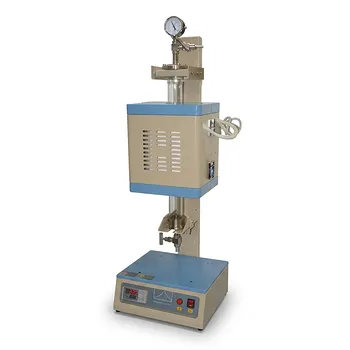
Compact Vertical Split Quartz Tube Furnace with Stainless Steel Vacuum Flanges for Rapid Thermal Quenching and Controlled Atmosphere Material Processing
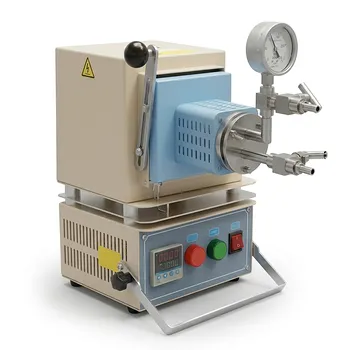
Compact Hybrid Muffle and Tube Furnace for 1000C Controlled Atmosphere Laboratory Material Sintering
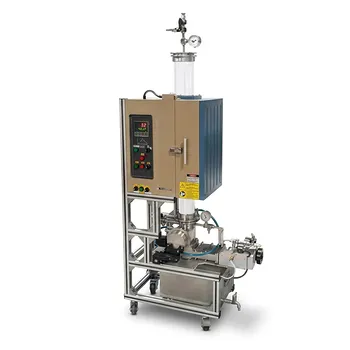
1200C High Temperature Atmosphere Controlled Vertical Quenching Tube Furnace with 4 Inch Quartz Tube
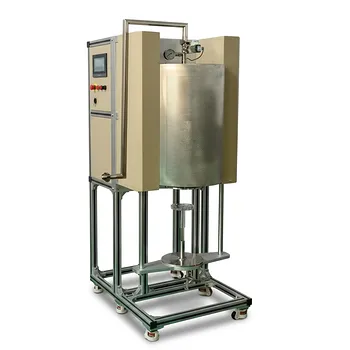
1200°C Atmosphere Controlled Automatic Bottom Loading Furnace with 6 Inch Quartz Tube
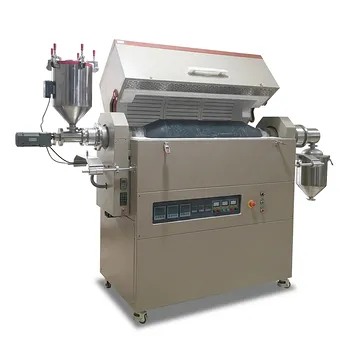
High Temperature Tilting Rotary Tubular Furnace for Continuous Powder Thermal Processing and Controlled Atmosphere Sintering
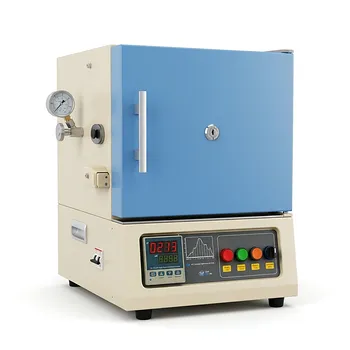
1200C Hybrid Muffle and Tube Furnace for Material Research with Dual Atmosphere Control Quartz Tubes
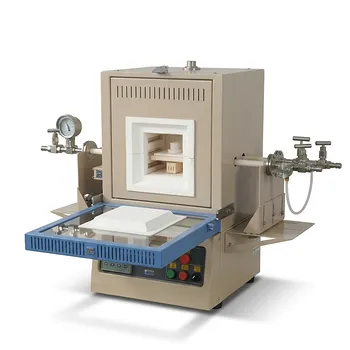
1700C Compact Hybrid Furnace with Dual Layer Box Sintering and Controlled Atmosphere Alumina Tubes
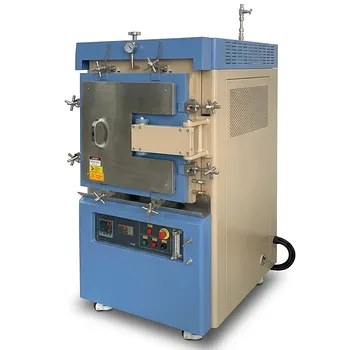
Atmosphere Controlled Muffle Furnace 1700C Maximum Temperature 80L High Capacity Vacuum Inert Gas Box Furnace
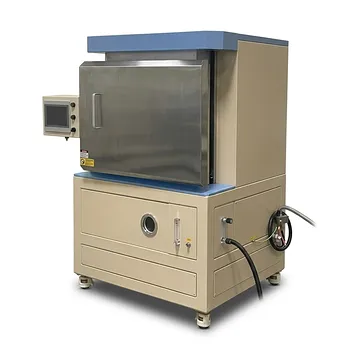
1650C High Temperature Atmosphere Controlled Box Furnace with 65L Chamber for Advanced Material Sintering and Industrial Heat Treatment
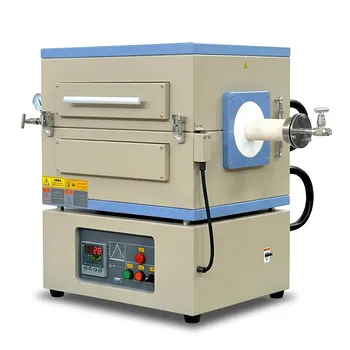
1500°C Split Tube Furnace with Alumina Tube and Vacuum Sealing Flanges for Material Research
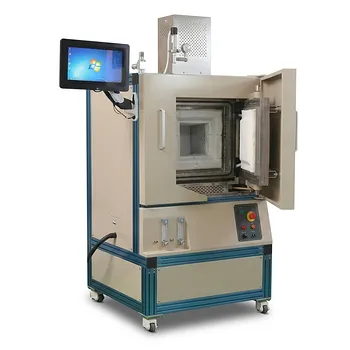
High Temperature Oxygen and Inert Atmosphere Controlled Furnace 8 Liter 1700C Sintering System for Advanced Materials RD
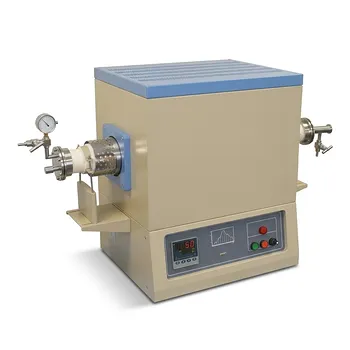
1700C High Temperature Alumina Tube Furnace with 18 Inch Heated Zone and Vacuum Sealing Flanges
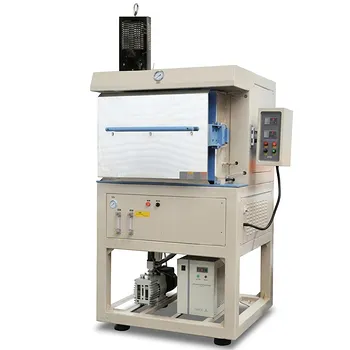
1200C Hydrogen Atmosphere Box Furnace with 5 Heated Sides and 64L Chamber
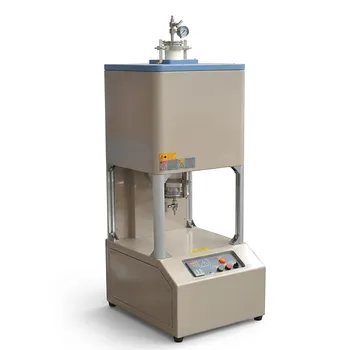
Vertical 1700C Vacuum and Atmosphere Tube Furnace with 80mm Alumina Tube
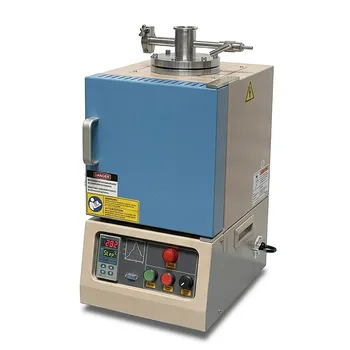
High Temperature Hybrid Muffle and Tube Furnace with Vacuum Capability and PID Control
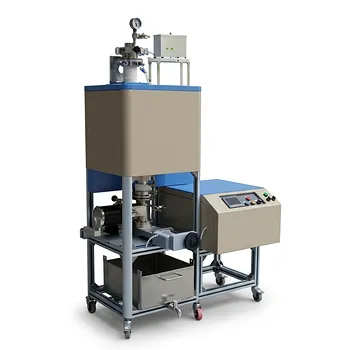
High Temperature 1700C Vertical Tube Furnace for Powder Spherification and Material Sintering
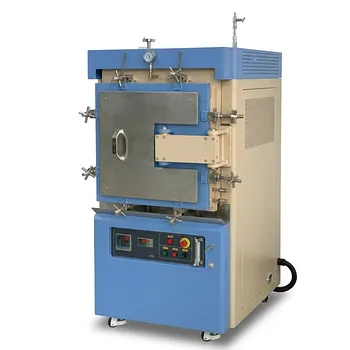
High Temperature Economic Hydrogen Gas Box Furnace 1600C Atmosphere Controlled Thermal Processing System 65L Capacity
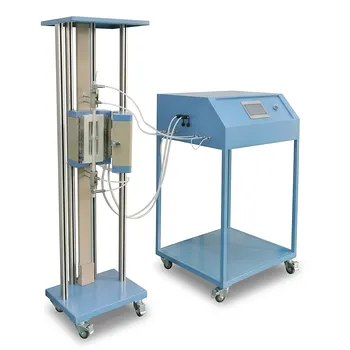
High Temperature Vertical Tube Furnace for Small Solid Oxide Fuel Cell Testing with Four Channel Gas Control
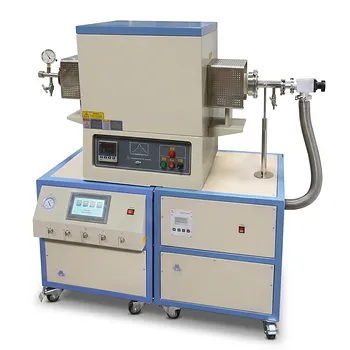
High Temperature 1700C Tube Furnace with High Vacuum Turbomolecular Pump System and Multi Channel Mass Flow Controller Gas Mixer