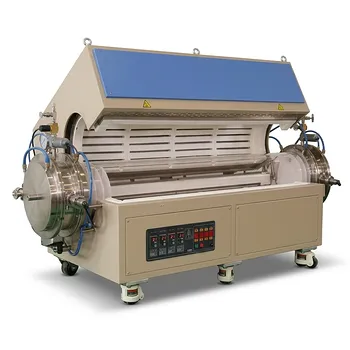
What is the primary engineering purpose for using a customized ventilation hood when operating a split tube furnace? RCF Safety
Updated 3 months ago
The primary engineering purpose of a customized ventilation hood is to eliminate operator exposure to airborne Refractory Ceramic Fiber (RCF) dust. This specific dust is released whenever the furnace body is opened, closed, or moved, creating a significant respiratory hazard. By enclosing the furnace, the hood captures these harmful aerosols before they can enter the laboratory breathing zone.
A customized ventilation hood serves as a critical engineering control designed to isolate the physical movement of a split tube furnace from the laboratory environment. It ensures that mechanical disturbances to the internal insulation do not compromise air quality or operator safety.
The Mechanism of Exposure in Split Tube Furnaces
The Nature of Split Tube Design
A split tube furnace is unique because its heating chamber is hinged and can be opened lengthwise. This design allows for rapid access to the reaction chamber and the easy insertion of complex, pre-assembled process tubes.
The Source of the Hazard
The internal insulation of these furnaces is typically composed of Refractory Ceramic Fibers (RCF). While these fibers are excellent for heat retention, they are fragile and prone to degradation over time through repeated thermal cycling.
Release During Mechanical Disturbance
When the furnace is opened or closed, the mechanical friction and vibration cause microscopic fibers to break away from the insulation. These particles become airborne aerosols that are easily inhaled if not properly contained.
Engineering Controls vs. Personal Protection
Capturing at the Source
The customized hood is an engineering control, which is the most effective way to manage a hazard. Instead of relying on the operator to wear a respirator, the hood physically prevents the contaminant from spreading.
Maintaining the Breathing Zone
By providing a controlled space with dedicated airflow, the hood ensures that the breathing zone of the laboratory remains clean. This is vital for maintaining a safe working environment in multi-user facilities.
Mitigating Secondary Contamination
Without a hood, RCF dust can settle on laboratory surfaces, leading to secondary exposure later. The ventilation hood ensures these fibers are extracted and filtered immediately upon release.
Understanding the Trade-offs
Design and Ergonomics
Customized hoods can sometimes limit the physical range of motion for an operator. If the hood is poorly designed, it may make the insertion of large or fragile process tubes more difficult, increasing the risk of mechanical breakage.
Maintenance and Airflow Balance
Adding a ventilation hood requires regular airflow monitoring and maintenance. If the extraction rate is too low, the hood fails to contain the dust; if it is too high, it may create unwanted thermal gradients within the furnace itself.
Cost and Space Requirements
Implementing a customized solution is more expensive and space-intensive than using a standard bench-top setup. Laboratories must weigh these logistical requirements against the non-negotiable need for operator safety.
How to Apply This to Your Laboratory
Evaluating Your Safety Protocol
When integrating a split tube furnace into your workflow, the presence of RCF insulation necessitates a dedicated containment strategy. The following recommendations can guide your implementation:
- If your primary focus is regulatory compliance: Ensure the ventilation hood meets local OSHA or ISO standards for particulate extraction to guarantee a legally safe workplace.
- If your primary focus is experimental throughput: Design the hood with transparent, sliding access panels to allow for high visibility and easy manipulation of the furnace without compromising airflow.
- If your primary focus is long-term equipment health: Use the hood to prevent the buildup of corrosive or abrasive dust on other sensitive laboratory electronics nearby.
By prioritizing the use of a customized ventilation hood, you transform a split tube furnace from a potential respiratory hazard into a safe and efficient research tool.
Summary Table:
| Feature | Engineering Purpose and Benefit |
|---|---|
| Primary Goal | Eliminate operator exposure to airborne Refractory Ceramic Fiber (RCF) dust |
| Mechanism | Captures hazardous aerosols at the source during mechanical disturbance |
| Safety Type | Engineering control that isolates the hazard from the breathing zone |
| Risk Mitigation | Prevents secondary contamination of lab surfaces and electronics |
Elevate Laboratory Safety with THERMUNITS Solutions
At THERMUNITS, we understand that precision in material science requires uncompromising safety. As a leading manufacturer of high-temperature equipment, we provide integrated thermal processing solutions designed to protect your team and your research. Whether you are utilizing our Tube, Vacuum, and Atmosphere Furnaces, CVD/PECVD systems, or industrial rotary kilns, our engineering expertise ensures your R&D environment remains productive and free from hazardous particulates.
Maximize your lab's efficiency and operator safety—Contact our heat treatment experts today to customize your high-temperature setup!
References
- Nina Z. Janković, Desirée L. Plata. Particles in a box: novel design and evaluation of an adaptable engineering control enclosure for a common split tube furnace to eliminate occupational exposure to refractory ceramic insulation fibers. DOI: 10.1039/d3en00041a
Mentioned Products
- 1250C Split Tube Furnace with 3 Inch Mullite Tube and Vacuum Sealing Flanges for Precision Thermal Processing
- High Temperature 1200C Split Tube Furnace with Hinged Vacuum Flanges and 4 Inch Quartz Tube for Laboratory Research
- Split Vertical Tube Furnace with 1200C Quartz Tube and Stainless Steel Vacuum Flanges for Rapid Thermal Processing
- 24 Inch Three Zone Split Tube Furnace with Optional Quartz Tube and Vacuum Flange System for High Temperature Material Synthesis
- High Temperature 1200C Split Tube Furnace with Optional Quartz Tube Sizes and Vacuum Sealing Flanges for Material Science Research
People Also Ask
- What are the specific advantages and use cases for a split tube furnace? Optimize Lab Efficiency & Material Research
- How does a split tube furnace contribute to the thermal stabilization of Clignin@H-TiO2? Achieve Structural Precision
- What are the advantages of using a split tube furnace for heating a catalytic reactor? Boost Efficiency and Precision
- How does a split tube furnace facilitate debinding of ceramic green bodies? Master Precise Thermal & Atmosphere Control
- What is the core function of a laboratory split-tube furnace in carbon dioxide capture testing? - Key Thermal Precision

Tech Team · ThermUnits
Last updated on Jun 03, 2026
Related Products
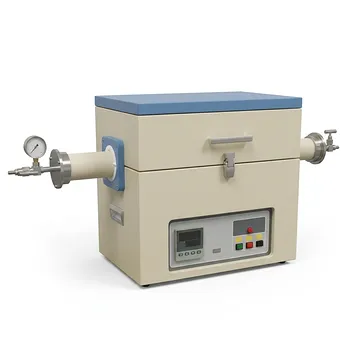
1250C Split Tube Furnace with 3 Inch Mullite Tube and Vacuum Sealing Flanges for Precision Thermal Processing
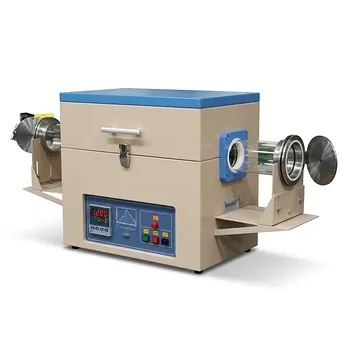
High Temperature 1200C Split Tube Furnace with Hinged Vacuum Flanges and 4 Inch Quartz Tube for Laboratory Research
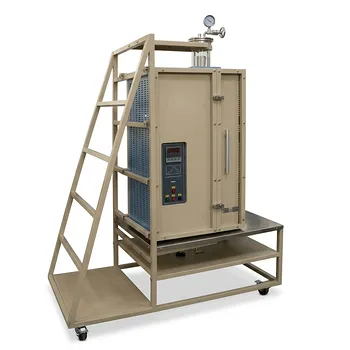
Split Vertical Tube Furnace with 1200C Quartz Tube and Stainless Steel Vacuum Flanges for Rapid Thermal Processing
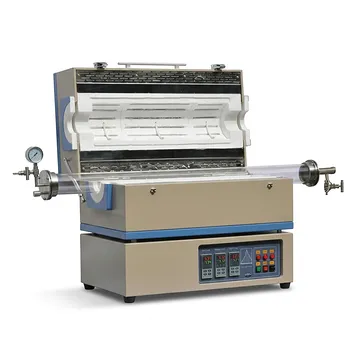
24 Inch Three Zone Split Tube Furnace with Optional Quartz Tube and Vacuum Flange System for High Temperature Material Synthesis
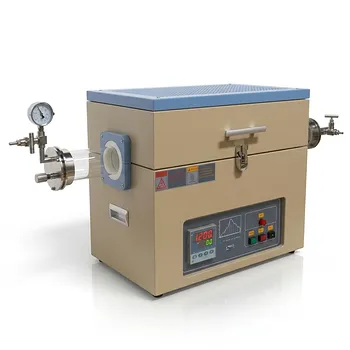
High Temperature 1200C Split Tube Furnace with Optional Quartz Tube Sizes and Vacuum Sealing Flanges for Material Science Research
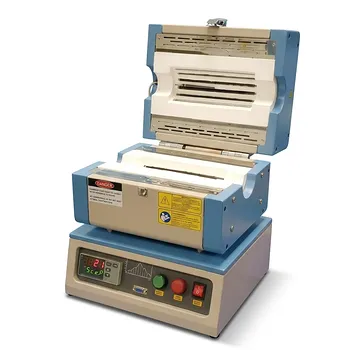
1250C Compact Split Tube Furnace with 8 Inch Heating Zone and Programmable Controller
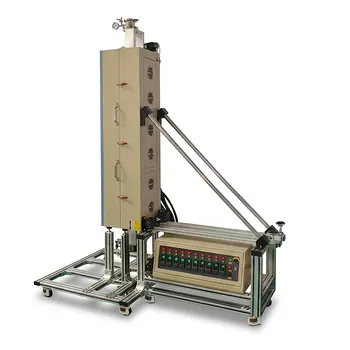
1200°C 10-Zone Split Tube Furnace with Horizontal and Vertical Mounting for Multi-Zone Thermal Gradients and Large Diameter Material Processing
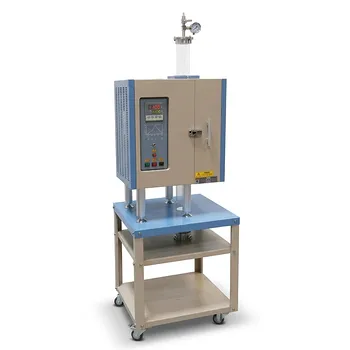
1100°C Split Vertical Tube Furnace with 80mm Quartz Tube and Stainless Steel Vacuum Flanges
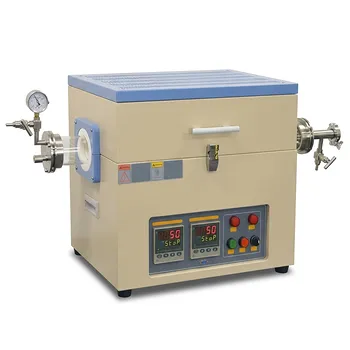
1200C Dual Zone Split Tube Furnace with Fused Quartz Tube and Vacuum Flanges Available in 60mm 80mm and 100mm Diameters
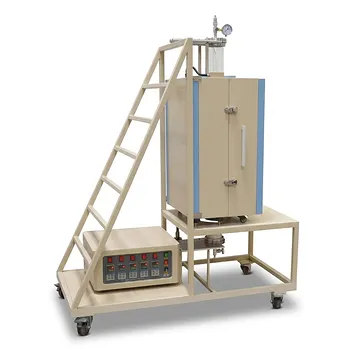
Five Zone Split Vertical Tube Furnace 1200C Max with 4 Inch Quartz Tube and Stainless Steel Vacuum Flanges

Compact Vertical Split Quartz Tube Furnace with Stainless Steel Vacuum Flanges for Rapid Thermal Quenching and Controlled Atmosphere Material Processing

High Temperature 1700C Six Zone Split Tube Furnace with Alumina Tube and Water Cooled Flanges
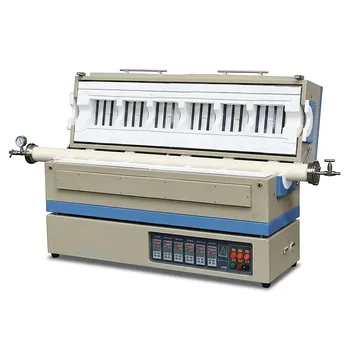
Six Zone Split Tube Furnace with Alumina Tube and Vacuum Flanges for 1500C High Temperature Thermal Processing and CVD
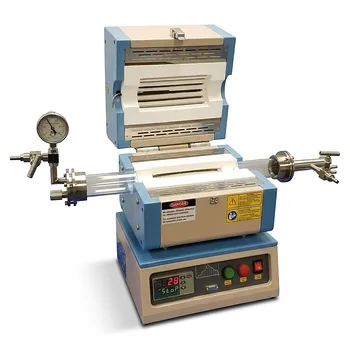
Compact Split Tube Furnace with Integrated Vacuum System and Precision Temperature Calibrator
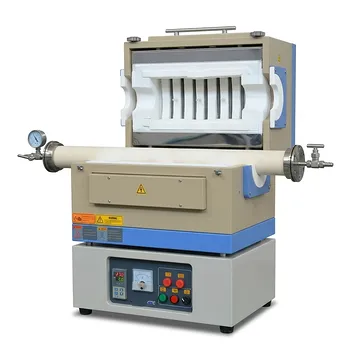
High Temperature 1600C Split Tube Furnace Vacuum Flanges Valves Optional 60mm 80mm Alumina Tube
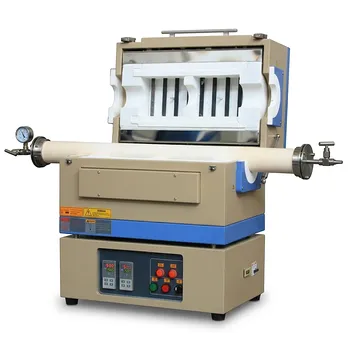
1500C Two Zone Split Tube Furnace with Vacuum Flange and 80mm Alumina Tube
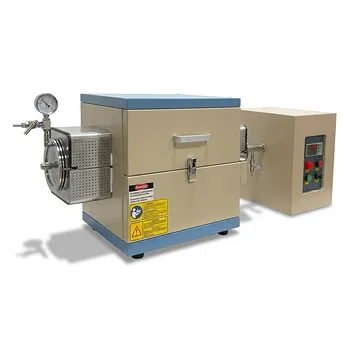
1200C High Temperature 5 Inch Split Vacuum Tube Furnace with 12 Inch Heating Zone and Separated PID Controller
Compact Split Tube Furnace with Insertable Temperature Calibrator and Integrated Vacuum System
High Temperature Split Tube Furnace 1500C for Material Research Vacuum and Atmosphere Thermal Processing