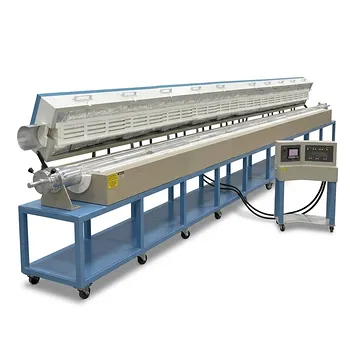
Why integrate a vertical split tube furnace with hydraulic loading for HSECC? Essential for In-Situ Fire Simulation.
Updated 3 months ago
The integration of a vertical split tube furnace with a high-capacity hydraulic loading system is essential for capturing the "thermomechanical coupling" effect in High-Strength Engineered Cementitious Composites (HSECC). This specific configuration allows for the application of constant mechanical stress—such as a 40% preload—simultaneously with temperatures reaching up to 600°C. This setup is required because high-strength materials exhibit significantly more severe strength loss while they are hot than after they have been allowed to cool.
In-situ testing using integrated furnace and loading systems is the only way to accurately simulate real-world fire conditions for HSECC. This approach reveals critical strength attenuation during heat exposure that traditional residual (post-cooling) tests fail to detect.
Simulating Real-World Fire Stress
The Role of Thermomechanical Coupling
In a real fire, structural elements like columns are under constant compressive loads while temperatures rise. Integration ensures that the mechanical and thermal stresses are applied at the same time, rather than sequentially.
Replicating Preload Conditions
HSECC is often used in load-bearing applications where it may support a 40% preload during a fire event. A high-capacity hydraulic system provides the necessary force to maintain this load while the furnace encloses the specimen in a stable thermal environment.
Environmental Continuity
The vertical split tube design is used to fully enclose the specimen, ensuring it is subjected to a constant, uniform high-temperature environment. This prevents thermal gradients that could lead to inaccurate data during the compression cycle.
The Discrepancy Between In-Situ and Residual Testing
The Phenomenon of Severe Strength Attenuation
High-strength materials typically show much higher strength attenuation during high-temperature exposure than in a residual state. Testing a cooled specimen often leads to an overestimation of the material's structural integrity.
Real-Time Observation of Mechanical Response
In-situ testing allows researchers to observe the mechanical response of HSECC in real-time as the heat penetrates the matrix. This is vital for identifying the exact point of structural failure during a simulated fire.
Limitations of Static Cold Testing
Static testing conducted after a specimen has cooled misses the transient thermal strains and pore pressure increases that occur during heating. These internal stresses are primary drivers of failure in high-strength cementitious materials.
Understanding the Trade-offs
System Complexity and Calibration
Integrating high-capacity hydraulics with high-temperature furnaces increases operational complexity. The loading rods and sensors must be thermally shielded to prevent heat transfer from damaging the hydraulic components or skewing measurements.
Material Specificity
While this setup is ideal for HSECC, the high-strength nature of the material means that any misalignment in the loading system can lead to explosive spalling or premature failure. Precision in both thermal control and load application is required to get repeatable results.
Applying This Knowledge to Your Project
Making the Right Choice for Your Goal
When determining your testing protocol for high-strength composites, consider the final structural application of the material.
- If your primary focus is structural safety during active fire: Use integrated in-situ testing to capture the lowest possible strength floor of the material.
- If your primary focus is post-fire repairability: Residual strength testing is sufficient to determine if the structure can be salvaged after it has cooled.
- If your primary focus is material development: Use thermomechanical coupling to identify how different fiber reinforcements react to simultaneous heat and pressure.
Selecting the right integrated system ensures that your data reflects the harsh reality of fire stress rather than the safer conditions of a cooled laboratory environment.
Summary Table:
| Feature | Function in HSECC Testing | Research Benefit |
|---|---|---|
| Vertical Split Tube Design | Encloses specimens for uniform heating | Eliminates thermal gradients & data inaccuracies |
| Hydraulic Loading | Applies constant mechanical stress (e.g., 40% preload) | Simulates real-world load-bearing fire conditions |
| In-Situ Configuration | Simultaneous thermal and mechanical stress | Captures severe strength loss missed by residual tests |
| Real-Time Monitoring | Observes mechanical response during heating | Identifies exact structural failure points in fire |
Elevate Your Material Research with THERMUNITS
As a leading manufacturer of high-temperature laboratory equipment for material science and industrial R&D, THERMUNITS understands the critical need for precision in thermomechanical testing. Whether you are developing High-Strength Engineered Cementitious Composites (HSECC) or advanced ceramics, our comprehensive range of solutions—including Tube Furnaces, Hot Press Furnaces, Vacuum Induction Melting (VIM), and CVD/PECVD systems—is designed to provide stable thermal environments and reliable performance.
Partner with us to achieve:
- Precise Thermal Control: Essential for capturing real-time strength attenuation in high-strength materials.
- Customized Integration: Seamlessly combine heating solutions with mechanical loading setups for in-situ analysis.
- Versatile Solutions: Specialized equipment covering Muffle, Atmosphere, Rotary, and Dental applications.
Ready to simulate real-world conditions with unmatched accuracy? Contact our technical team today to find the perfect thermal processing solution for your laboratory.
References
- S. Rawat, Y. X. Zhang. In‐situ compressive and tensile performances of high strength engineered cementitious composite at elevated temperatures. DOI: 10.1002/suco.202300724
Mentioned Products
- 1100°C Split Vertical Tube Furnace with 80mm Quartz Tube and Stainless Steel Vacuum Flanges
- Split Vertical Tube Furnace with 1200C Quartz Tube and Stainless Steel Vacuum Flanges for Rapid Thermal Processing
- Compact Vertical Split Quartz Tube Furnace with Stainless Steel Vacuum Flanges for Rapid Thermal Quenching and Controlled Atmosphere Material Processing
- High Temperature 1700C Vertical Split Tube Furnace for Material Quenching and Single Crystal Growth
- High Temperature Vertical Split Tube Furnace with PID Temperature Controller for 1 and 2 Inch Processing Tubes
People Also Ask
- What is the role of a split vertical tube furnace during flash sintering of 8YSZ and 20SDC? Master Ultra-Fast R&D
- What is the primary engineering purpose for using a customized ventilation hood when operating a split tube furnace? RCF Safety
- What are the advantages of 1100°C tube furnaces for ORR catalysts? Boost Conductivity and Structural Stability.
- What is the function of a laboratory-grade vertical tube furnace in fast pyrolysis? Optimize Composite Research.
- How does a vertical tube furnace facilitate thermoelectric alloy melting? Precision synthesis for material homogeneity.

Tech Team · ThermUnits
Last updated on Jun 03, 2026
Related Products
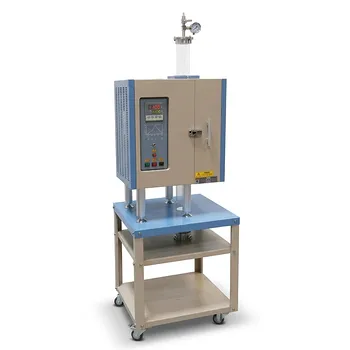
1100°C Split Vertical Tube Furnace with 80mm Quartz Tube and Stainless Steel Vacuum Flanges
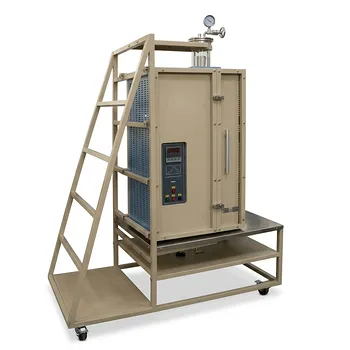
Split Vertical Tube Furnace with 1200C Quartz Tube and Stainless Steel Vacuum Flanges for Rapid Thermal Processing
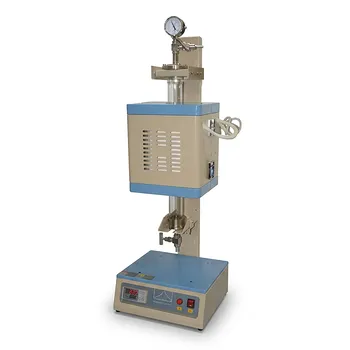
Compact Vertical Split Quartz Tube Furnace with Stainless Steel Vacuum Flanges for Rapid Thermal Quenching and Controlled Atmosphere Material Processing
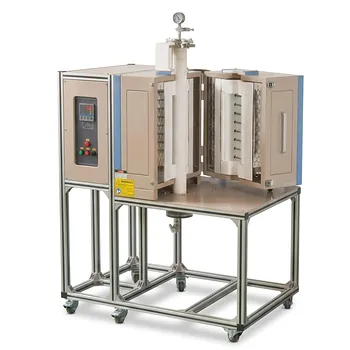
High Temperature 1700C Vertical Split Tube Furnace for Material Quenching and Single Crystal Growth
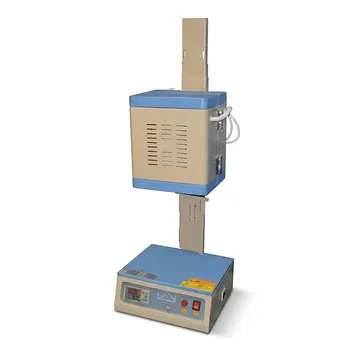
High Temperature Vertical Split Tube Furnace with PID Temperature Controller for 1 and 2 Inch Processing Tubes
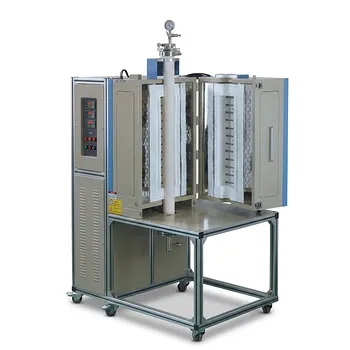
Three Zone Heating Split Vertical Tube Furnace 1700 High Temperature Vacuum Atmosphere Thermal Process System
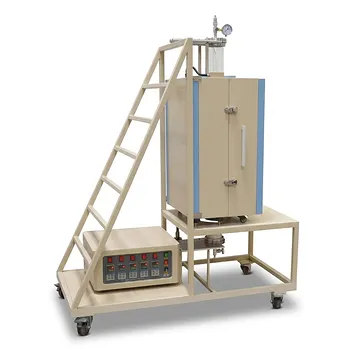
Five Zone Split Vertical Tube Furnace 1200C Max with 4 Inch Quartz Tube and Stainless Steel Vacuum Flanges
1100°C Dual Zone Split Vertical Tube Furnace with 4 Inch Quartz Tube and Vacuum Sealing Flanges
1200C Three Zone Split Vertical Tube Furnace 4 Inch Quartz Tube Stainless Steel Vacuum Flanges
1200°C 10-Zone Split Tube Furnace with Horizontal and Vertical Mounting for Multi-Zone Thermal Gradients and Large Diameter Material Processing

Vertical 1700C Vacuum and Atmosphere Tube Furnace with 80mm Alumina Tube

1200°C 5 Inch Vertical Quartz Tube Furnace with Stainless Steel Vacuum Flanges
1250C Split Tube Furnace with 3 Inch Mullite Tube and Vacuum Sealing Flanges for Precision Thermal Processing
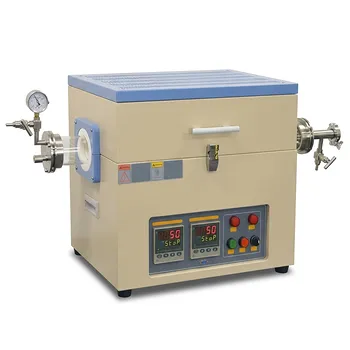
1200C Dual Zone Split Tube Furnace with Fused Quartz Tube and Vacuum Flanges Available in 60mm 80mm and 100mm Diameters
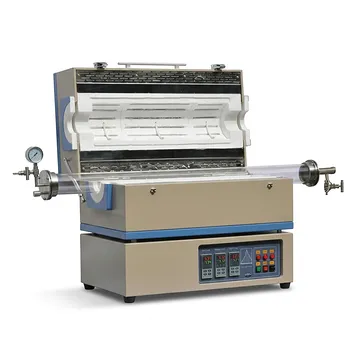
24 Inch Three Zone Split Tube Furnace with Optional Quartz Tube and Vacuum Flange System for High Temperature Material Synthesis
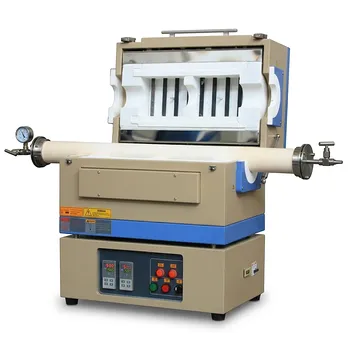
1500C Two Zone Split Tube Furnace with Vacuum Flange and 80mm Alumina Tube
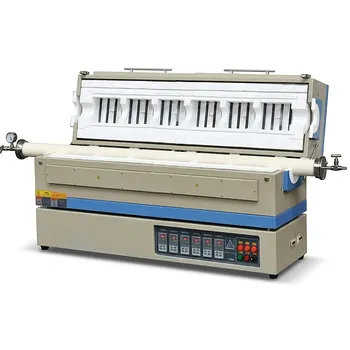
High Temperature 1700C Six Zone Split Tube Furnace with Alumina Tube and Water Cooled Flanges
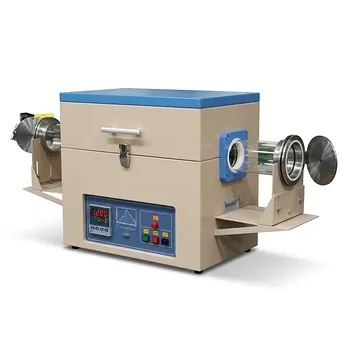
High Temperature 1200C Split Tube Furnace with Hinged Vacuum Flanges and 4 Inch Quartz Tube for Laboratory Research
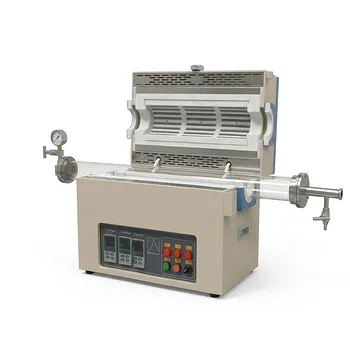
1200°C Three Zone Split Tube Furnace with 18 Inch Heating Length and Vacuum Flanges