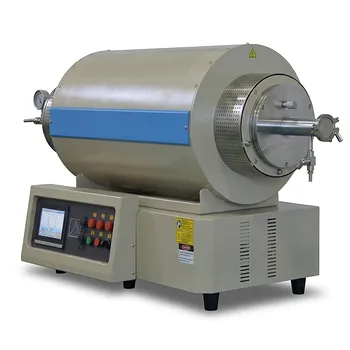
How does a high-precision tube furnace ensure the quality of Fe2N when preparing precursors for Fe/Li3N? Expert Guide.
Updated 3 months ago
Achieving high-quality $\text{Fe}_2\text{N}$ requires a synergy of thermal stability and atmospheric purity. A high-precision tube furnace ensures this quality by maintaining a constant 800 °C environment and strictly regulating the flow of ammonia ($\text{NH}_3$) gas. This controlled setting facilitates the thermal decomposition of ammonia into a reactive nitrogen source while simultaneously preventing unwanted oxidation of the iron precursor.
Core Takeaway: The high-precision tube furnace acts as a hermetically sealed reactor that transforms $\text{Fe}_3\text{O}_4$ into $\text{Fe}_2\text{N}$ by balancing precise thermal energy with a controlled chemical atmosphere, ensuring the phase purity necessary for high-performance electrodes.
Precise Thermal Management at High Temperatures
Maintaining Isothermal Stability at 800 °C
The synthesis of $\text{Fe}_2\text{N}$ relies on a stable isothermal environment to ensure uniform crystal growth. Fluctuations in temperature can lead to incomplete reactions or the formation of secondary iron-nitride phases like $\text{Fe}_4\text{N}$ or $\epsilon\text{-Fe}_3\text{N}$.
Minimizing Internal Thermal Stress
High-precision furnaces utilize programmable temperature curves to manage heating and cooling rates. This precision minimizes internal thermal stress and dislocation defects within the nitride structure, which is critical for the structural integrity of the resulting $\text{Fe/Li}_3\text{N}$ precursor.
Atmospheric Integrity and Gas Dynamics
Controlled Ammonia Decomposition
The furnace provides the specific energy required for the thermal decomposition of $\text{NH}_3$, which serves as the primary nitrogen source. By accurately controlling the gas flow rate, the furnace ensures a consistent supply of reactive nitrogen atoms to the surface of the iron oxide precursor.
Hermetic Sealing and Purity
The high-quality sealing performance of a tube furnace is essential for maintaining a pure reaction atmosphere. By excluding oxygen and moisture, the furnace prevents the re-oxidation of the iron species, ensuring that the $\text{Fe}_3\text{O}_4$ is effectively converted into pure $\text{Fe}_2\text{N}$ rather than an oxynitride.
Simultaneous Reduction and Nitriding
In the gas-phase nitriding process, the furnace environment allows reduction and nitriding to occur simultaneously. The hydrogen released from $\text{NH}_3$ decomposition reduces the $\text{Fe}_3\text{O}_4$ precursor, while the nitrogen concurrently enters the lattice to form the nitride phase.
Understanding the Trade-offs and Pitfalls
The Risk of Phase Contamination
If the temperature control is imprecise, the iron-nitrogen system can easily shift between different stoichiometric phases. Small deviations from the 800 °C setpoint can result in a mixture of nitrides, which degrades the electrochemical performance of the final electrode.
Gas Flow and Kinetic Limitations
Low gas flow rates may lead to a stagnant boundary layer, slowing the nitriding kinetics and resulting in a core-shell structure where the center of the particle remains an oxide. Conversely, excessively high flow rates can create temperature gradients within the tube, compromising the uniformity of the sample.
Sealing Degradation at High Temperatures
Repeated thermal cycling to 800 °C can stress the furnace seals and gaskets. Any breach in vacuum integrity introduces oxygen, which acts as a competitor to nitrogen and can completely stall the nitriding process or produce hazardous byproducts.
How to Apply This to Your Project
Recommendations for Material Synthesis
- If your primary focus is Phase Purity: Use a furnace with a multi-zone heating configuration to ensure an ultra-uniform temperature profile across the entire precursor boat.
- If your primary focus is Large-Scale Consistency: Implement a high-precision mass flow controller (MFC) in tandem with the tube furnace to maintain a rigorous and repeatable $\text{NH}_3$ delivery rate.
- If your primary focus is Structural Integrity: Utilize a programmable cooling cycle of less than 5 °C per minute to prevent micro-cracking during the transition from the nitriding temperature to room temperature.
The high-precision tube furnace is the fundamental tool for converting iron oxides into high-activity nitrides by providing the exact thermodynamic and kinetic conditions required for successful nitrogen substitution.
Summary Table:
| Parameter | Role in Fe2N Synthesis | Impact on Material Quality |
|---|---|---|
| 800°C Stability | Maintains isothermal environment | Ensures phase purity and uniform crystal growth |
| NH3 Gas Flow | Provides reactive nitrogen & reduction | Prevents stagnant layers and ensures complete conversion |
| Hermetic Sealing | Excludes oxygen and moisture | Prevents re-oxidation of iron species |
| Thermal Curves | Managed heating and cooling rates | Minimizes internal thermal stress and structural defects |
Elevate Your Material Research with THERMUNITS
Precision is the key to successful material synthesis. As a leading manufacturer of high-temperature laboratory equipment, THERMUNITS provides the advanced thermal solutions necessary for high-performance R&D. Our high-precision Tube furnaces, Vacuum furnaces, and CVD/PECVD systems are engineered to deliver the atmospheric purity and isothermal stability required for complex processes like Fe2N nitriding.
Whether you are developing next-generation electrodes or conducting industrial heat treatment, our comprehensive range—including Muffle, Rotary, and Hot Press furnaces—ensures your project's success.
Ready to optimize your thermal processing? Contact THERMUNITS today to find your solution!
References
- Linyi Zhao, Guihua Yu. A fast-charging/discharging and long-term stable artificial electrode enabled by space charge storage mechanism. DOI: 10.1038/s41467-024-48215-2
Mentioned Products
- High Temperature Rotary Tube Furnace with Integrated Ball Milling and Gas Flow Function for Powder Nitriding
- High Temperature 1700C Vertical Tube Furnace for Powder Spherification and Material Sintering
- Compact High Temperature 1600C Tube Furnace with 50mm Alumina Tube and Vacuum Flanges for Material Sintering
- High Temperature Automated 5 Inch Tube Furnace for Autonomous Material Research and Advanced Laboratory R&D
- 1500C Max Dual Zone Rotary Tube Furnace with 60 mm OD Alumina Tube for High Temperature Material Synthesis
People Also Ask
- How does a rotary tube furnace improve the processing of granular materials? Enhance Uniformity and Reaction Kinetics
- Why use a rotary tube furnace for FACS carbonization? Ensure uniform morphology and prevent sphere agglomeration.
- In what ways do rotary tube furnaces enhance chemical and specialty mineral processing? Drive Precision and Uniformity.
- Why is the precise optimization of residence time essential in the catalyst calcination process? Maximize Your Yields.
- What are the typical operating temperature ranges and mechanical specifications for rotary furnaces? A Complete Guide

Tech Team · ThermUnits
Last updated on Jun 03, 2026
Related Products
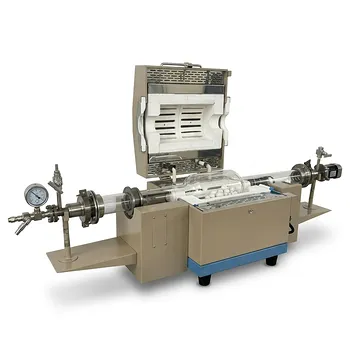
High Temperature Rotary Tube Furnace with Integrated Ball Milling and Gas Flow Function for Powder Nitriding

High Temperature 1700C Vertical Tube Furnace for Powder Spherification and Material Sintering

Compact High Temperature 1600C Tube Furnace with 50mm Alumina Tube and Vacuum Flanges for Material Sintering

High Temperature Automated 5 Inch Tube Furnace for Autonomous Material Research and Advanced Laboratory R&D
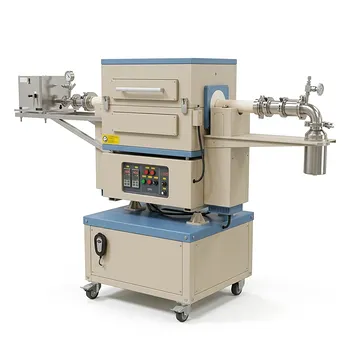
1500C Max Dual Zone Rotary Tube Furnace with 60 mm OD Alumina Tube for High Temperature Material Synthesis

High Temperature Tube Furnace 1500C with Sliding Flanges and 50mm OD for Rapid Thermal Processing Fast Heating and Cooling
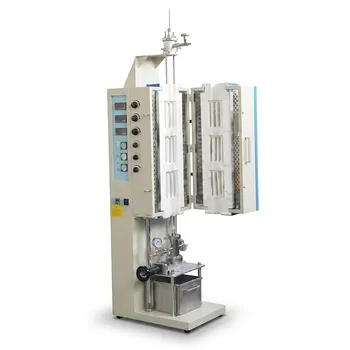
High Temperature Dual Zone Tube Furnace for Material Science Research and Professional Thermal Processing
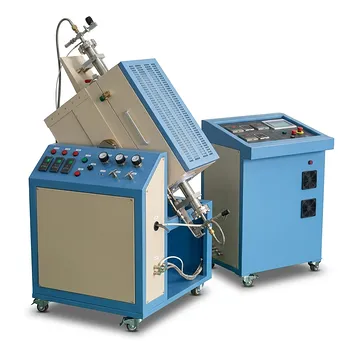
1100C High Pressure Rocking Tube Furnace with 2 Inch Super Alloy Processing Tube for Material Synthesis

1800C High Temperature Compact Vacuum Tube Furnace with 60mm OD Alumina Tube and Kanthal MoSi2 Heating Elements

1700C Hydrogen Gas Tube Furnace with 60mm Alumina Process Tube and Integrated Hydrogen Safety Detector
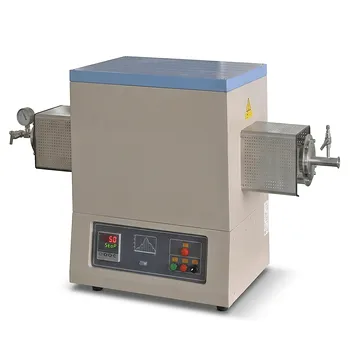
High Temperature 1700C Tube Furnace with 4 Inch OD Alumina Tube and Vacuum Sealing Flanges

1200C High Throughput Multi Channel Tube Furnace with 50mm Quartz Tubes for Annealing and Material Phase Diagram Research
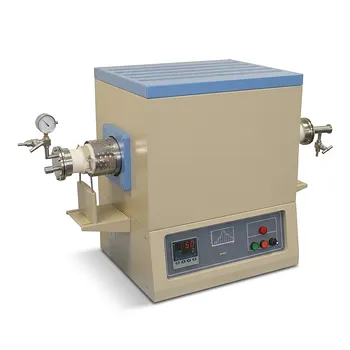
1700C High Temperature Alumina Tube Furnace with 18 Inch Heated Zone and Vacuum Sealing Flanges
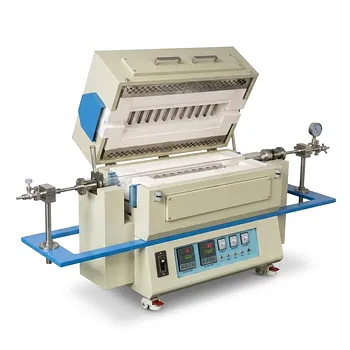
High Temperature Dual Zone Rotating Tube Furnace 1500C Silicon Carbide Heating for Advanced Material Synthesis
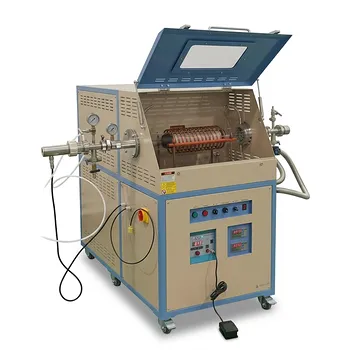
Ultra High Temperature 2300C Induction Heated Graphite Tube Furnace with Infrared Control
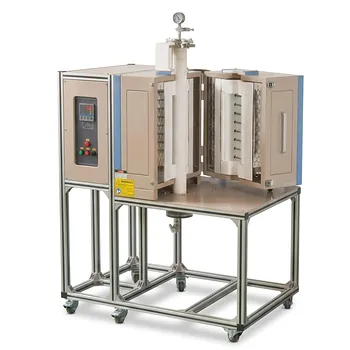
High Temperature 1700C Vertical Split Tube Furnace for Material Quenching and Single Crystal Growth

High Temperature 1700C Benchtop Tube Furnace with 5 Inch Heating Zone High Purity Alumina Tube and Vacuum Sealing Flanges

High Temperature 1700C Tube Furnace with High Vacuum Turbomolecular Pump System and Multi Channel Mass Flow Controller Gas Mixer

Vertical 1700C Vacuum and Atmosphere Tube Furnace with 80mm Alumina Tube